MMSx Authority · Applied Biomechanics Lab
Shoulder Rehabilitation: 50 Evidence-Based Biomechanics Analyses
Fifty evidence-based shoulder rehabilitation articles from the MMSx Authority Applied Biomechanics Lab: movement analysis, verified research data and decision pathways for shoulder pain. Each article pairs a biomechanical analysis of three movements with verified research data, a decision pathway and APA 7 references with DOIs.
Cite this collection
Mehta, N. (2026). Shoulder Rehabilitation: 50 Evidence-Based Biomechanics Analyses [Collection]. MMSx Authority Applied Biomechanics Lab. Zenodo. https://doi.org/10.5281/zenodo.23735725
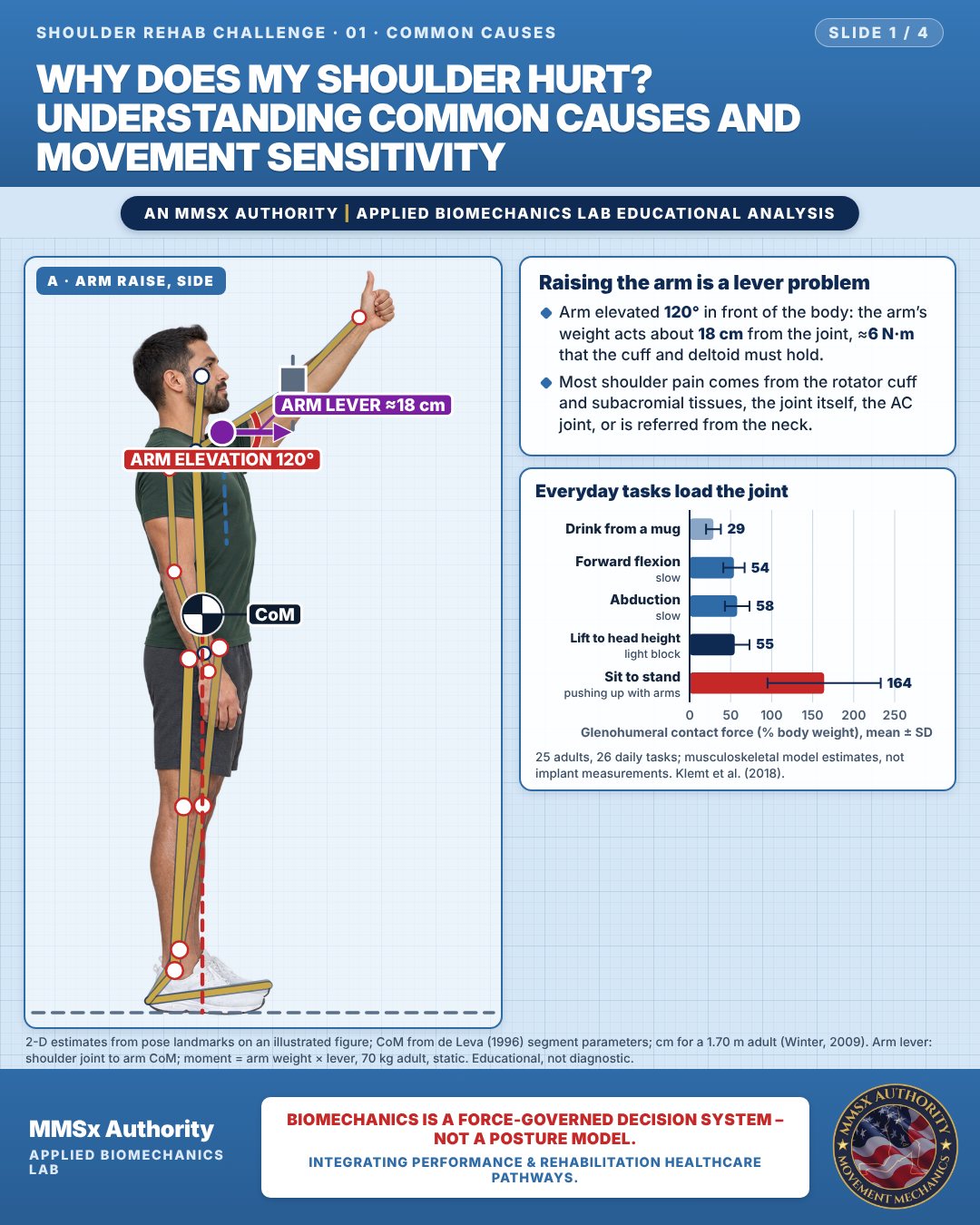 01
Why does my shoulder hurt? Understanding common causes and movement sensitivity
Arm elevated 120° in front of the body: the arm’s weight acts about 18 cm from the joint, ≈ 6 N·m that the cuff and deltoid must hold. Most shoulder…
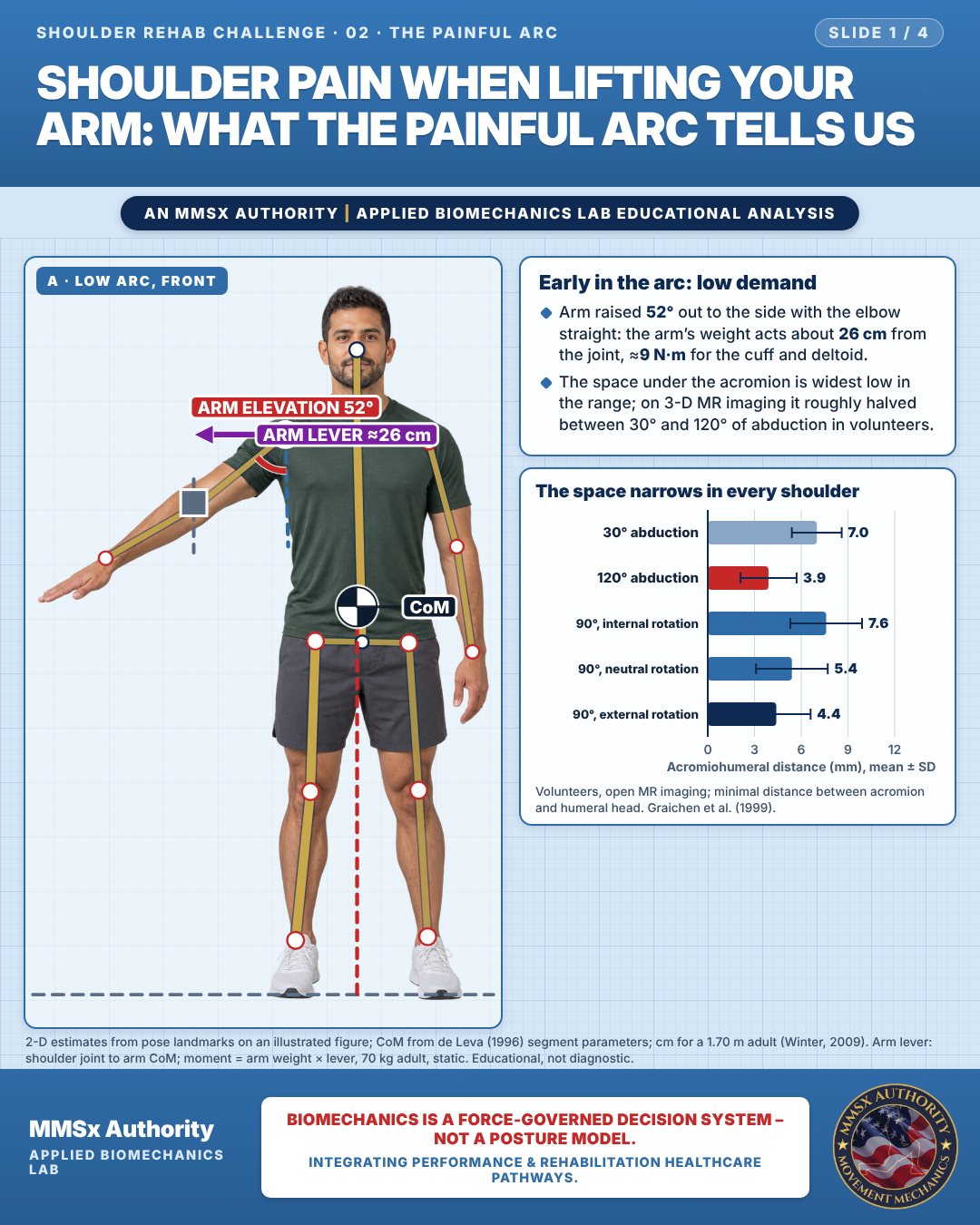 02
Shoulder pain when lifting your arm: what the painful arc tells us
A painful arc is pain felt during part of active arm elevation, classically mid-range abduction, that eases above or below that range.
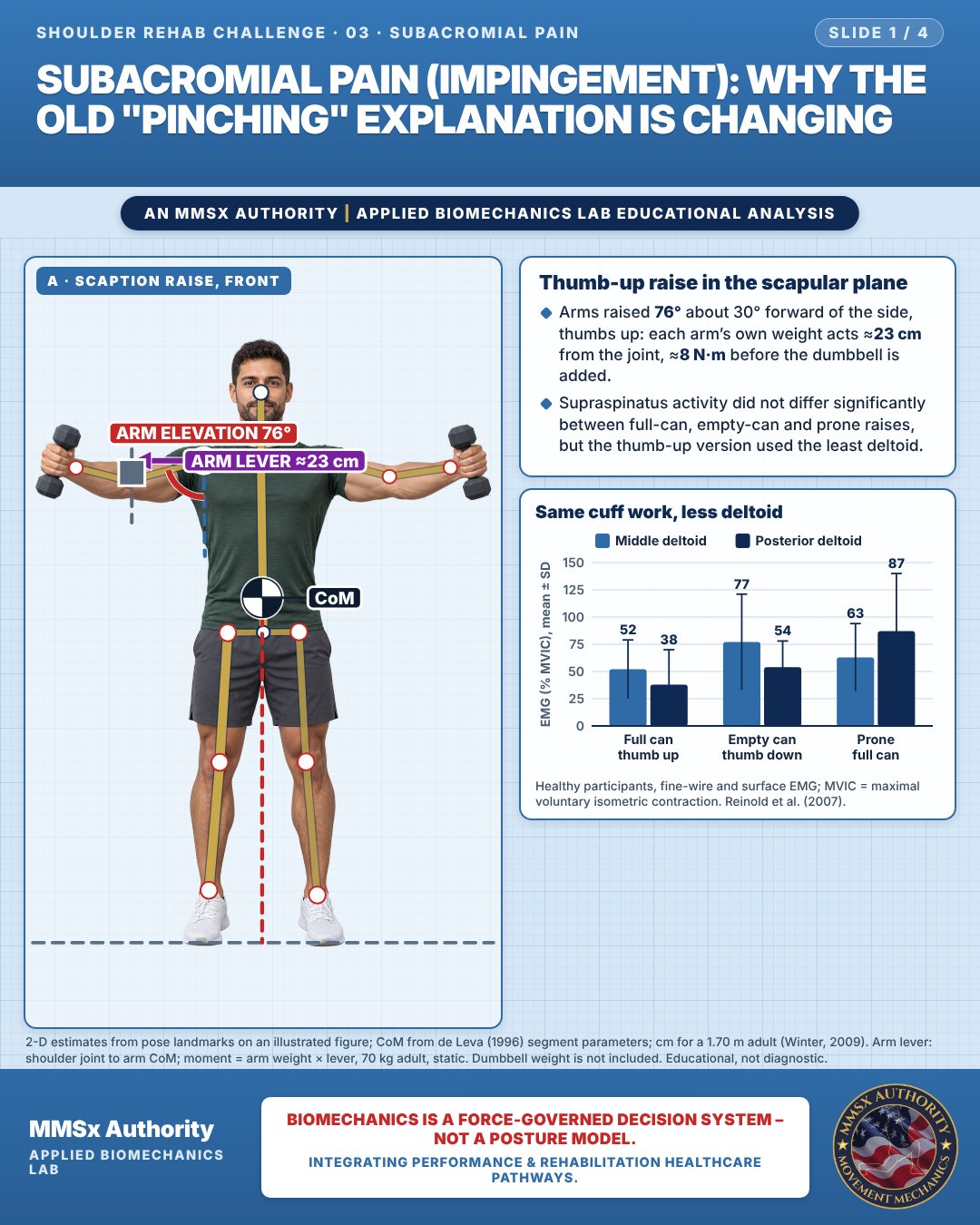 03
Subacromial pain (impingement): why the old "pinching" explanation is changing
Subacromial pain (formerly "subacromial impingement syndrome") is shoulder pain, typically lateral and provoked by arm elevation, that is attributed…
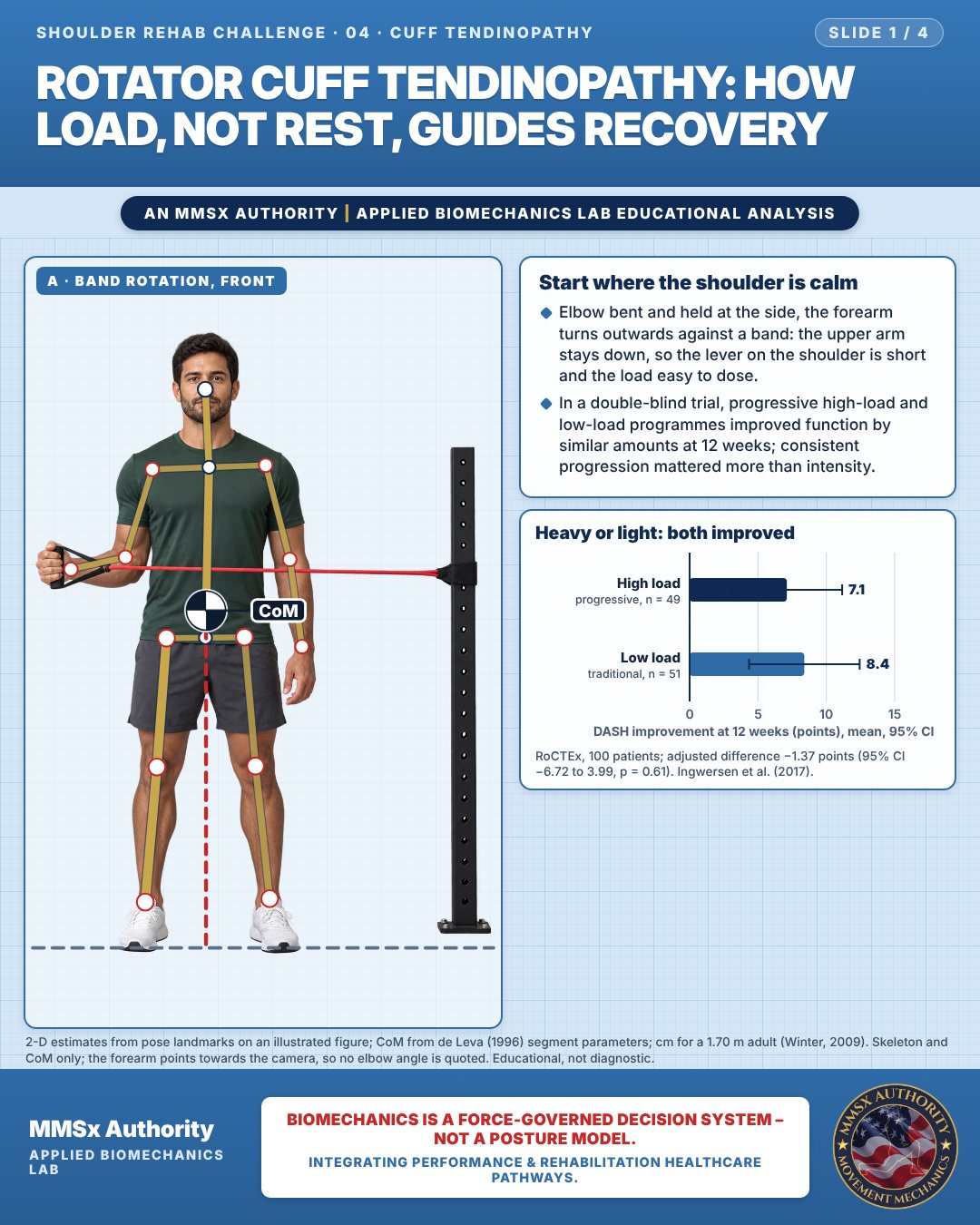 04
Rotator cuff tendinopathy: how load, not rest, guides recovery
Rotator cuff tendinopathy is a painful, load-related condition of the rotator cuff tendons, with or without calcification or partial-thickness tearing.
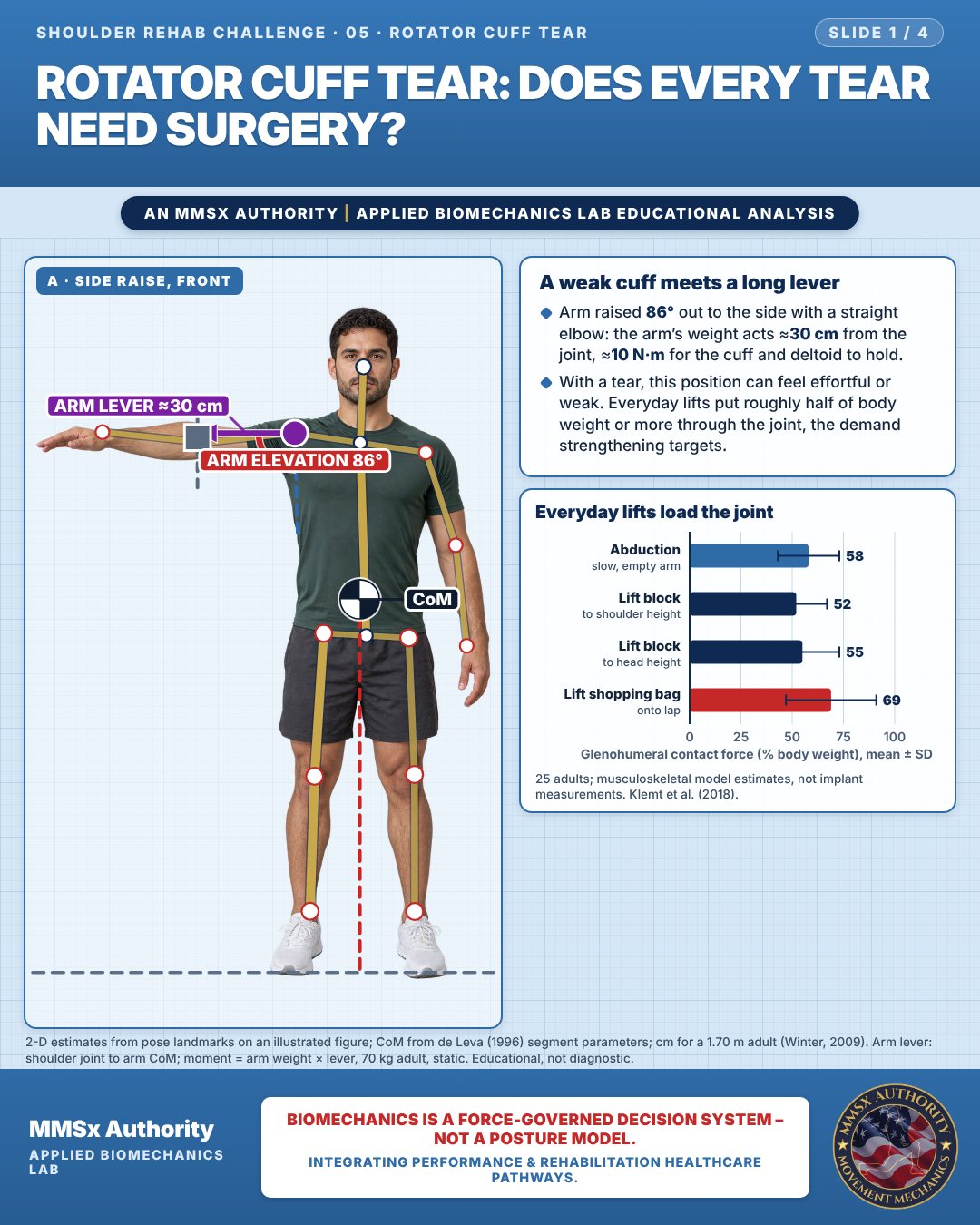 05
Rotator cuff tear: does every tear need surgery?
A rotator cuff tear is a partial- or full-thickness defect in one or more rotator cuff tendons, most often supraspinatus.
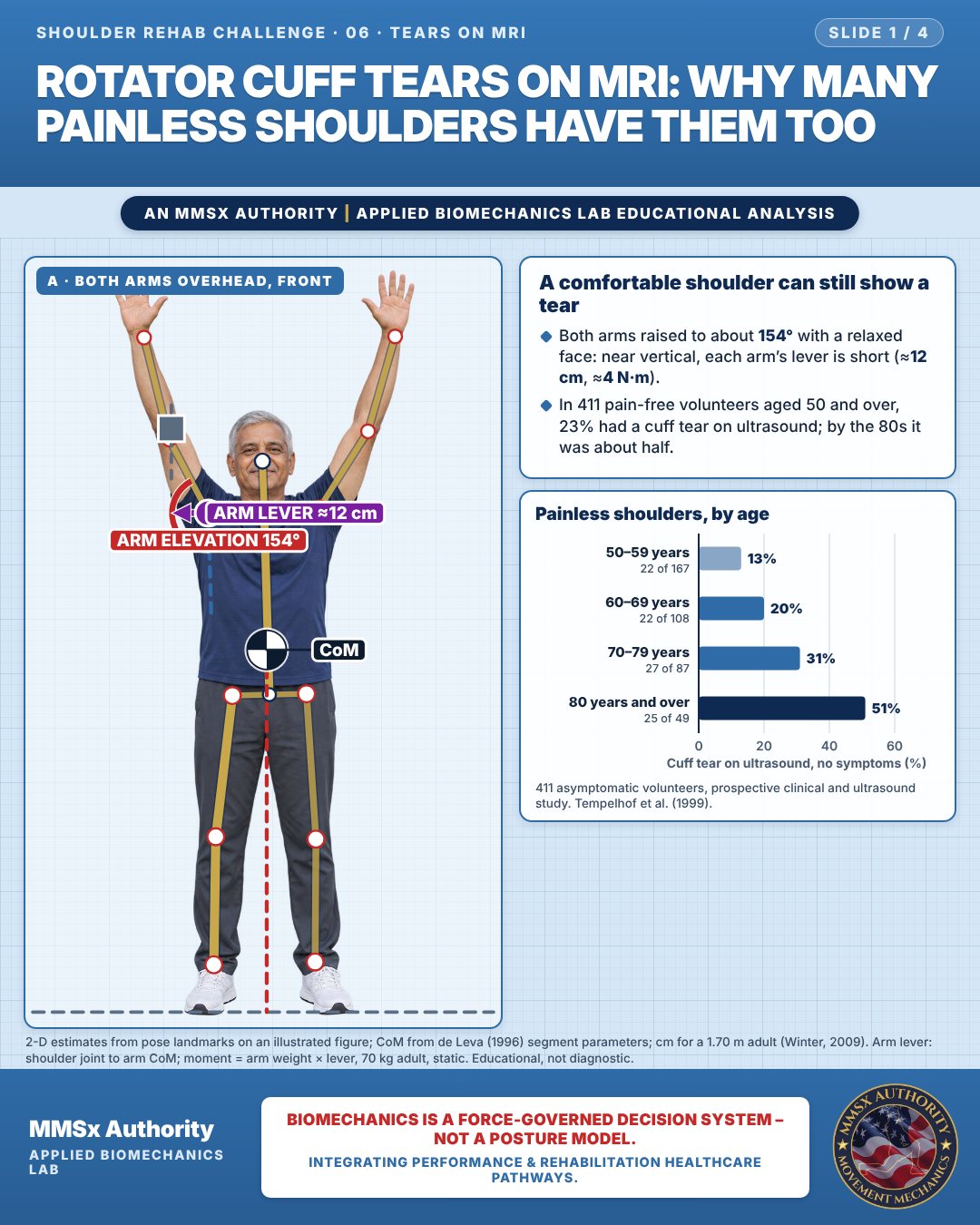 06
Rotator cuff tears on MRI: why many painless shoulders have them too
Rotator cuff tears and other cuff abnormalities are common imaging findings in people with no shoulder symptoms, and their frequency rises steeply with age.
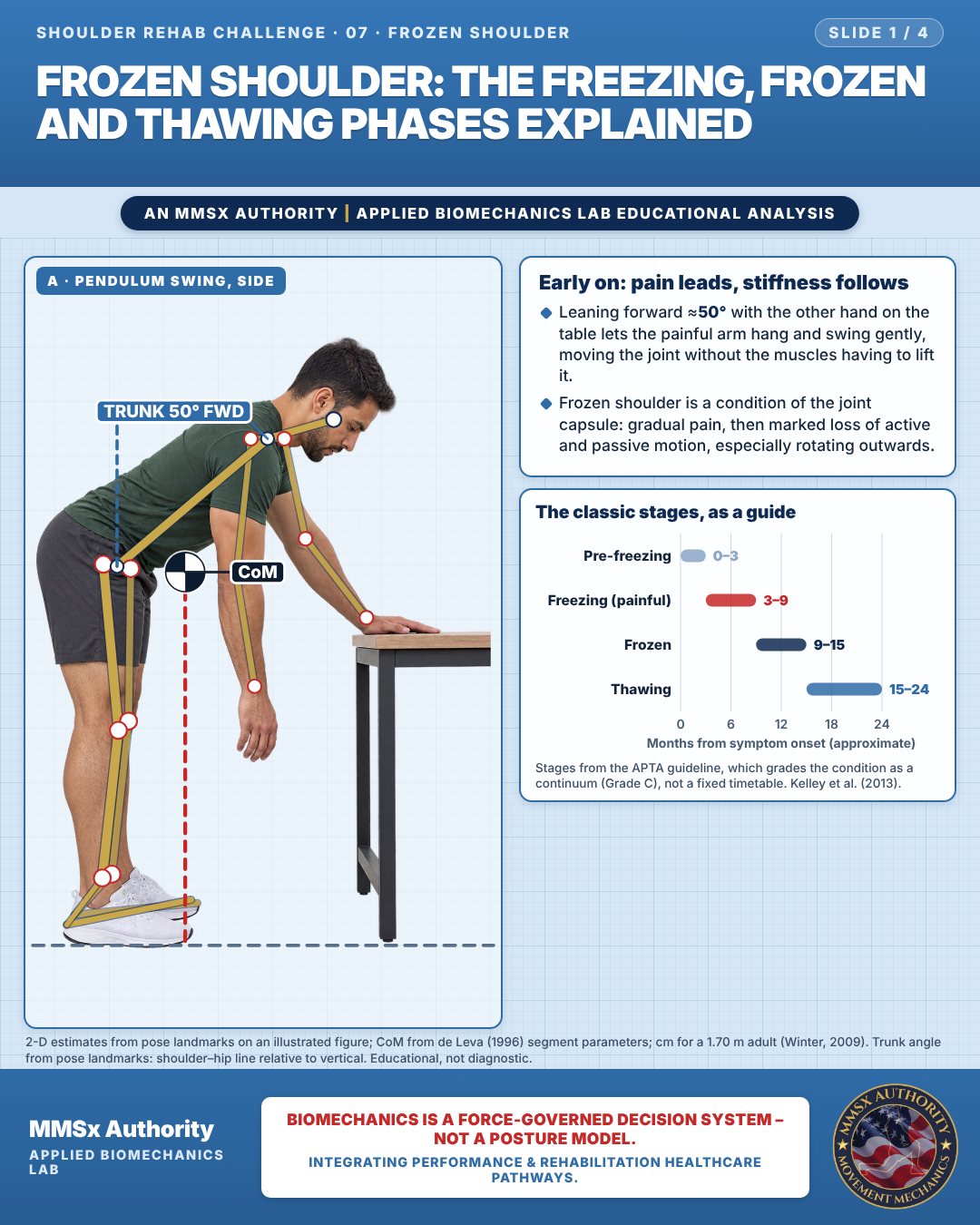 07
Frozen shoulder: the freezing, frozen and thawing phases explained
Frozen shoulder (adhesive capsulitis) is a condition of the glenohumeral capsule. Movement analysis, verified research data and a decision pathway.
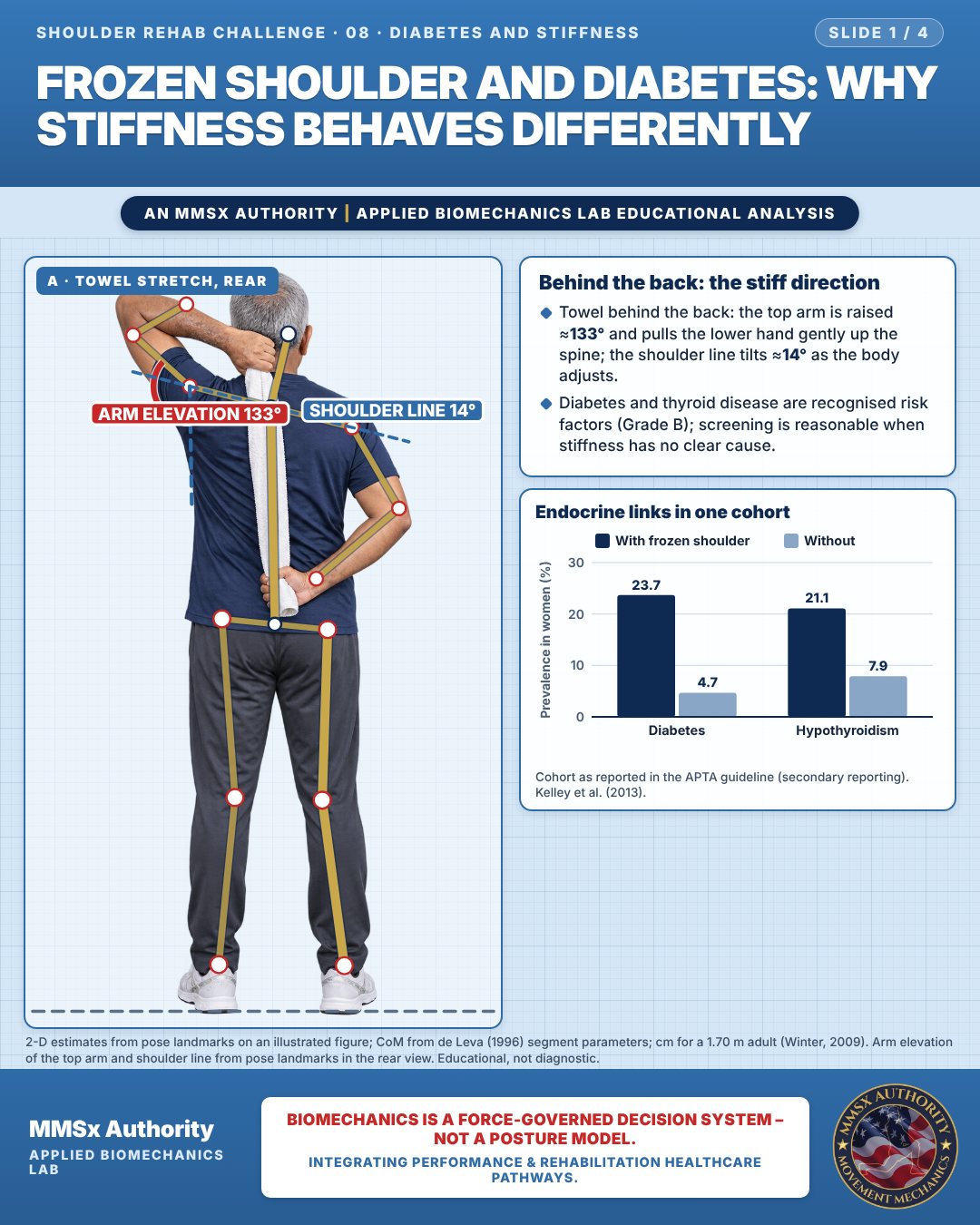 08
Frozen shoulder and diabetes: why stiffness behaves differently
Frozen shoulder in people with diabetes is adhesive capsulitis occurring with diabetes mellitus, a recognised risk factor (Grade B) (Kelley et al., 2013).
 09
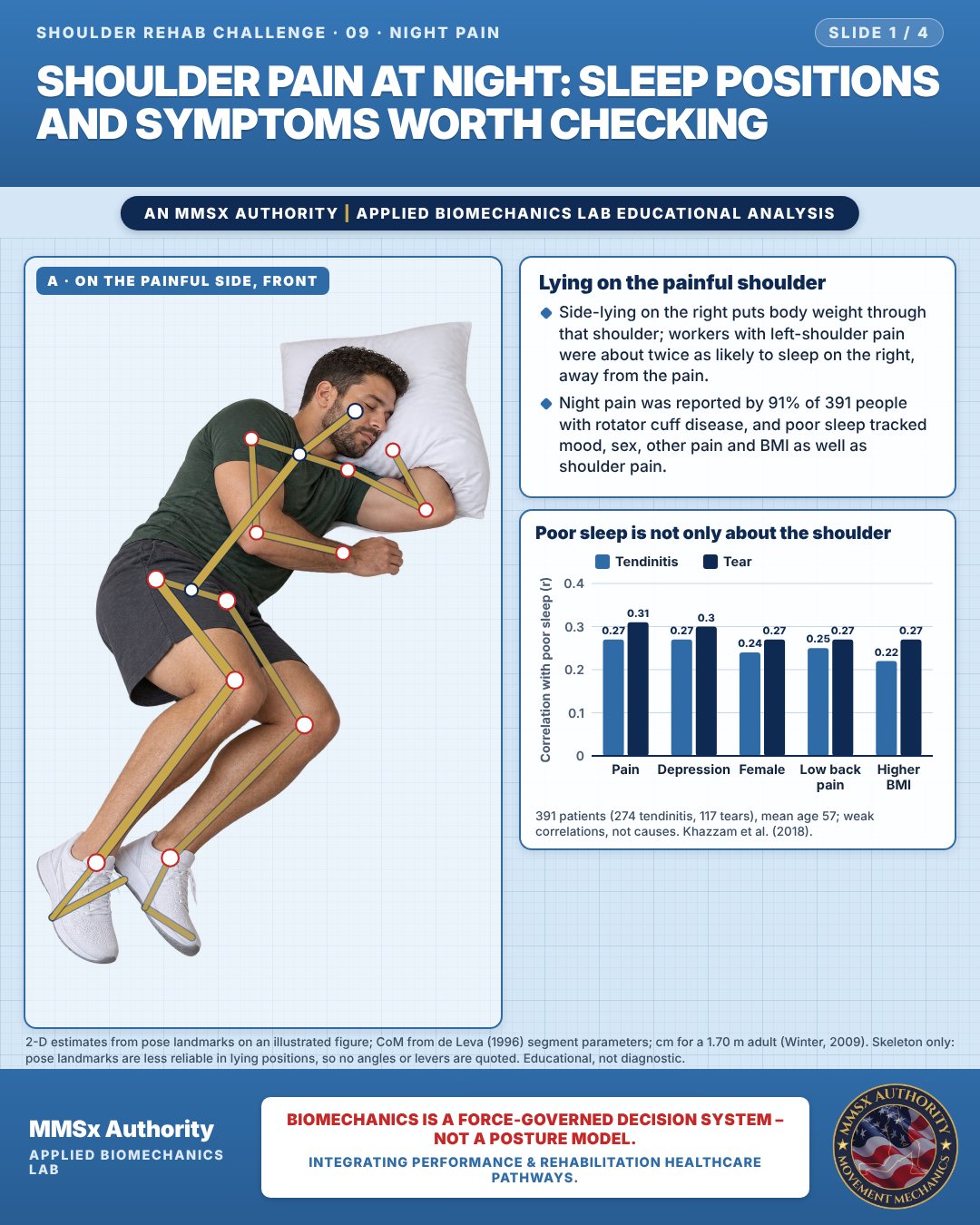
Shoulder pain at night: sleep positions and symptoms worth checking
Night pain is shoulder pain that disturbs sleep or prevents lying on the affected side. Movement analysis, verified research data and a decision pathway.
 10
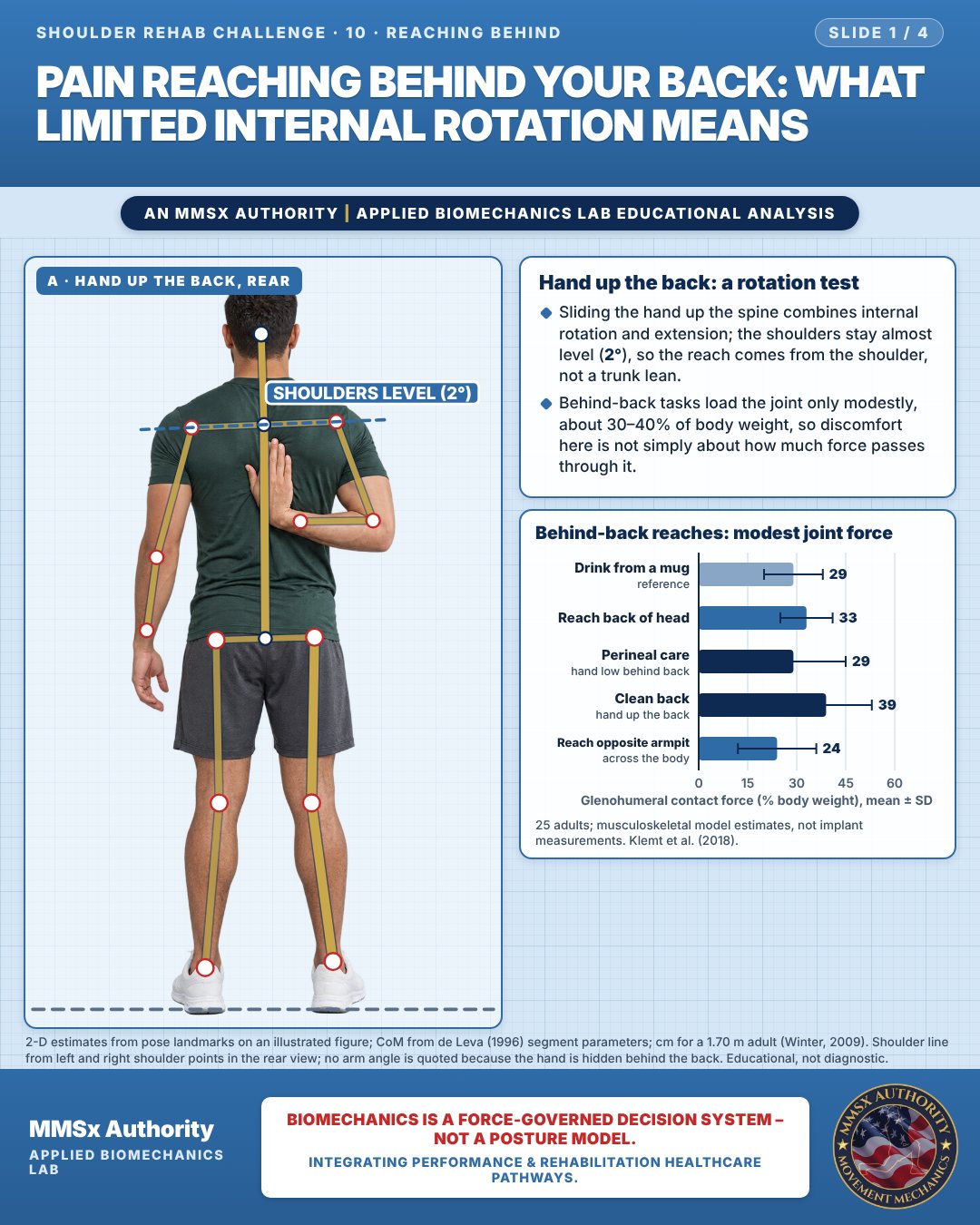
Pain reaching behind your back: what limited internal rotation means
Limited hand-behind-back reach is reduced functional internal rotation, usually recorded as the highest vertebral level the thumb can reach.
 11
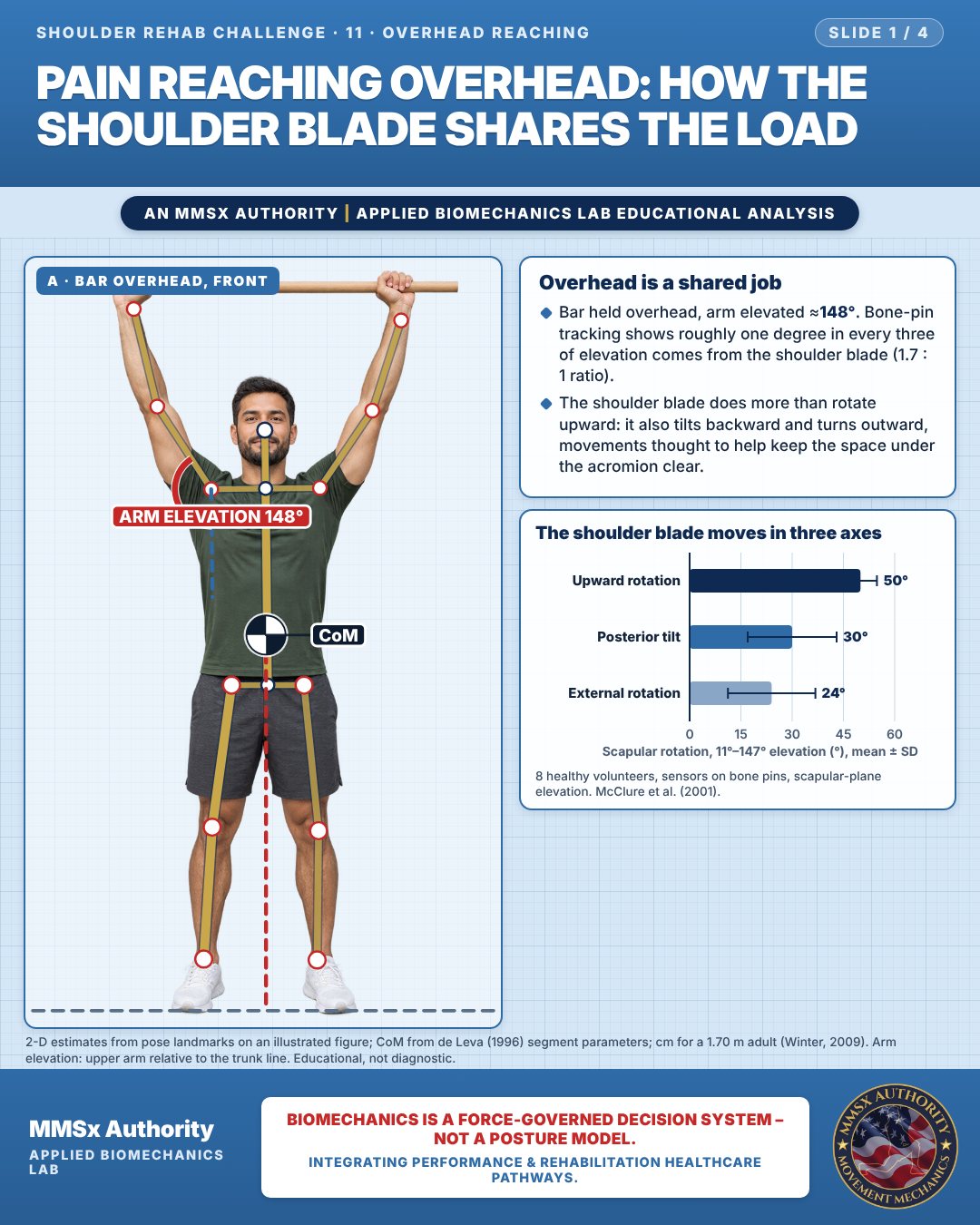
Pain reaching overhead: how the shoulder blade shares the load
Overhead reaching pain is shoulder pain provoked by raising the arm above shoulder height.
 12
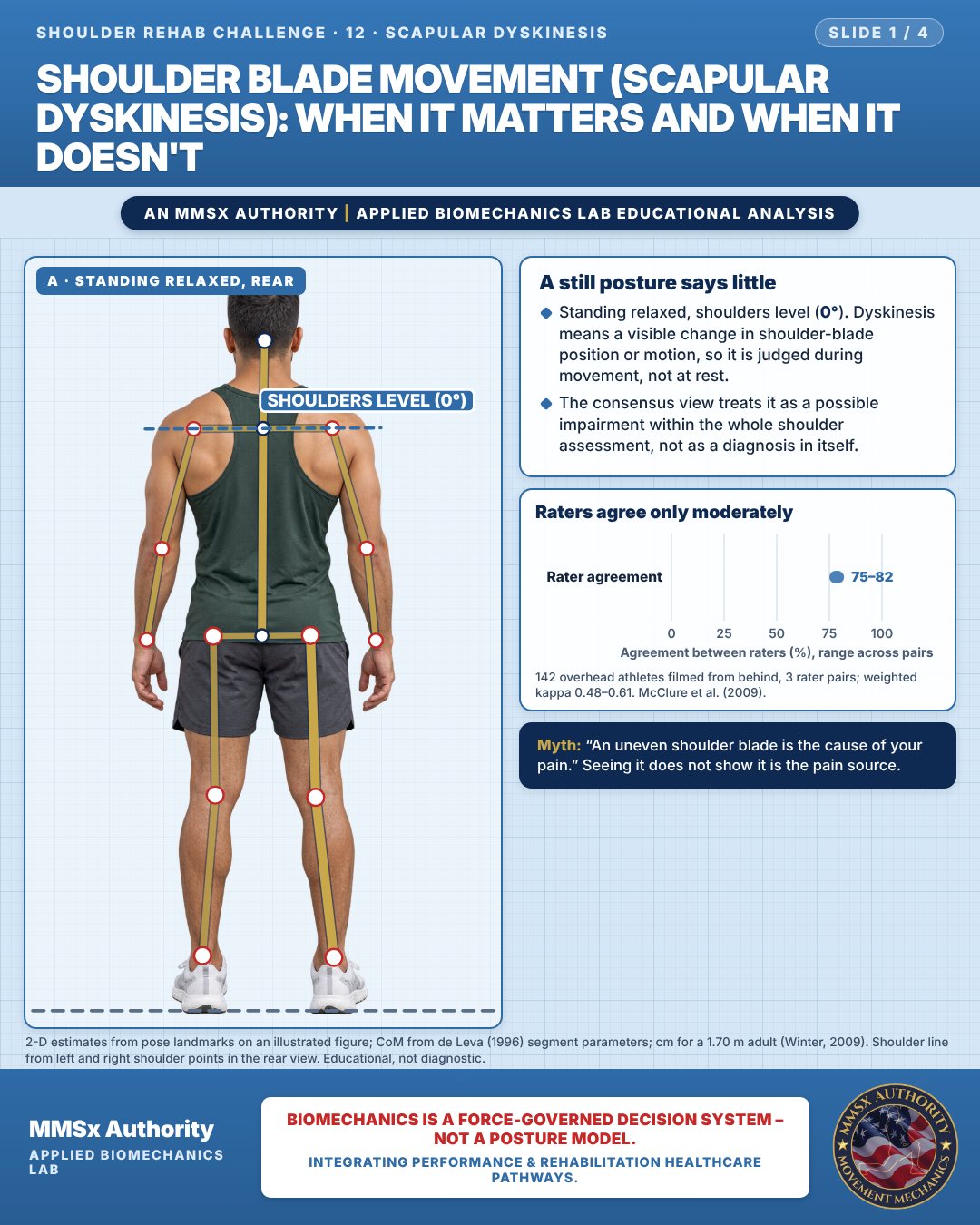
Shoulder blade movement (scapular dyskinesis): when it matters and when it doesn't
Scapular dyskinesis is an observable alteration in the position or motion of the shoulder blade at rest or during arm movement.
 13
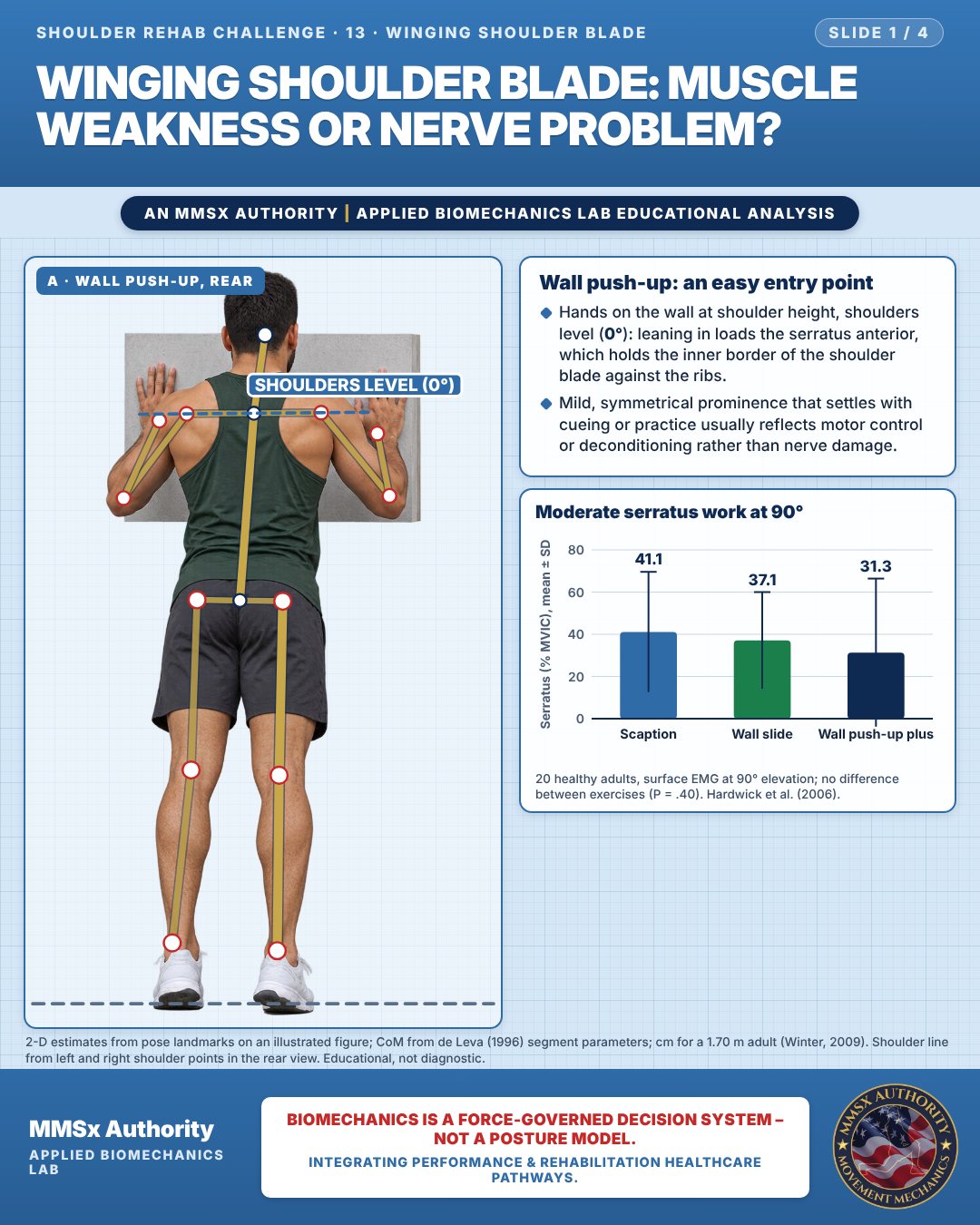
Winging shoulder blade: muscle weakness or nerve problem?
Scapular winging is prominence of the medial border of the shoulder blade away from the chest wall, at rest or during pushing or arm elevation.
 14
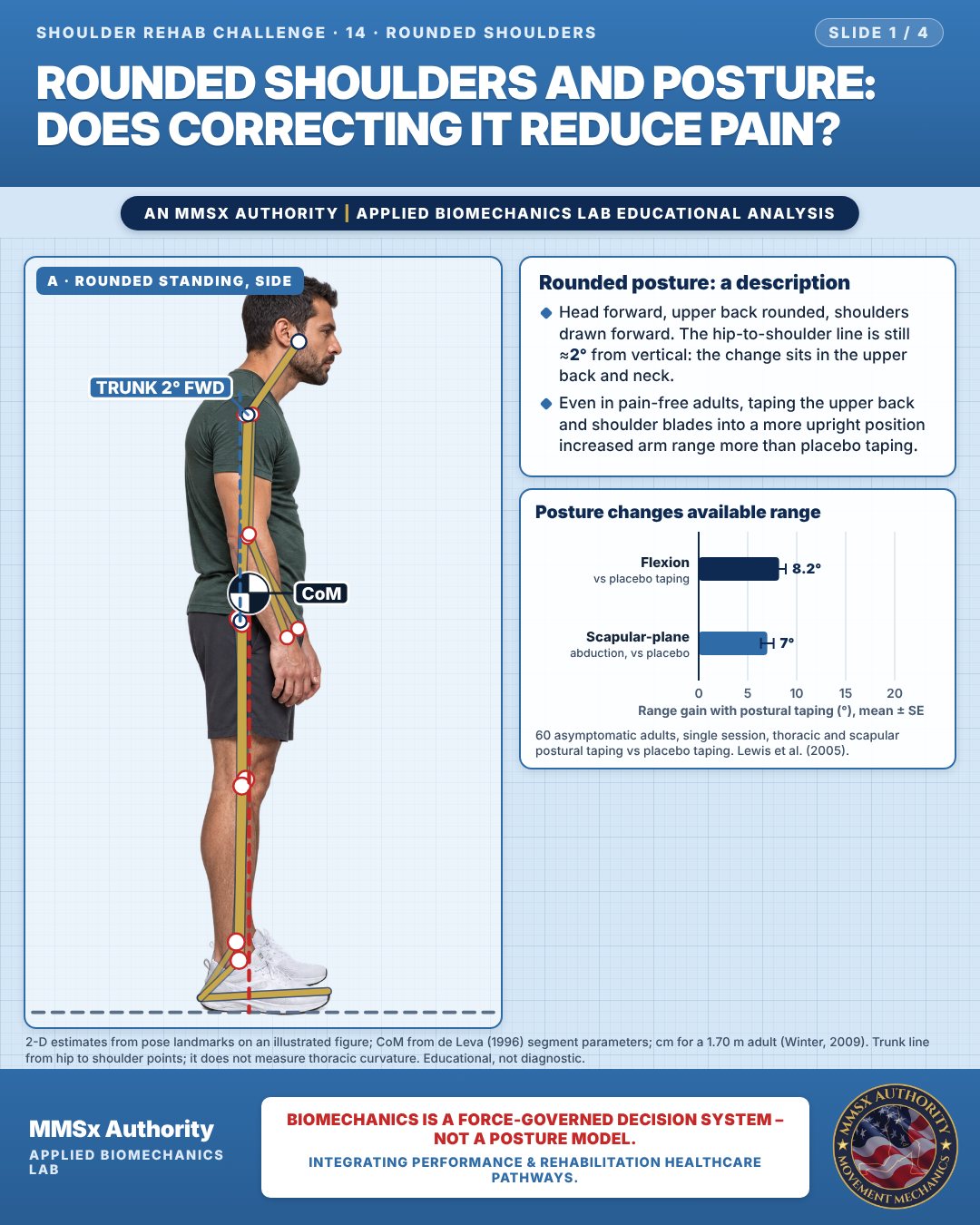
Rounded shoulders and posture: does correcting it reduce pain?
"Rounded shoulders" describes a standing or sitting posture with increased thoracic kyphosis, forward head position and protracted, anteriorly tilted…
 15
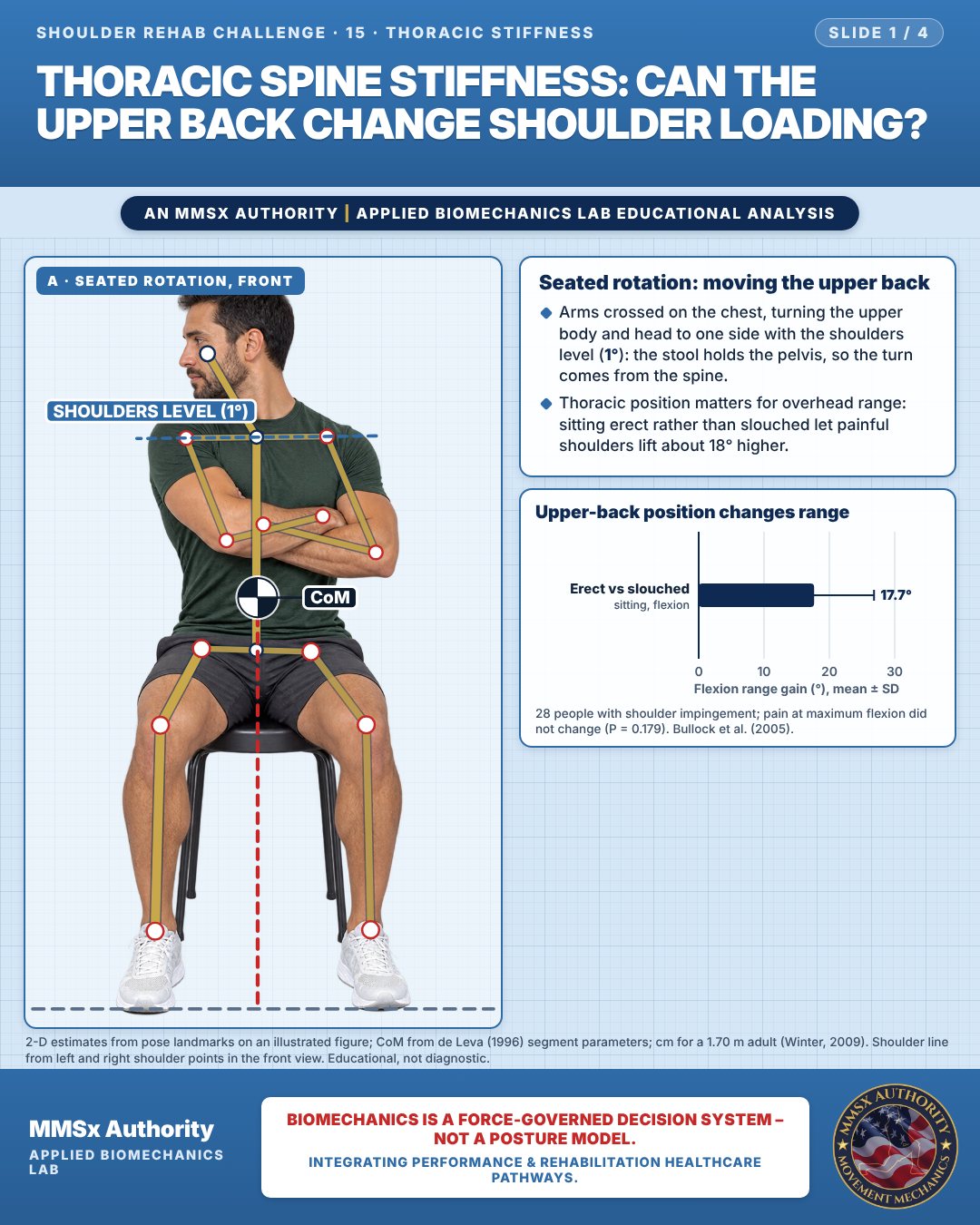
Thoracic spine stiffness: can the upper back change shoulder loading?
Thoracic spine stiffness means reduced extension or rotation mobility of the upper back. Movement analysis, verified research data and a decision pathway.
 16
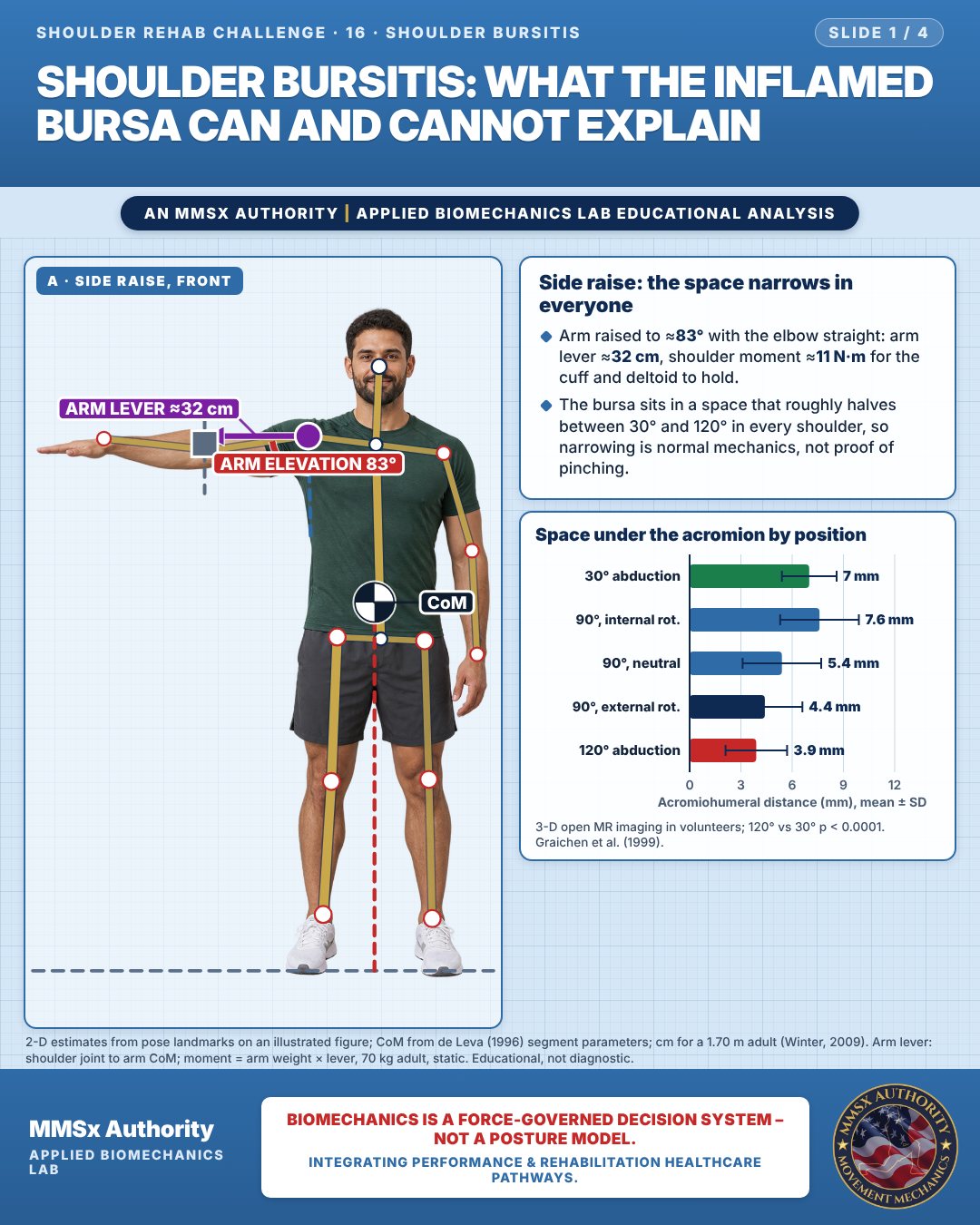
Shoulder bursitis: what the inflamed bursa can and cannot explain
Subacromial-subdeltoid bursitis describes thickening, fluid or inflammation of the bursa that lies between the rotator cuff and the acromion and deltoid.
 17
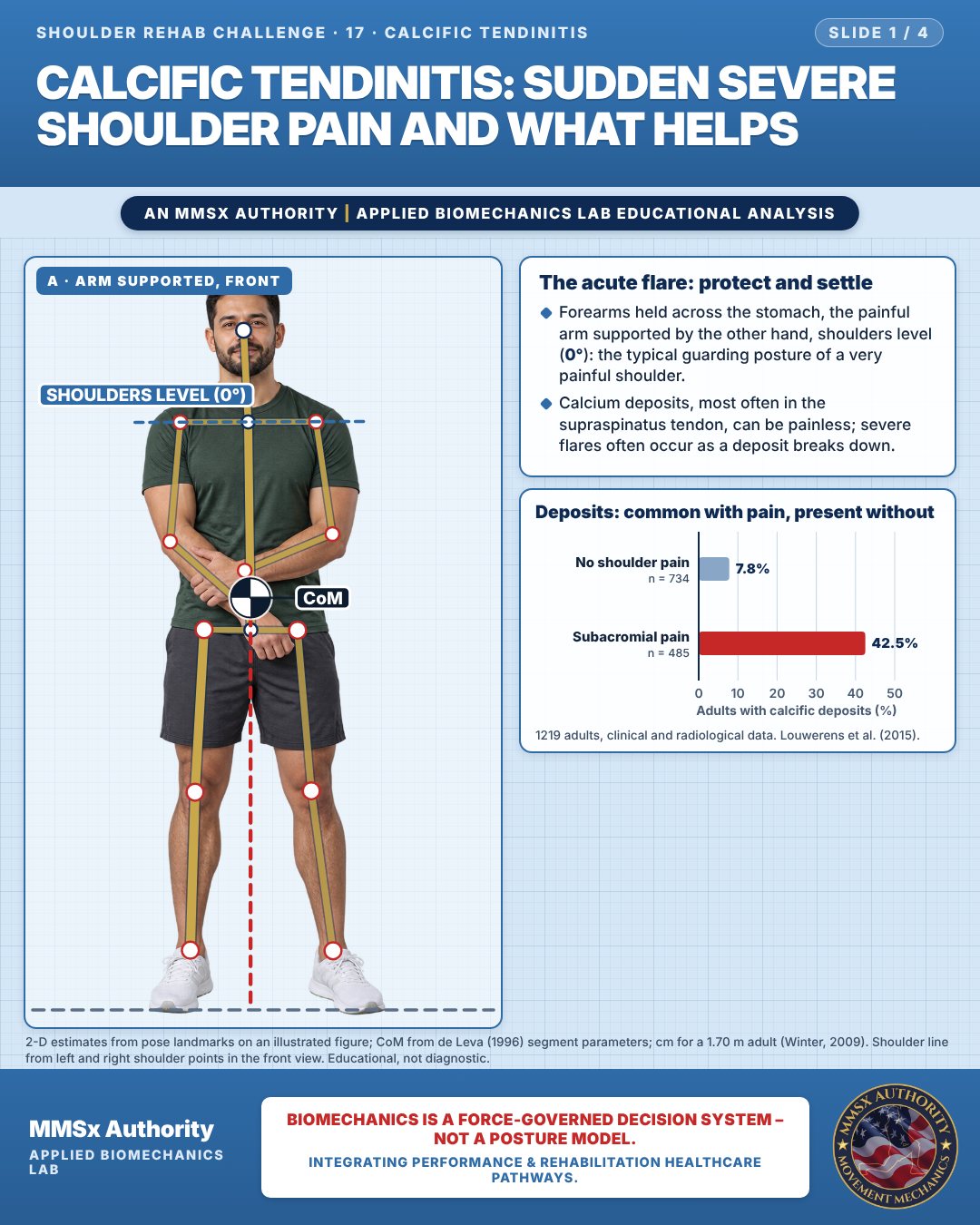
Calcific tendinitis: sudden severe shoulder pain and what helps
Calcific tendinopathy (calcific tendinitis) of the rotator cuff is deposition of calcium hydroxyapatite within a cuff tendon, most often the supraspinatus.
 18
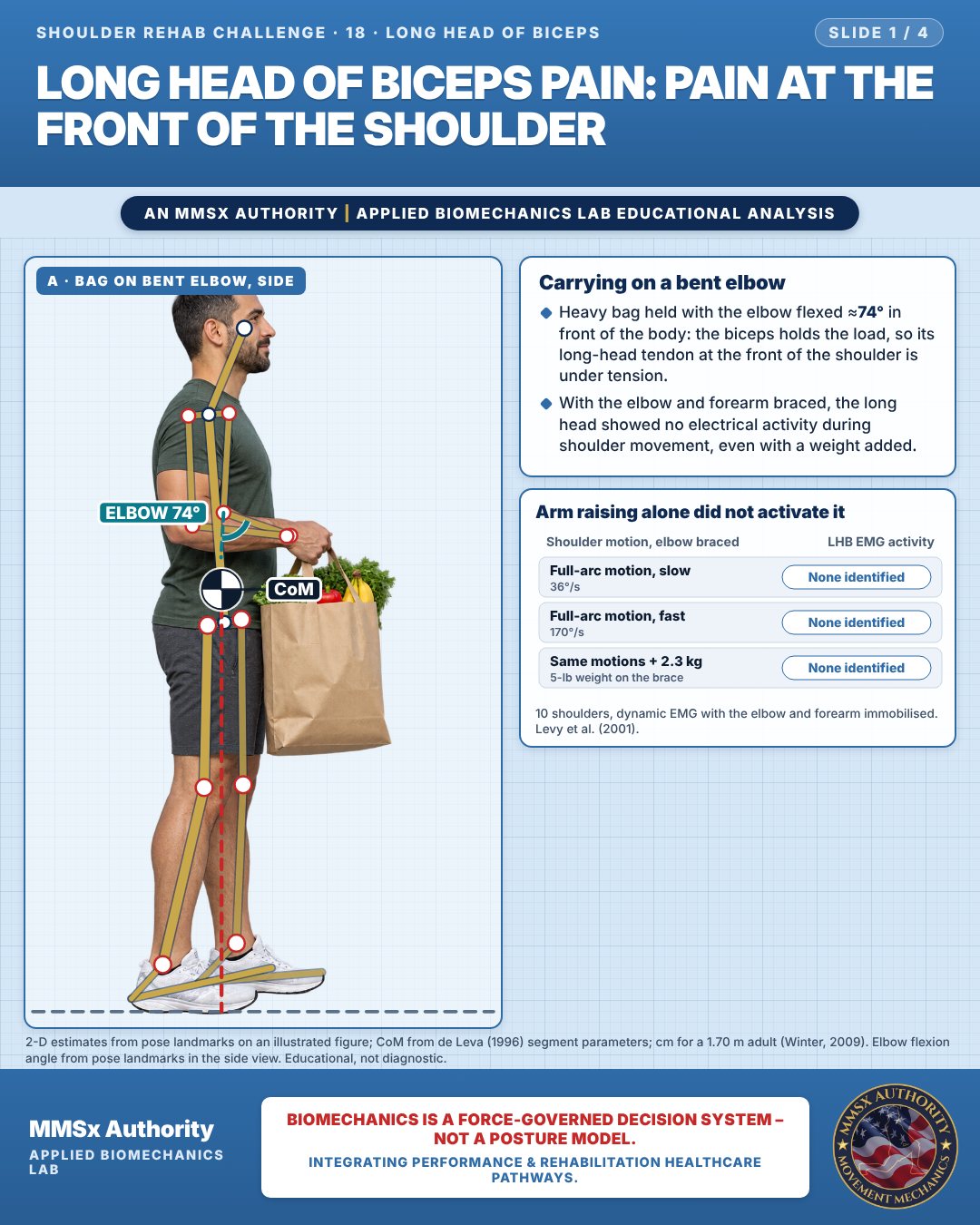
Long head of biceps pain: pain at the front of the shoulder
Long head of biceps (LHB) tendinopathy is pain arising from the intra-articular and bicipital-groove portion of the tendon.
 19
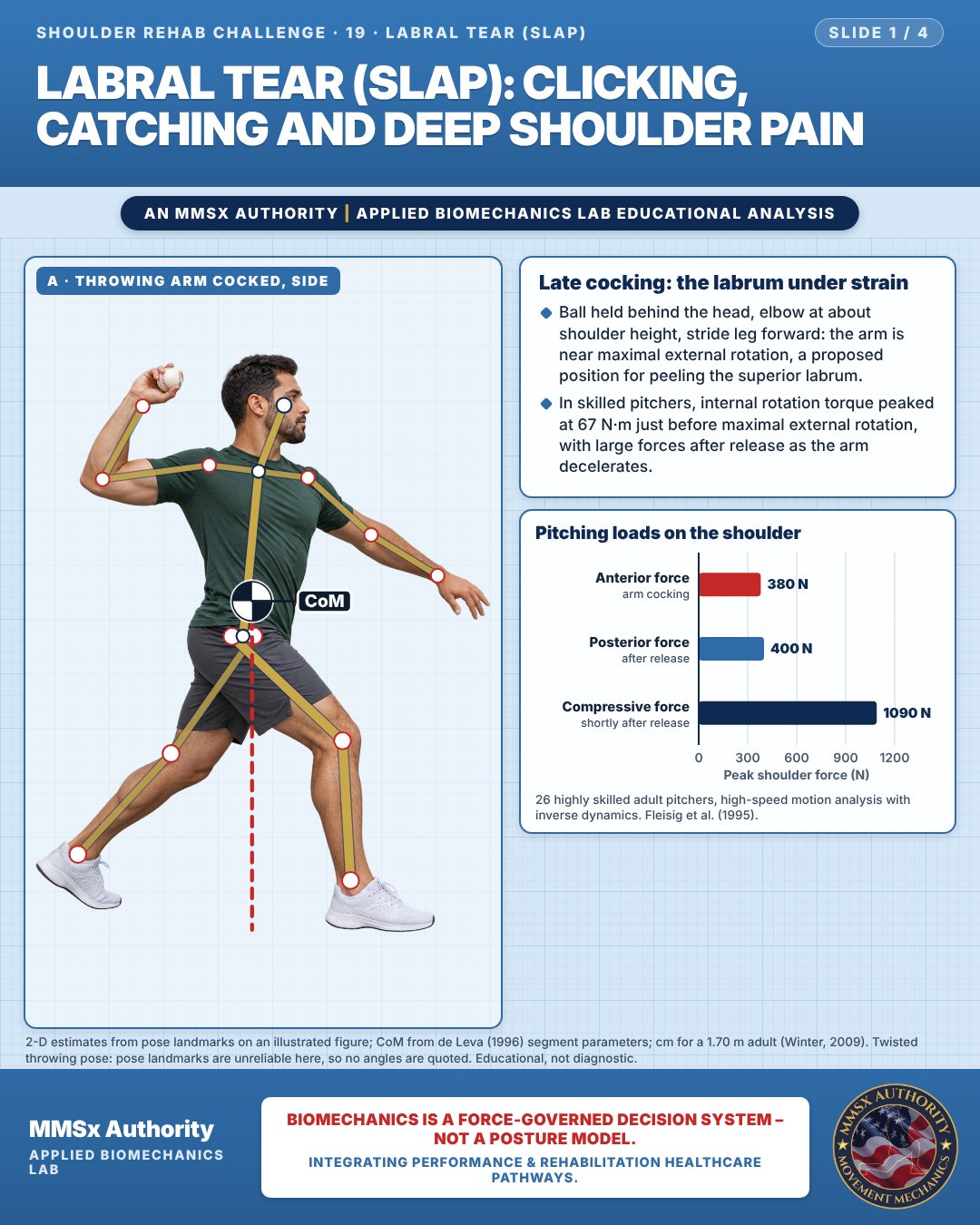
Labral tear (SLAP): clicking, catching and deep shoulder pain
A SLAP (superior labrum anterior to posterior) lesion is a tear of the superior glenoid labrum at the attachment of the long head of biceps.
 20
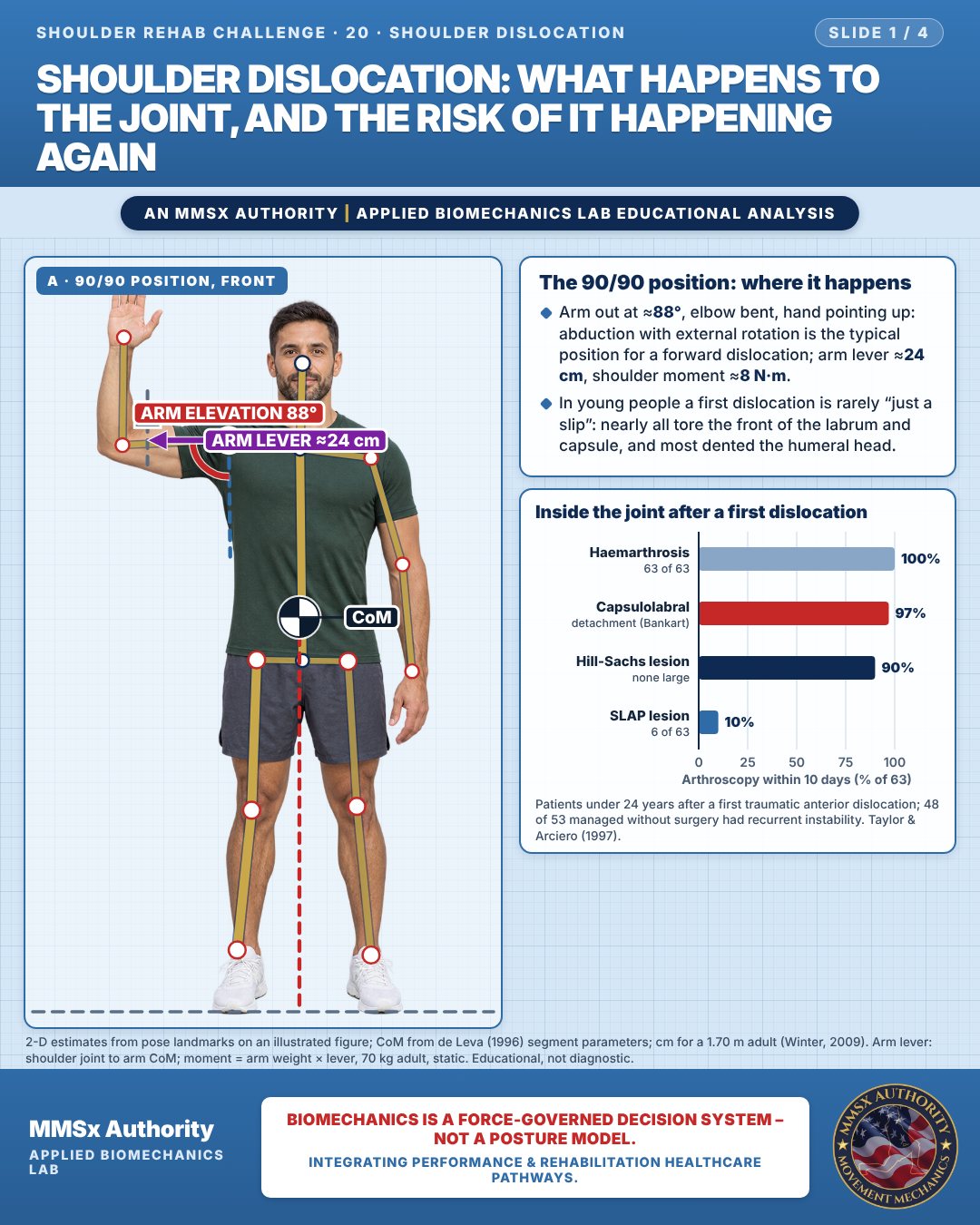
Shoulder dislocation: what happens to the joint, and the risk of it happening again
A traumatic anterior shoulder dislocation is complete displacement of the humeral head out of the glenoid, usually forward and down.
 21
Shoulder instability: when the shoulder feels loose or slips
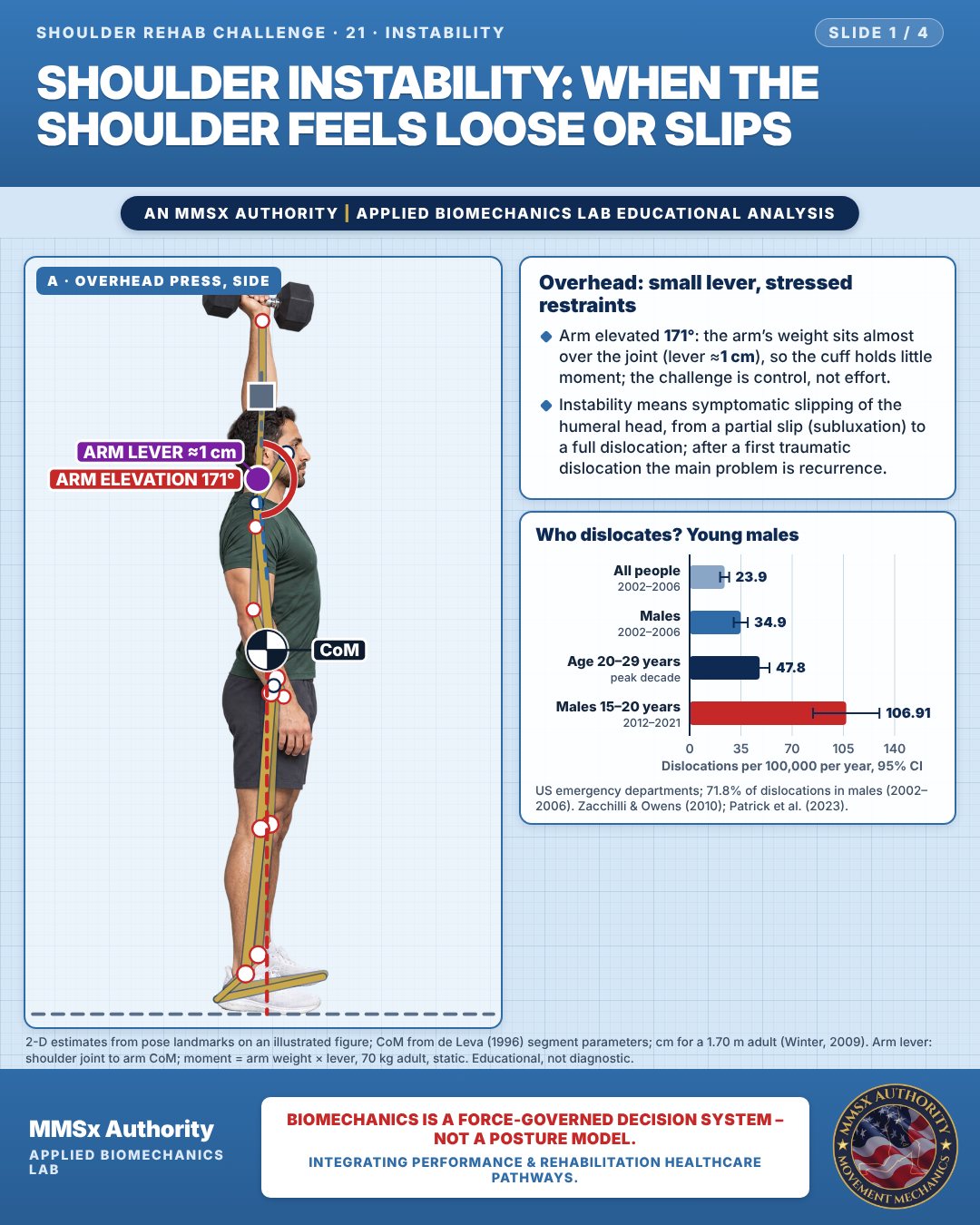
Glenohumeral instability is symptomatic excessive translation of the humeral head on the glenoid, ranging from subluxation (partial slip, spontaneous…
 22
Hypermobile shoulders: building control without forcing range
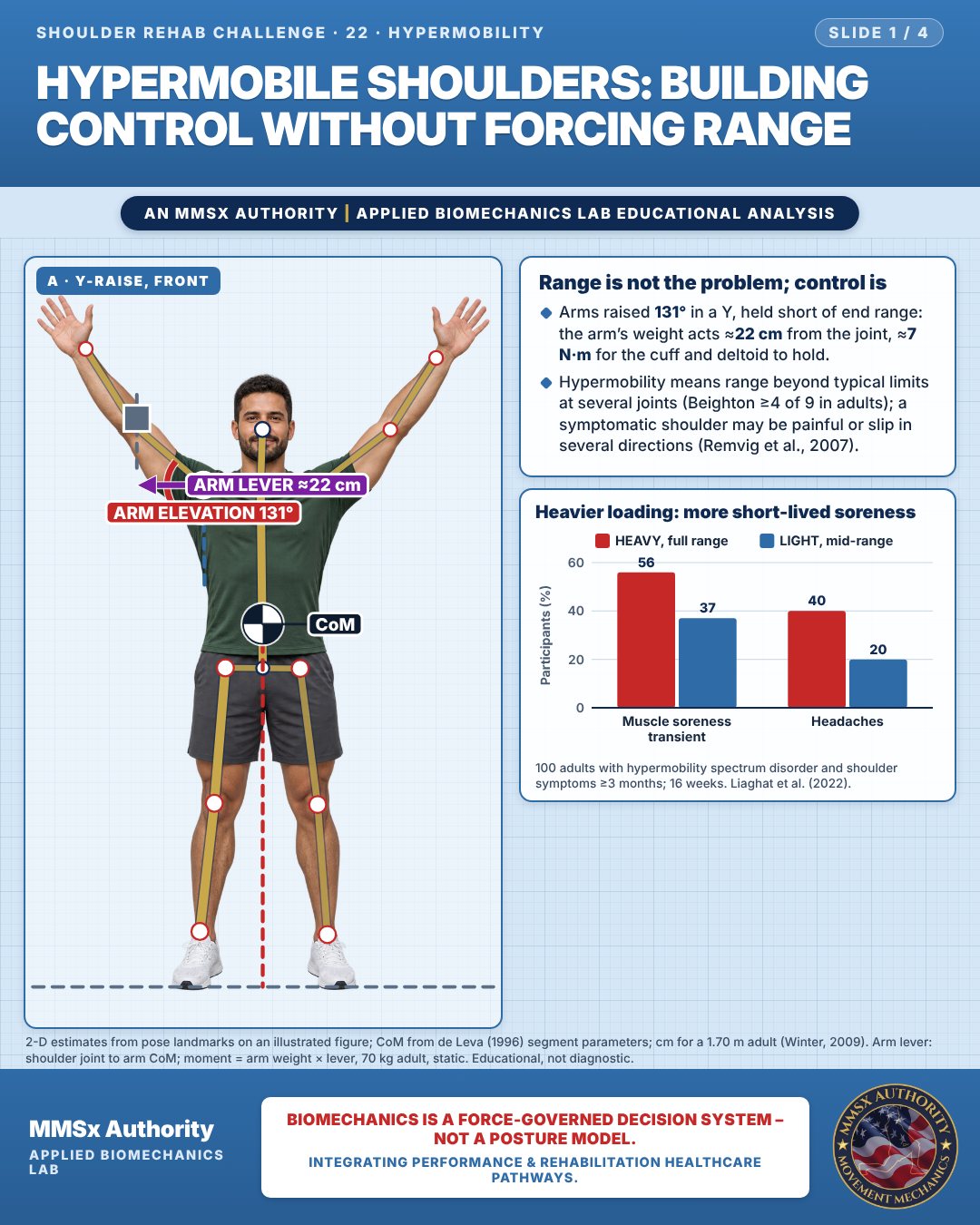
Generalised joint hypermobility describes joint range beyond typical limits at multiple joints (commonly screened with the Beighton method, ≥4 of 9…
 23
AC joint pain: pain on top of the shoulder
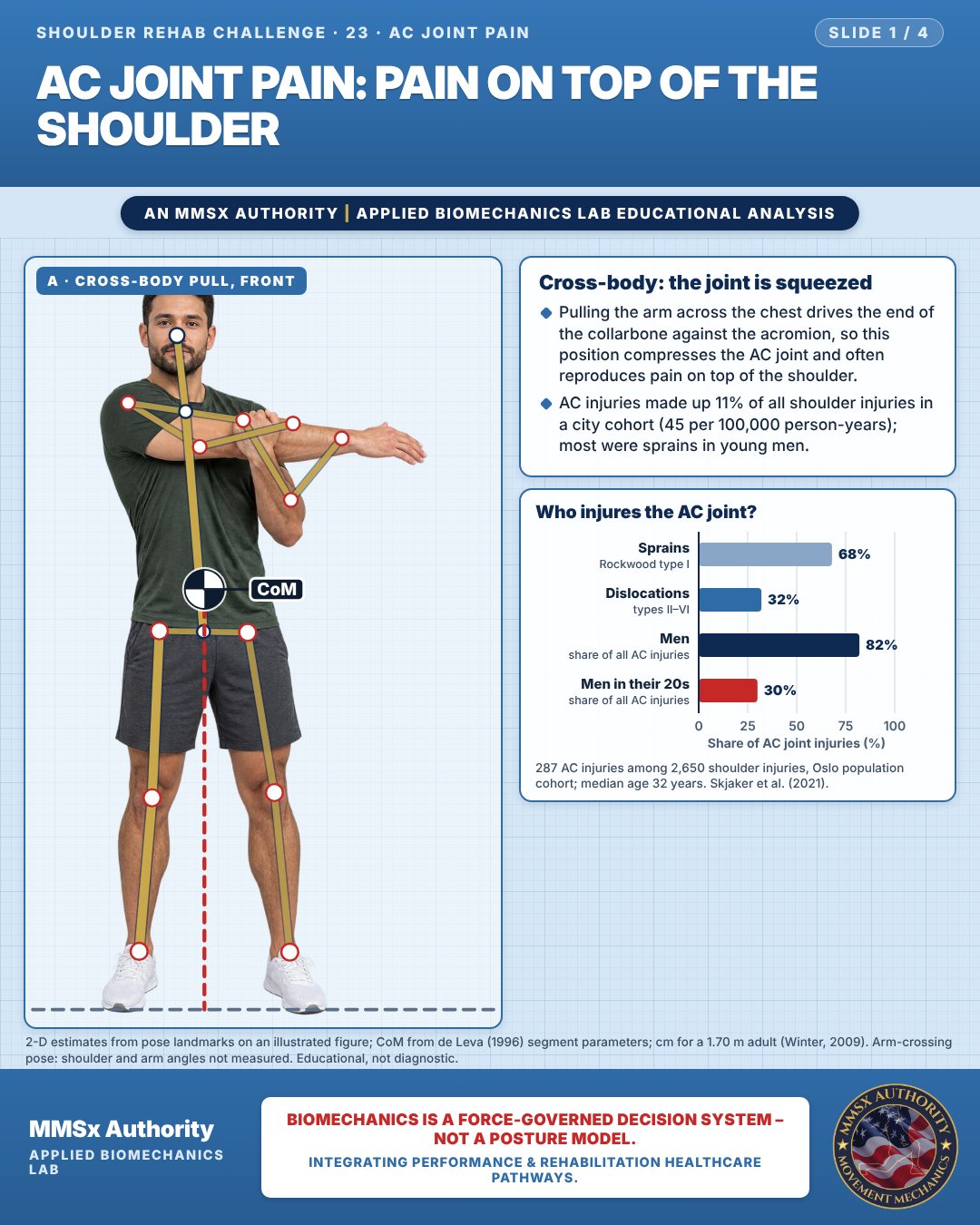
Acromioclavicular (AC) joint pain is pain arising from the joint between the lateral clavicle and the acromion, usually felt on top of the shoulder.
 24
Shoulder pain or neck pain? Why the source of arm pain matters
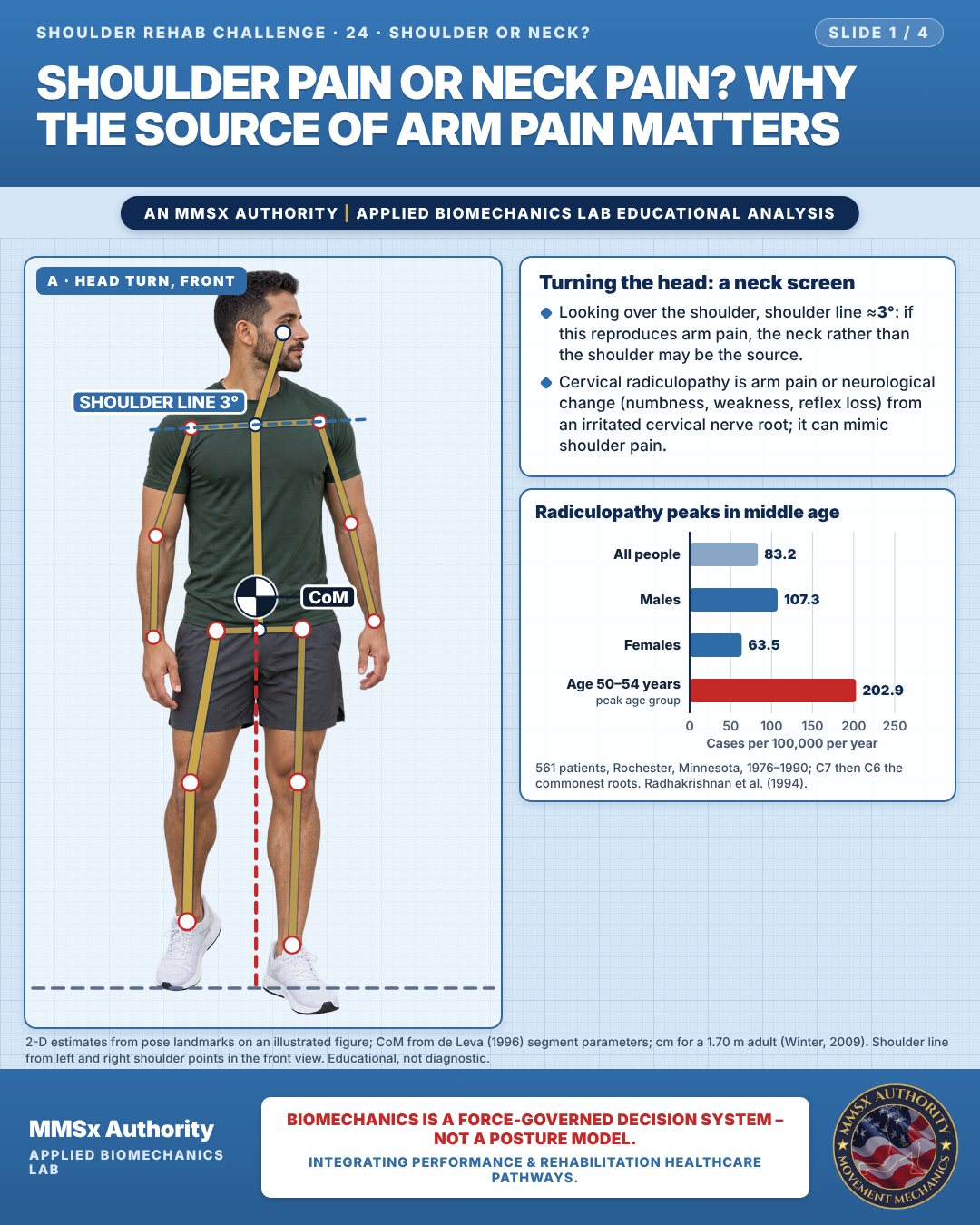
Cervical radiculopathy is arm pain and/or neurological change (sensory loss, weakness, reflex change) in a nerve-root distribution caused by…
 25
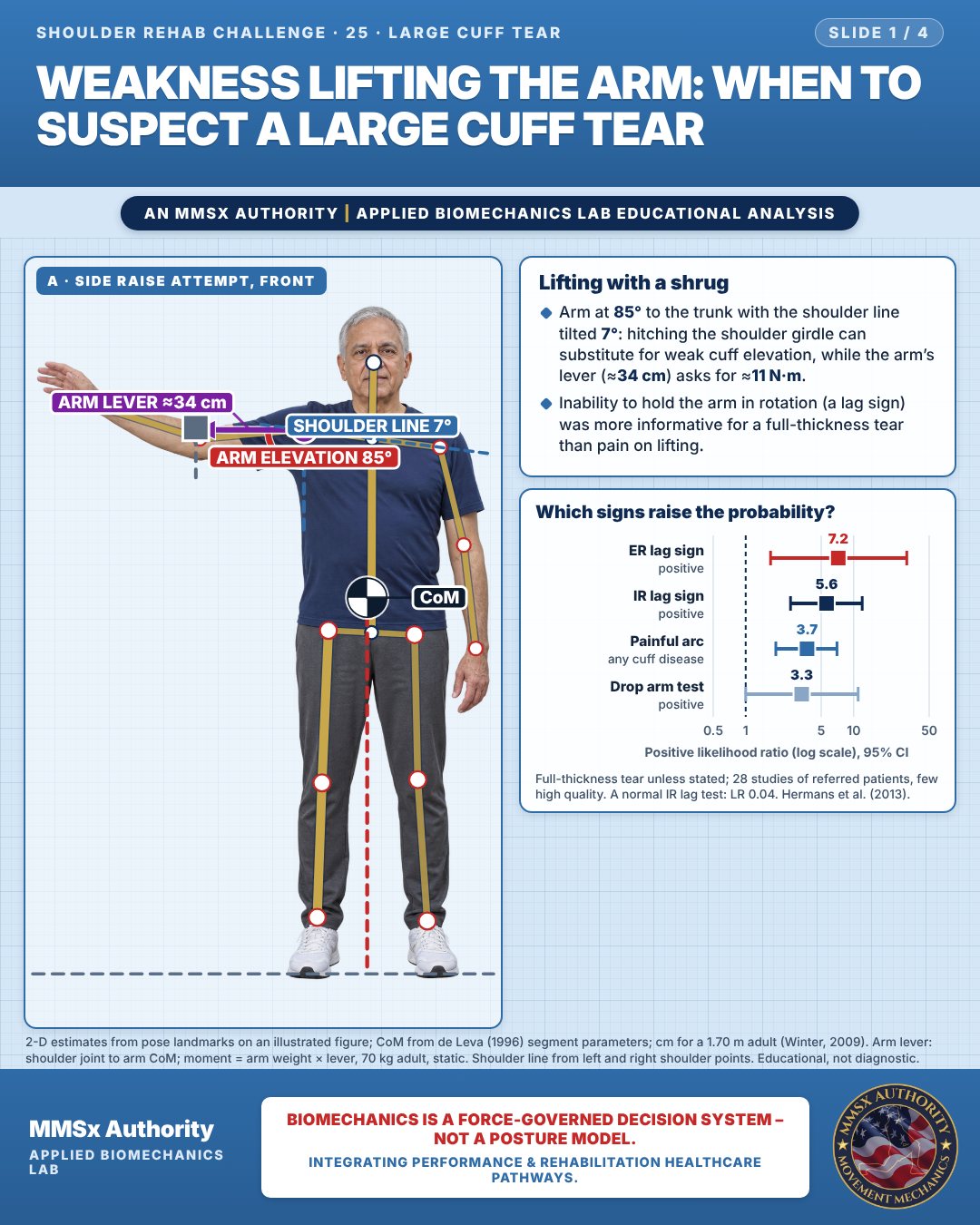
Weakness lifting the arm: when to suspect a large cuff tear
A large or massive rotator cuff tear is a full-thickness tear involving more than one tendon or a large retracted defect.
 26
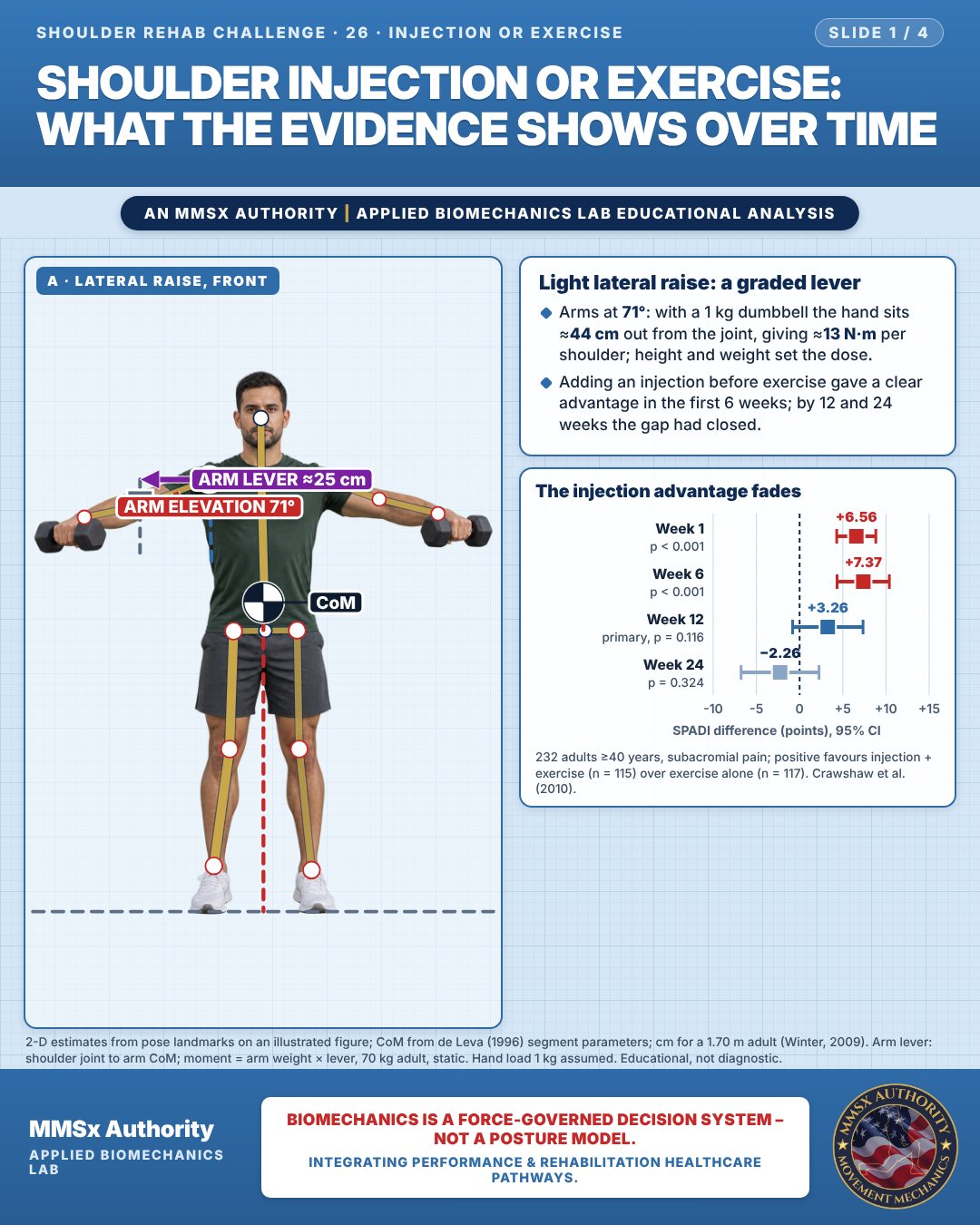
Shoulder injection or exercise: what the evidence shows over time
Subacromial corticosteroid injection delivers an anti-inflammatory steroid (usually with local anaesthetic) into the subacromial space for rotator…
 27
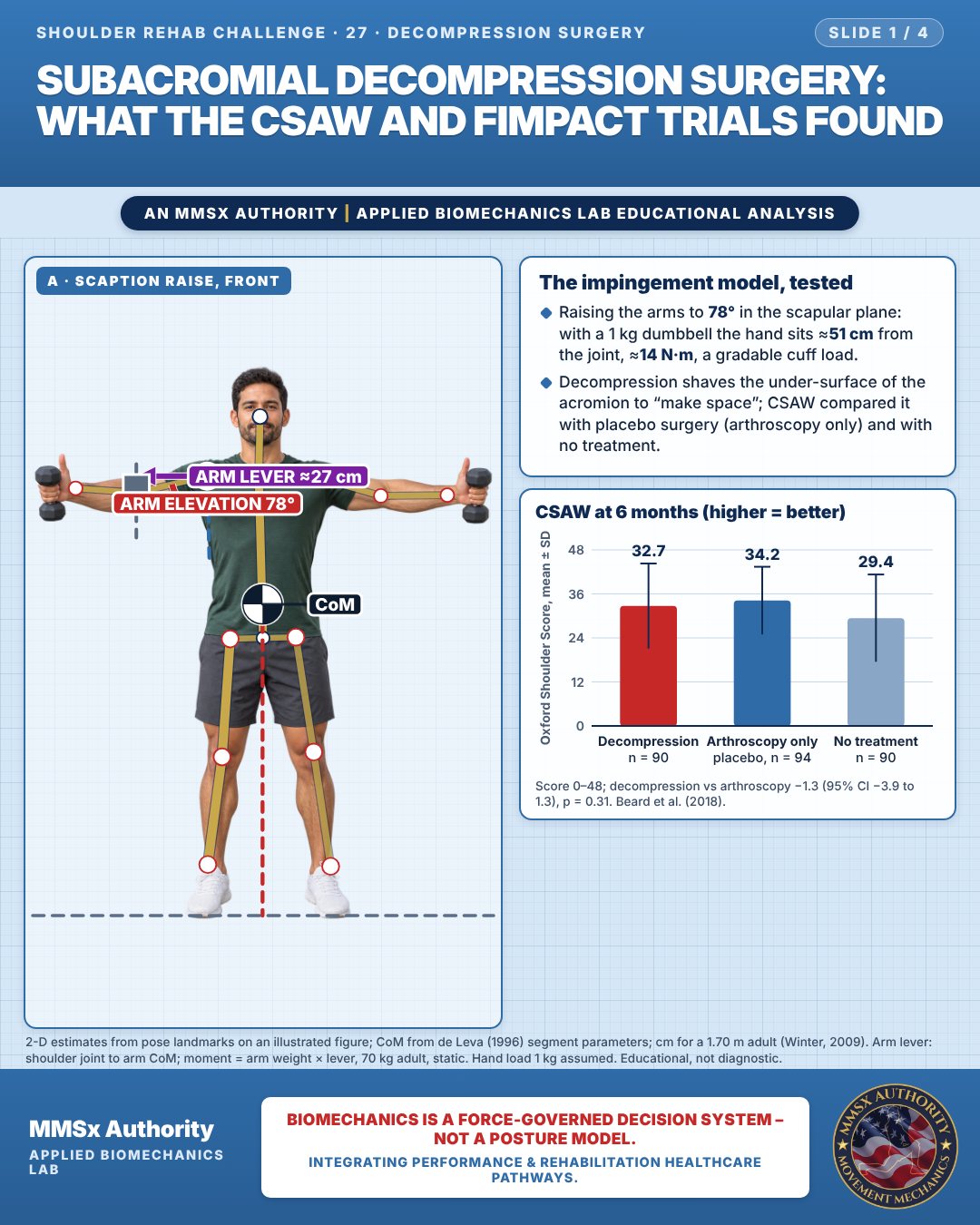
Subacromial decompression surgery: what the CSAW and FIMPACT trials found
Arthroscopic subacromial decompression (ASD) removes bone and soft tissue from the under-surface of the acromion to "make space" for the rotator cuff.
 28
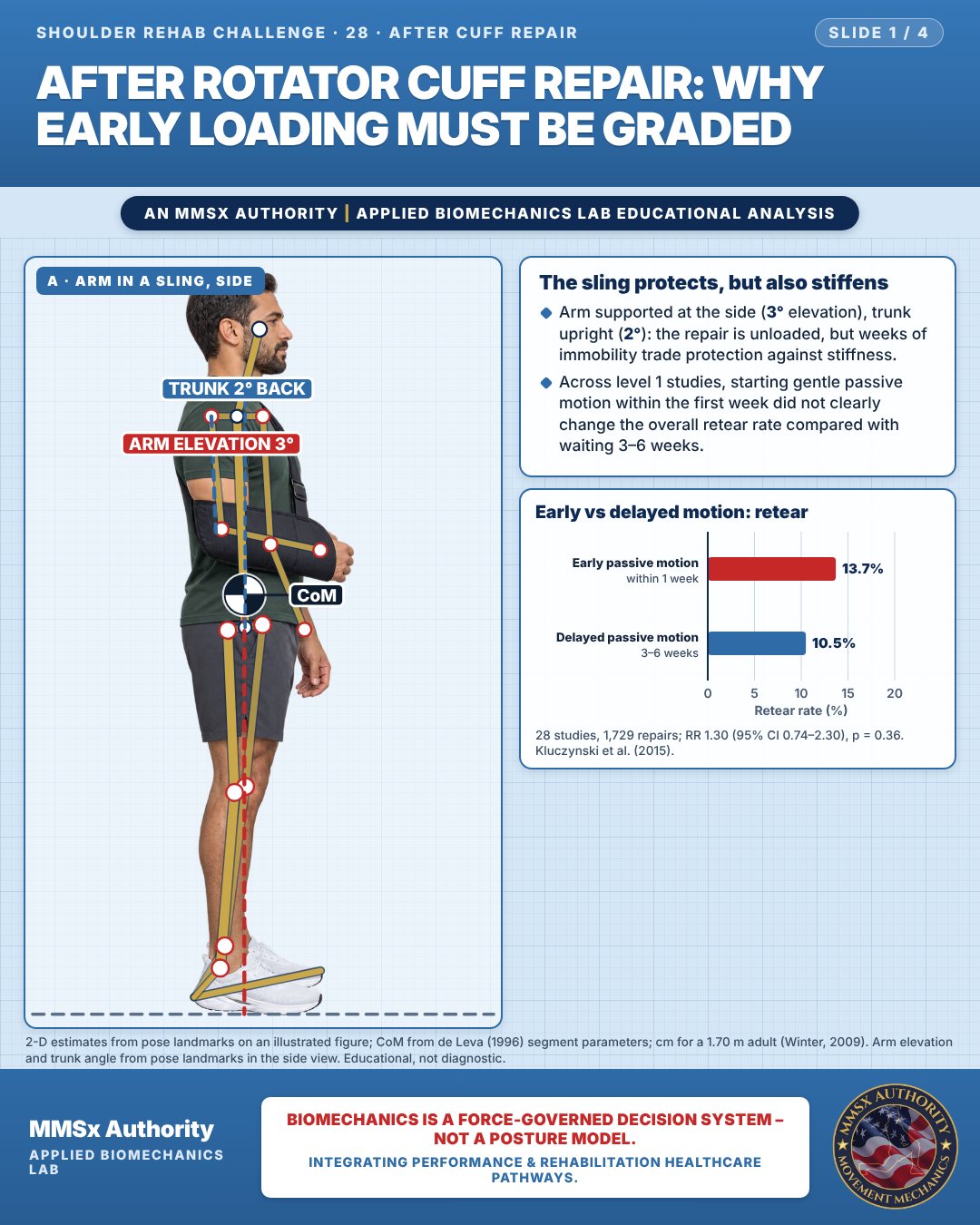
After rotator cuff repair: why early loading must be graded
Rehabilitation after rotator cuff repair balances protecting the healing tendon–bone repair against stiffness.
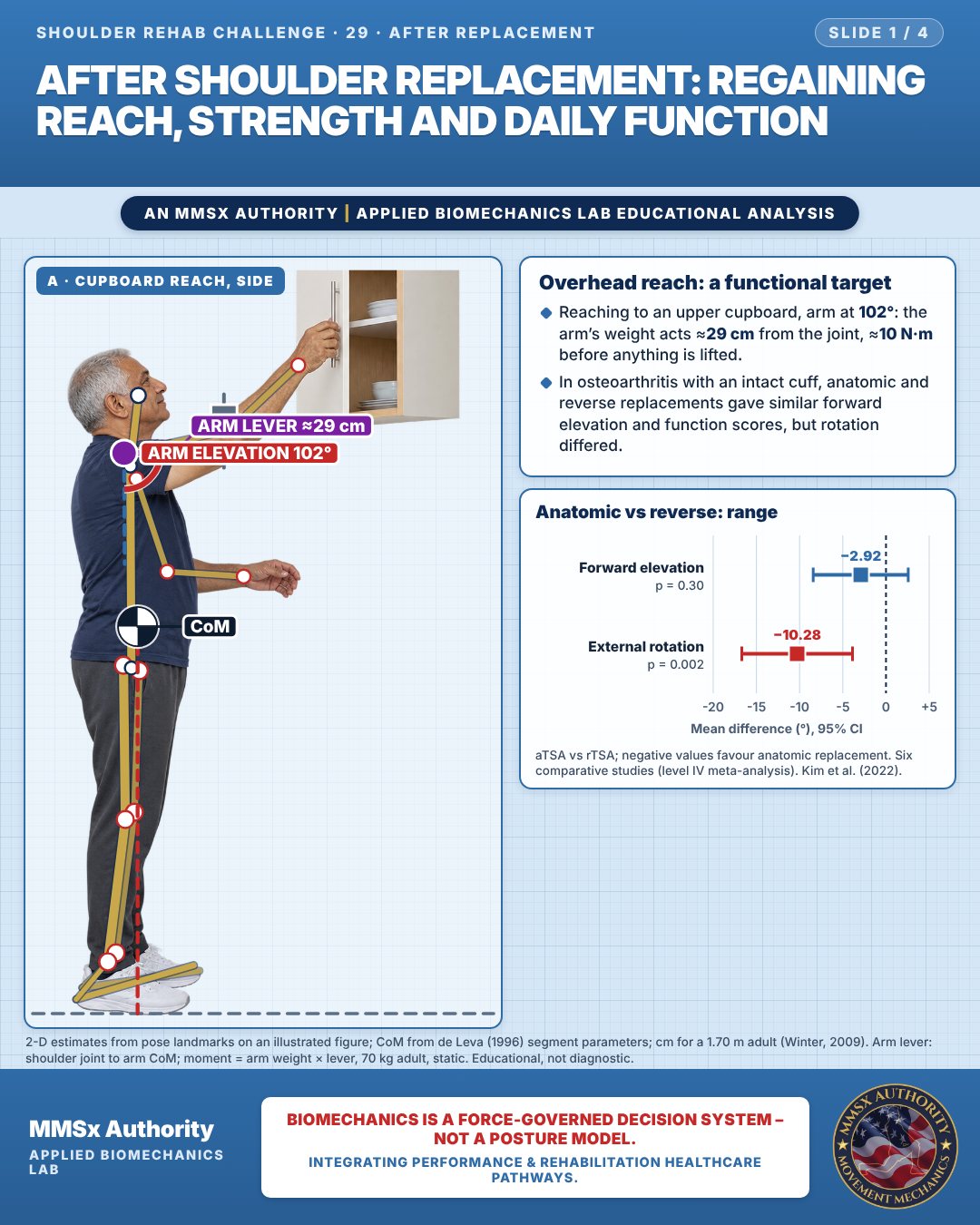 29
After shoulder replacement: regaining reach, strength and daily function
Shoulder replacement (arthroplasty) replaces the damaged joint surfaces: anatomic total shoulder arthroplasty (aTSA) recreates the native…
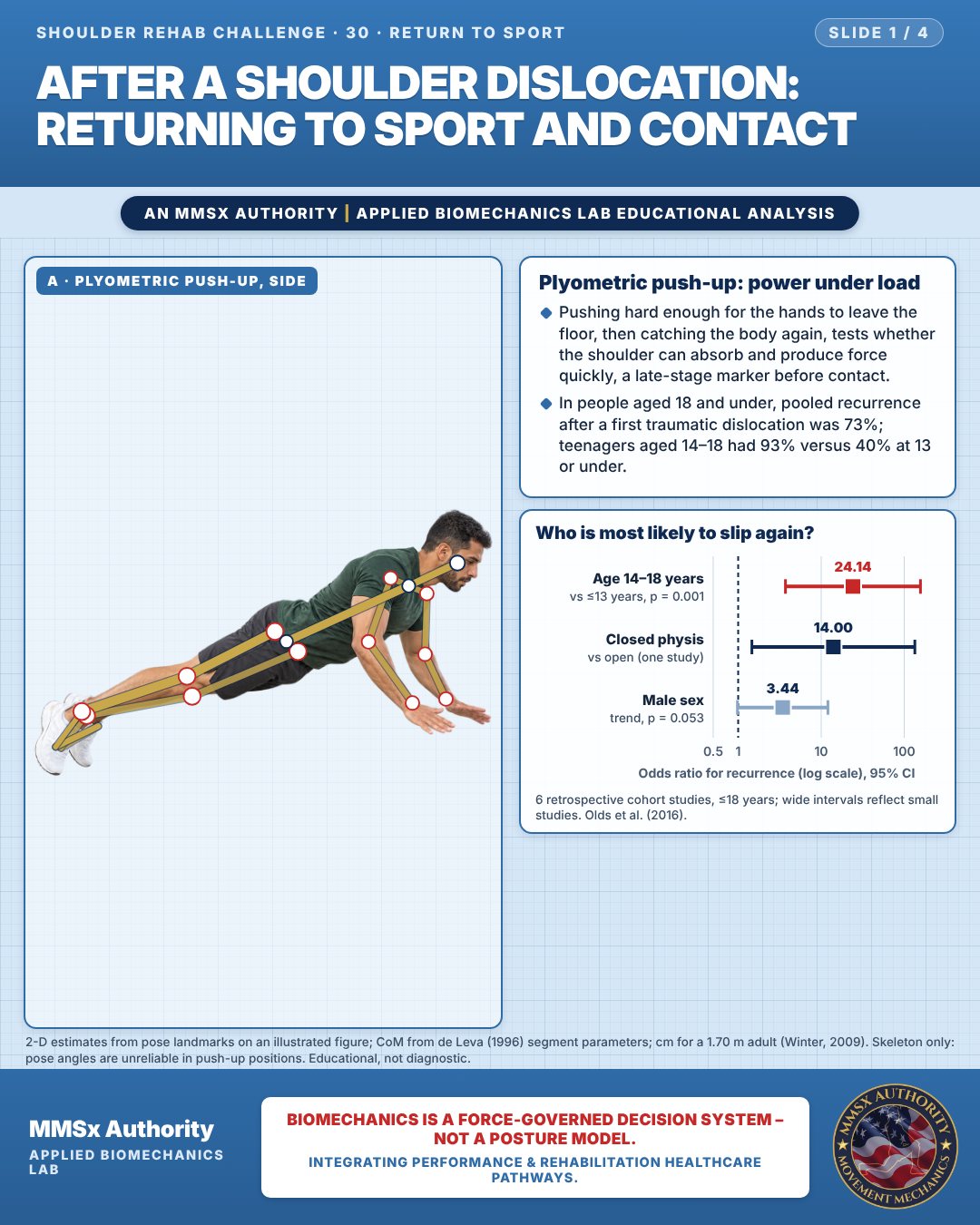 30
After a shoulder dislocation: returning to sport and contact
Return to sport after a traumatic anterior shoulder dislocation is a staged, criterion-based decision covering restored range, strength, power and…
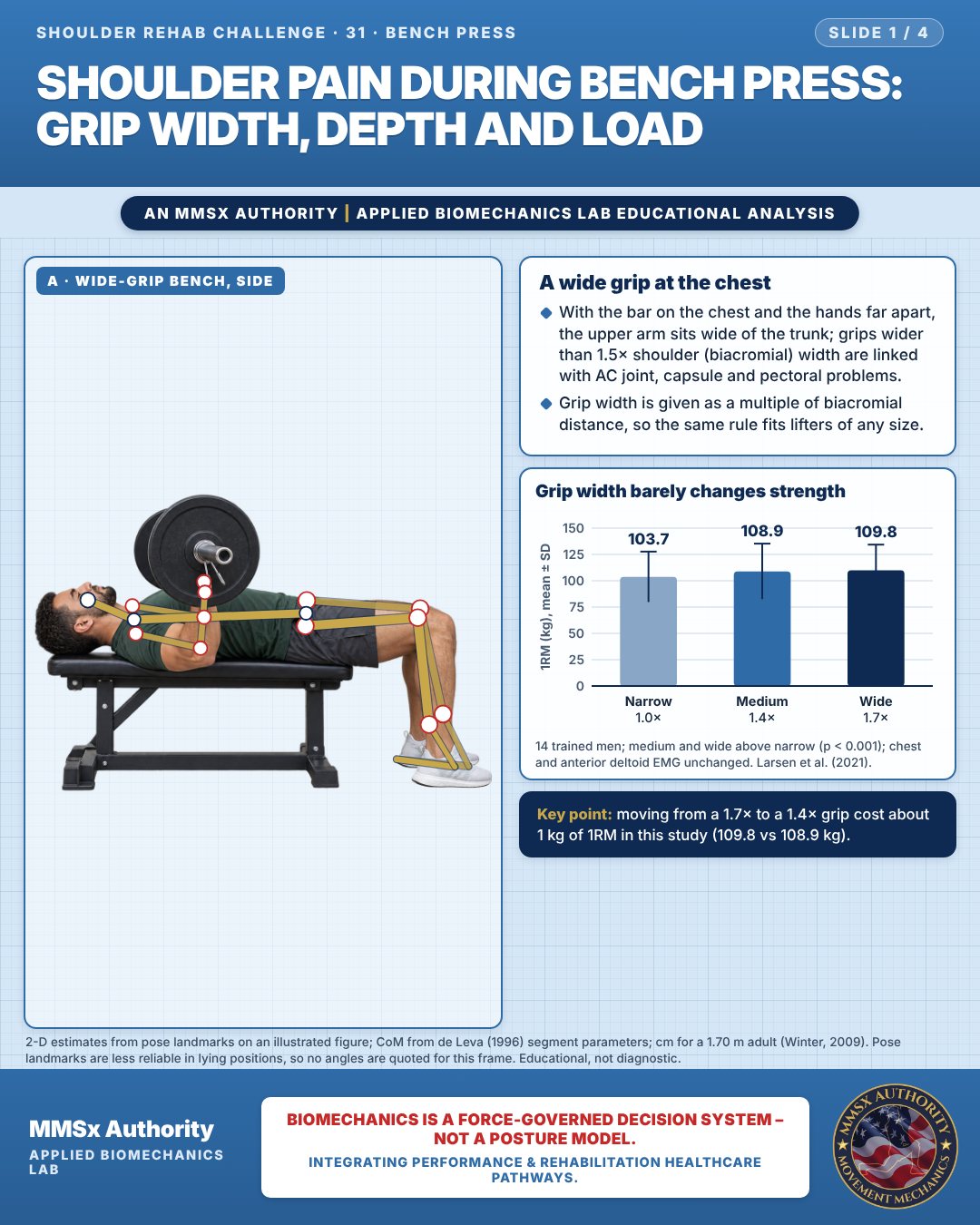 31
Shoulder pain during bench press: grip width, depth and load
Bench-press-related shoulder pain is pain at the front, top or deep in the shoulder that is brought on or made worse by horizontal pressing.
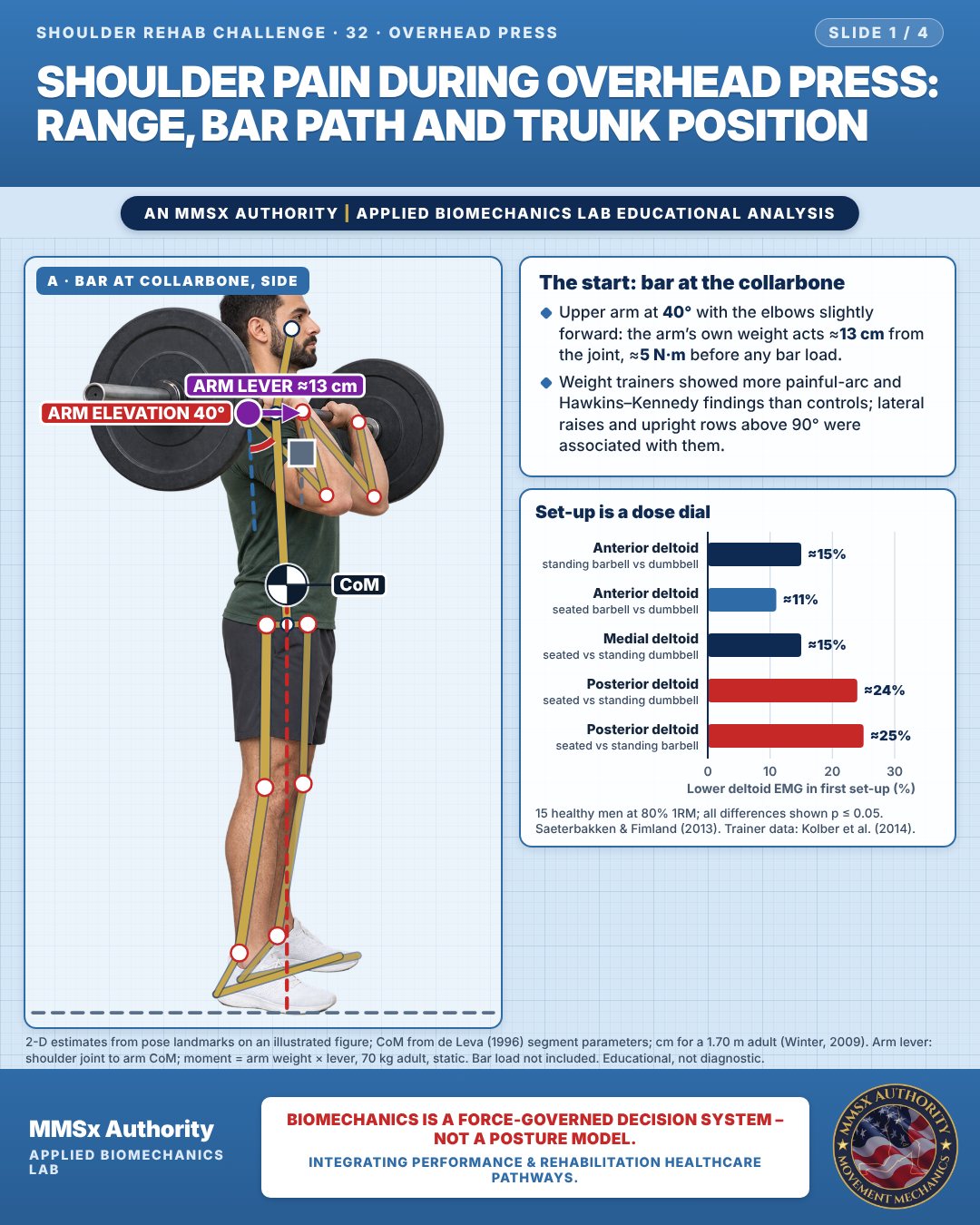 32
Shoulder pain during overhead press: range, bar path and trunk position
Overhead-press-related shoulder pain is pain felt during or after pressing a load above the head.
 33
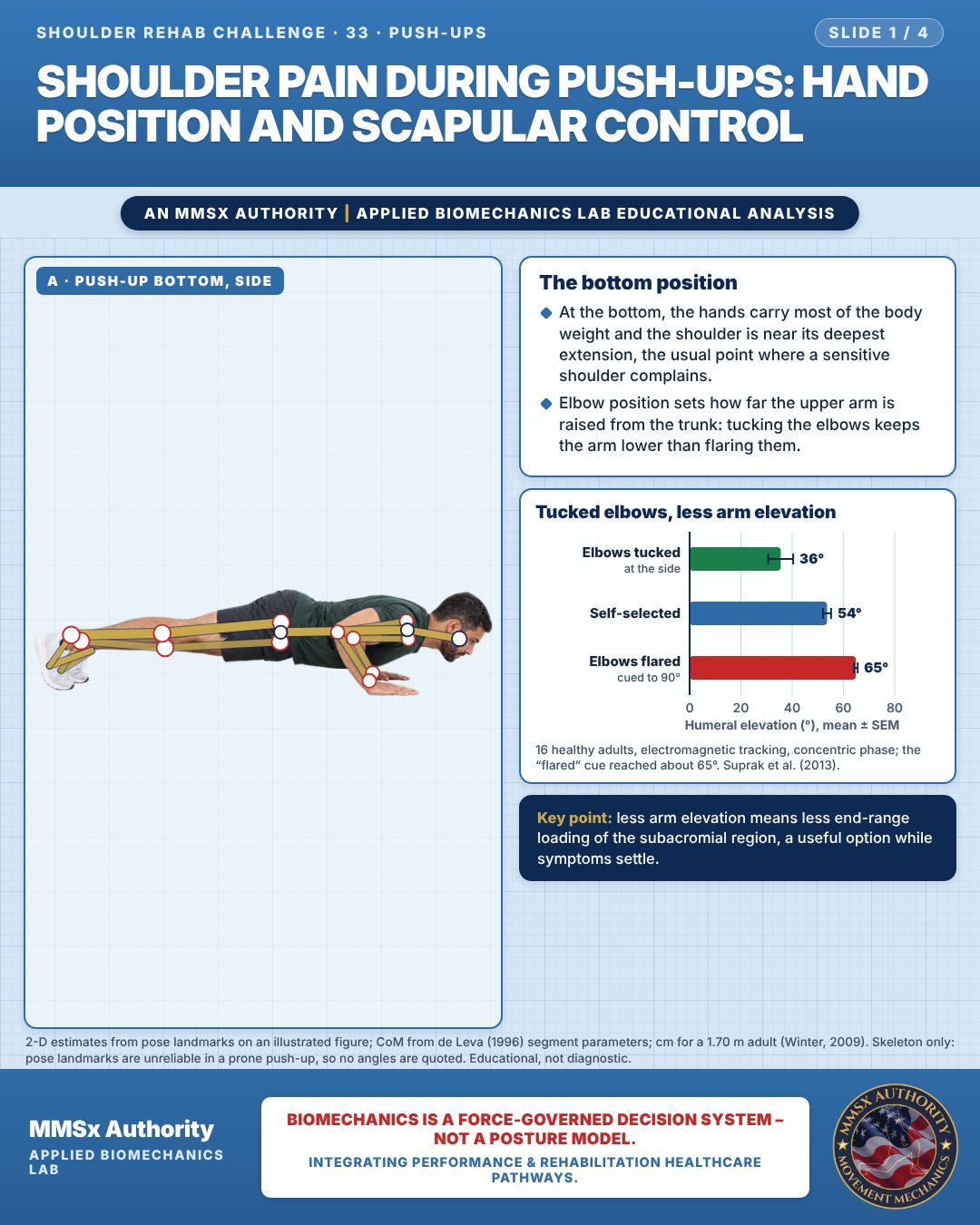
Shoulder pain during push-ups: hand position and scapular control
Push-up-related shoulder pain is pain at the front or top of the shoulder during the lowering or pressing phase of a push-up.
 34
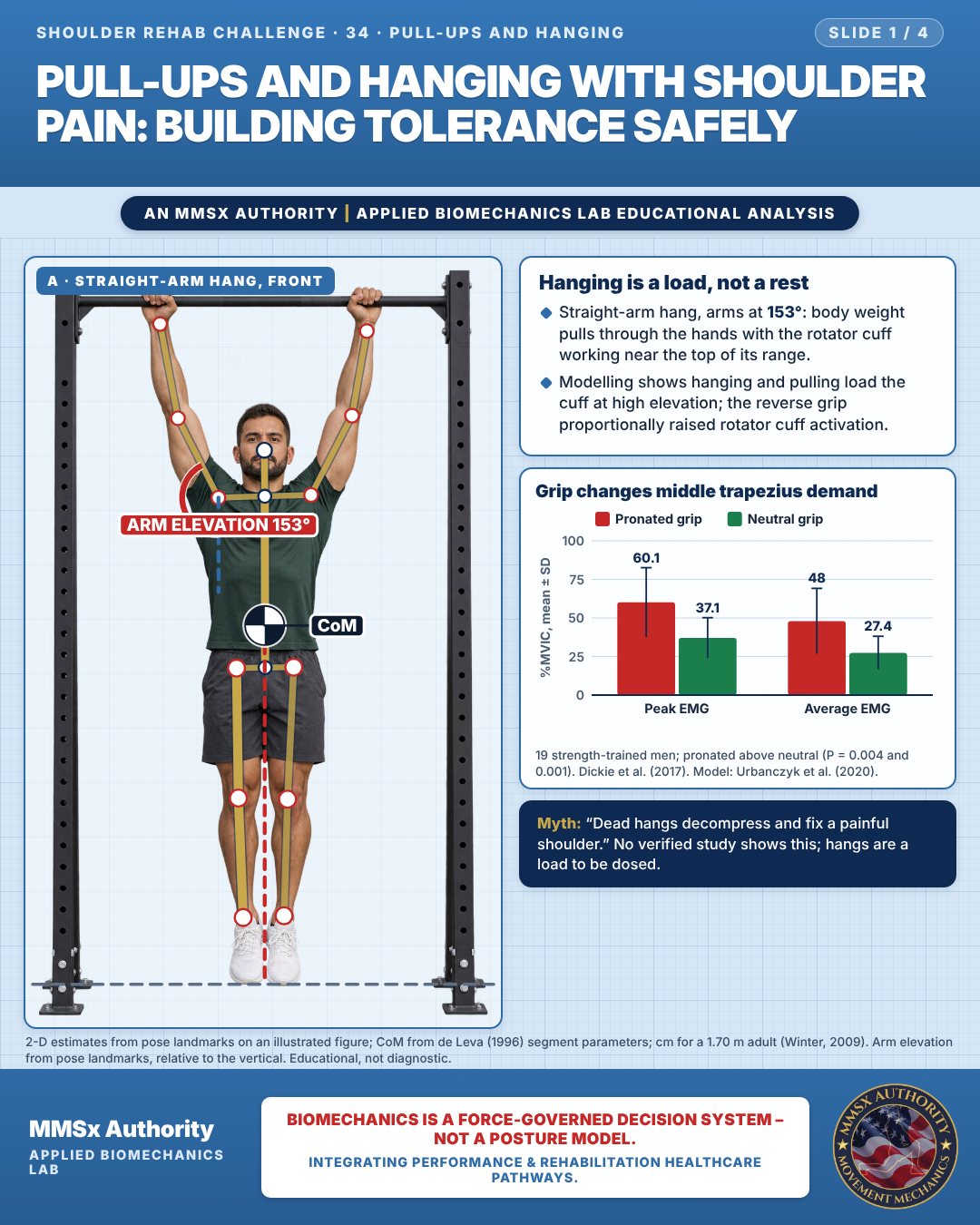
Pull-ups and hanging with shoulder pain: building tolerance safely
Pull-up- or hang-related shoulder pain is pain during hanging, pulling or the lowering phase.
 35
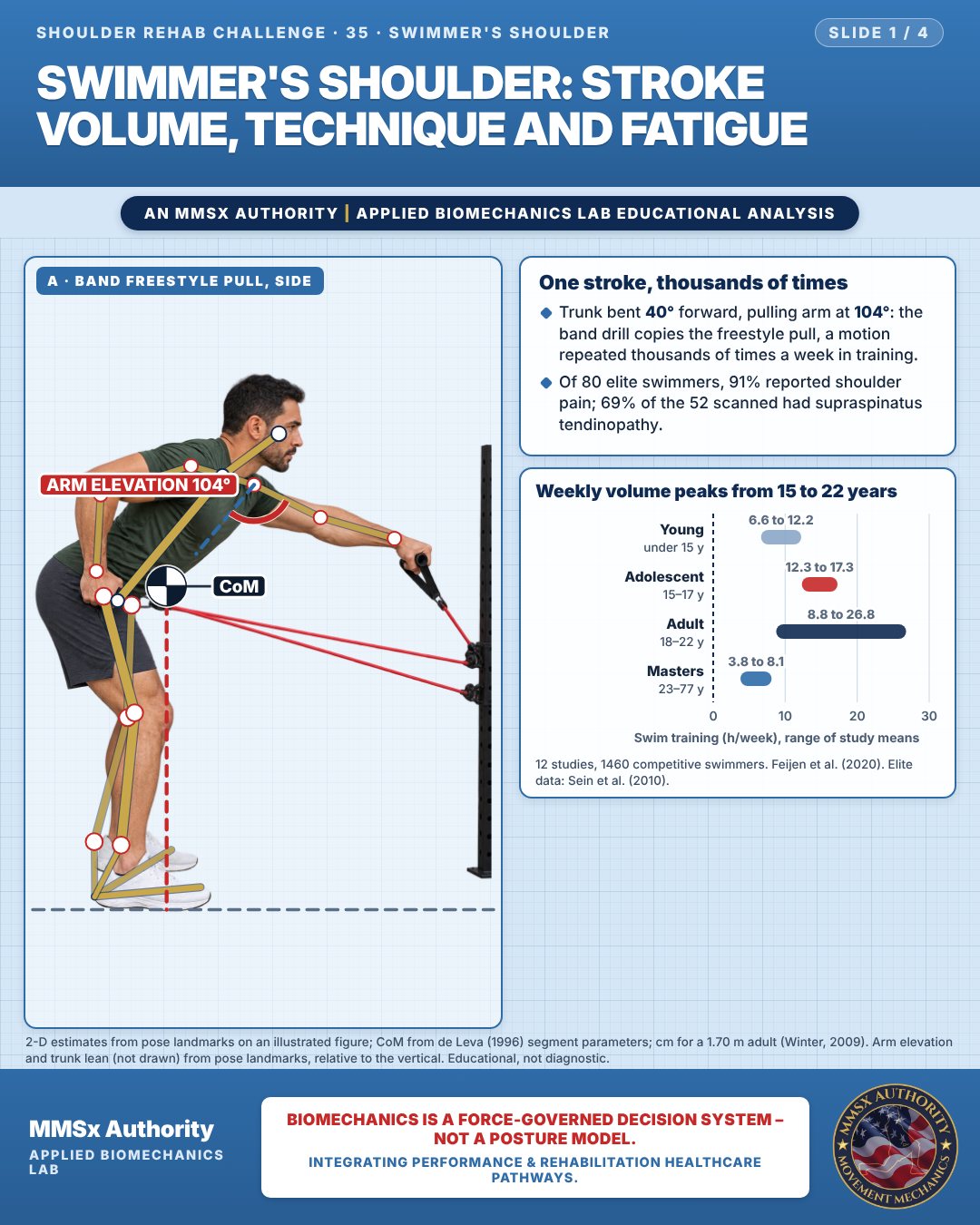
Swimmer's shoulder: stroke volume, technique and fatigue
"Swimmer's shoulder" is a descriptive term, not a single diagnosis. Movement analysis, verified research data and a decision pathway.
 36
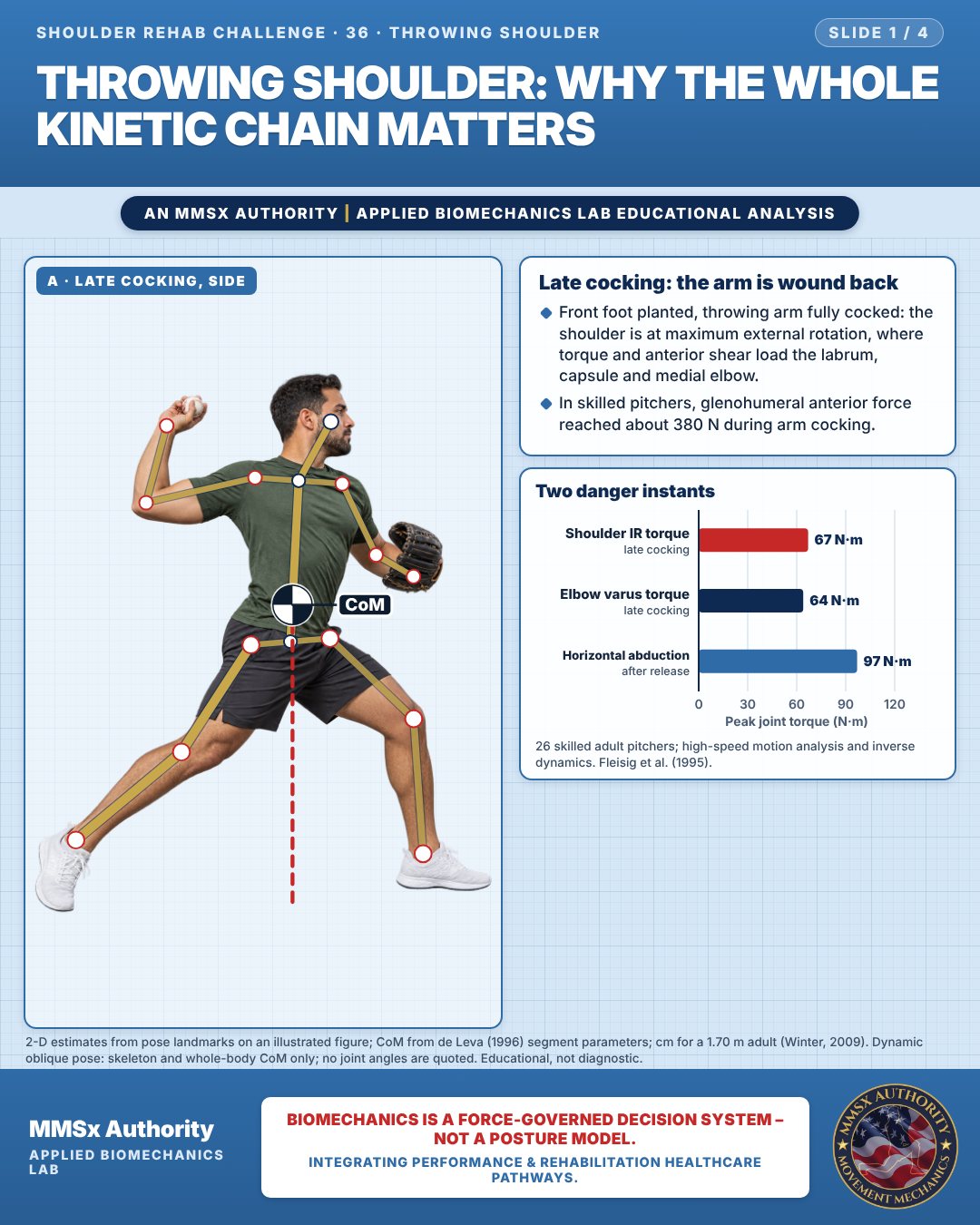
Throwing shoulder: why the whole kinetic chain matters
The throwing shoulder is a term for pain or injury in overhead throwers. Movement analysis, verified research data and a decision pathway.
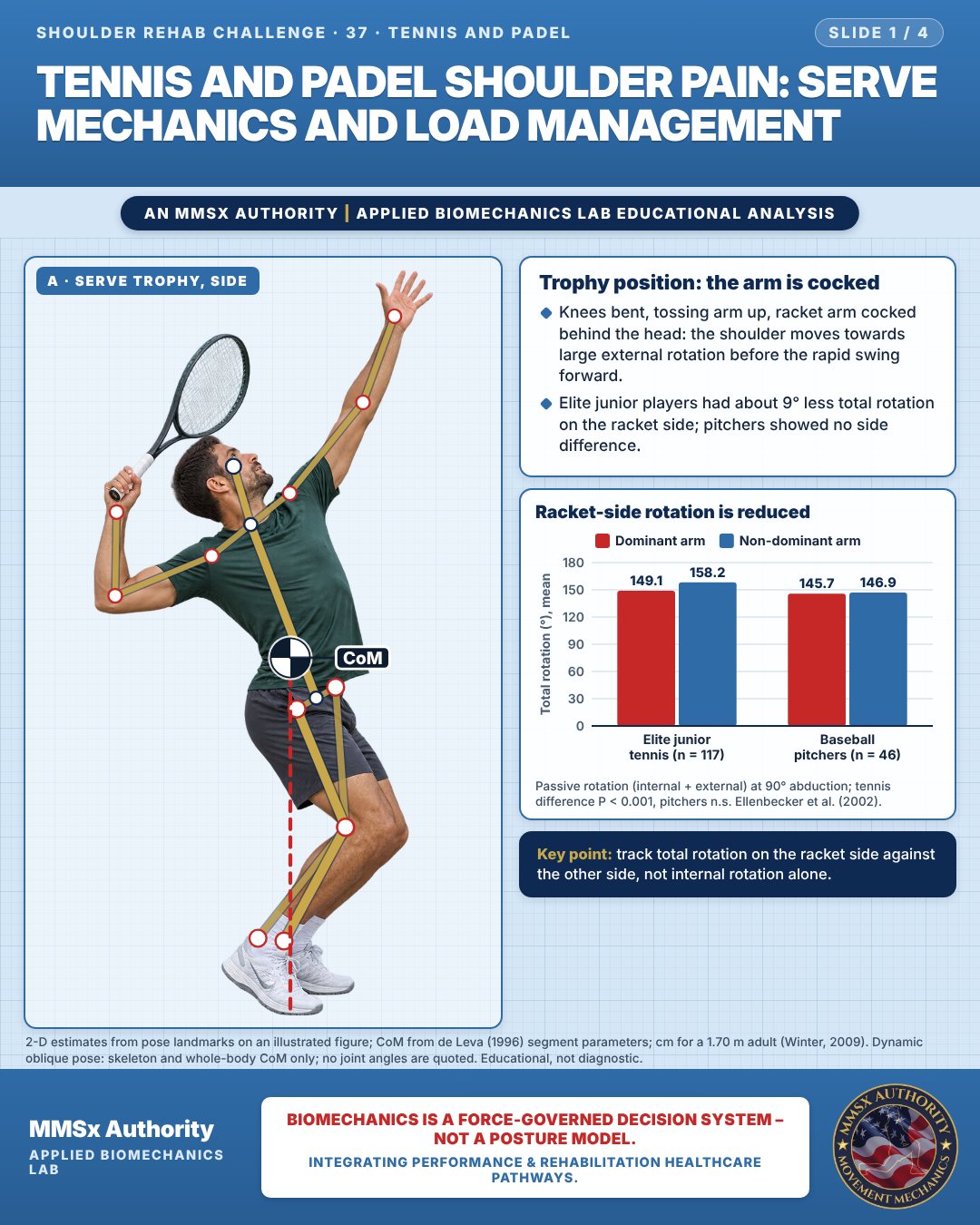 37
Tennis and padel shoulder pain: serve mechanics and load management
Tennis and padel shoulder pain is overuse pain in the racket-arm shoulder. Movement analysis, verified research data and a decision pathway.
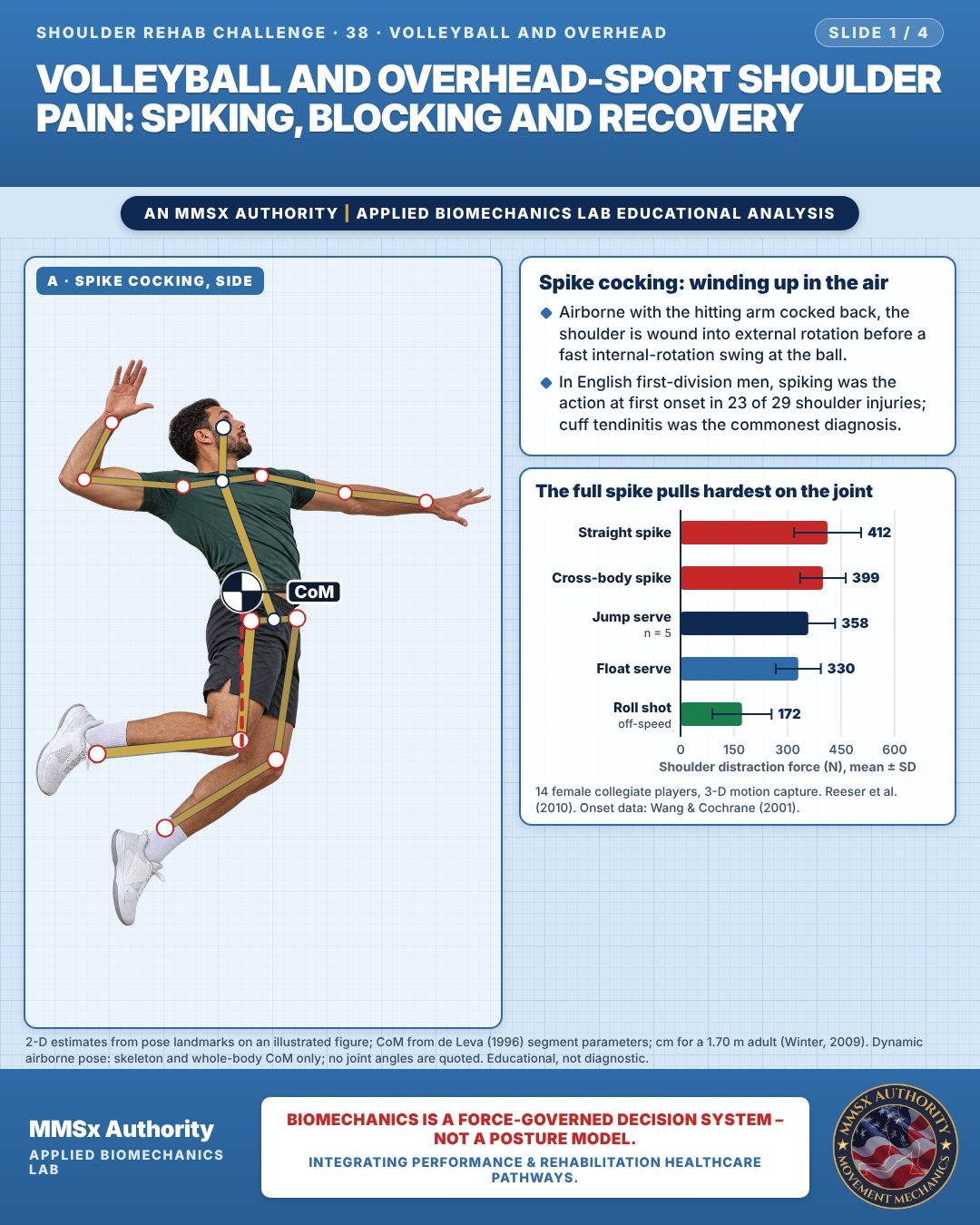 38
Volleyball and overhead-sport shoulder pain: spiking, blocking and recovery
Volleyball shoulder pain is mostly overuse pain in the hitting shoulder, usually rotator cuff tendinopathy.
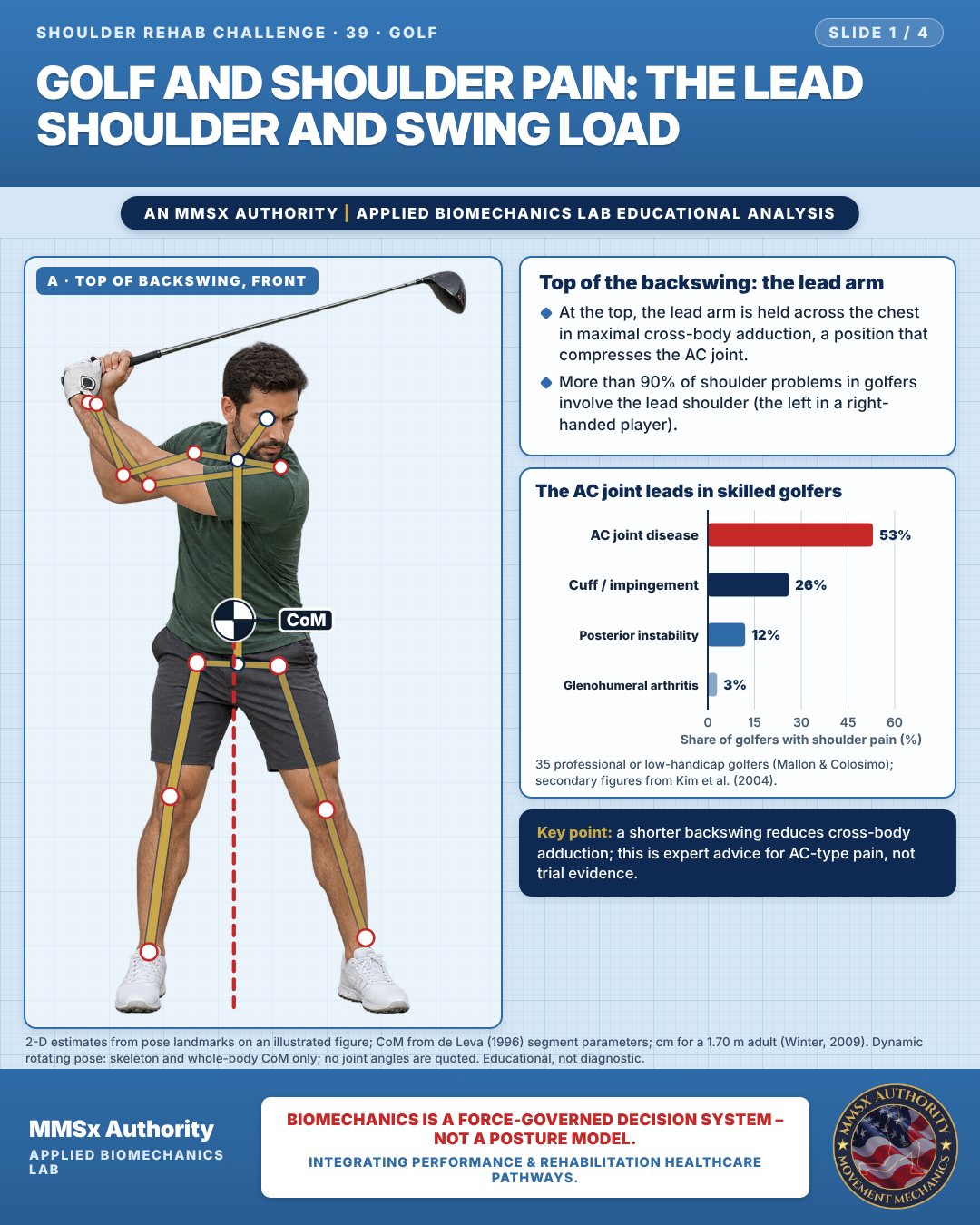 39
Golf and shoulder pain: the lead shoulder and swing load
Golfer's shoulder pain most often affects the lead shoulder (the left in a right-handed golfer).
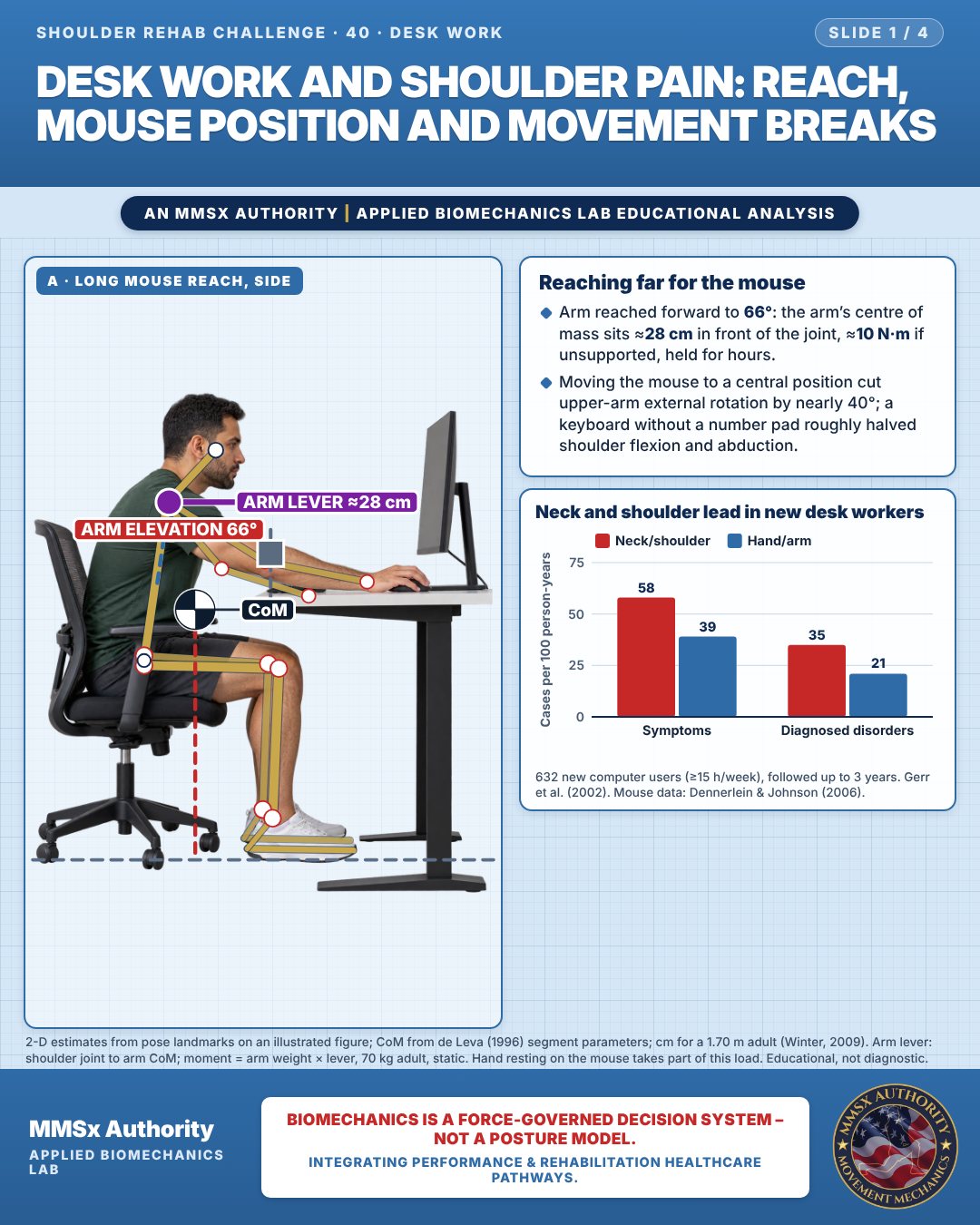 40
Desk work and shoulder pain: reach, mouse position and movement breaks
Desk-related neck–shoulder pain is aching or tension in the upper trapezius and shoulder region in people who work at a computer for long periods.
 41
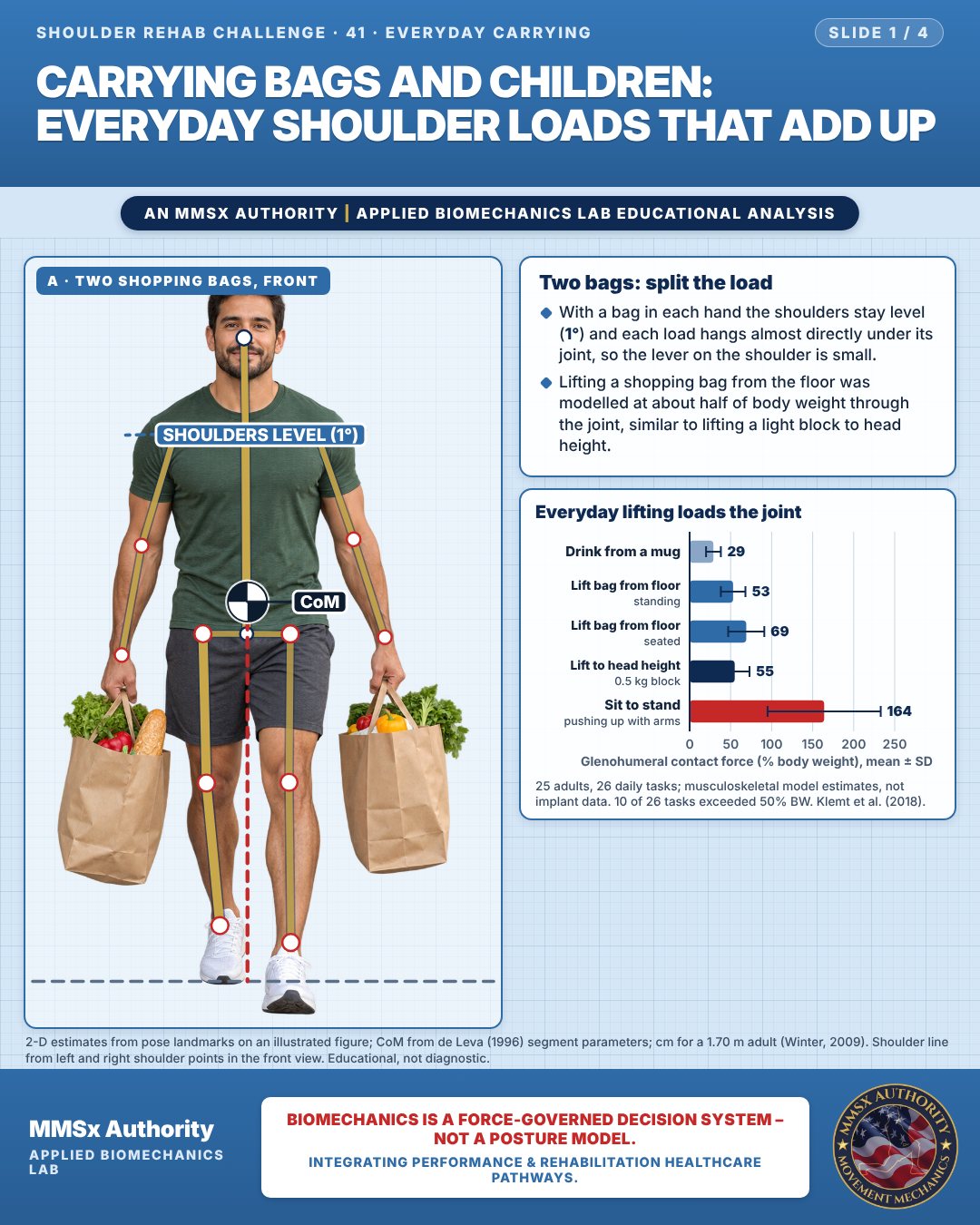
Carrying bags and children: everyday shoulder loads that add up
Everyday carrying and lifting load the glenohumeral joint through compressive and shear contact forces.
 42
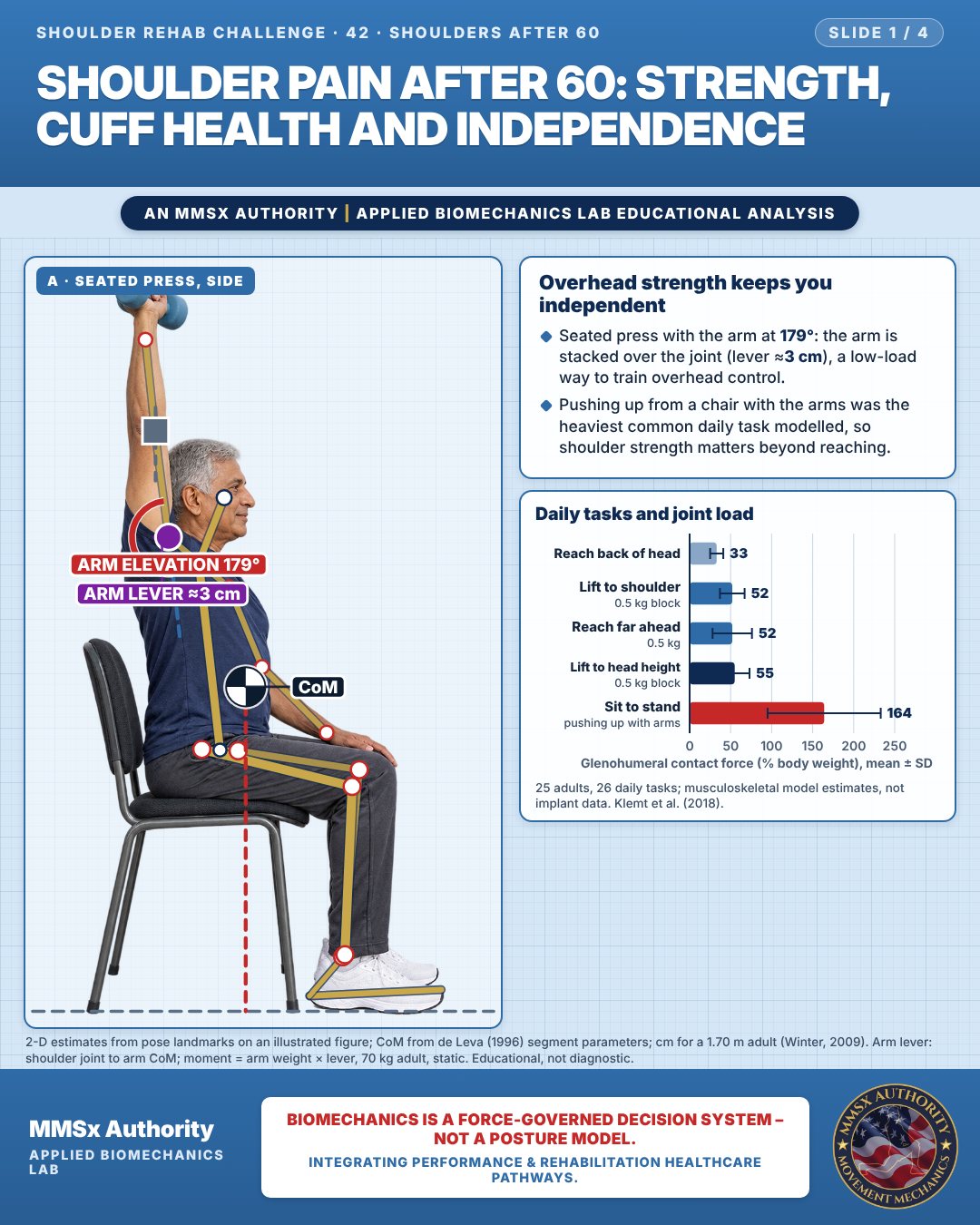
Shoulder pain after 60: strength, cuff health and independence
After about 50 years of age, full-thickness rotator cuff tears become increasingly common, and many cause no symptoms.
 43
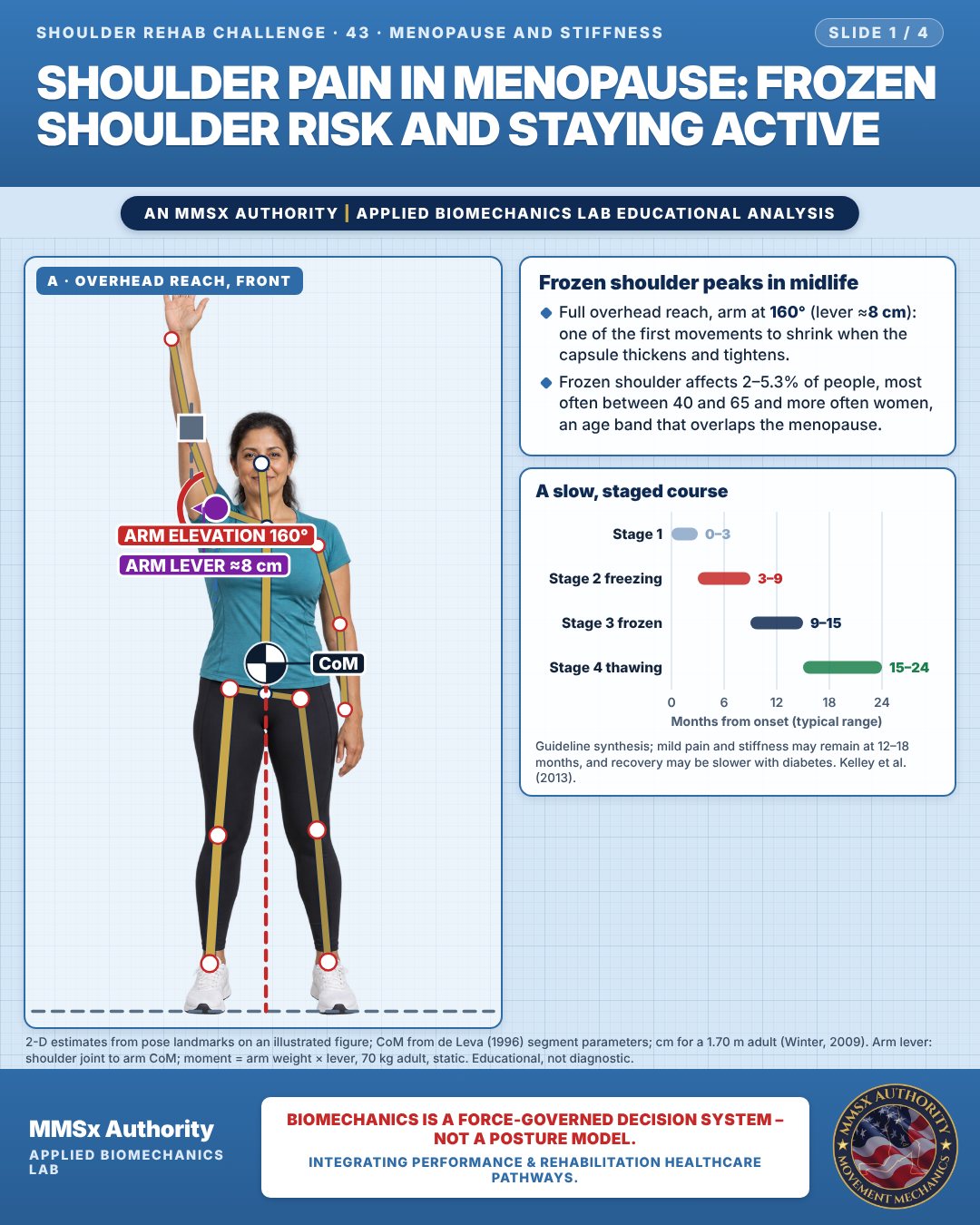
Shoulder pain in menopause: frozen shoulder risk and staying active
Frozen shoulder (adhesive capsulitis) is a painful, progressive loss of both active and passive glenohumeral movement, especially external rotation,…
 44
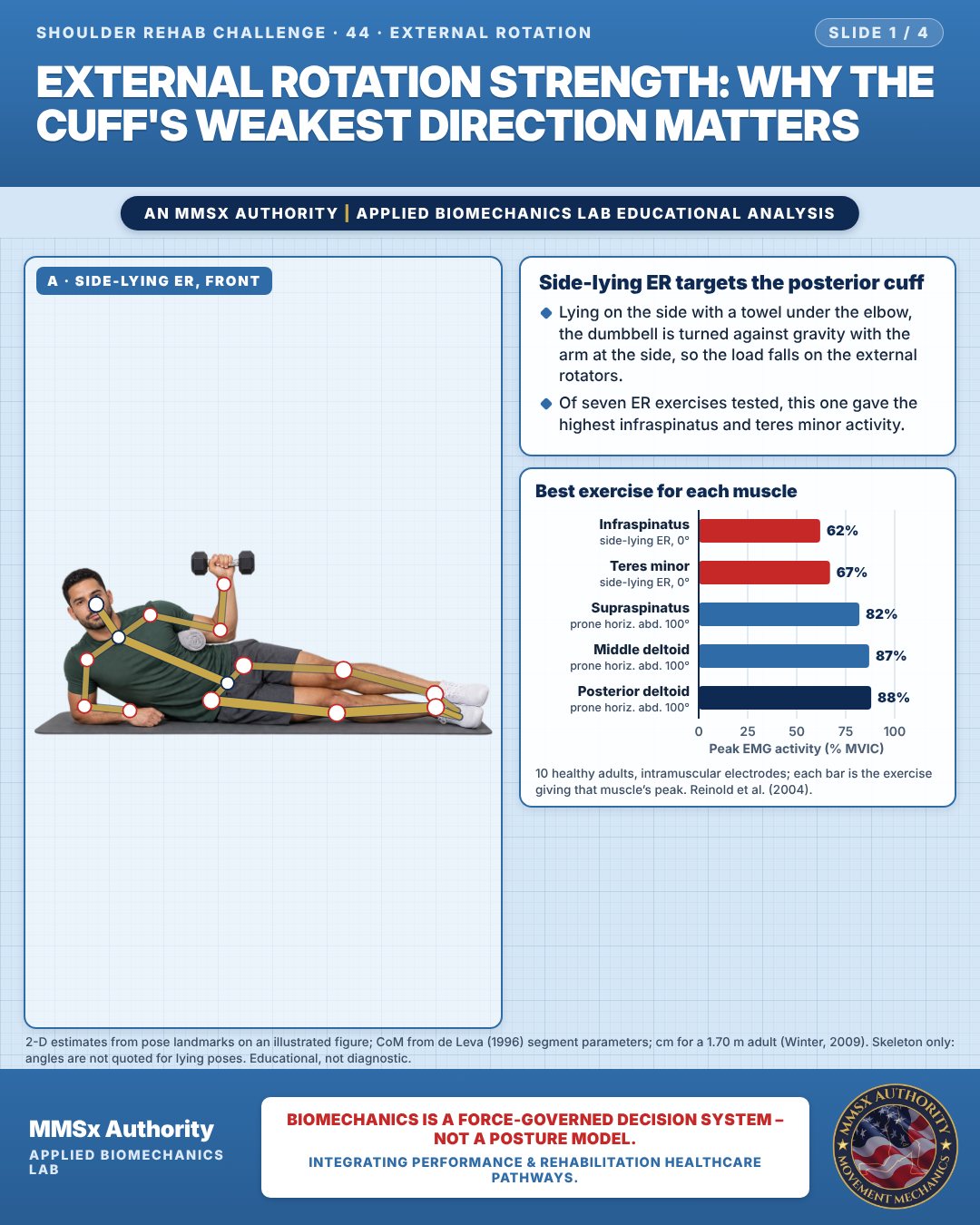
External rotation strength: why the cuff's weakest direction matters
External rotation (ER) strength is the torque the posterior rotator cuff (chiefly infraspinatus and teres minor, with posterior deltoid assistance)…
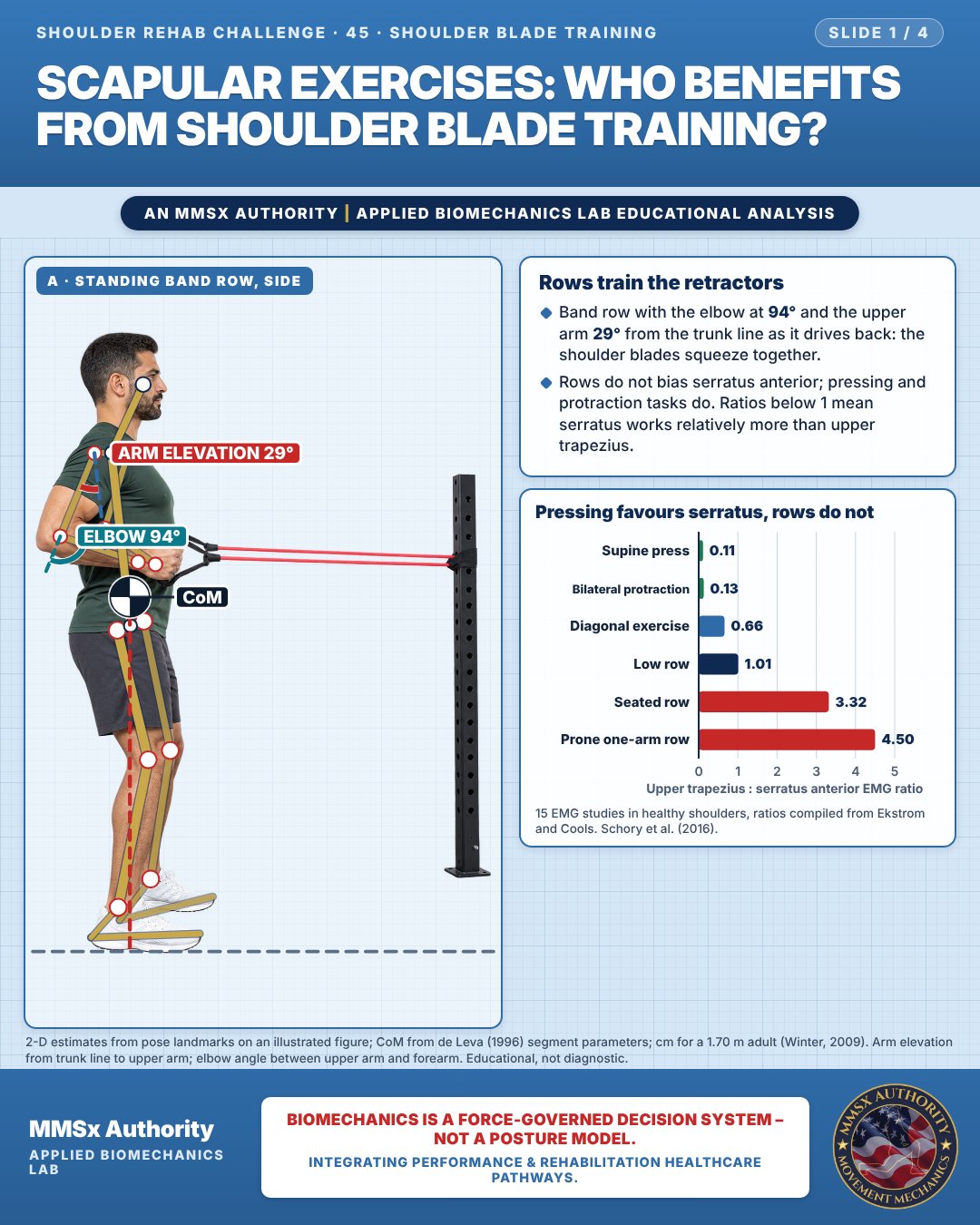 45
Scapular exercises: who benefits from shoulder blade training?
Scapular-focused exercise aims to improve strength, endurance and control of the muscles that position and rotate the shoulder blade (trapezius,…
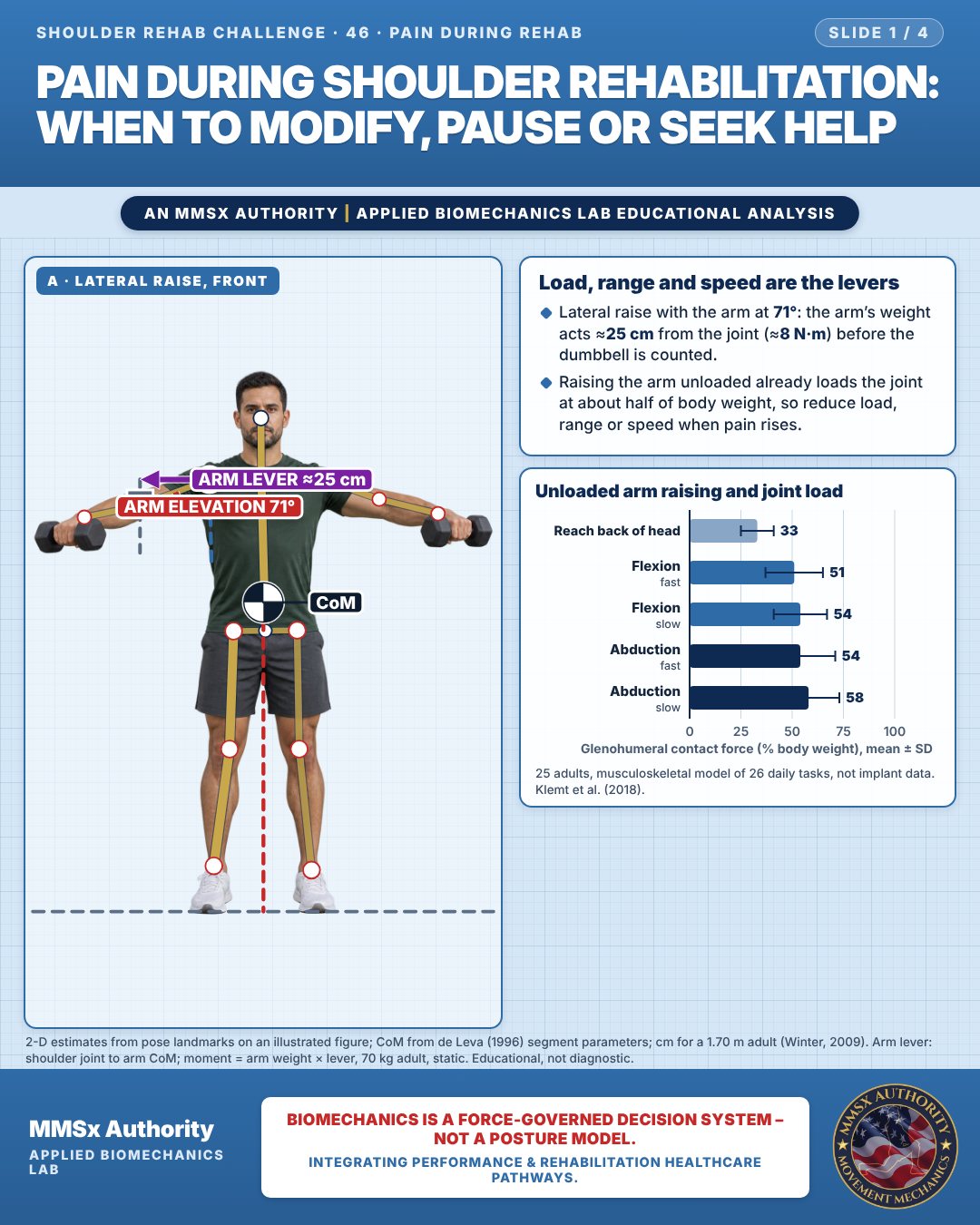 46
Pain during shoulder rehabilitation: when to modify, pause or seek help
Pain monitoring is the practice of allowing a defined, acceptable level of pain during and after rehabilitation exercise (for example, not above 5 on…
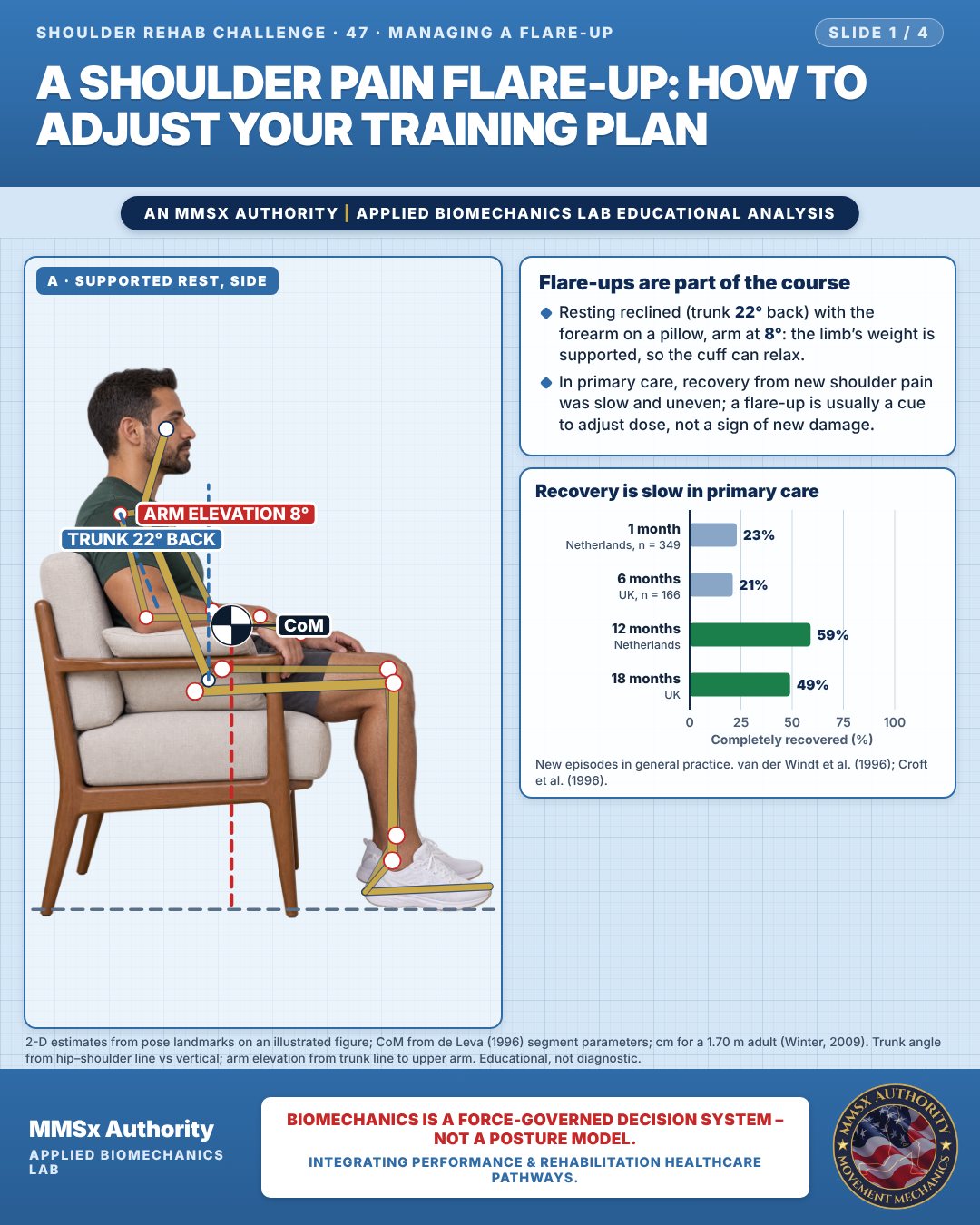 47
A shoulder pain flare-up: how to adjust your training plan
A flare-up is a temporary increase in shoulder pain, sensitivity or stiffness above a person's usual level, often after a change in load, sleep or stress.
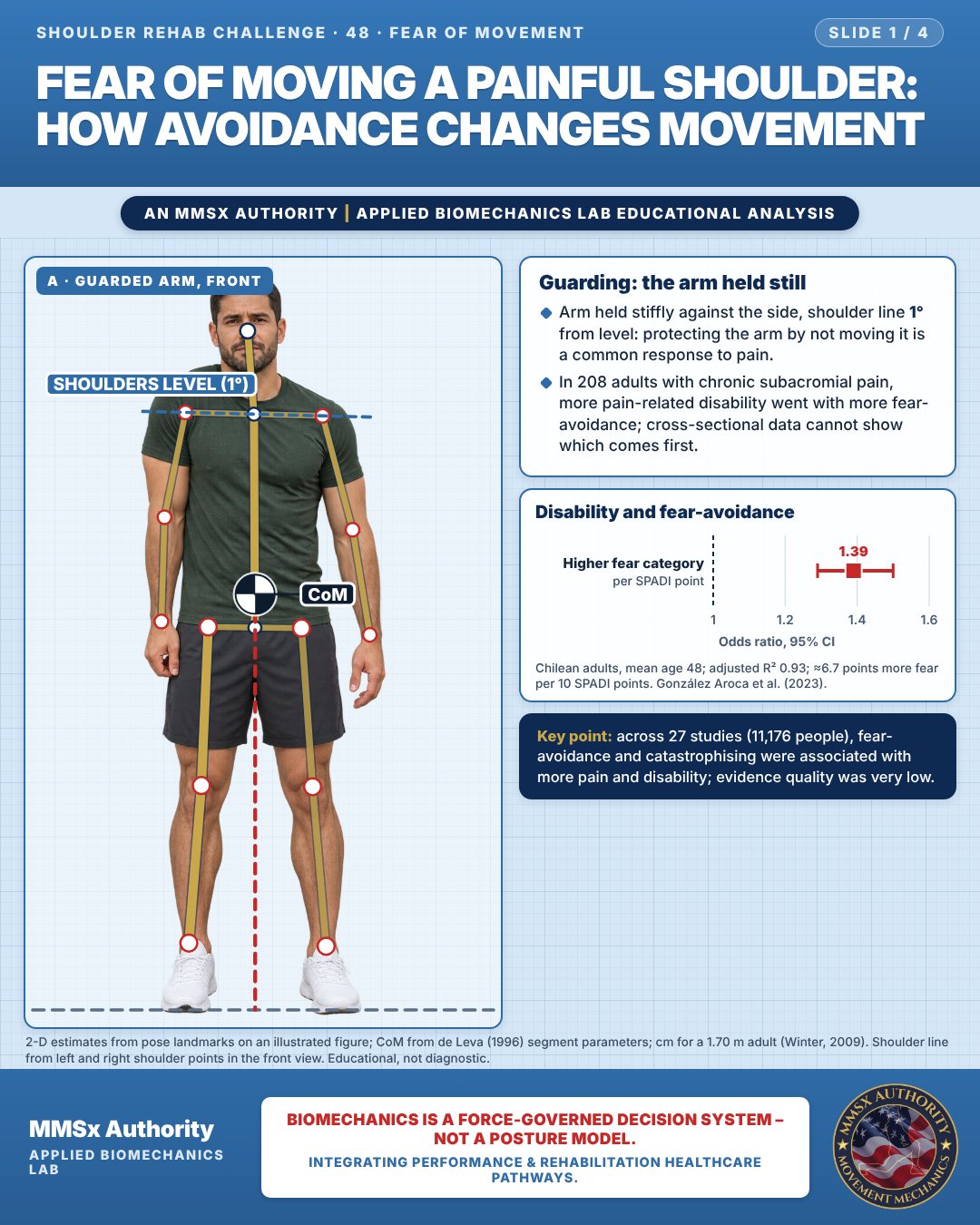 48
Fear of moving a painful shoulder: how avoidance changes movement
Kinesiophobia (fear of movement) and fear-avoidance beliefs are expectations that moving will cause pain or harm, leading people to guard the arm,…
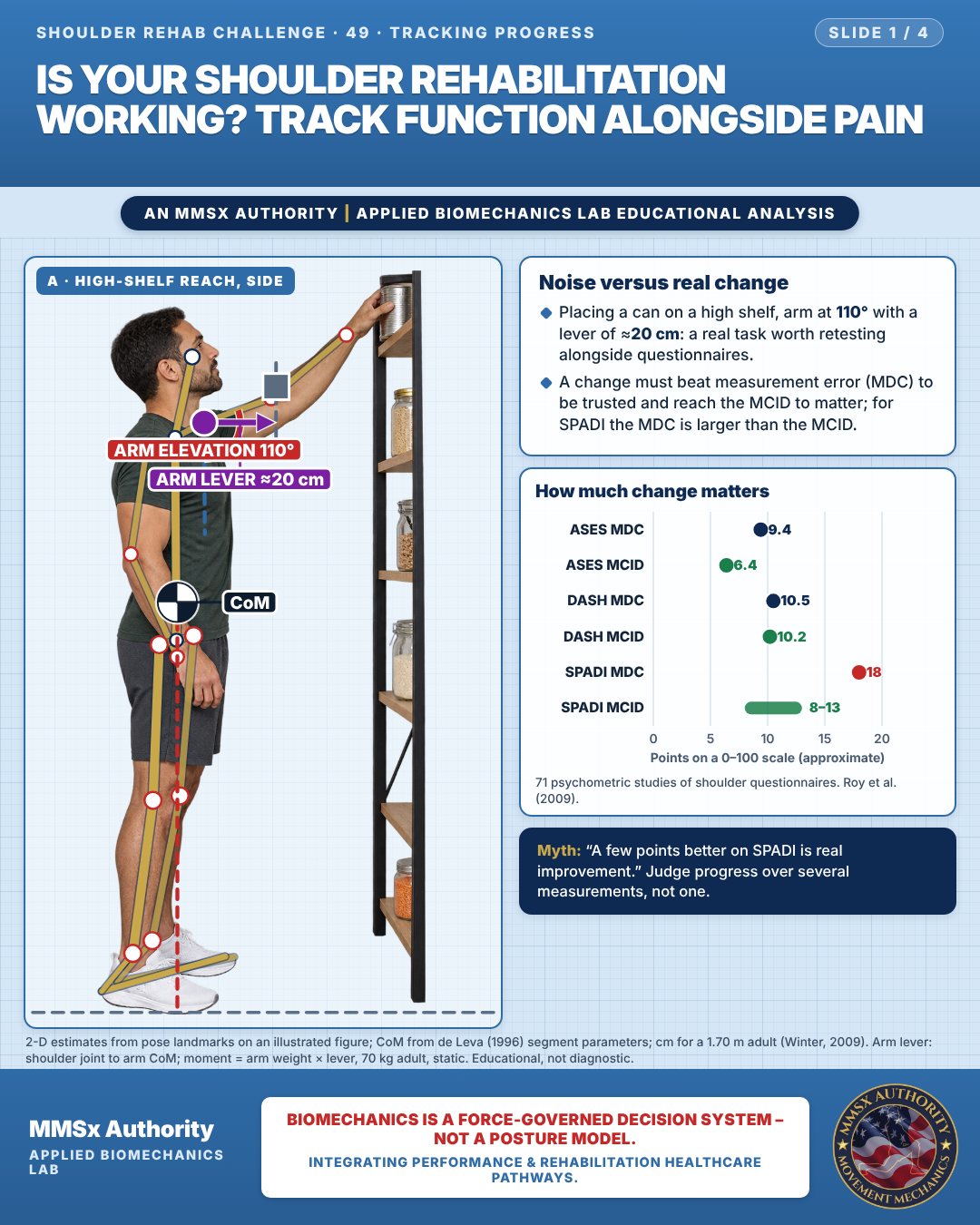 49
Is your shoulder rehabilitation working? Track function alongside pain
Patient-reported outcome measures (PROMs) such as the Shoulder Pain and Disability Index (SPADI, 0–100, higher = worse), the Disabilities of the Arm,…
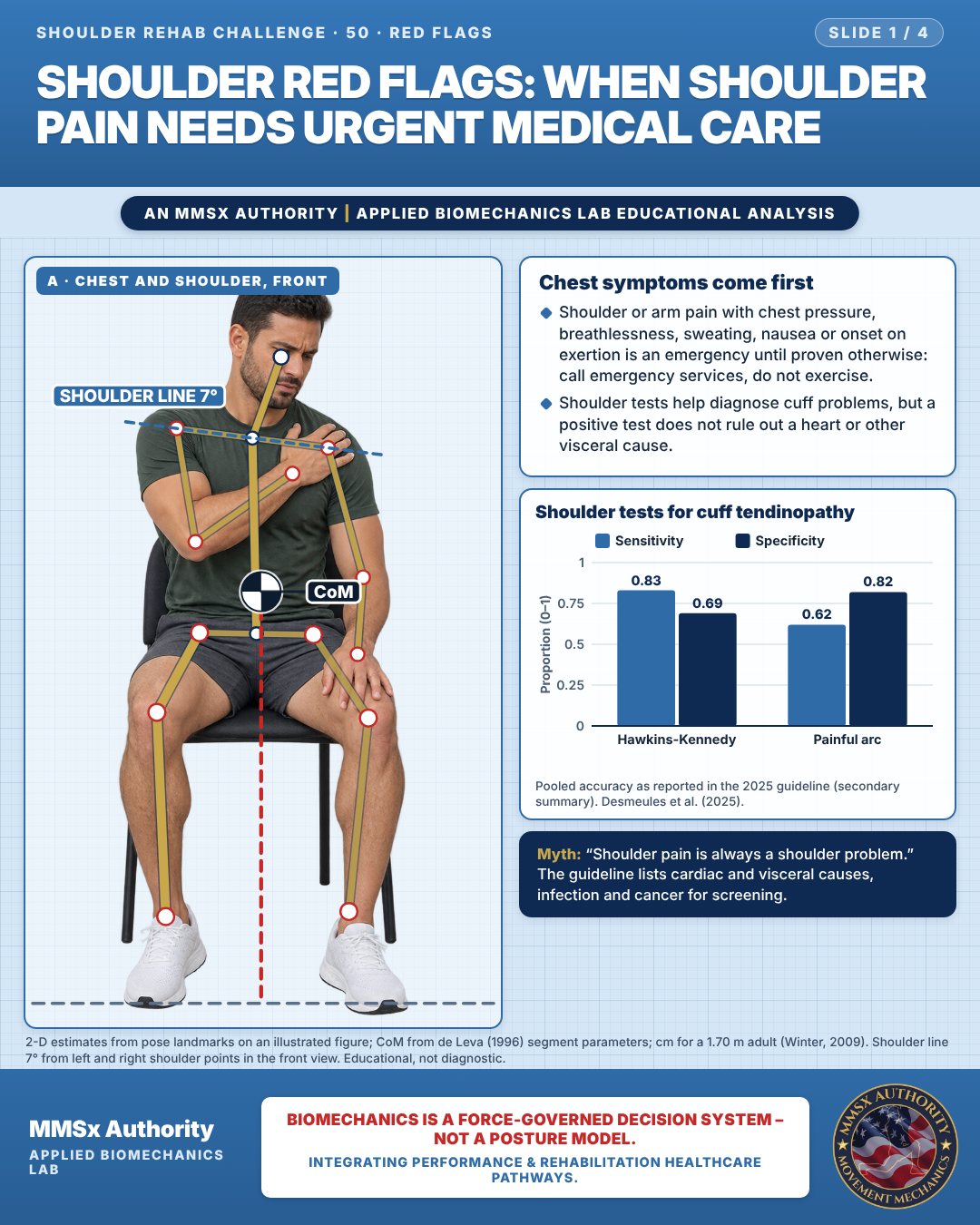 50
Shoulder red flags: when shoulder pain needs urgent medical care
Red flags are signs or symptoms suggesting that shoulder pain may come from serious pathology or systemic disease rather than a musculoskeletal…