MMSx Authority · Applied Biomechanics Lab
Lower Back Rehabilitation: 50 Evidence-Based Biomechanics Analyses
Fifty evidence-based lower back pain articles from the MMSx Authority Applied Biomechanics Lab: movement analysis, verified research data and decision pathways. Each article pairs a biomechanical analysis of three movements with verified research data, a decision pathway and APA 7 references with DOIs.
Cite this collection
Mehta, N. (2026). Lower Back Rehabilitation: 50 Evidence-Based Biomechanics Analyses [Collection]. MMSx Authority Applied Biomechanics Lab. Zenodo. https://doi.org/10.5281/zenodo.23735778
 01
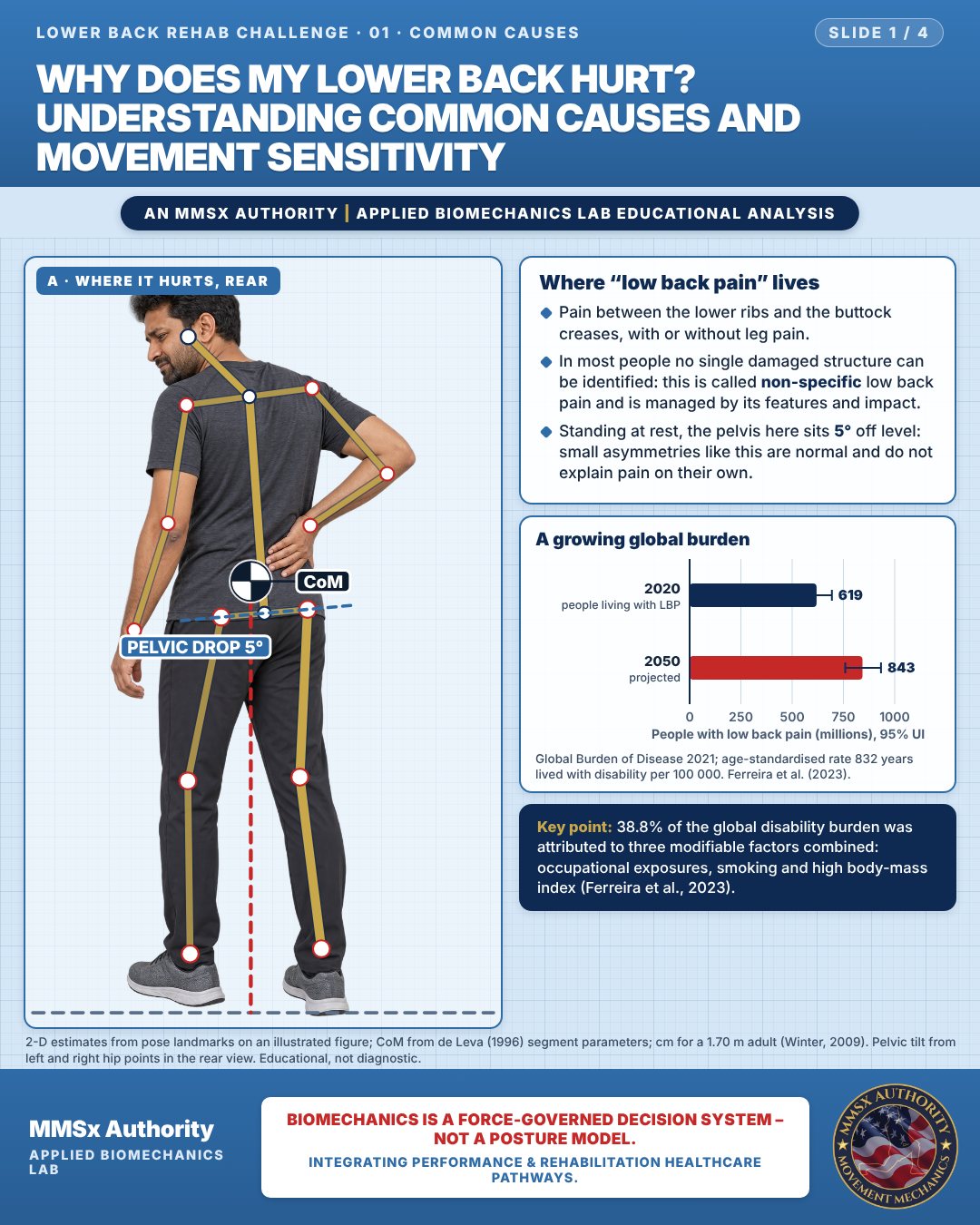
Why does my lower back hurt? Understanding common causes and movement sensitivity
Non-specific low back pain is pain between the lower ribs and the buttock creases (with or without leg pain) for which no specific pathoanatomical…
 02
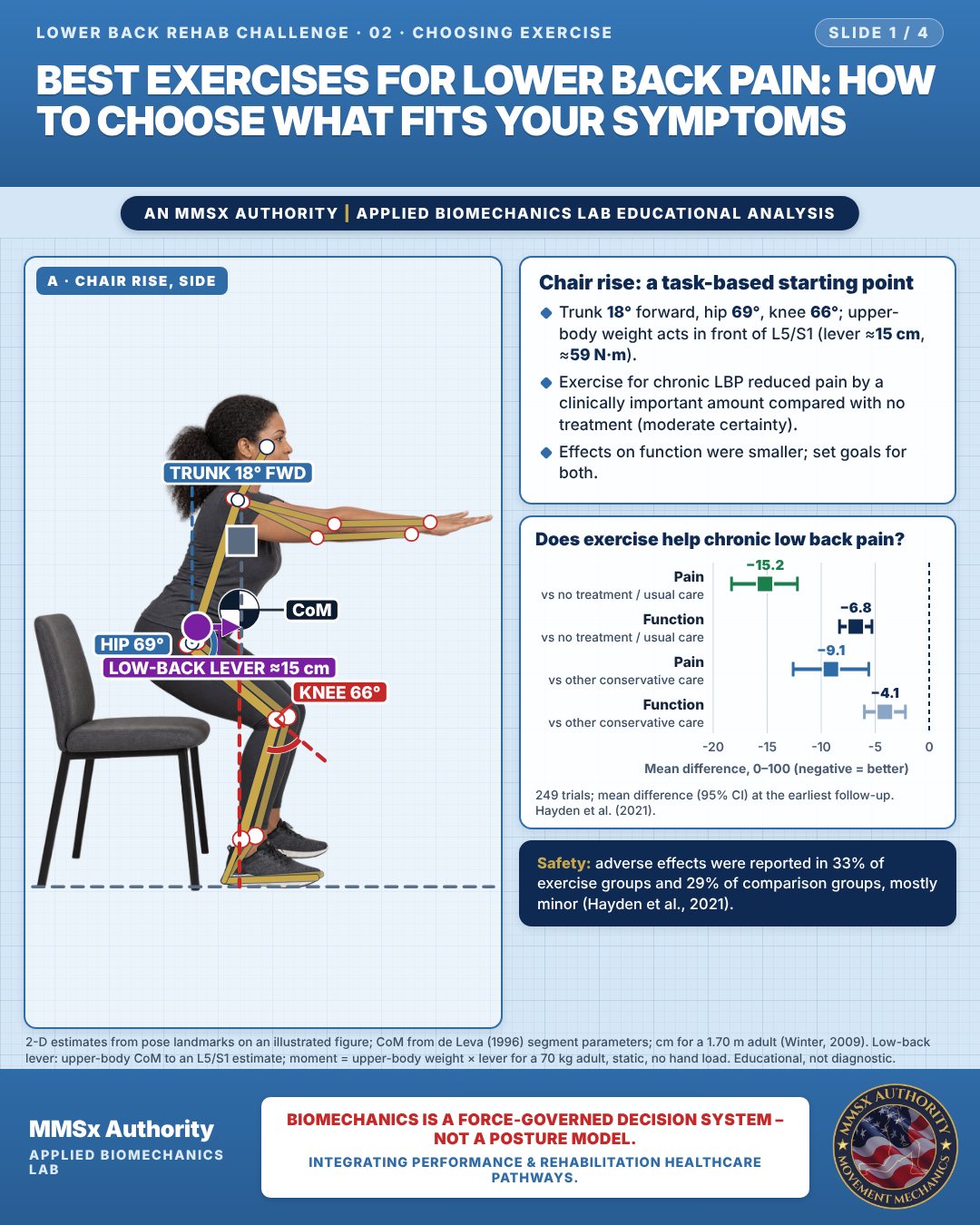
Best exercises for lower back pain: how to choose what fits your symptoms
Exercise therapy for low back pain is a planned programme of physical activity (e.g., strengthening, motor control/stabilisation, aerobic, Pilates,…
 03
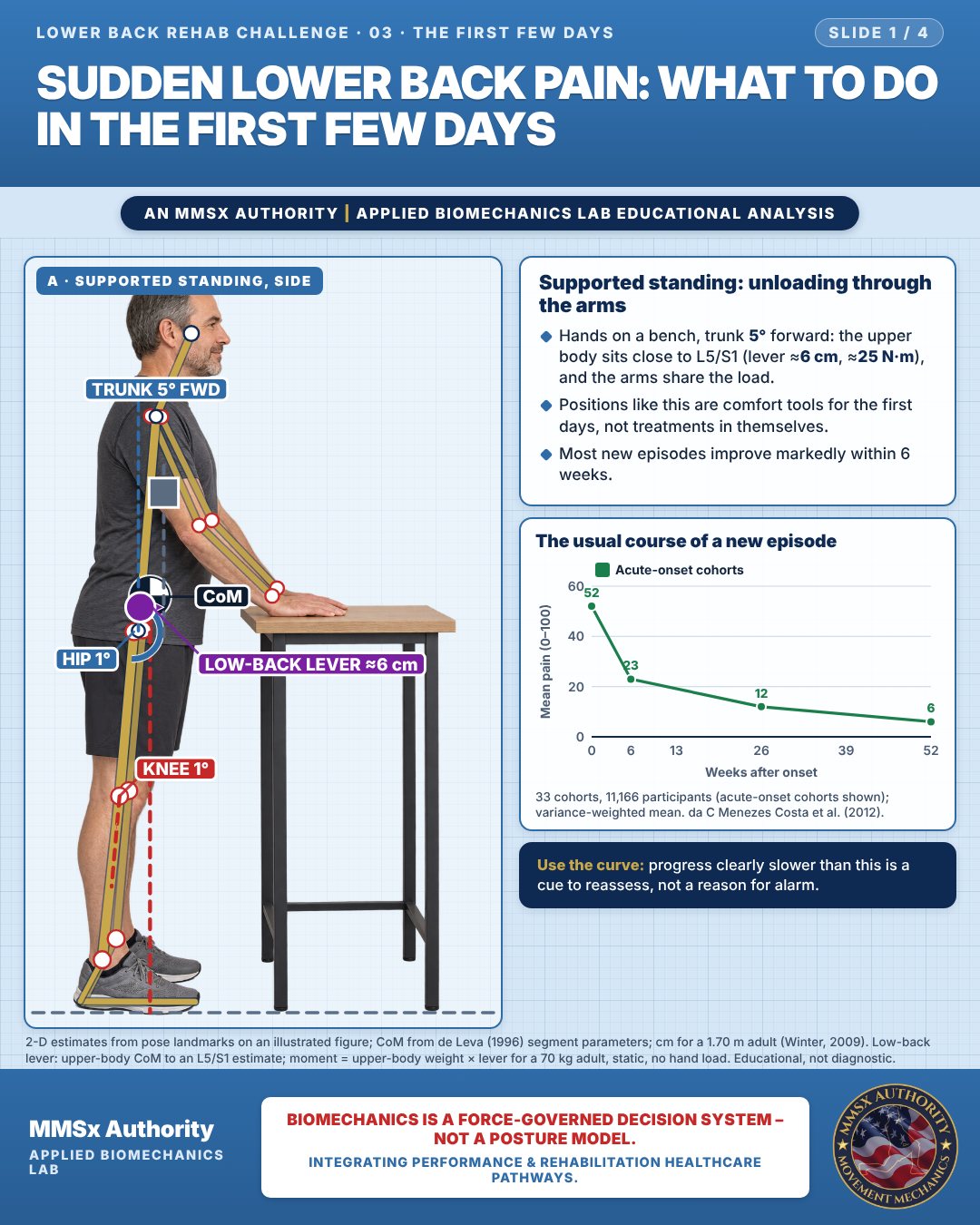
Sudden lower back pain: what to do in the first few days
Acute low back pain is a new episode of low back pain of less than 6 weeks' duration (commonly after a pain-free period).
 04
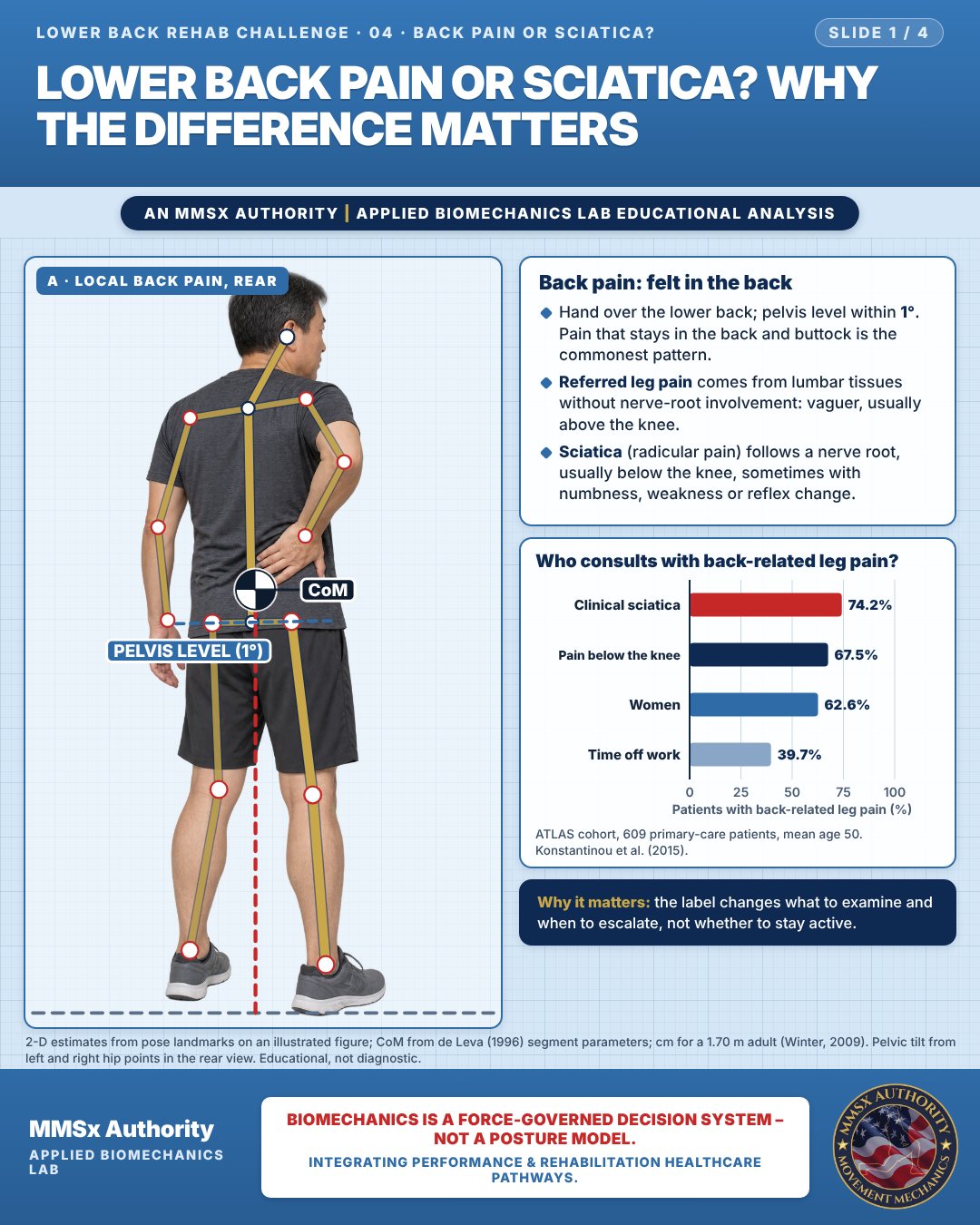
Lower back pain or sciatica? Why the difference matters
Sciatica (lumbar radicular pain) is leg pain in a nerve-root distribution, usually radiating below the knee, caused by irritation or compression of a…
 05
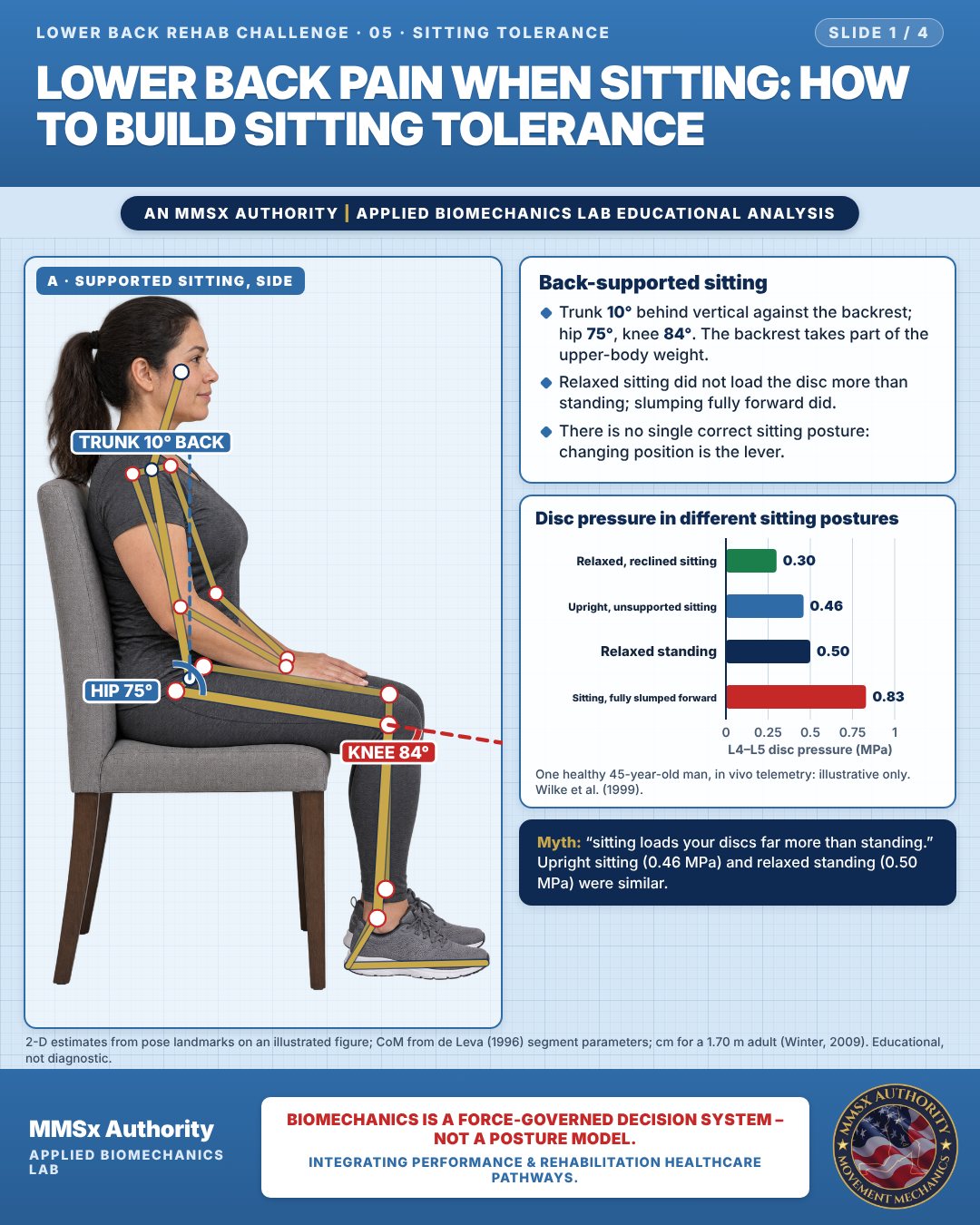
Lower back pain when sitting: how to build sitting tolerance
Sitting-related low back pain is low back pain that is provoked or increased by sustained sitting and usually eased by changing position, standing or walking.
 06
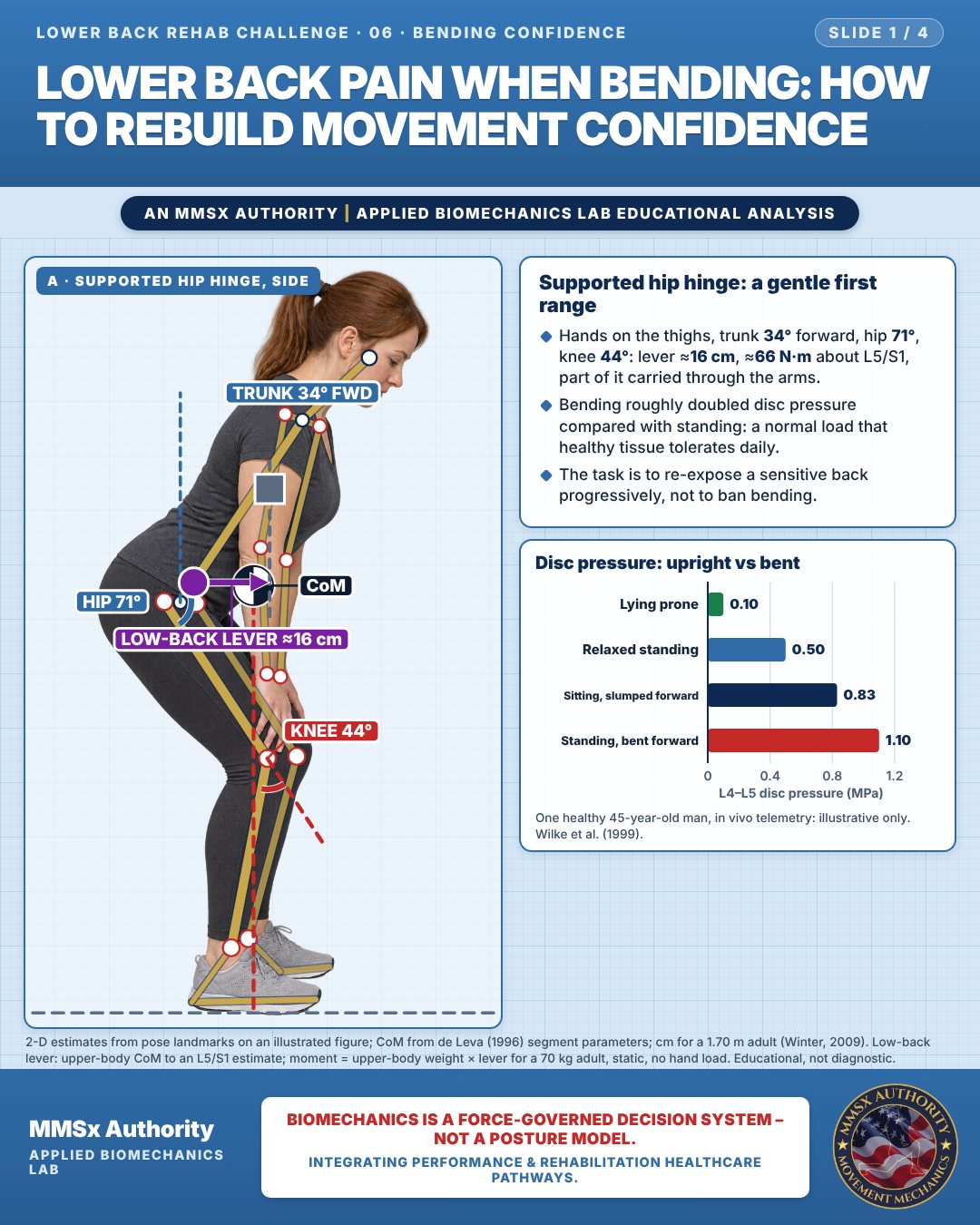
Lower back pain when bending: how to rebuild movement confidence
Bending-related (flexion-sensitive) low back pain is pain provoked by forward bending of the trunk.
 07
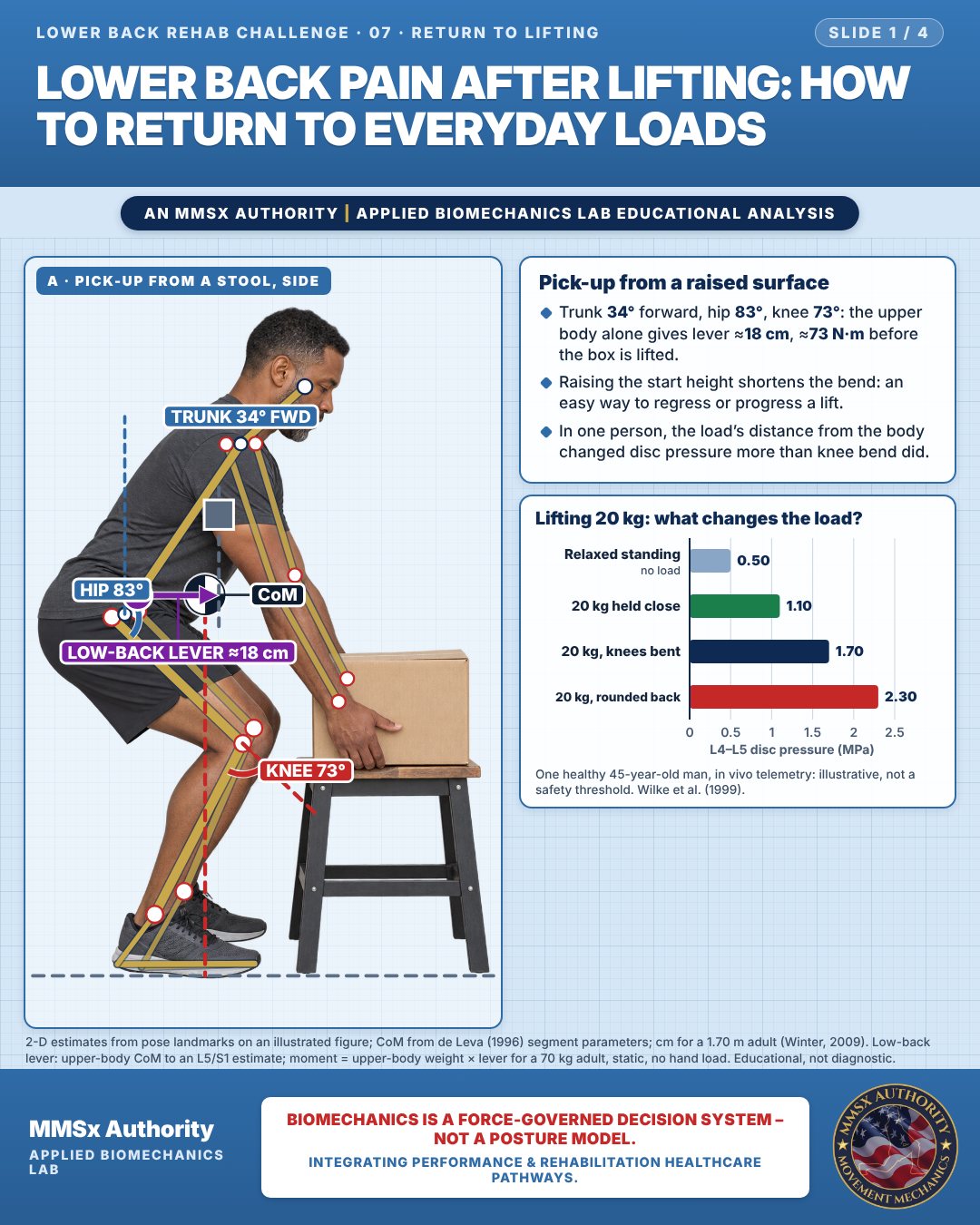
Lower back pain after lifting: how to return to everyday loads
Lifting-associated low back pain is an episode whose onset the person links to lifting or handling a load.
 08
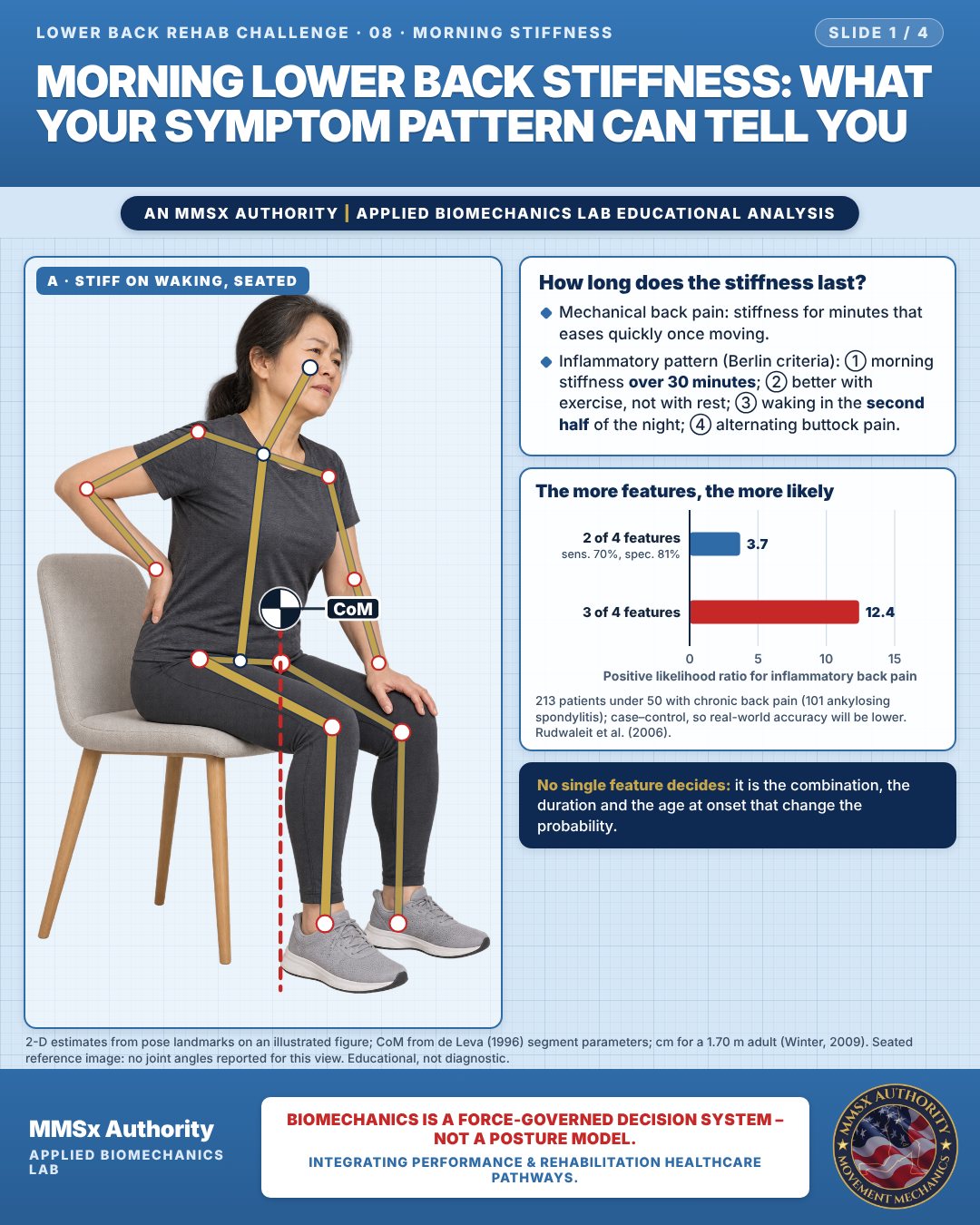
Morning lower back stiffness: what your symptom pattern can tell you
Morning low back stiffness is a sensation of restricted, effortful spinal movement on waking.
 09
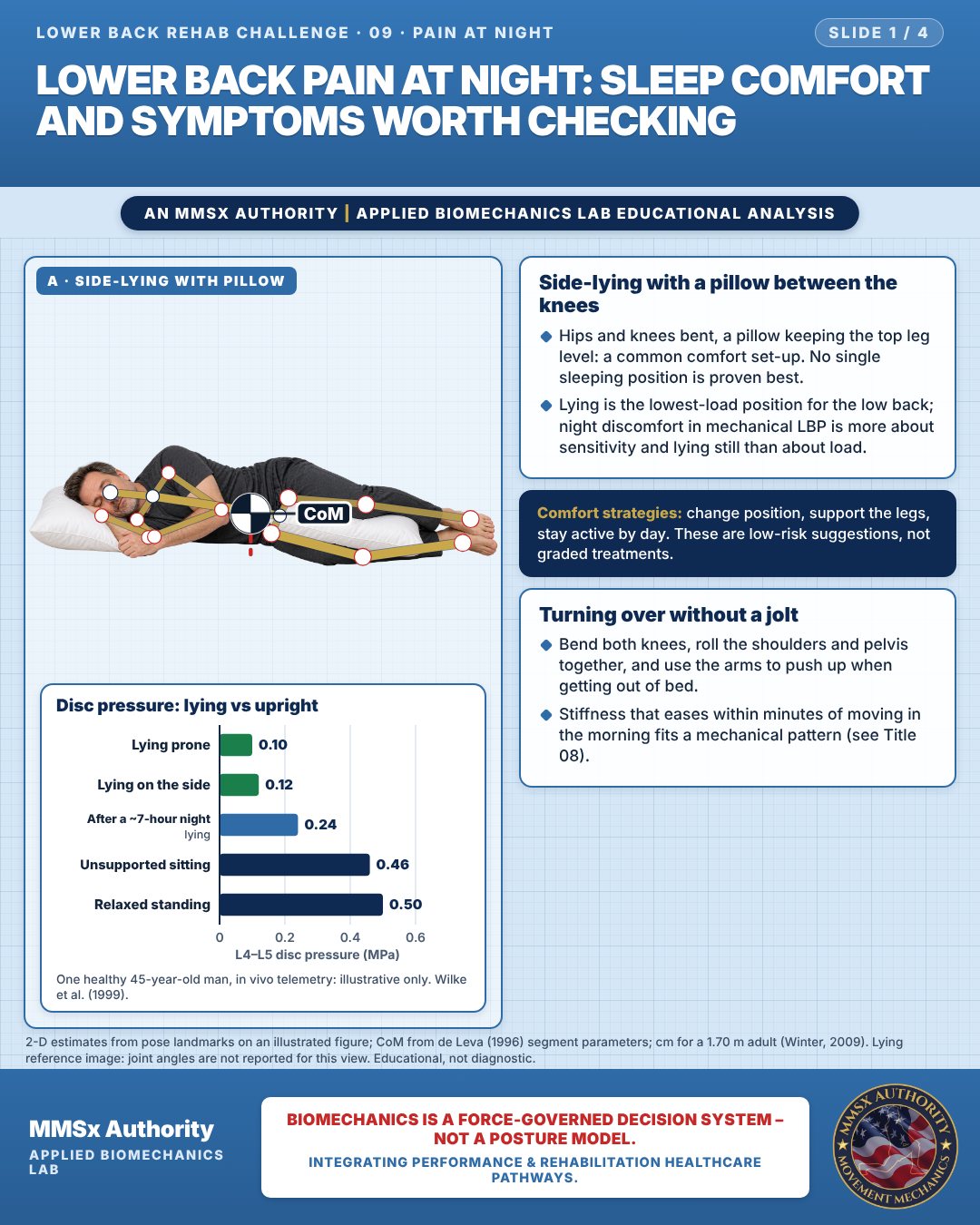
Lower back pain at night: sleep comfort and symptoms worth checking
Night-time low back pain ranges from position-related discomfort when turning or after lying in one position (common in mechanical LBP and eased by…
 10
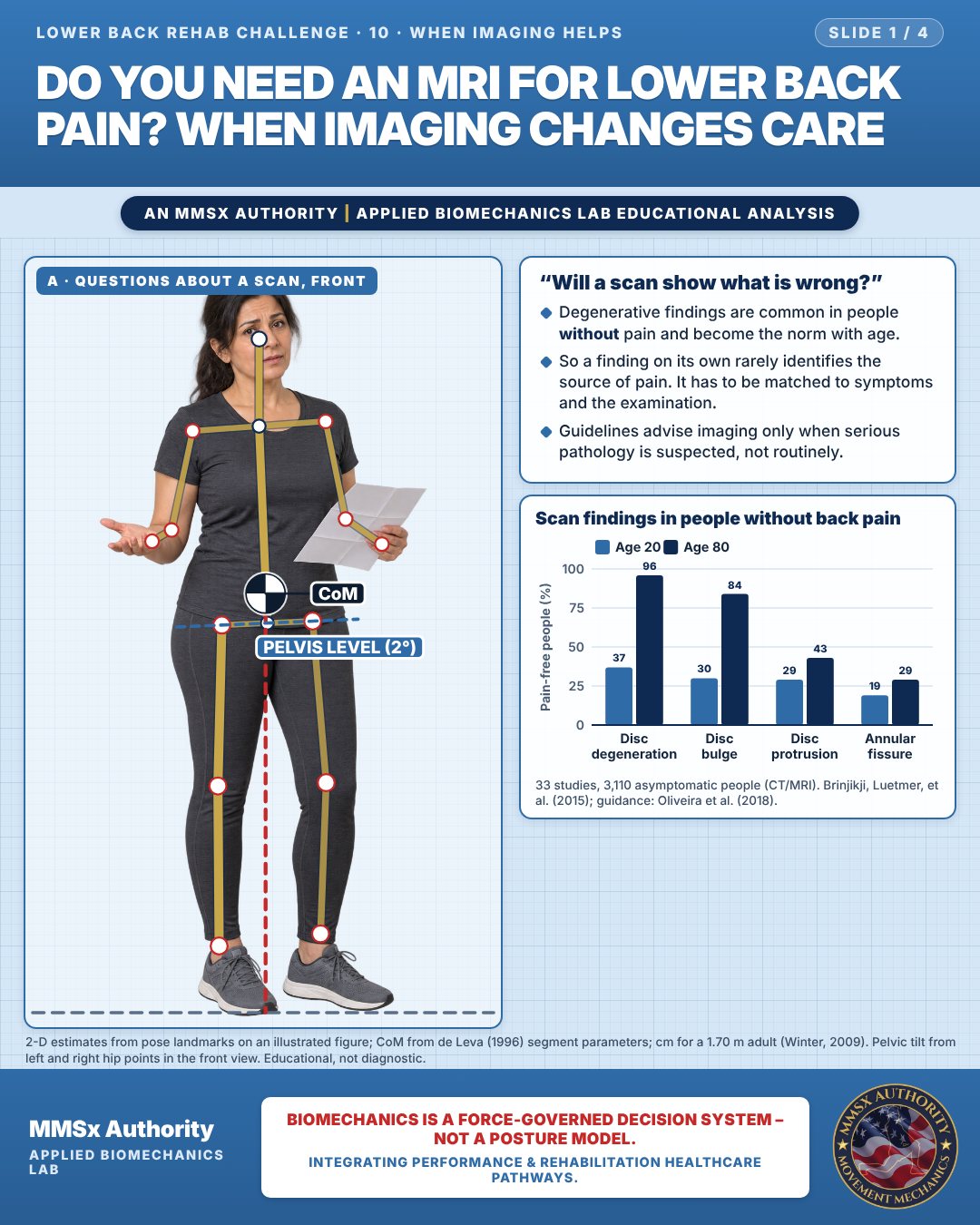
Do you need an MRI for lower back pain? When imaging changes care
Selective imaging means requesting MRI or other imaging only when the result is likely to change management — chiefly when serious pathology is…
 11
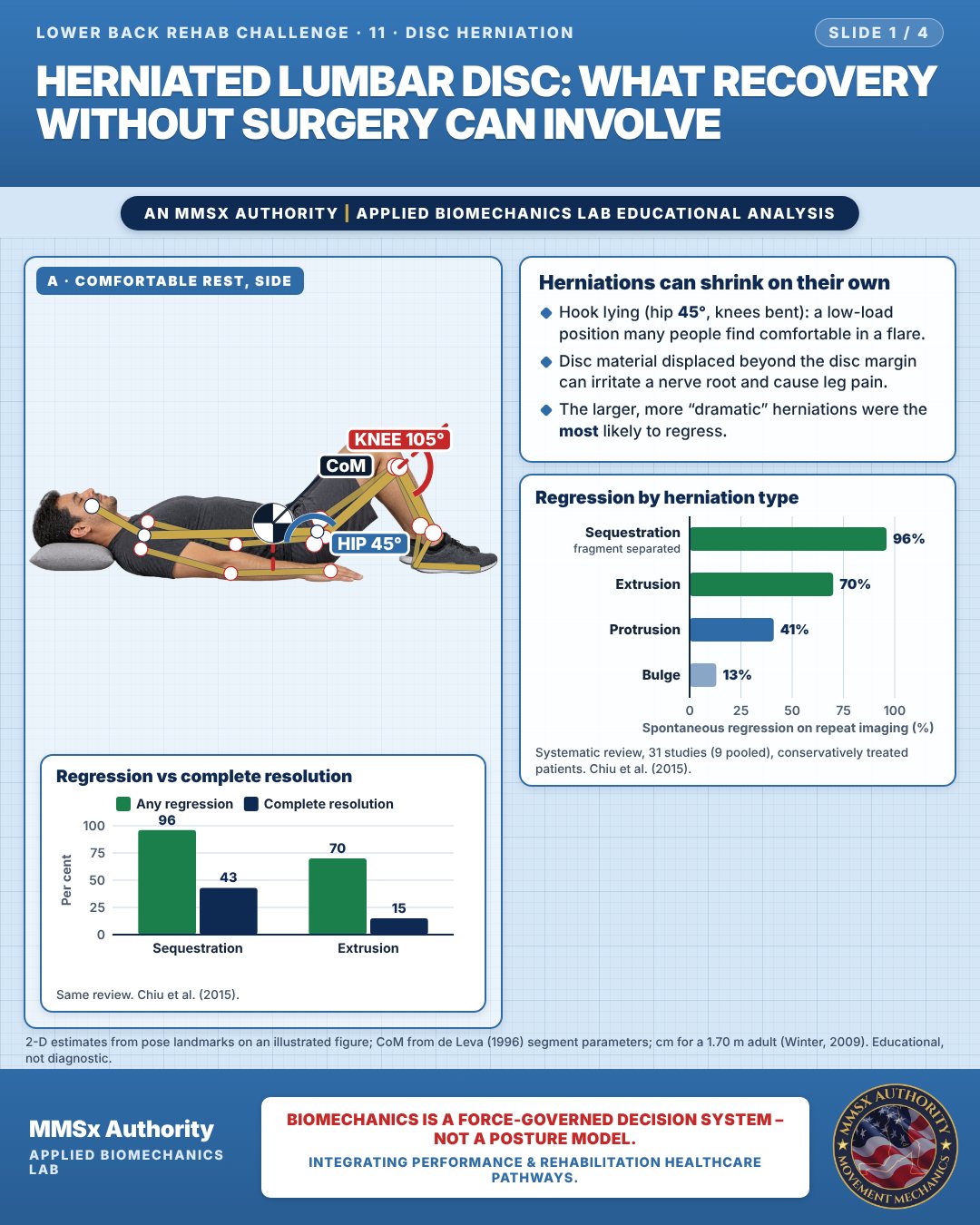
Herniated lumbar disc: what recovery without surgery can involve
A lumbar disc herniation is a localised displacement of disc material (nucleus and/or annulus) beyond the normal margins of the intervertebral disc space.
 12
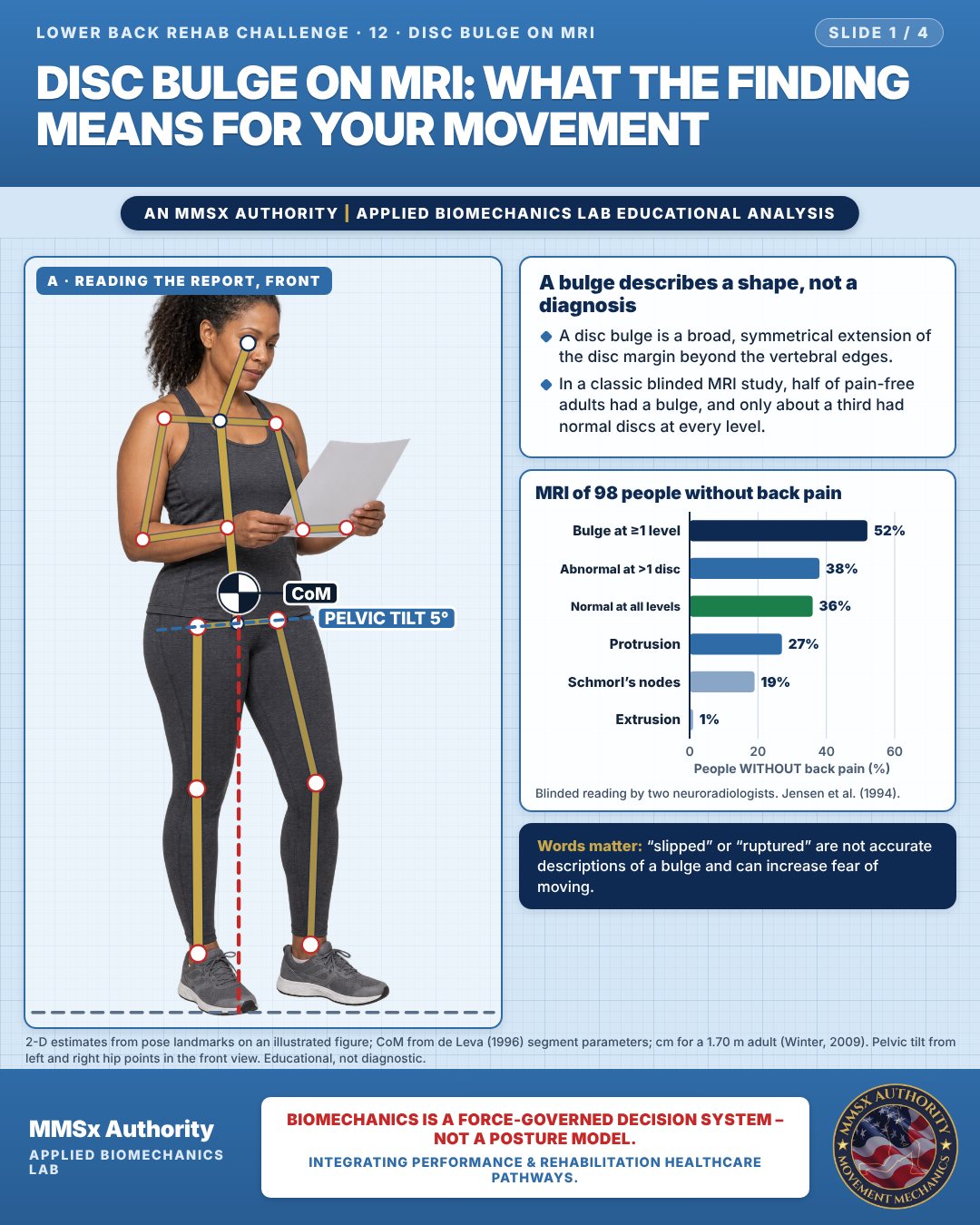
Disc bulge on MRI: what the finding means for your movement
A disc bulge is a broad-based, symmetrical extension of the disc margin beyond the edges of the vertebral end plates (typically involving a large…
 13
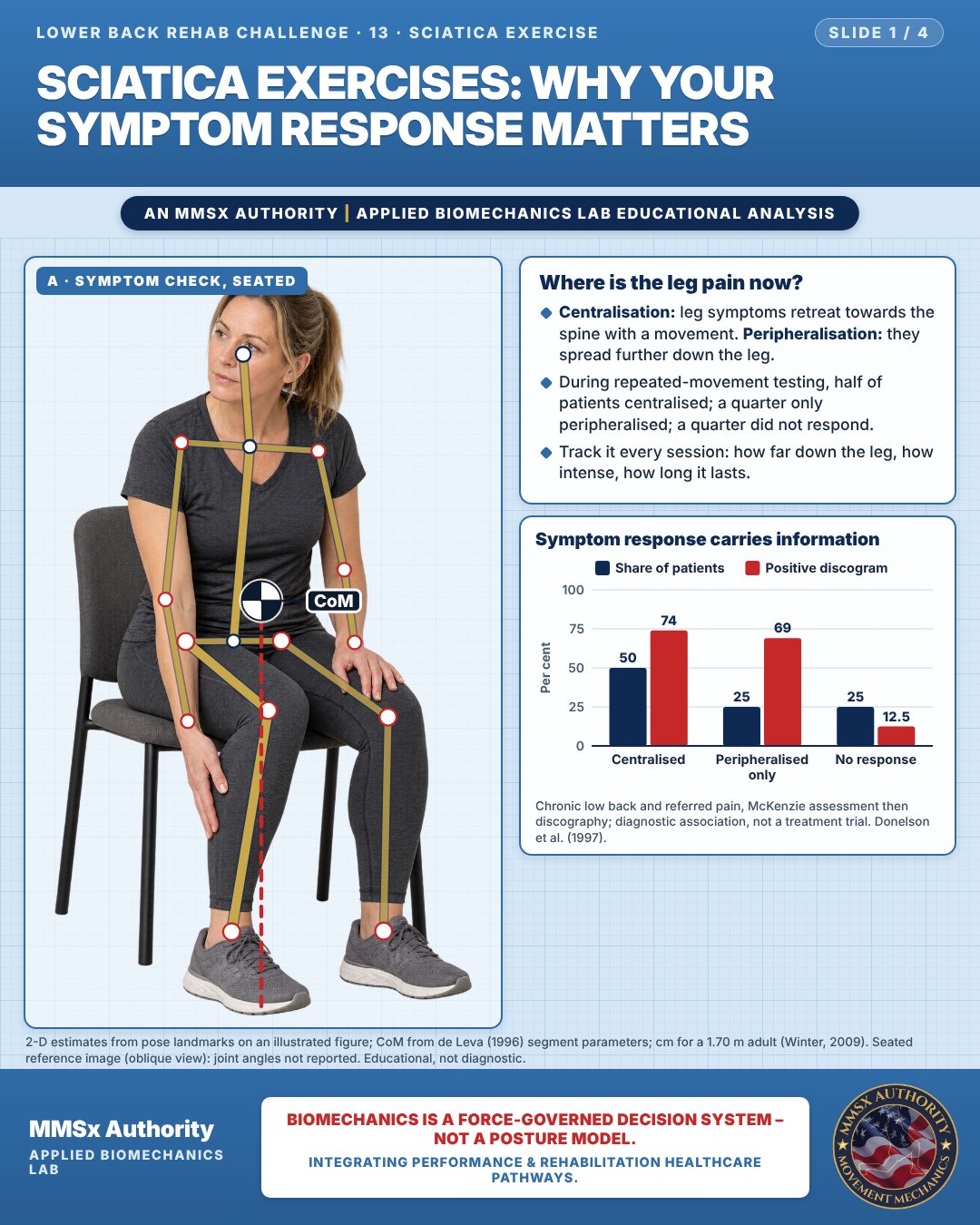
Sciatica exercises: why your symptom response matters
Sciatica is pain radiating into the leg in the distribution of a lumbosacral nerve root (most often L5 or S1), commonly with numbness, pins and…
 14
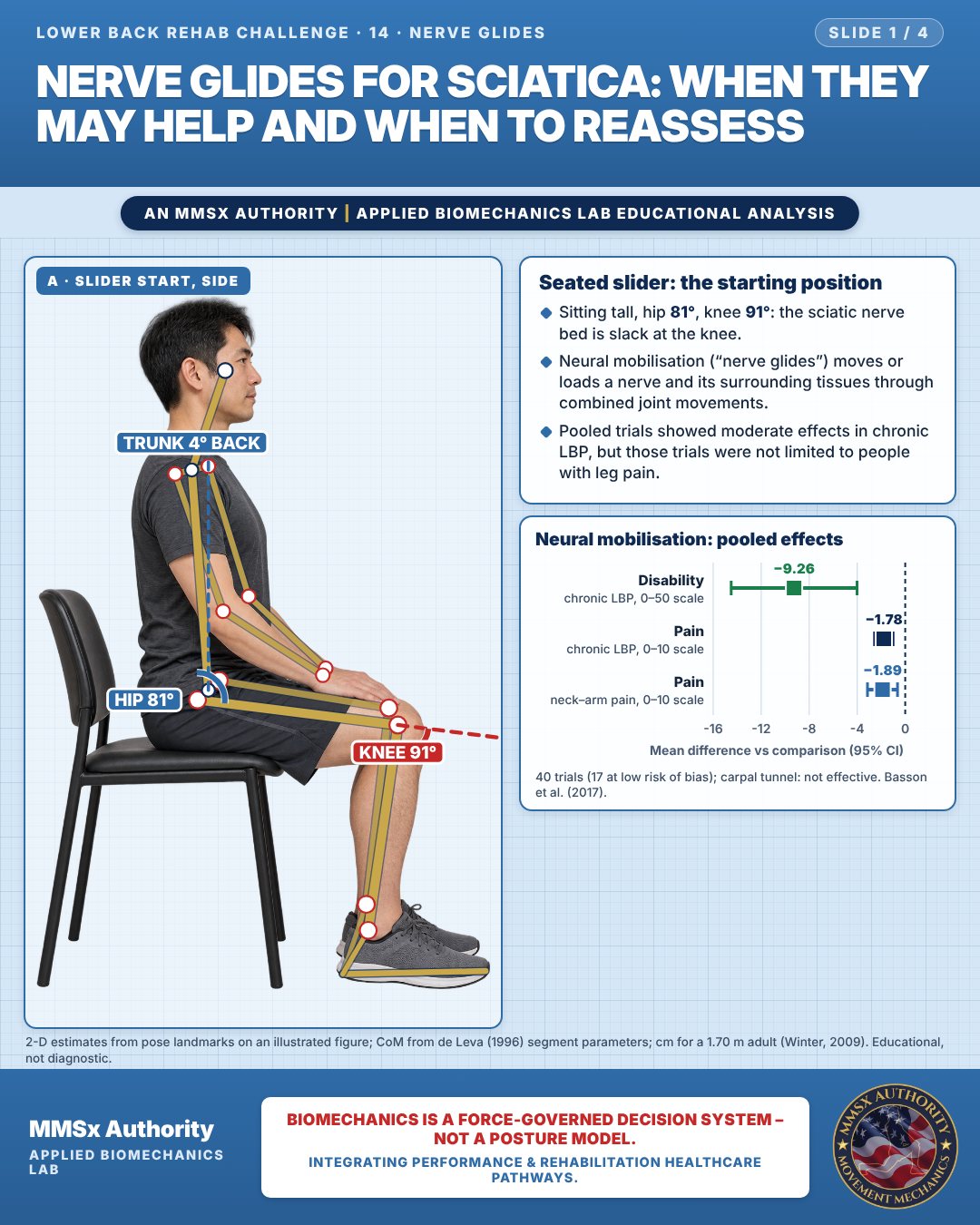
Nerve glides for sciatica: when they may help and when to reassess
Neural mobilisation ("nerve glides", neurodynamic exercises) are movements of the spine and limbs designed to move or load a peripheral nerve and its…
 15
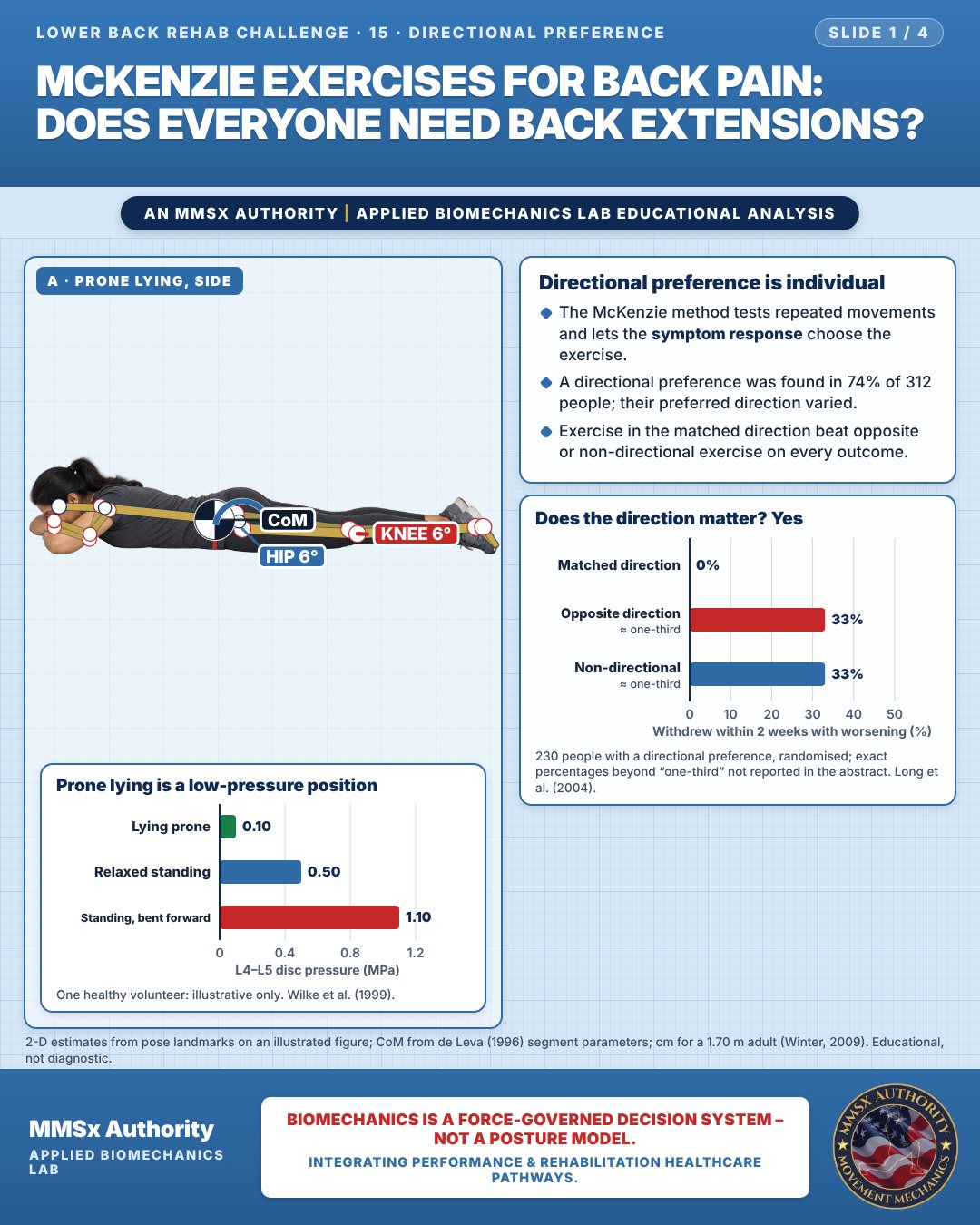
McKenzie exercises for back pain: does everyone need back extensions?
The McKenzie method (Mechanical Diagnosis and Therapy, MDT) is an assessment-led approach in which repeated end-range movements or sustained…
 16
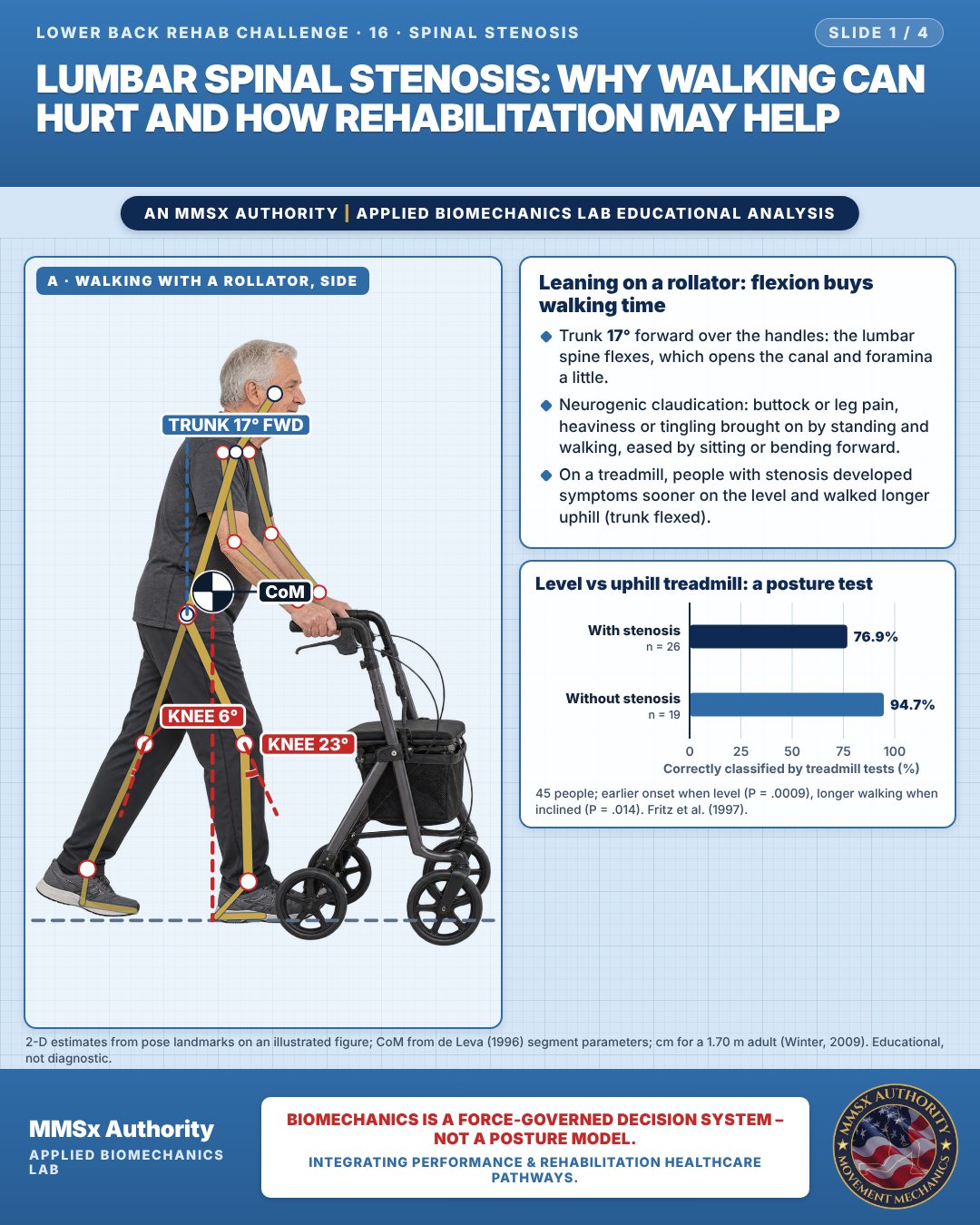
Lumbar spinal stenosis: why walking can hurt and how rehabilitation may help
Lumbar spinal stenosis (LSS) is narrowing of the central canal, lateral recesses or intervertebral foramina, usually from age-related changes (disc…
 17
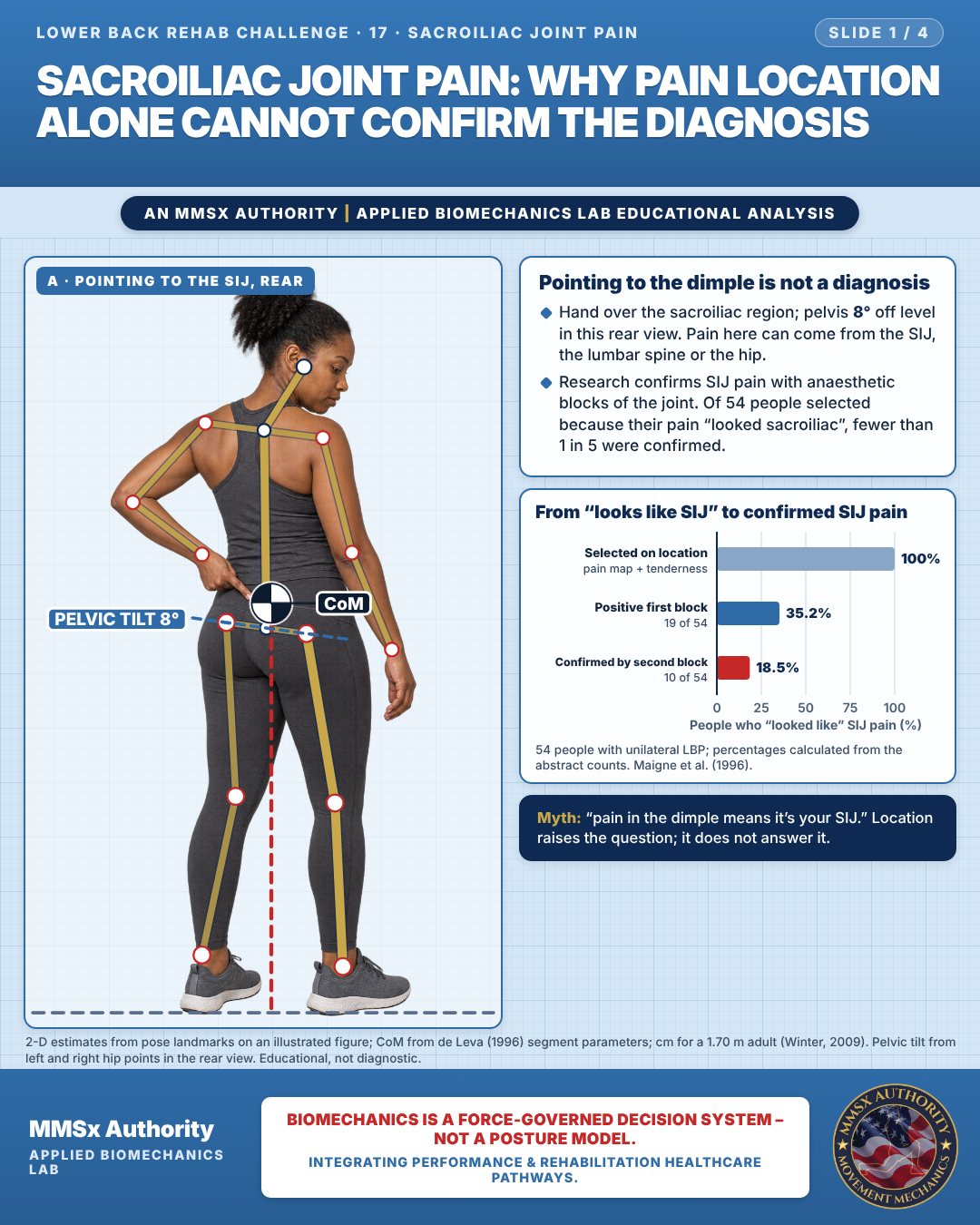
Sacroiliac joint pain: why pain location alone cannot confirm the diagnosis
Sacroiliac joint (SIJ) pain is pain arising from the SIJ complex, typically felt in the buttock below L5, around the posterior superior iliac spine,…
 18
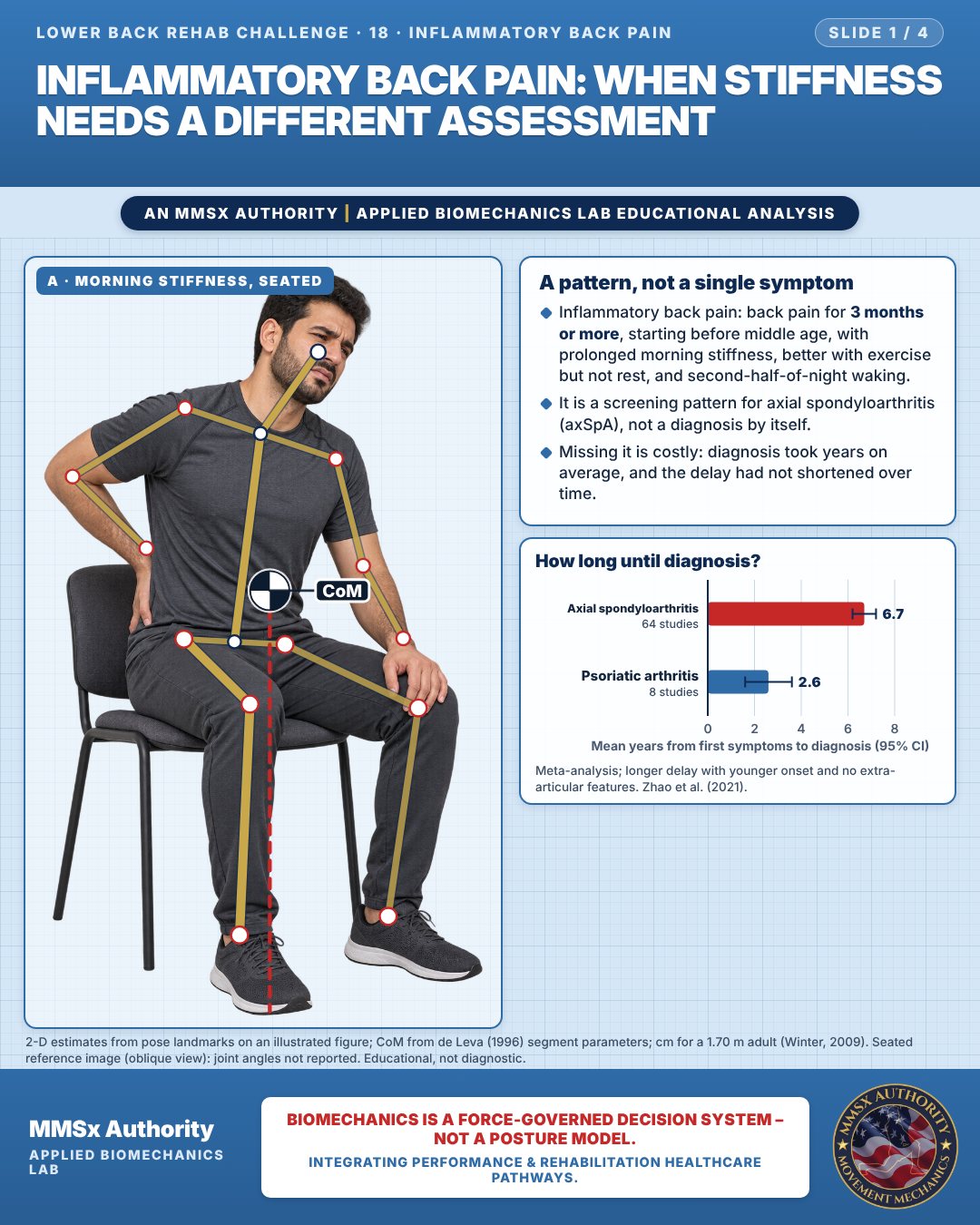
Inflammatory back pain: when stiffness needs a different assessment
Inflammatory back pain (IBP) is a clinical pattern of chronic back pain (≥3 months) typical of axial spondyloarthritis (axSpA, including ankylosing…
 19
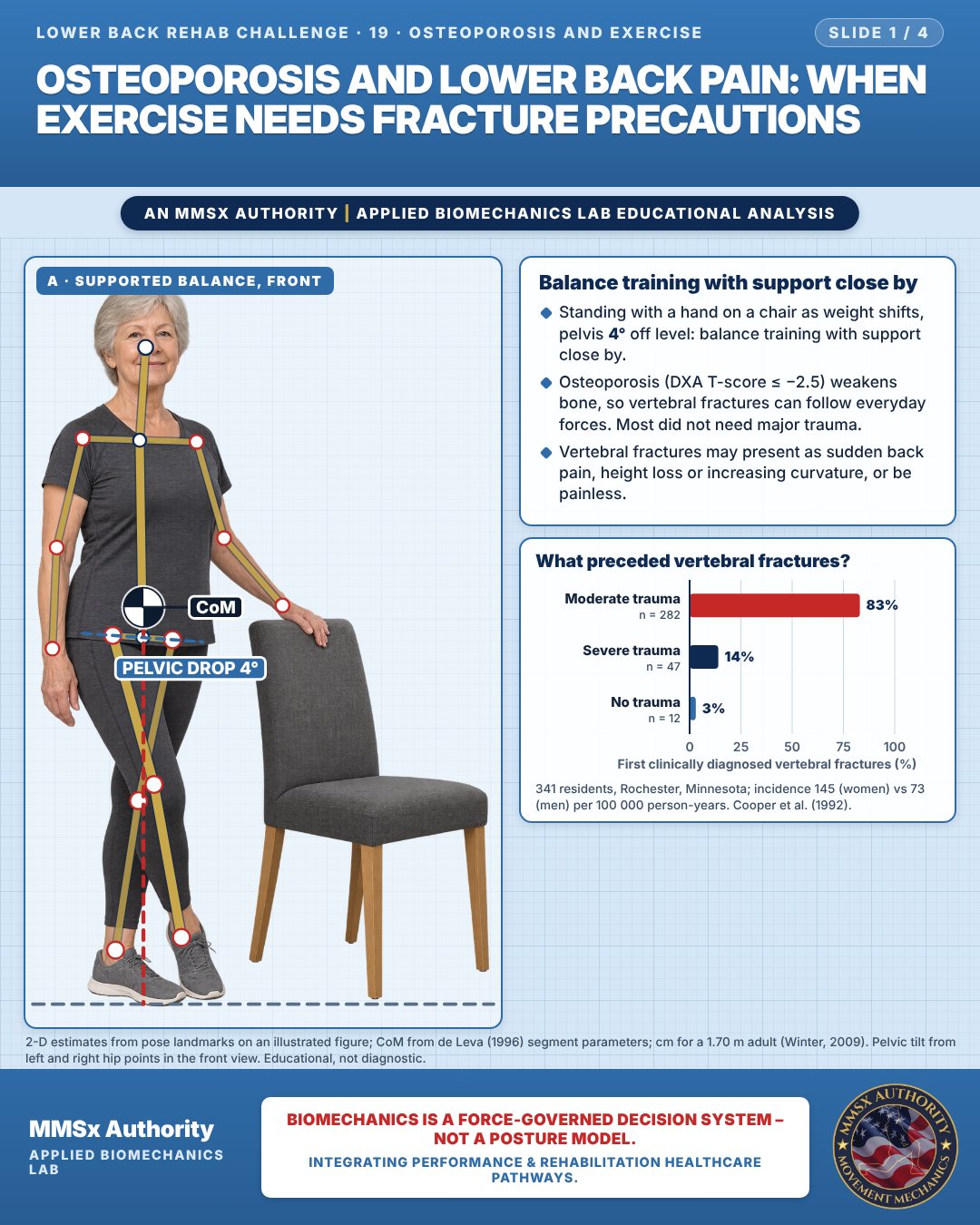
Osteoporosis and lower back pain: when exercise needs fracture precautions
Osteoporosis is a skeletal condition of low bone mass and deteriorated bone micro-architecture that increases fracture risk (commonly identified by a…
 20
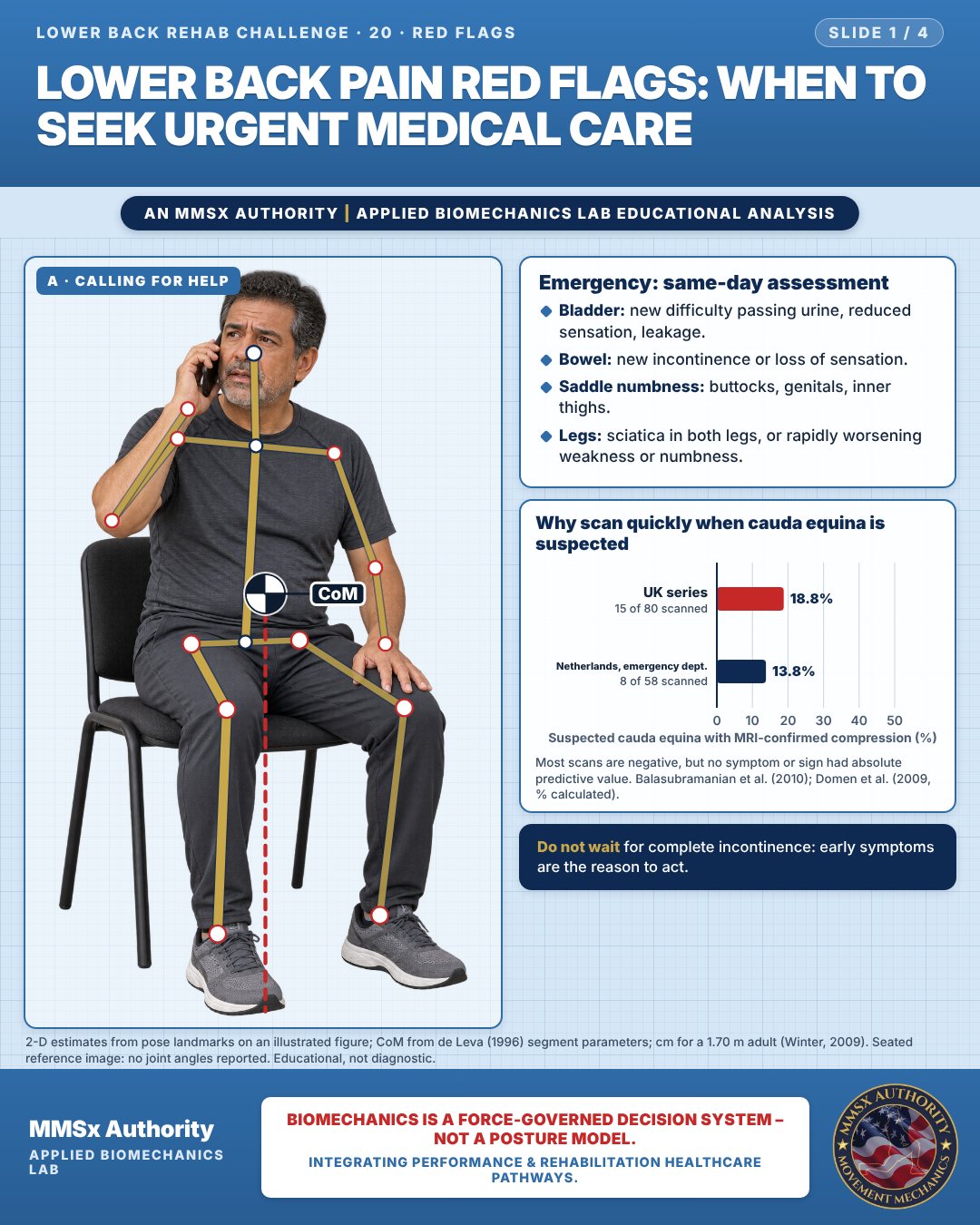
Lower back pain red flags: when to seek urgent medical care
Red flags are features from the history or examination that raise the probability of a serious underlying cause of back pain — such as cauda equina…
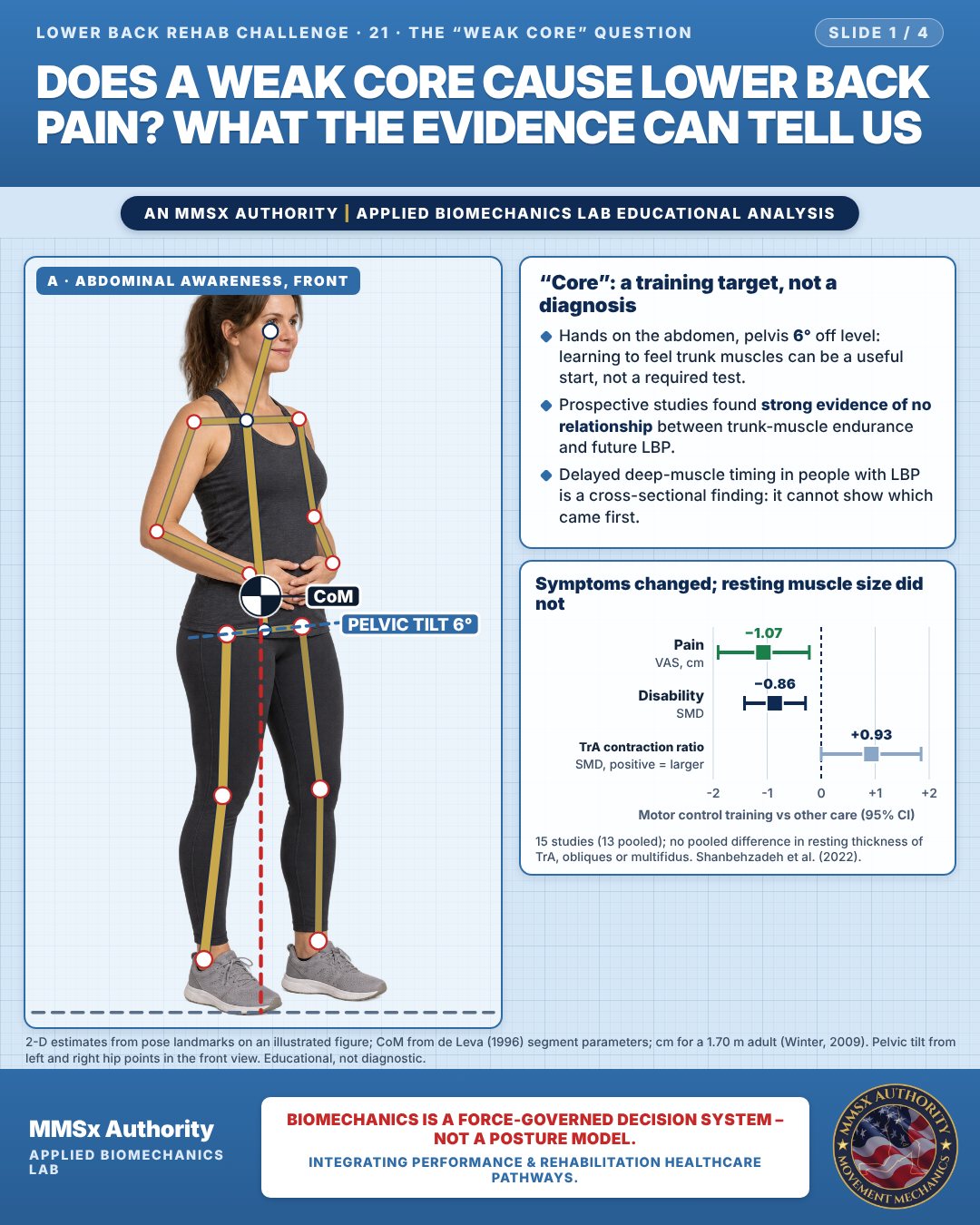 21
Does a weak core cause lower back pain? What the evidence can tell us
"Core" training is an umbrella term for exercise that targets the trunk and lumbopelvic muscles (deep abdominal and back muscles, obliques, rectus…
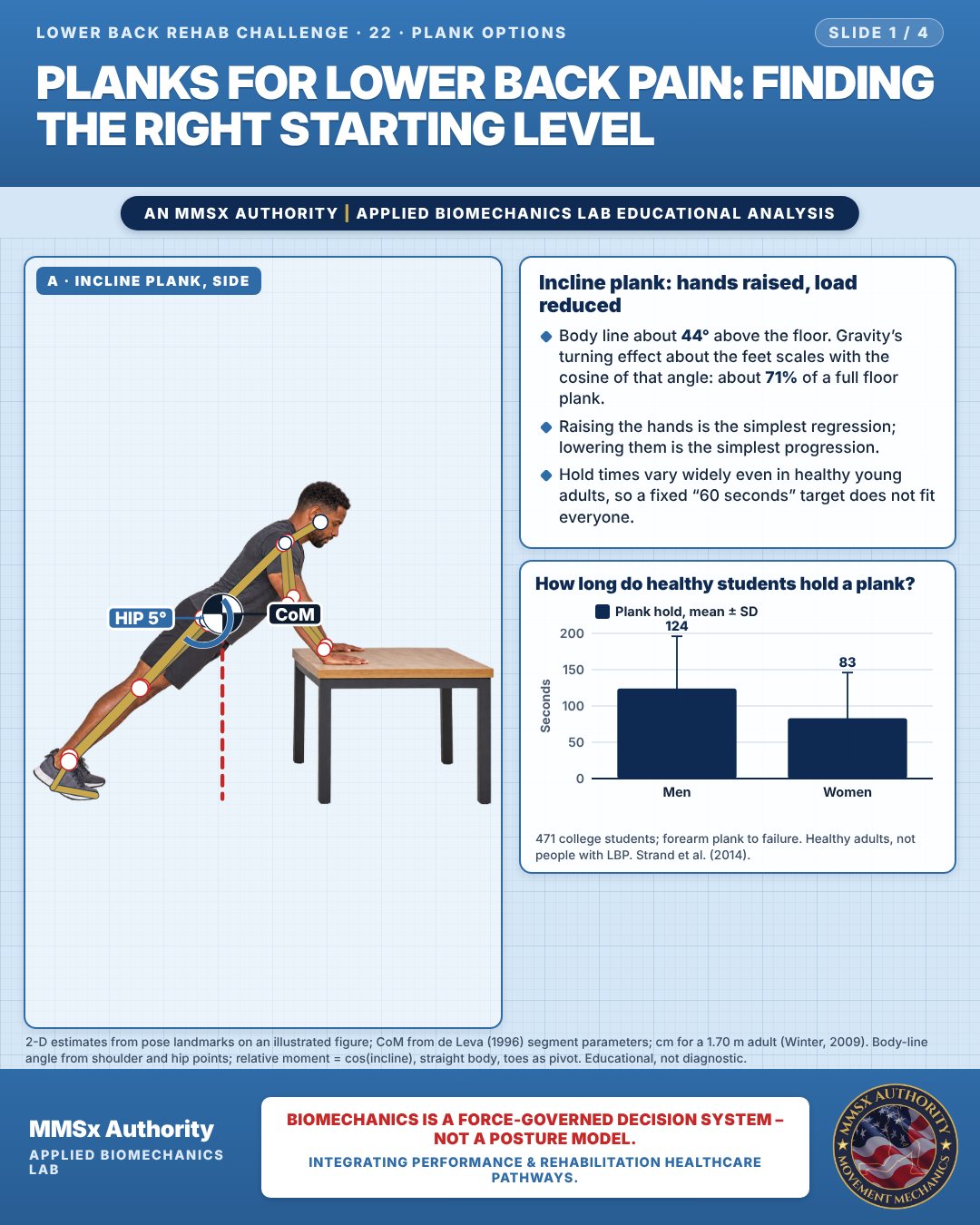 22
Planks for lower back pain: finding the right starting level
A plank (prone bridge) is an isometric hold in which the trunk is kept roughly neutral while supported on forearms and toes (or knees, or an incline).
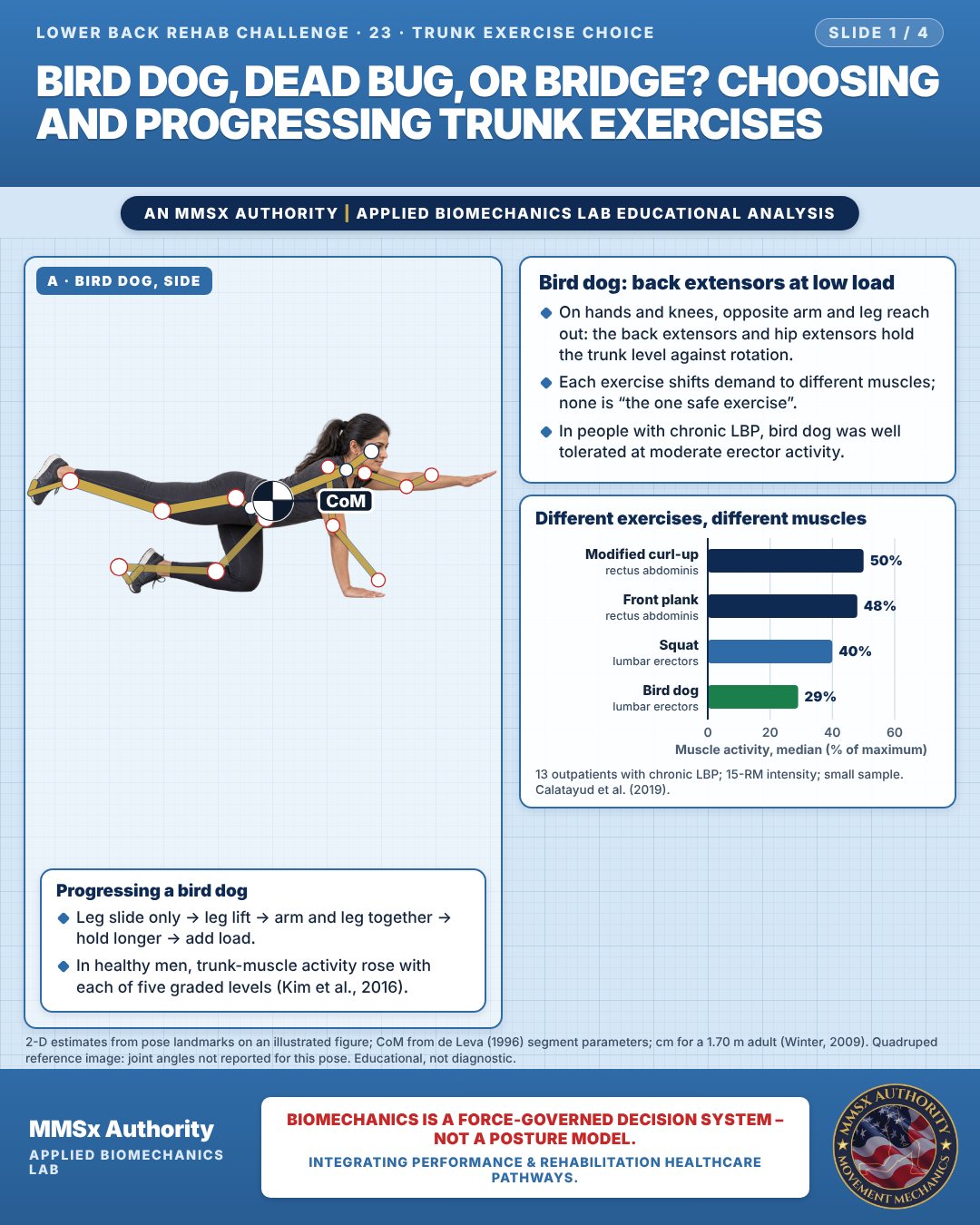 23
Bird dog, dead bug, or bridge? Choosing and progressing trunk exercises
Bird dog (quadruped opposite arm/leg reach), dead bug (supine opposite arm/leg lowering), and bridge (supine hip lift) are low-load trunk/hip…
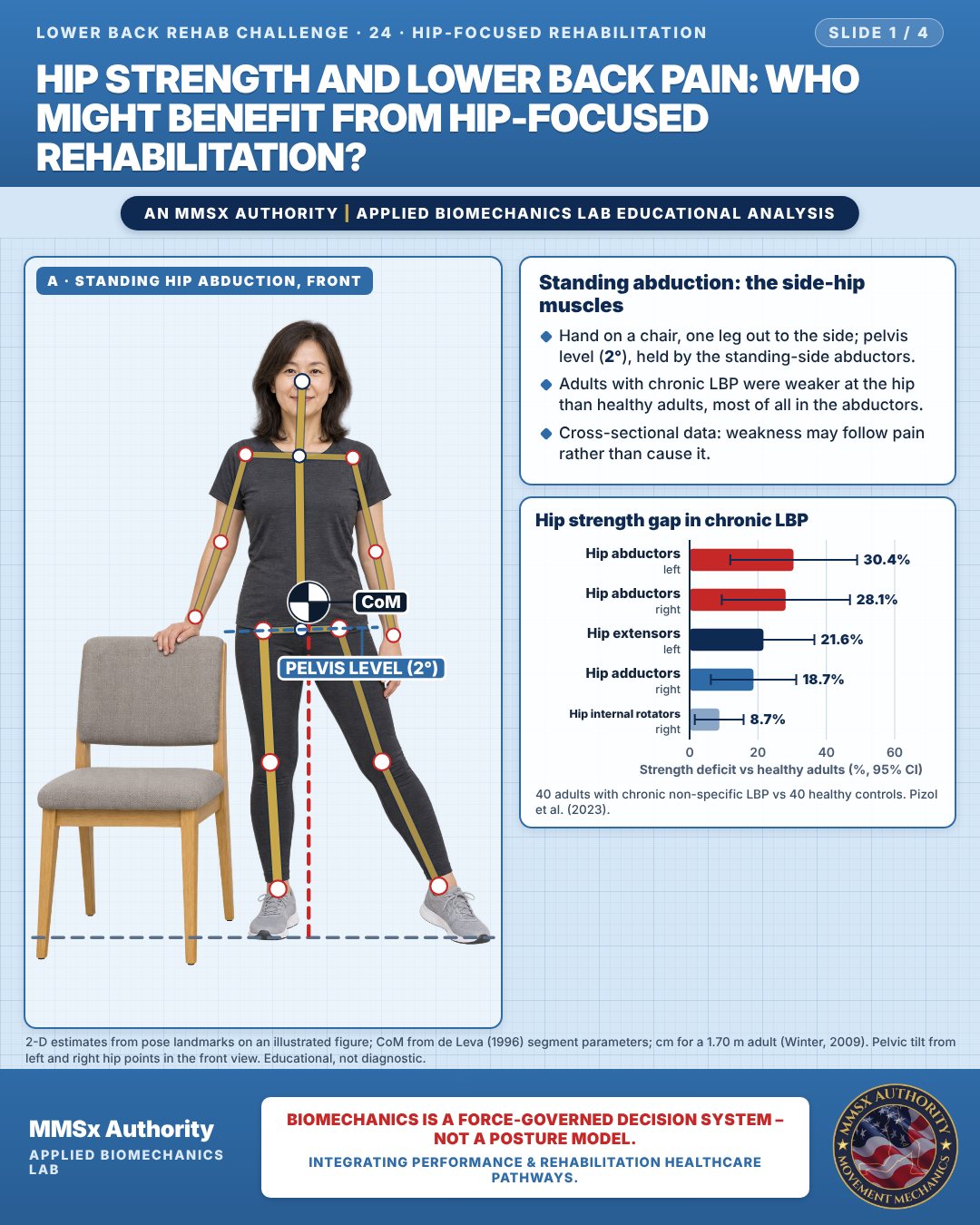 24
Hip strength and lower back pain: who might benefit from hip-focused rehabilitation?
Hip-focused rehabilitation for LBP means adding hip-directed treatment (hip abductor/extensor strengthening, hip mobility work, hip manual therapy)…
 25
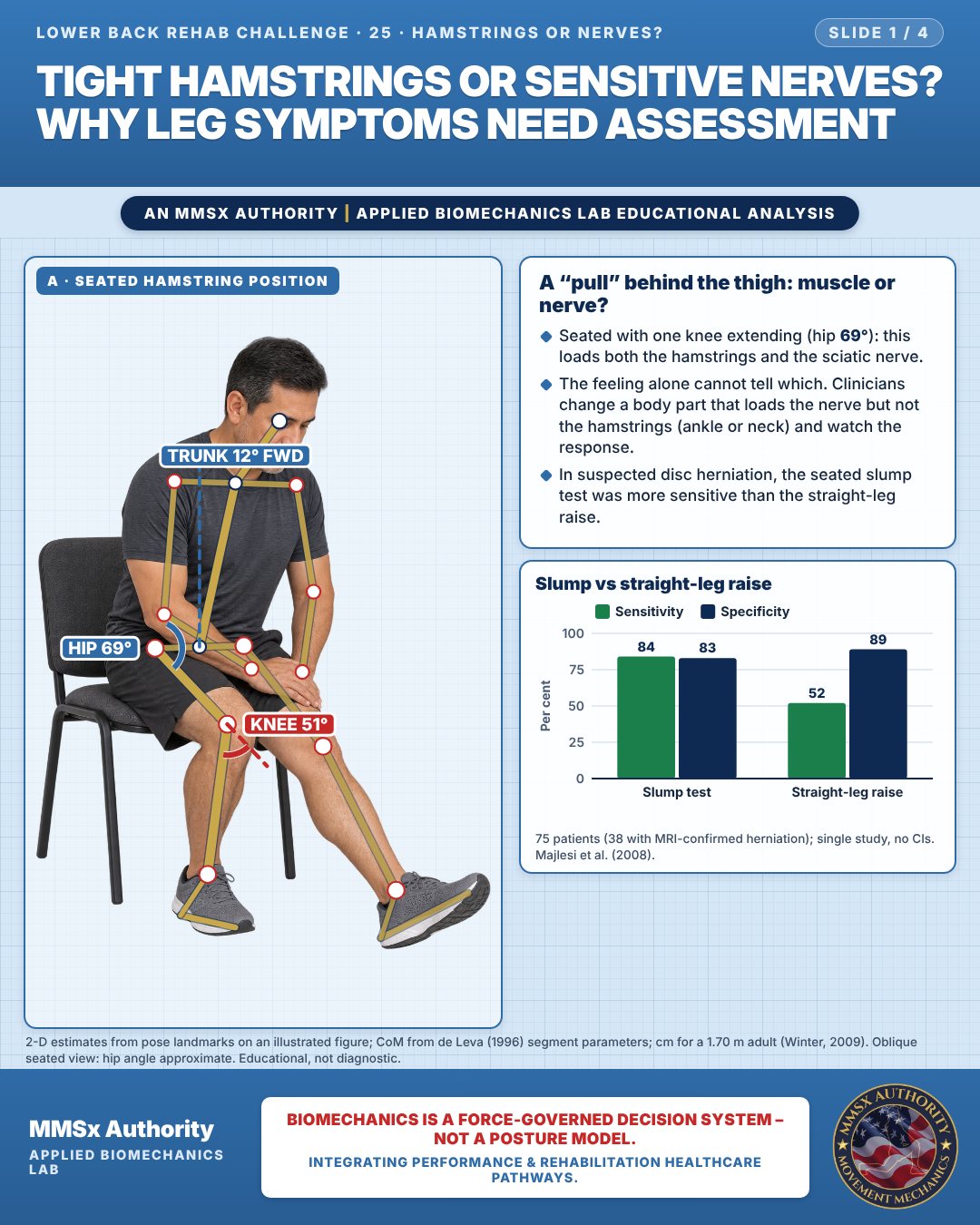
Tight hamstrings or sensitive nerves? Why leg symptoms need assessment
A "pulling" feeling behind the thigh during a straight leg raise or forward bend can come from muscle–tendon stretch tolerance (hamstrings) or from…
 26
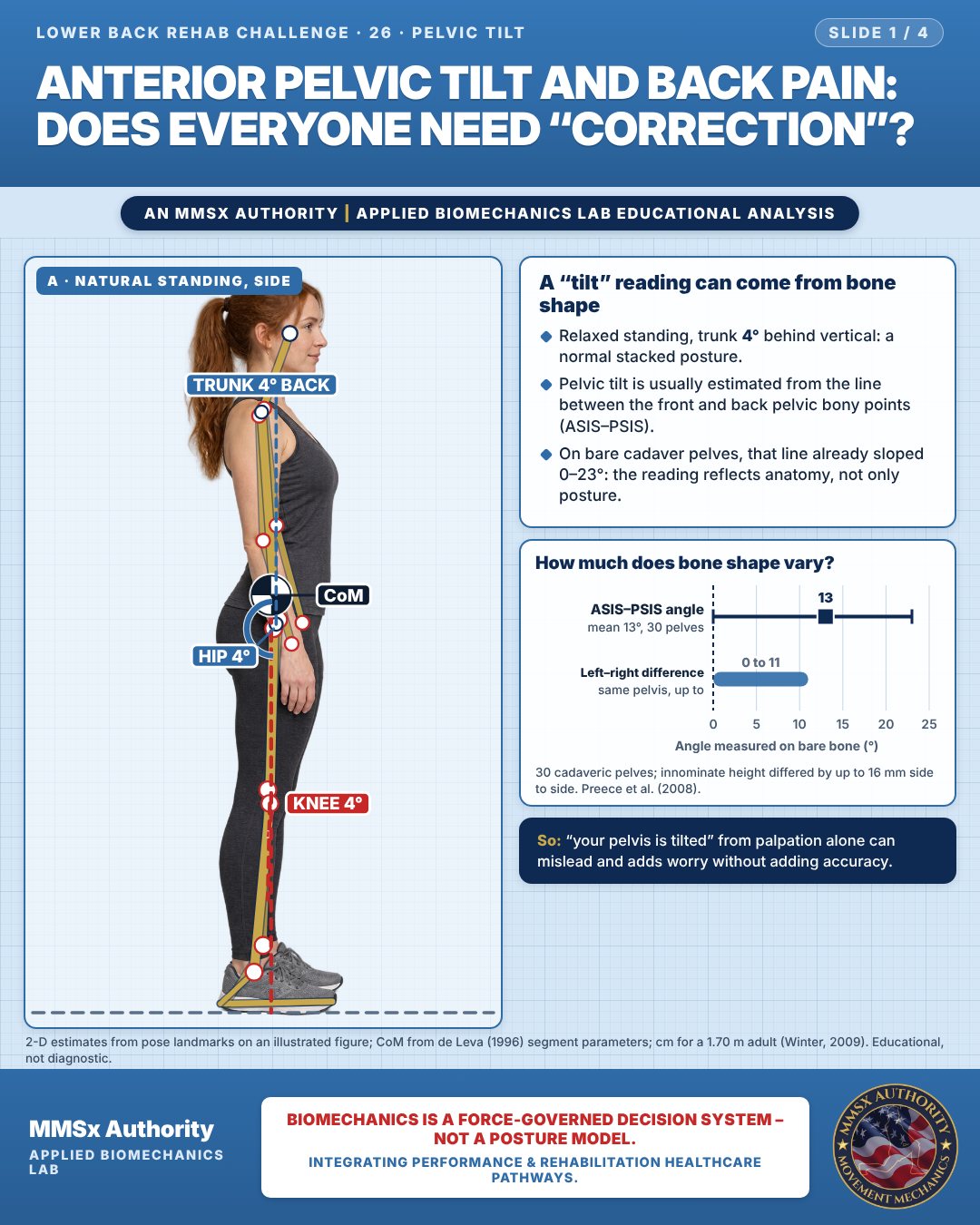
Anterior pelvic tilt and back pain: does everyone need “correction”?
Anterior pelvic tilt is a forward rotation of the pelvis in the sagittal plane, clinically estimated from the angle of a line joining the anterior…
 27
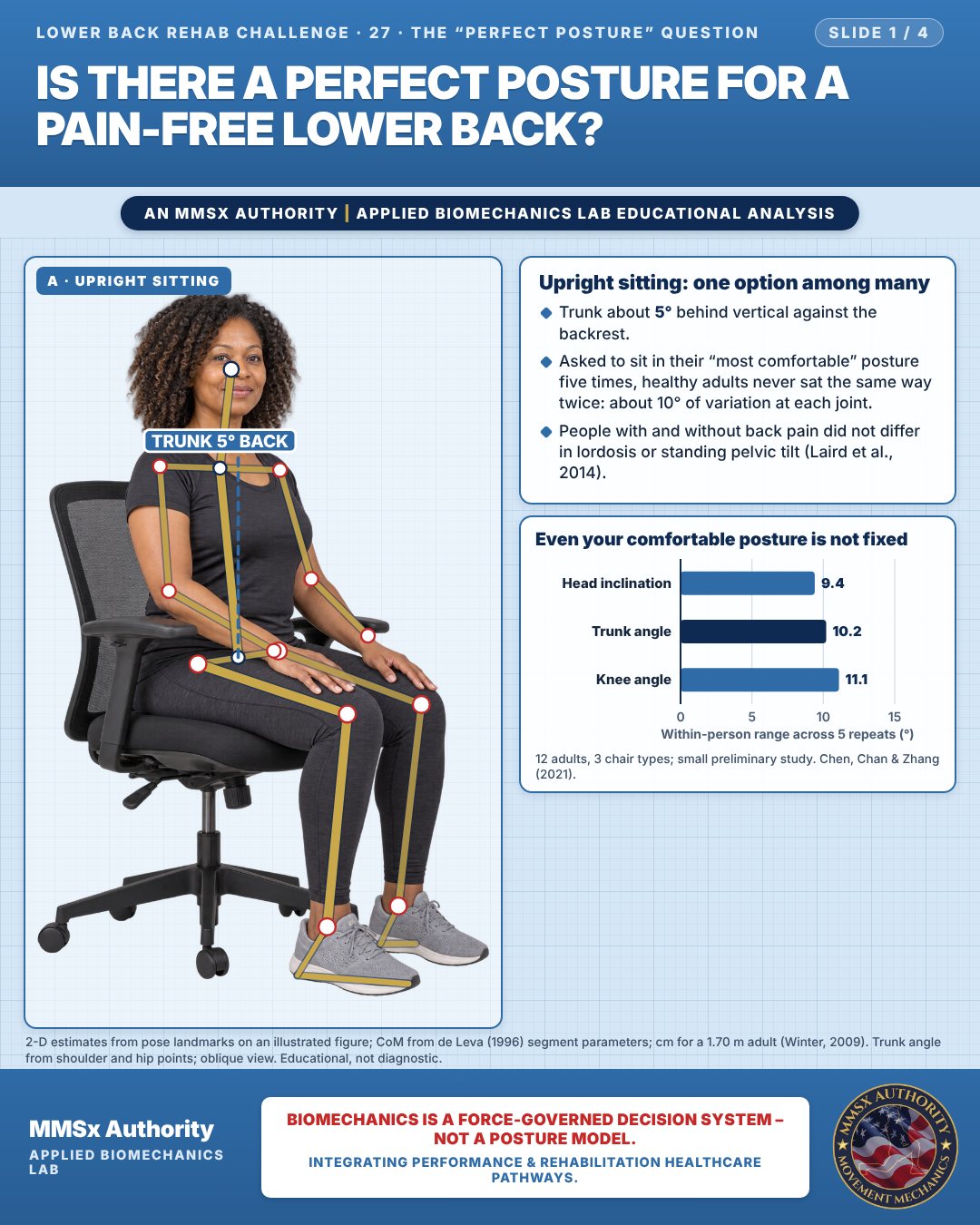
Is there a perfect posture for a pain-free lower back?
"Posture" is the position the body adopts at a moment (standing, sitting, bending). Movement analysis, verified research data and a decision pathway from the
 28
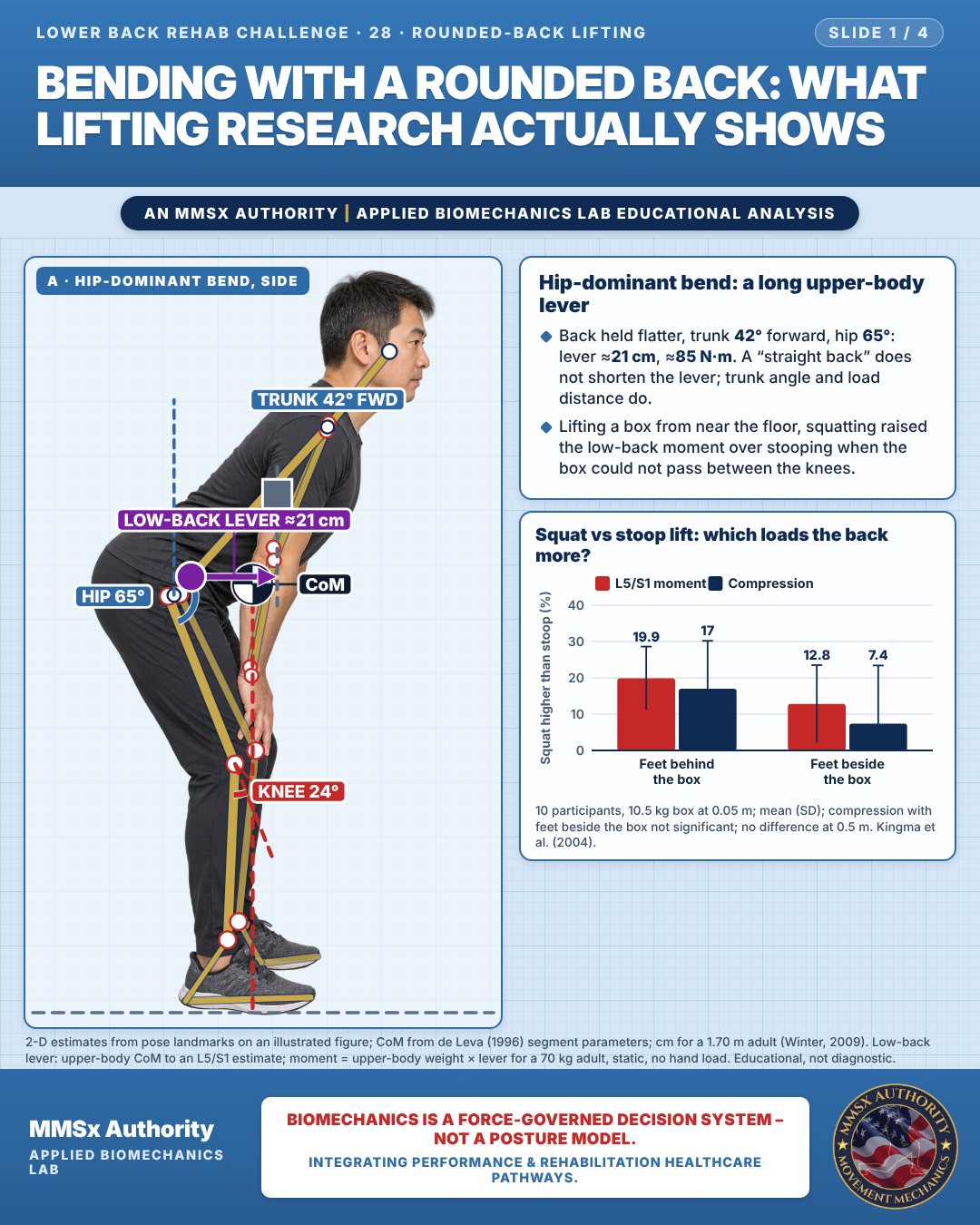
Bending with a rounded back: what lifting research actually shows
"Rounded-back" (stoop or flexed-spine) lifting means the load is raised with greater lumbar flexion and less knee bend.
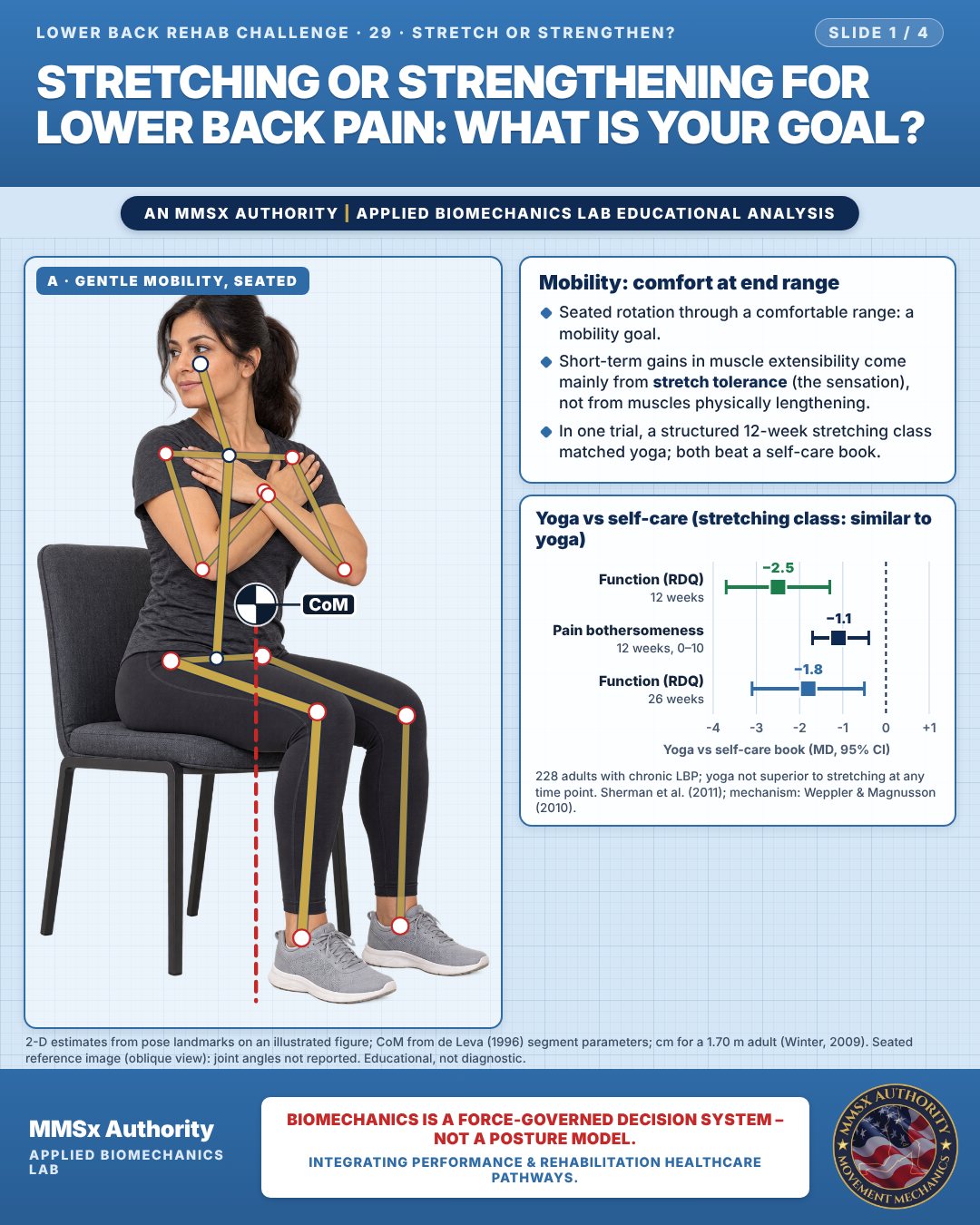 29
Stretching or strengthening for lower back pain: what is your goal?
Stretching (flexibility) exercise aims to increase range of motion or comfort at end range.
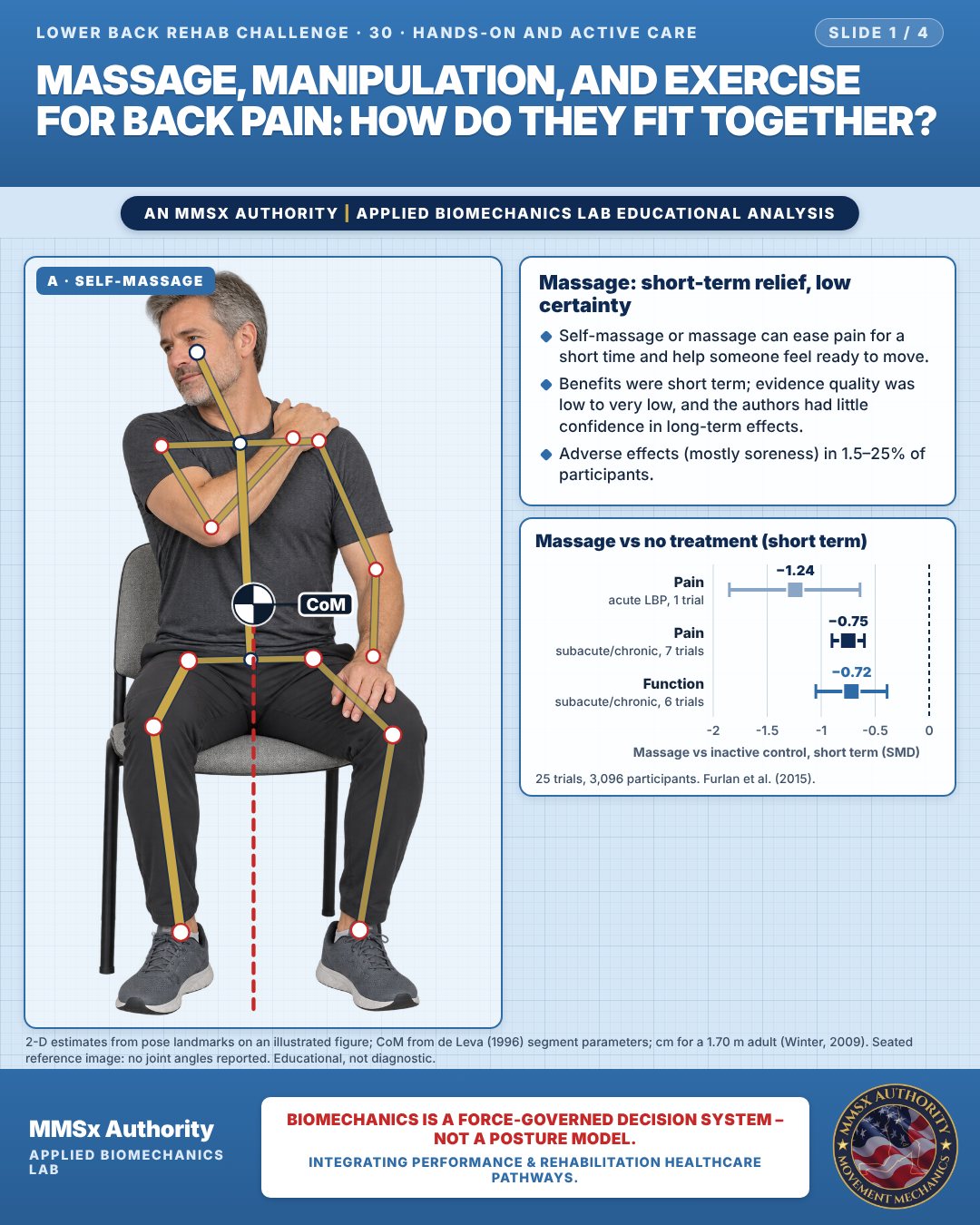 30
Massage, manipulation, and exercise for back pain: how do they fit together?
Spinal manipulative therapy (SMT) includes high-velocity thrust manipulation and lower-velocity mobilisation of spinal joints.
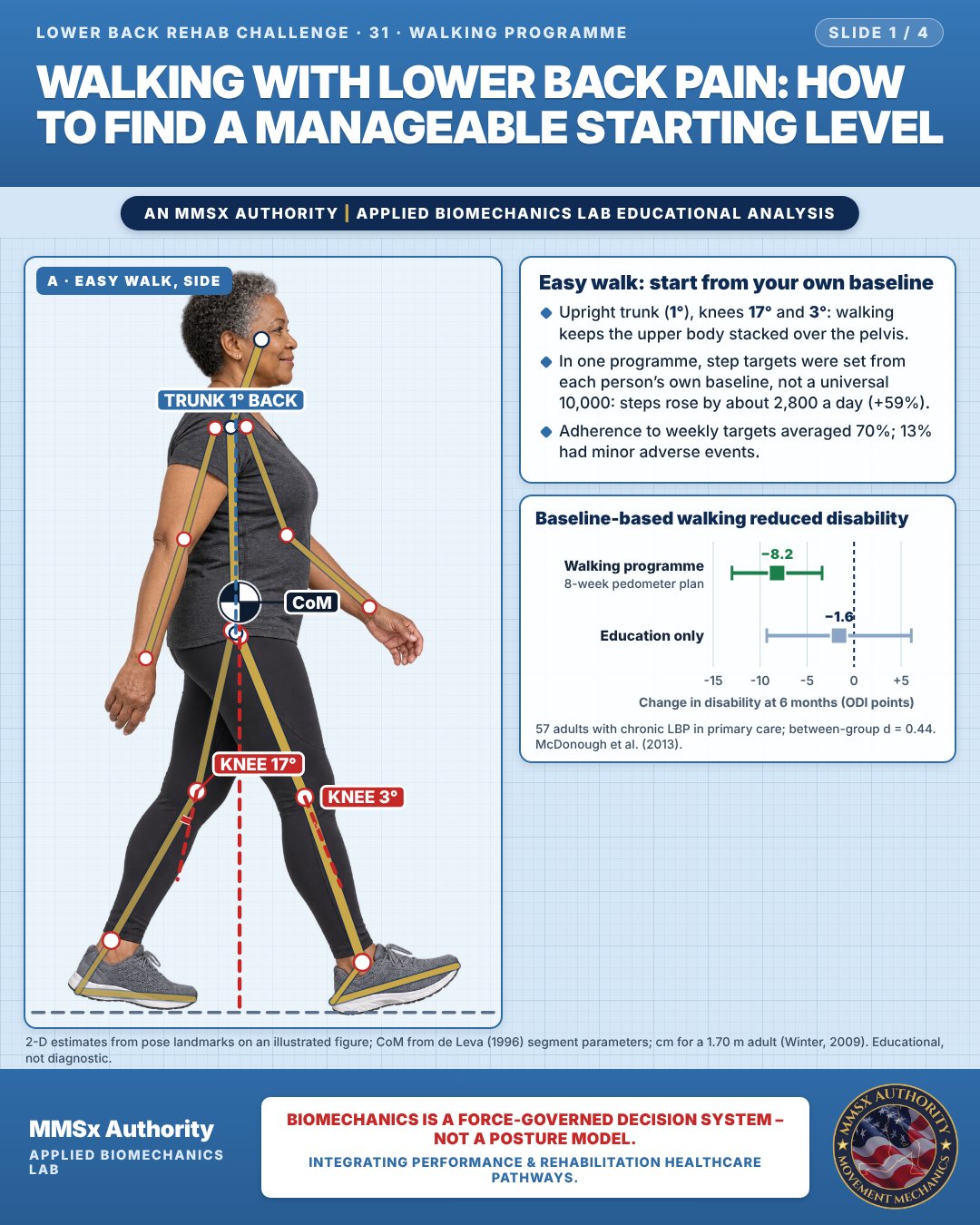 31
Walking with lower back pain: how to find a manageable starting level
A walking programme for low back pain is a graded, usually self-managed aerobic activity in which daily walking time or steps start at a level that…
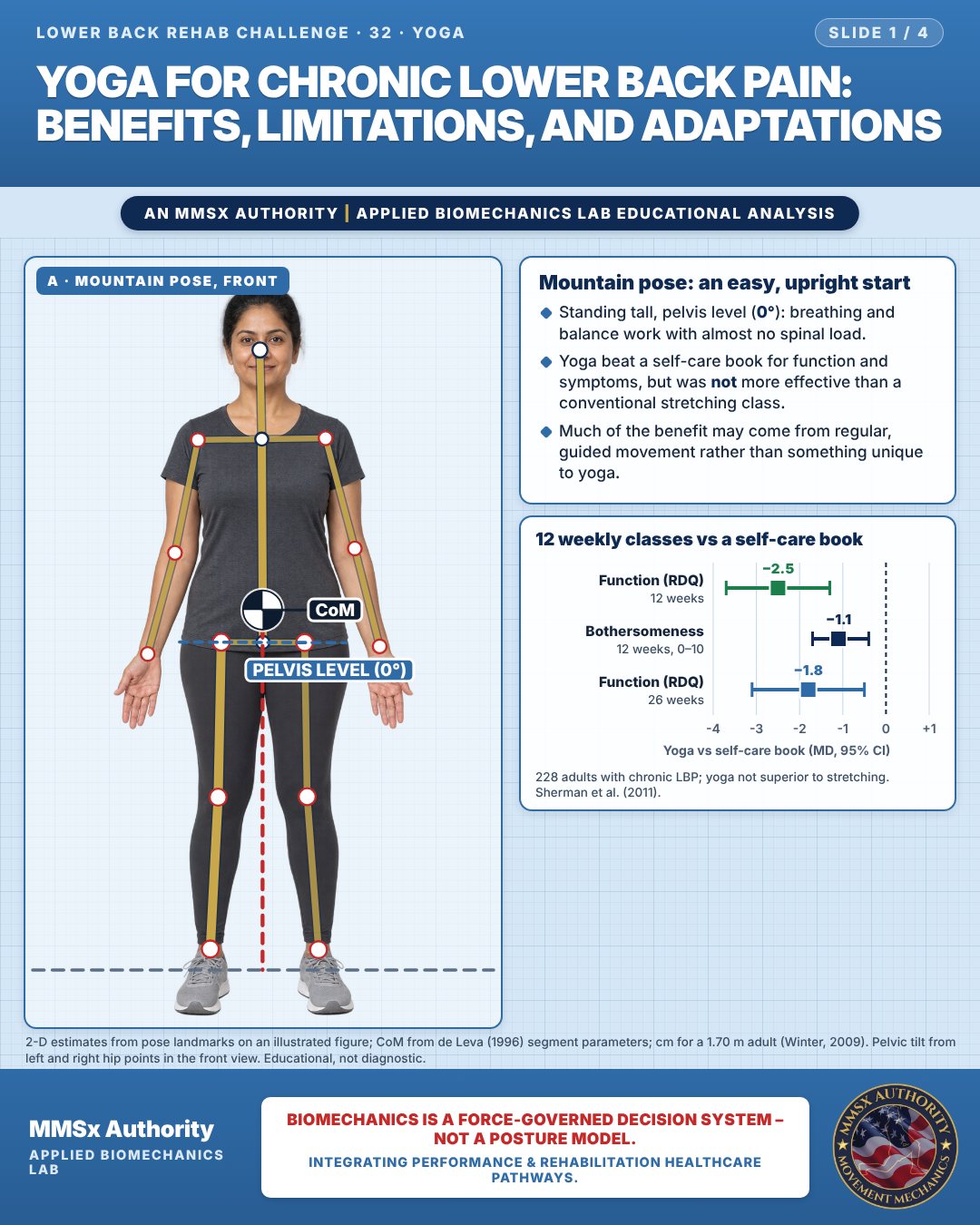 32
Yoga for chronic lower back pain: benefits, limitations, and adaptations
Therapeutic yoga for chronic non-specific LBP is a structured mind–body exercise programme combining postures (asanas), breathing and relaxation,…
 33
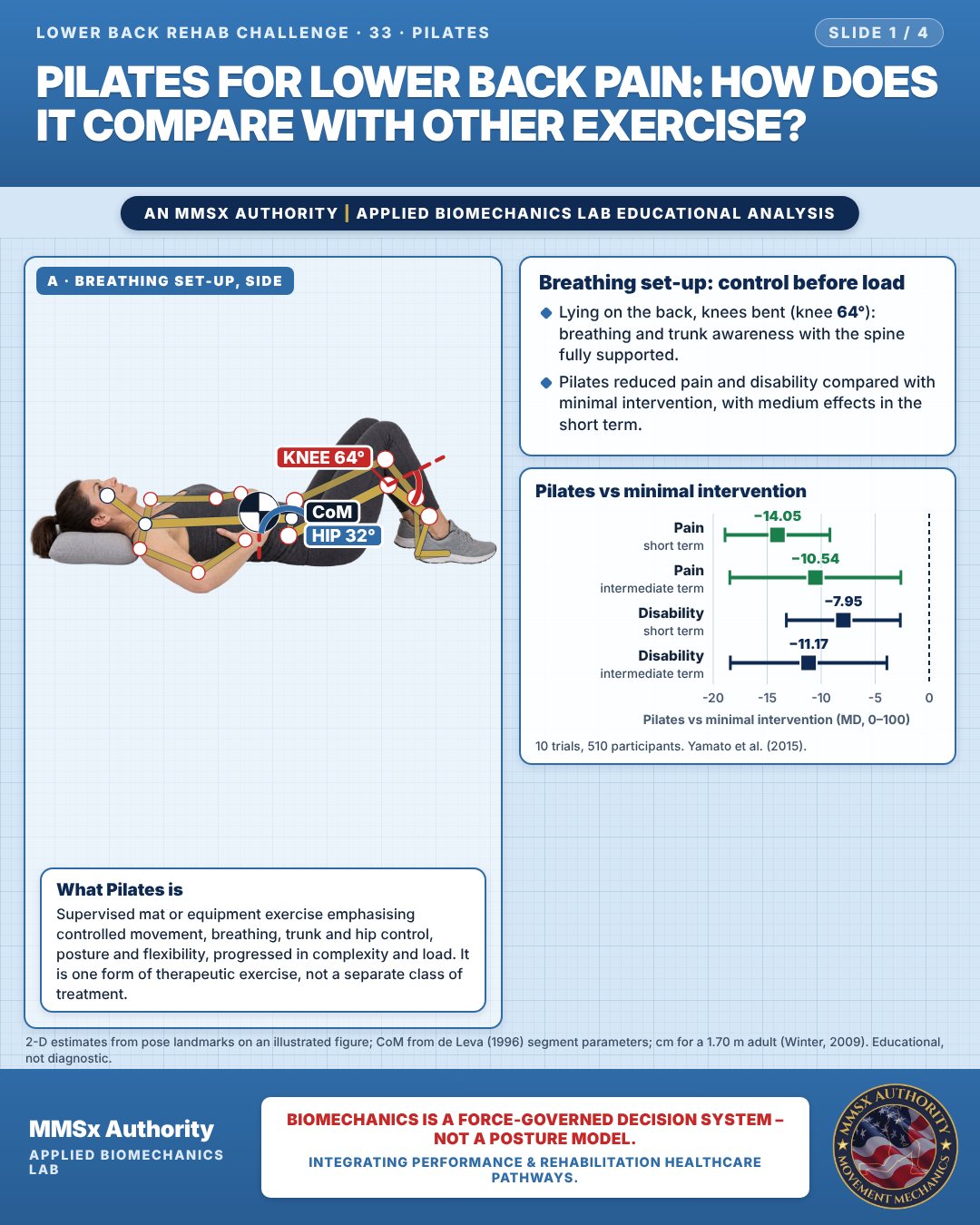
Pilates for lower back pain: how does it compare with other exercise?
Pilates-based exercise for LBP is a supervised programme (mat or equipment-based) emphasising controlled movement, breathing, trunk and hip control,…
 34
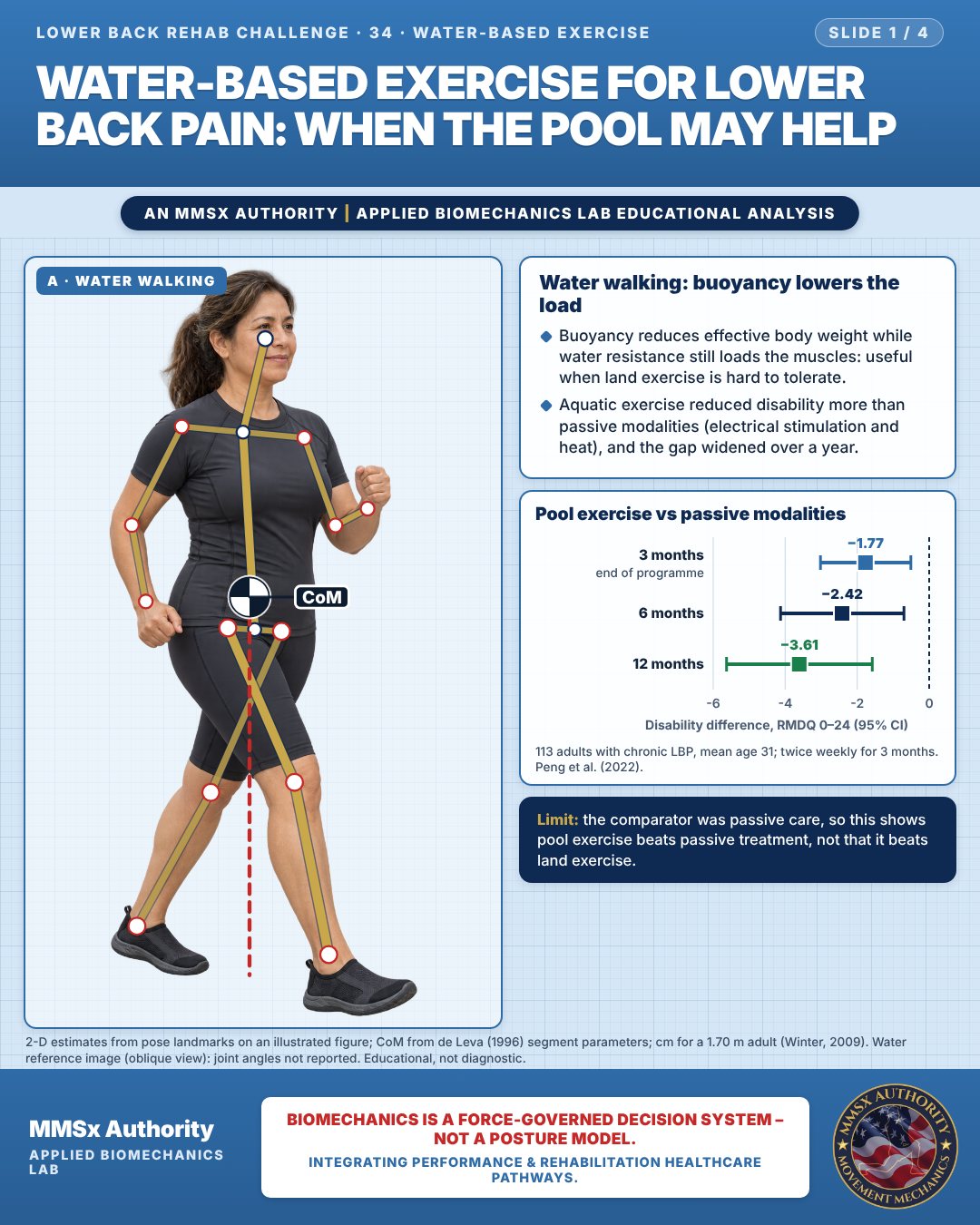
Water-based exercise for lower back pain: when the pool may help
Therapeutic aquatic exercise is supervised exercise performed in (usually warm) water, using buoyancy to reduce effective body weight and water…
 35
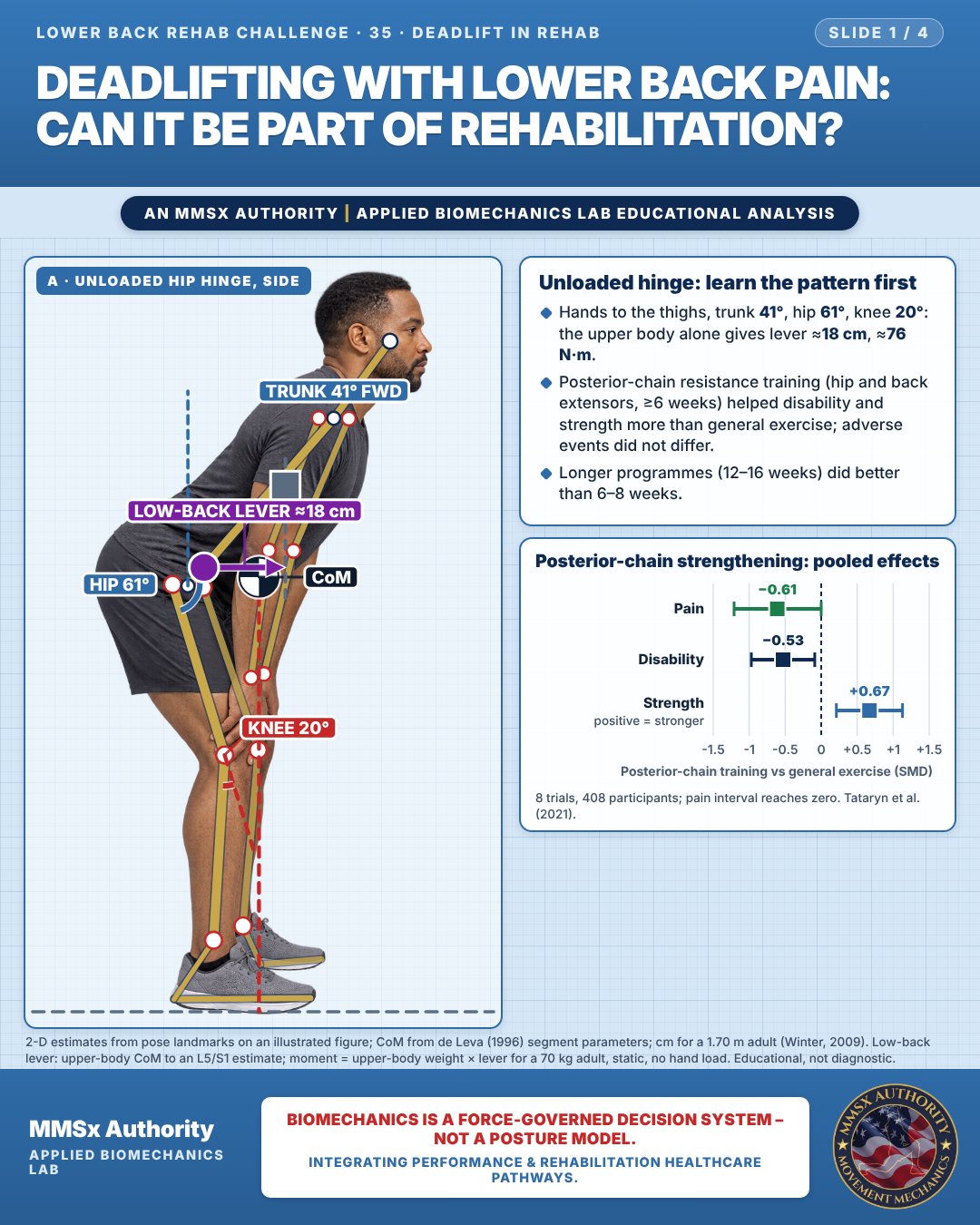
Deadlifting with lower back pain: can it be part of rehabilitation?
Deadlift-based rehabilitation uses the hip-hinge lift of a load from the floor (or from an elevated start) as a progressive, supervised strengthening…
 36
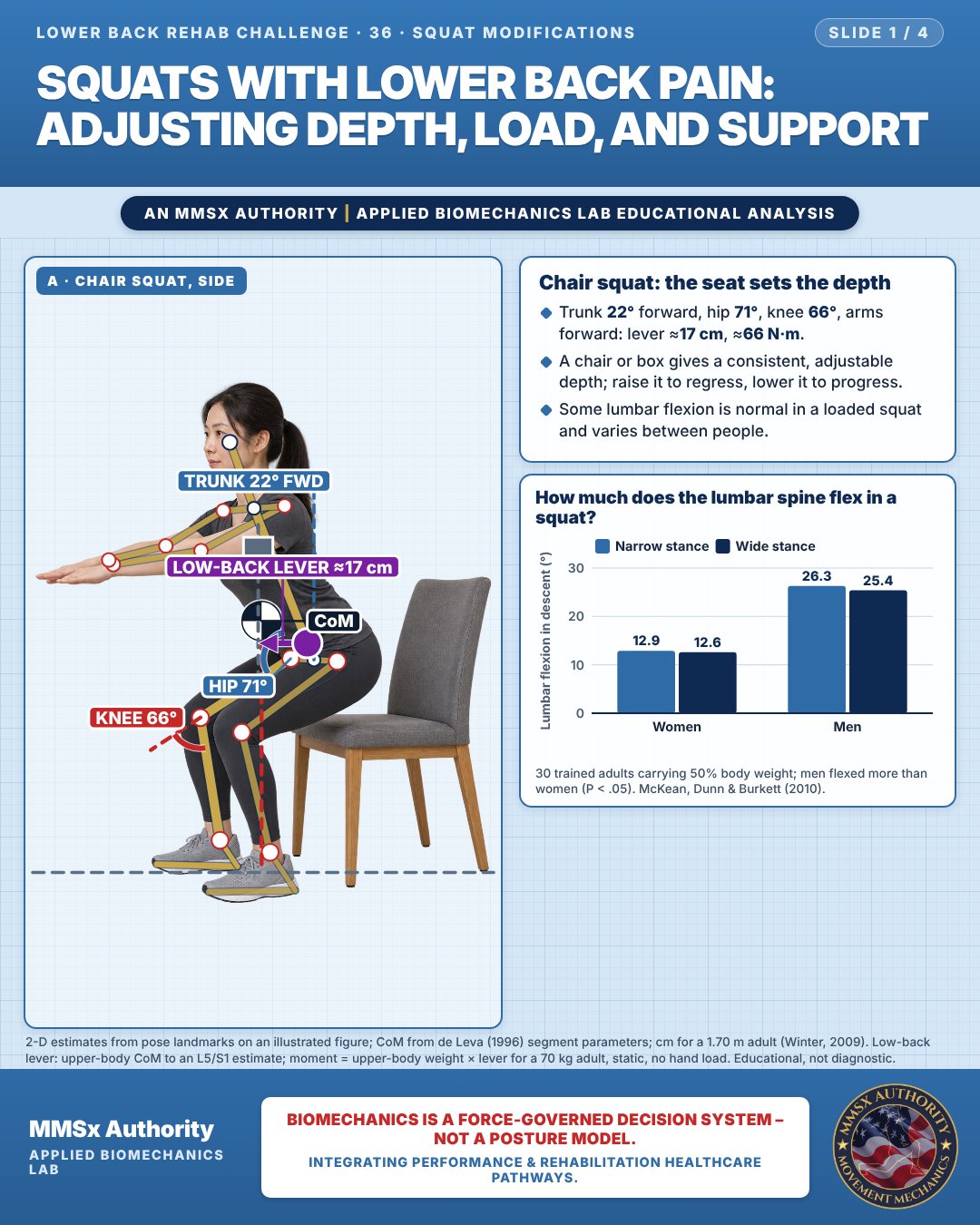
Squats with lower back pain: adjusting depth, load, and support
A modified squat for LBP is a hip–knee–ankle bending task whose depth (e.g. Movement analysis, verified research data and a decision pathway from the MMSx Aut
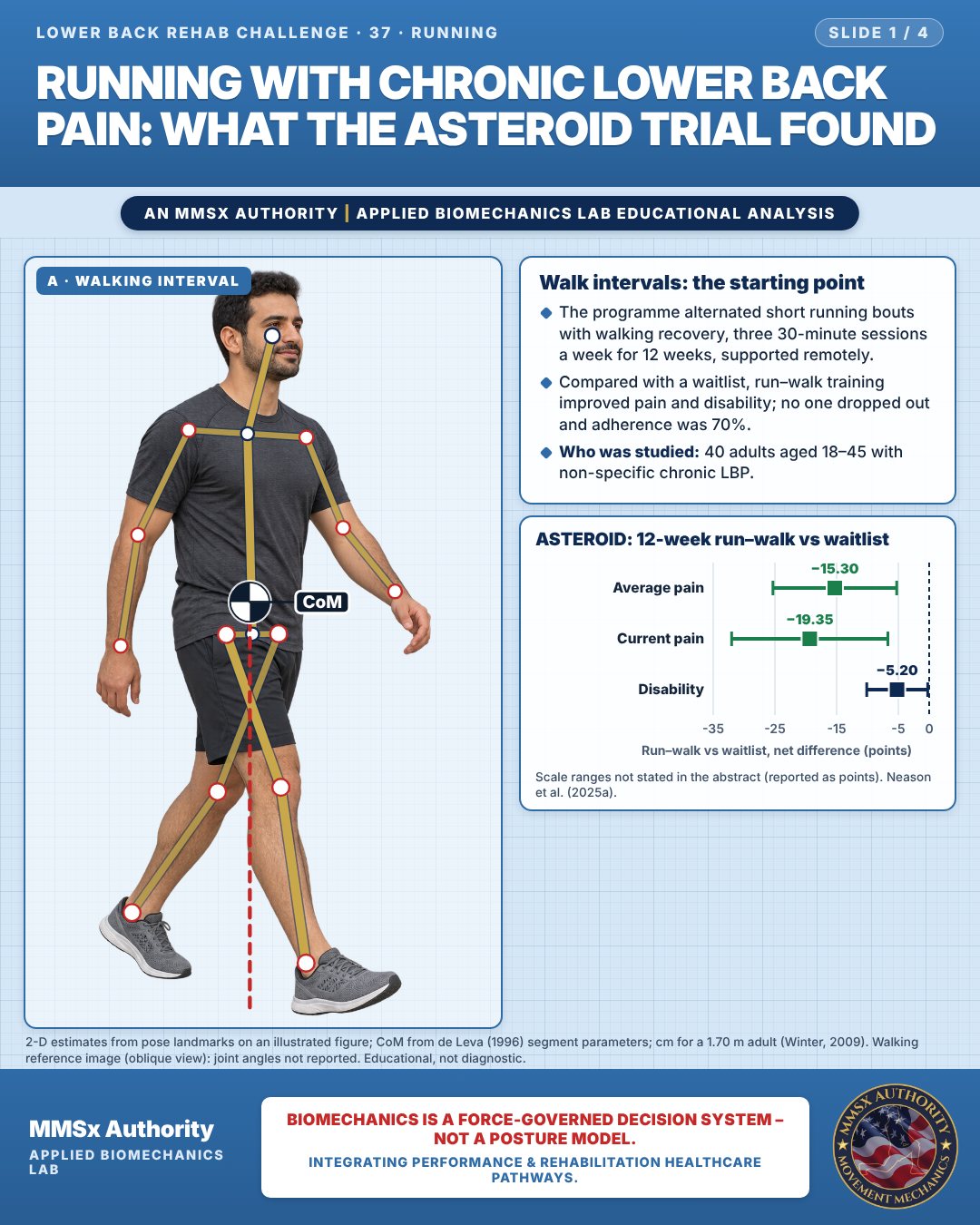 37
Running with chronic lower back pain: what the ASTEROID trial found
A run–walk interval programme alternates short running bouts with walking recovery and progresses the running proportion, speed and volume over weeks.
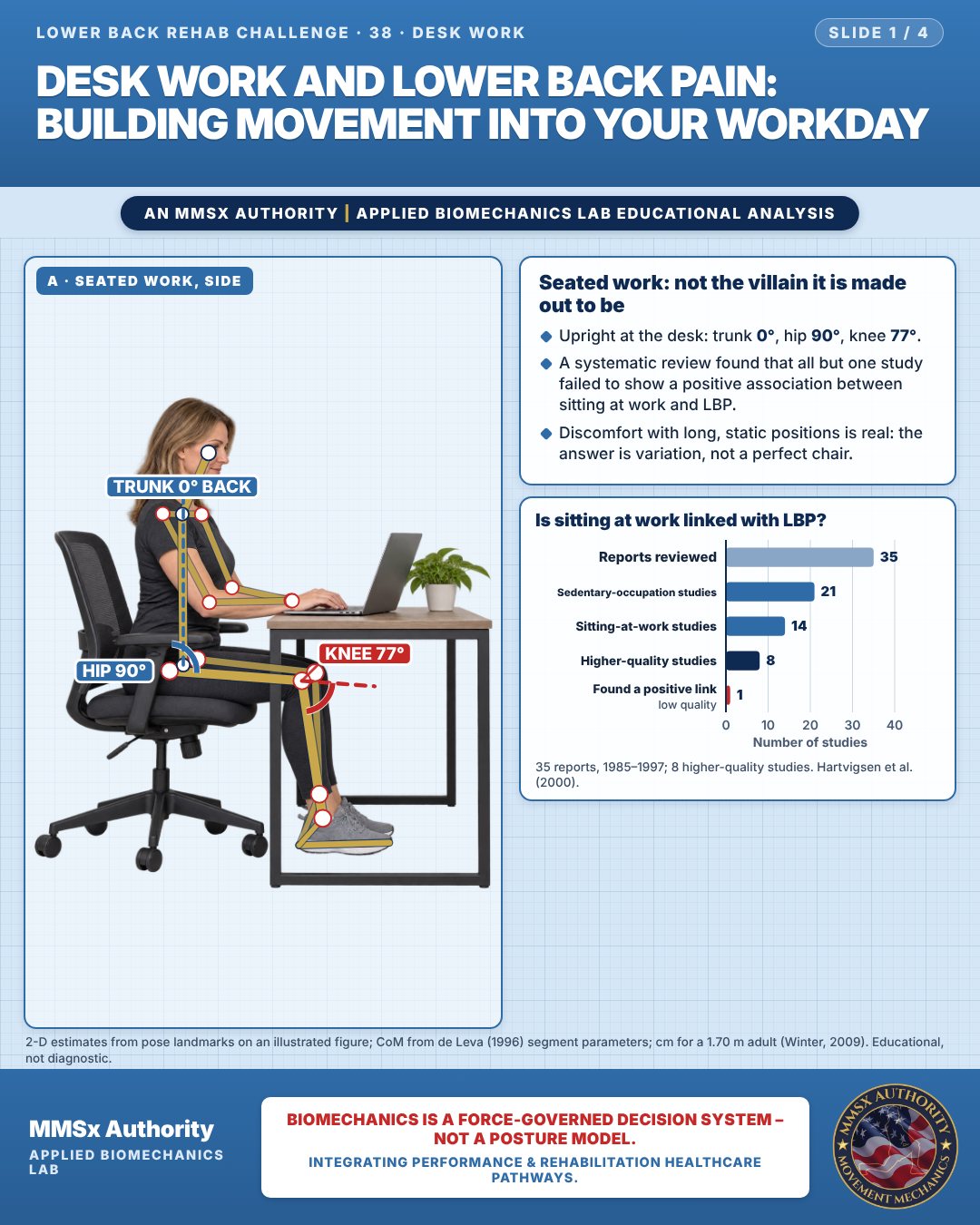 38
Desk work and lower back pain: building movement into your workday
Desk-work LBP management means varying posture and position across the working day (sitting, standing, walking, breaks), adjusting the workstation…
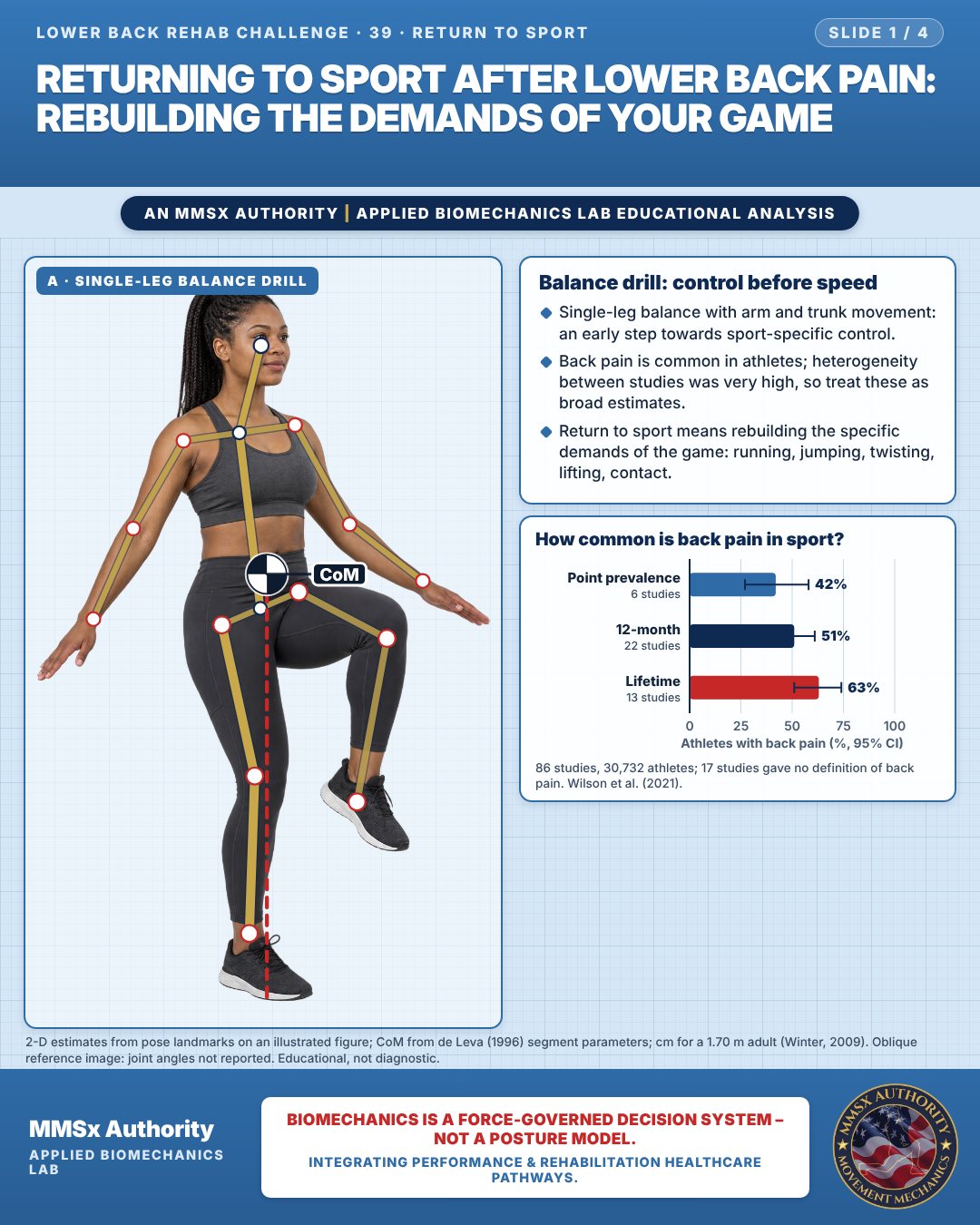 39
Returning to sport after lower back pain: rebuilding the demands of your game
Return to sport after LBP is a graded, criteria-informed progression from symptom-guided general activity, through sport-specific movements (running,…
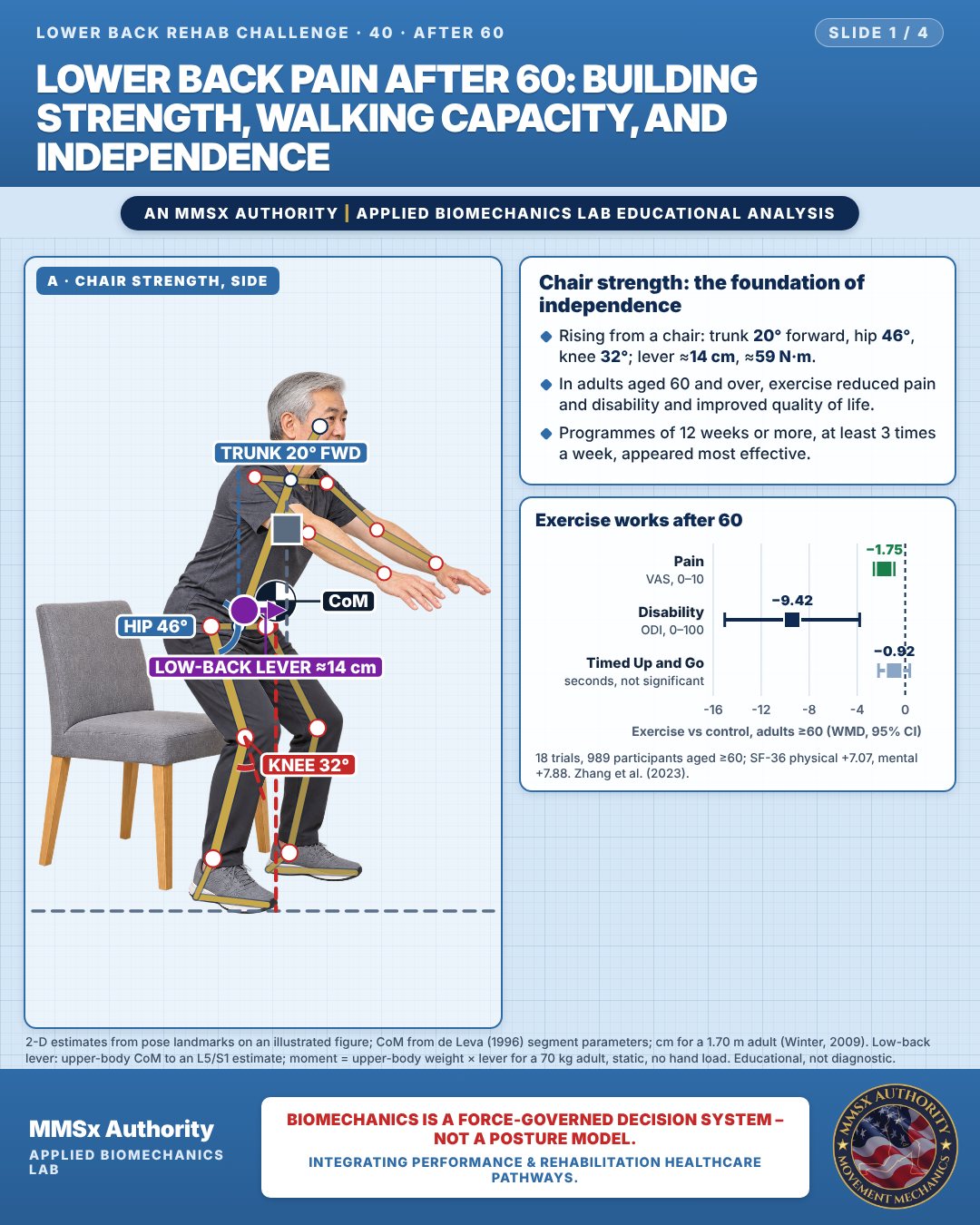 40
Lower back pain after 60: building strength, walking capacity, and independence
Rehabilitation for LBP in adults aged 60+ is individualised active care — progressive strength, walking/aerobic and balance or mind–body exercise,…
 41
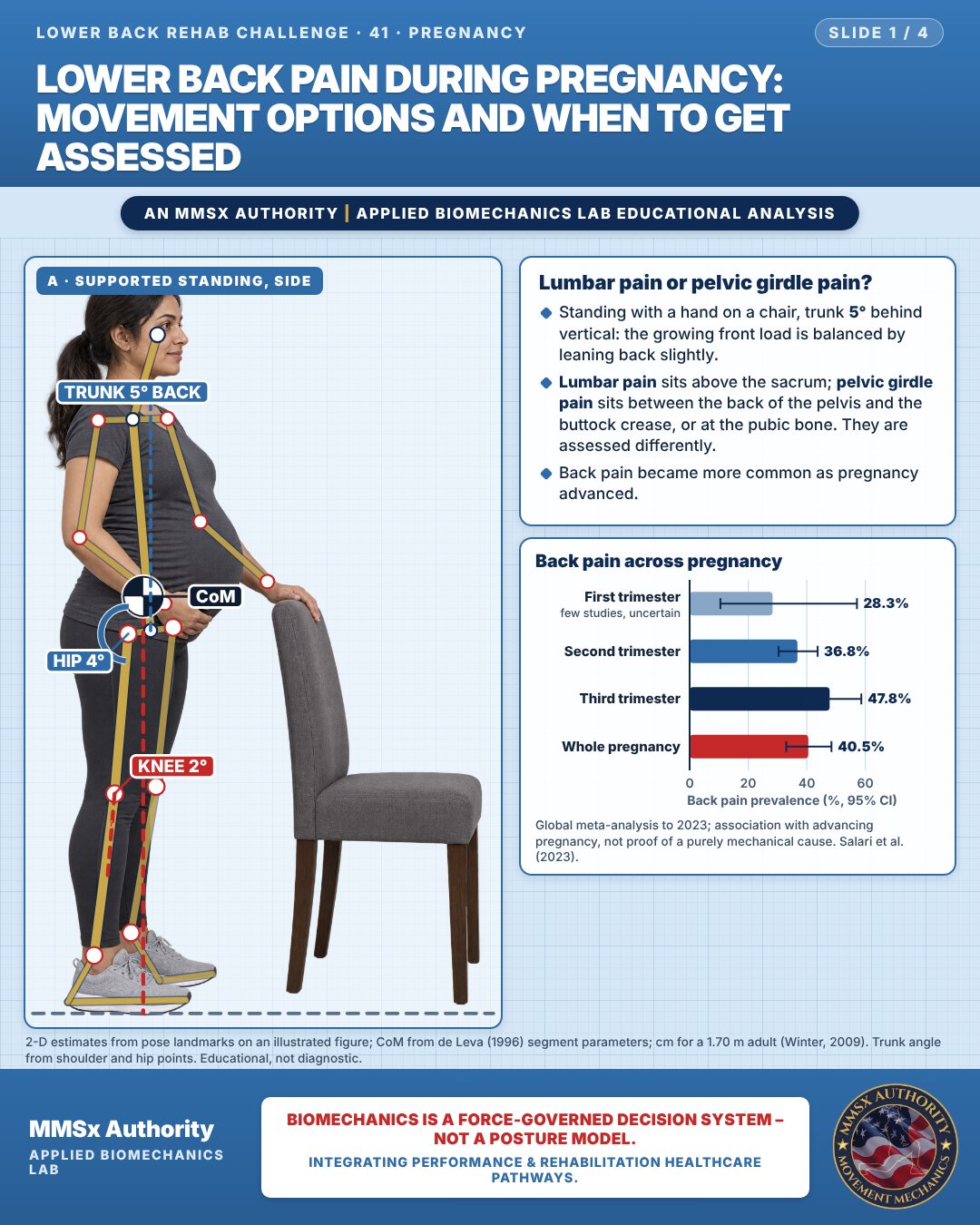
Lower back pain during pregnancy: movement options and when to get assessed
Pregnancy-related lumbopelvic pain is an umbrella term for pain in the lower back (lumbar region, above the sacrum) and/or the pelvic girdle (between…
 42
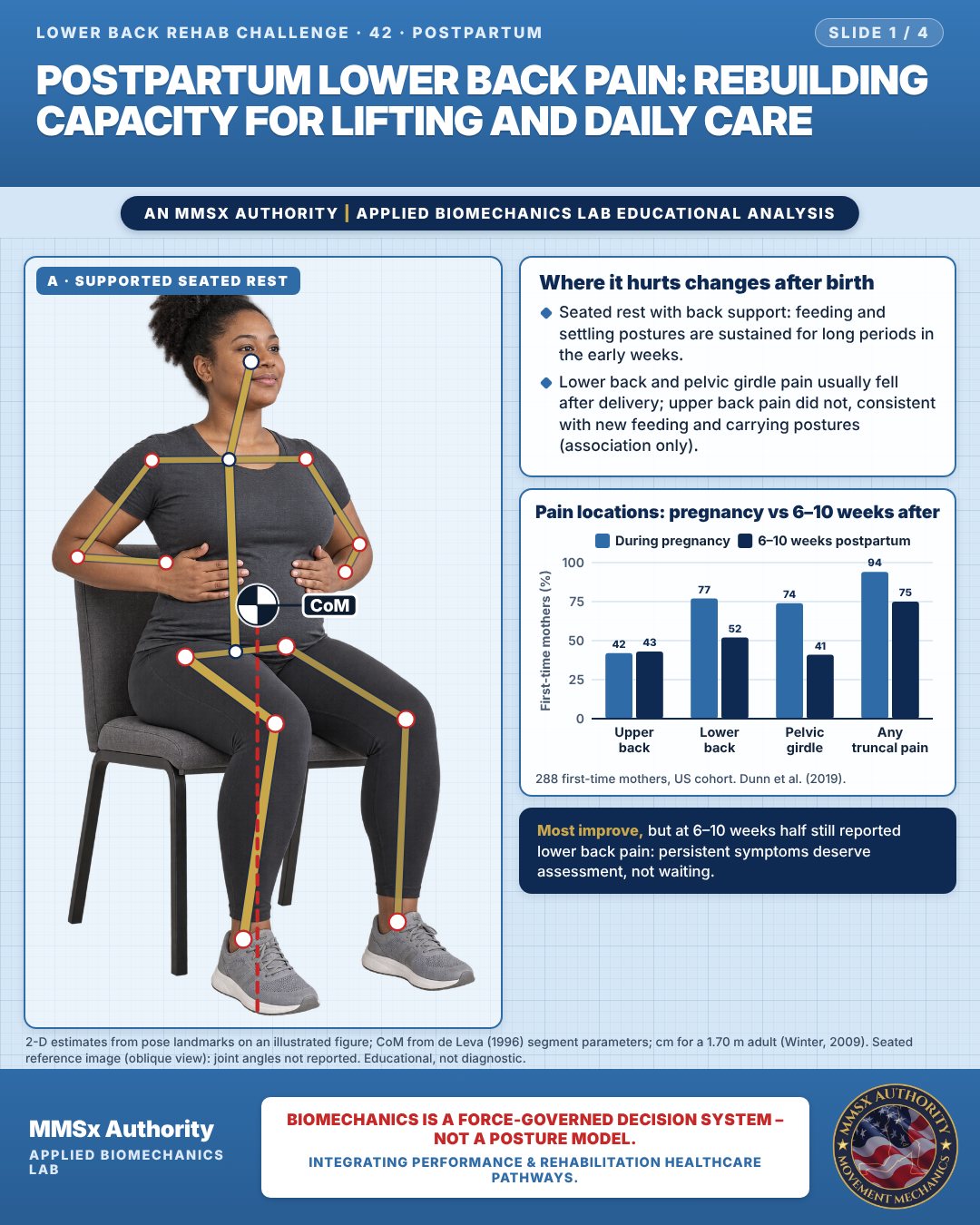
Postpartum lower back pain: rebuilding capacity for lifting and daily care
Postpartum lower back pain is pain in the lumbar region and/or pelvic girdle that persists or begins after childbirth.
 43
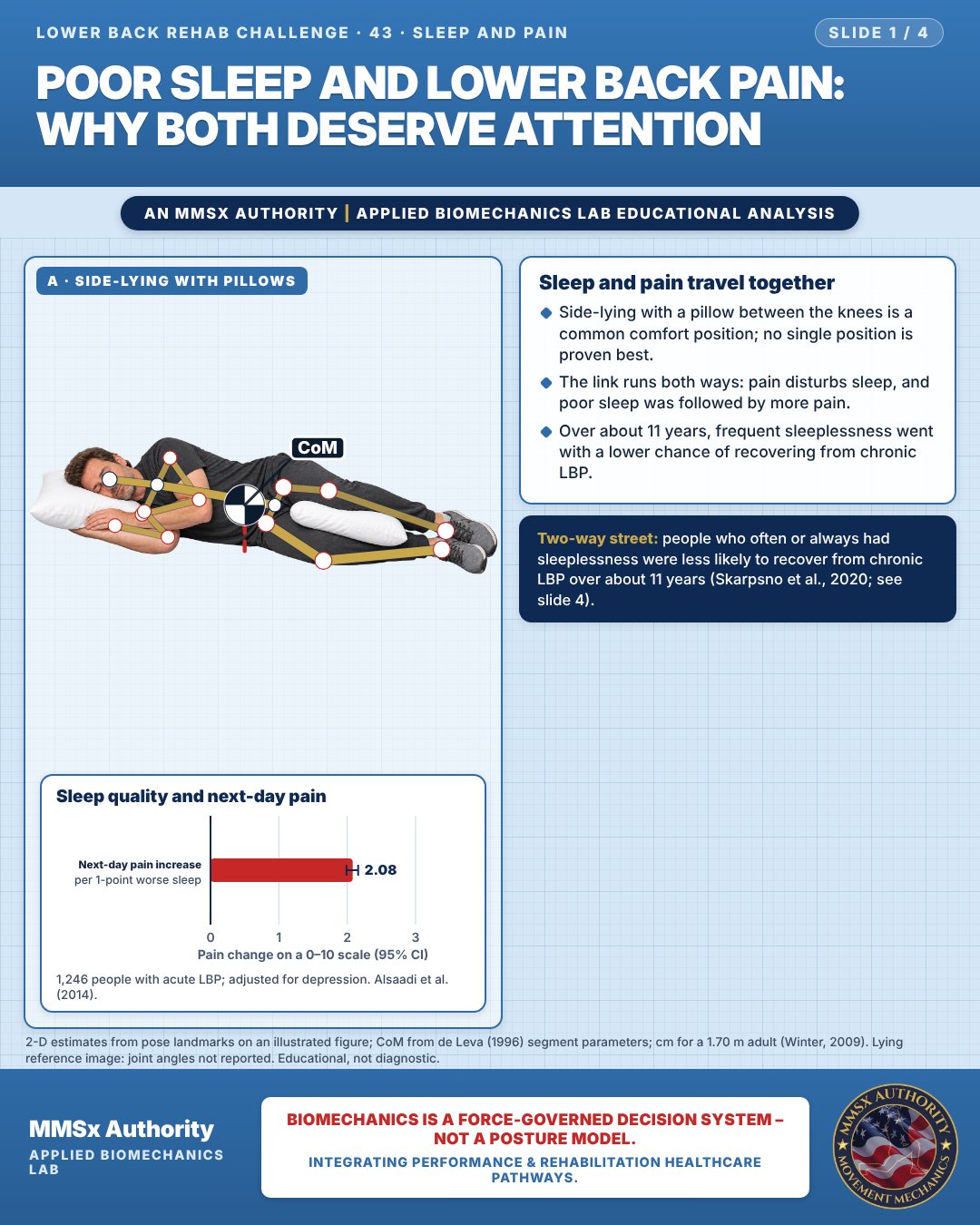
Poor sleep and lower back pain: why both deserve attention
Sleep disturbance in lower back pain covers difficulty falling asleep, waking because of pain or discomfort, shortened sleep, poor self-rated sleep…
 44
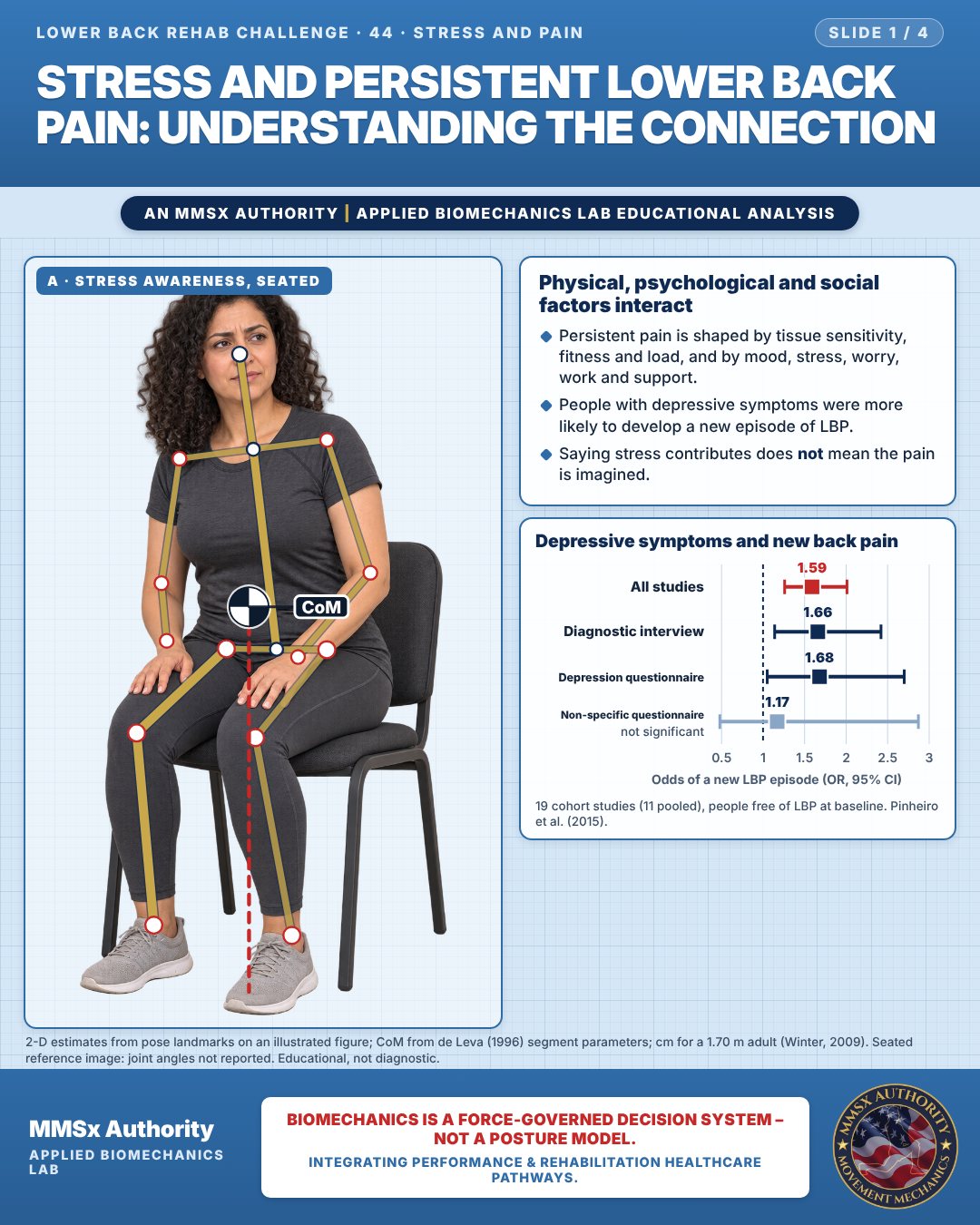
Stress and persistent lower back pain: understanding the connection
Persistent (chronic) lower back pain is pain lasting more than about three months. Movement analysis, verified research data and a decision pathway from the M
 45
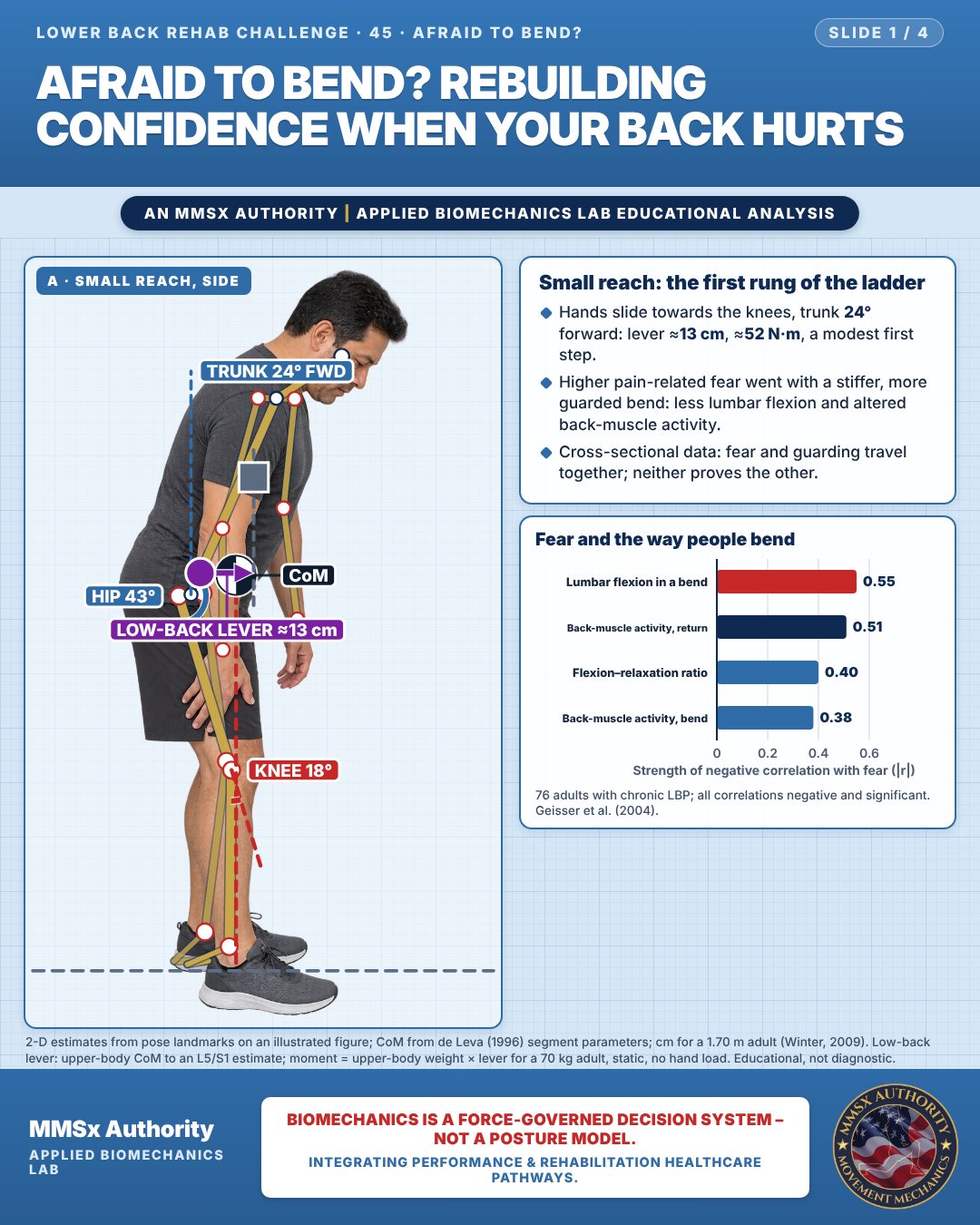
Afraid to bend? Rebuilding confidence when your back hurts
Pain-related fear (kinesiophobia, fear-avoidance) is the belief that a movement such as bending will cause pain, harm or (re)injury, leading to…
 46
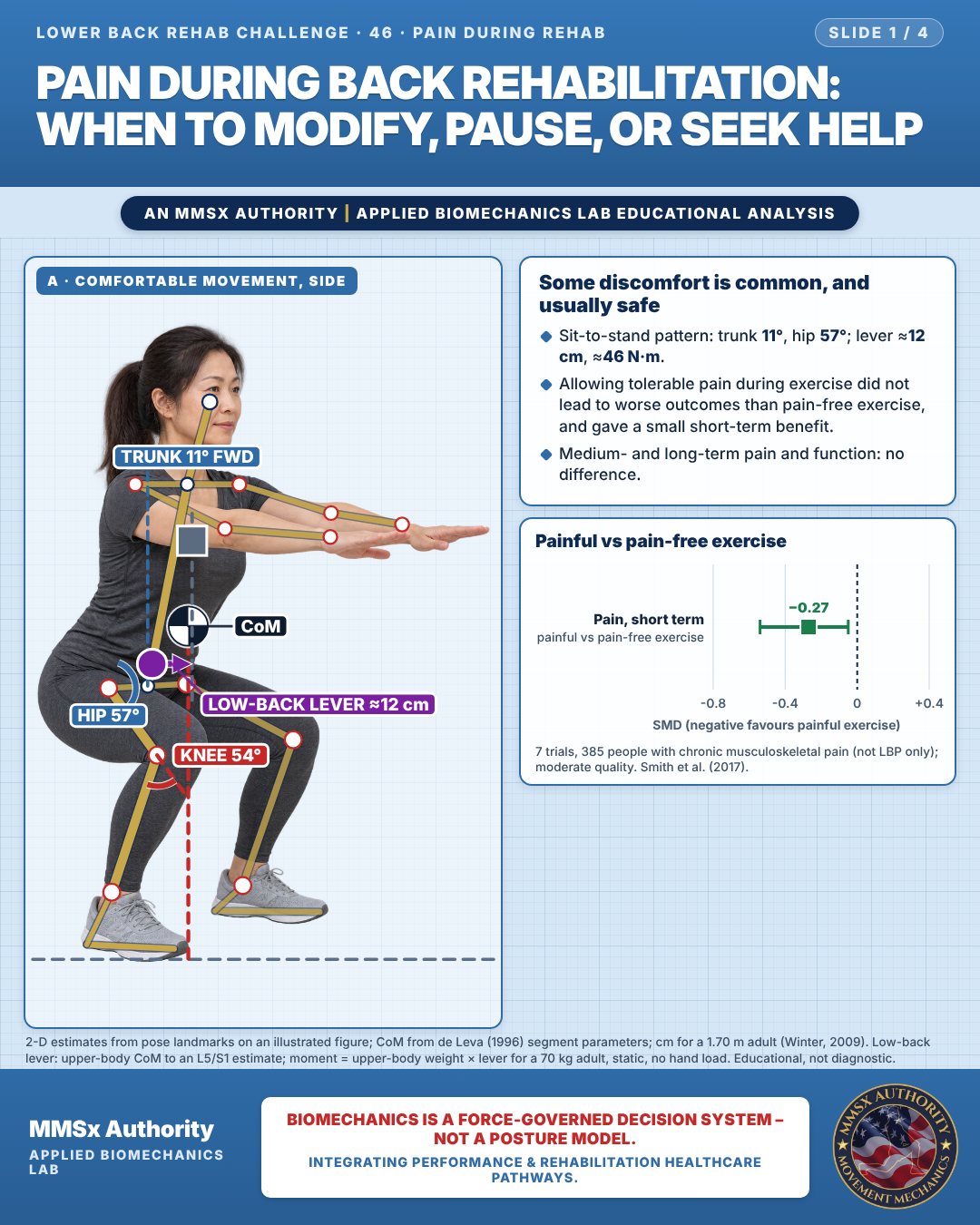
Pain during back rehabilitation: when to modify, pause, or seek help
Exercise-related pain in back rehabilitation is pain felt during or after exercise. Movement analysis, verified research data and a decision pathway from the
 47
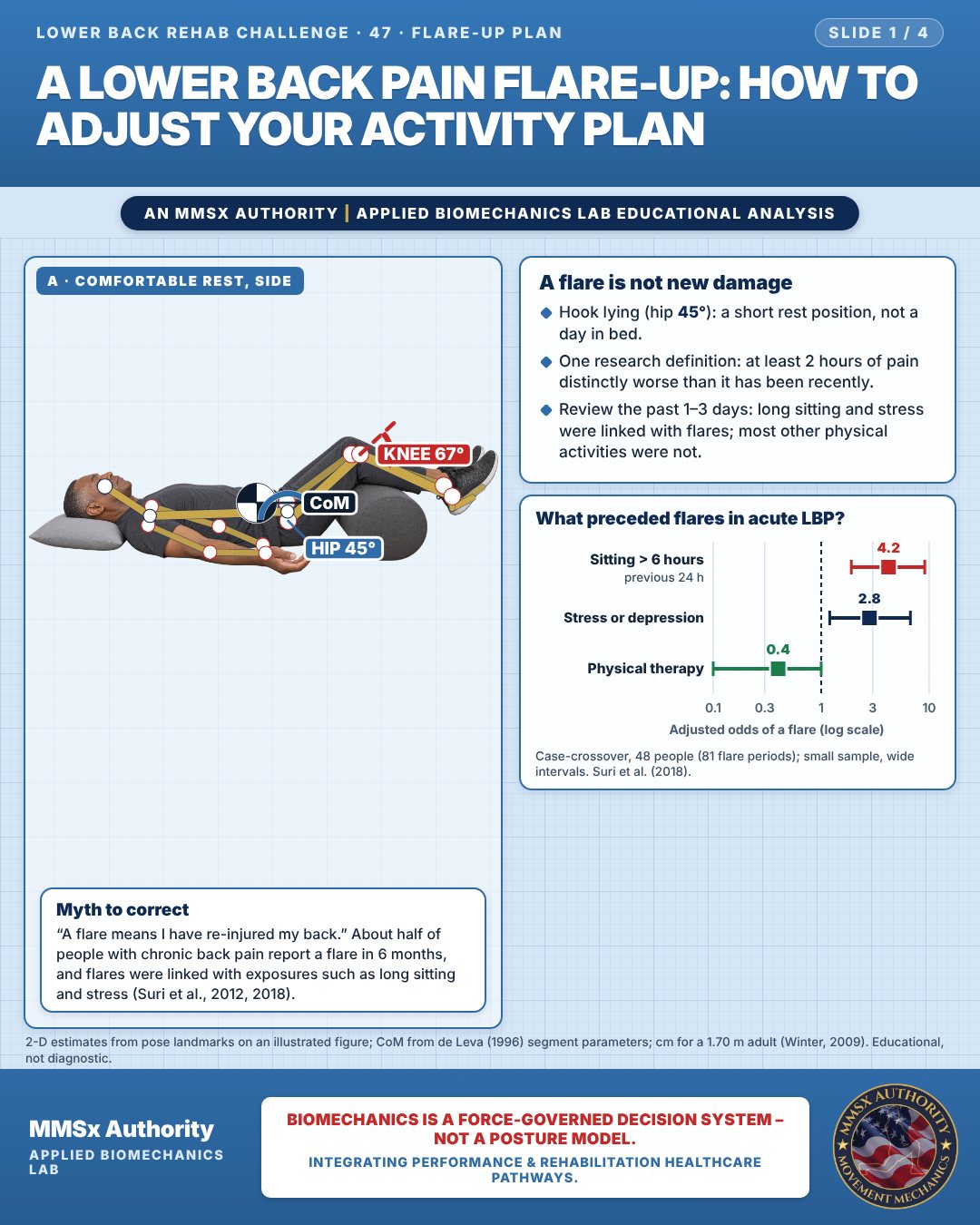
A lower back pain flare-up: how to adjust your activity plan
A flare-up is a period of increased pain, distinctly worse than it has been recently, within an ongoing or recurrent LBP condition.
 48
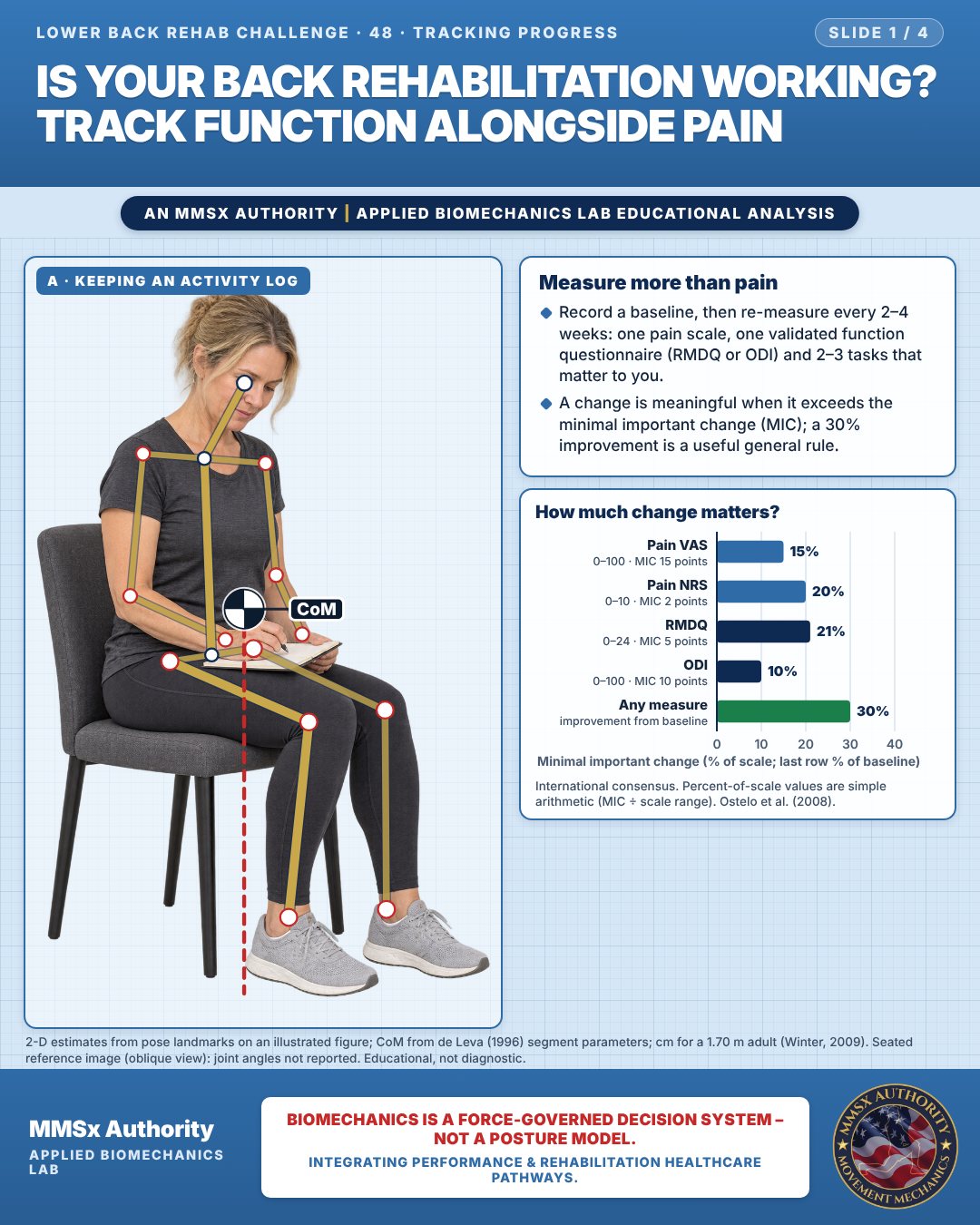
Is your back rehabilitation working? Track function alongside pain
Progress in back rehabilitation is best judged with several measures: pain intensity (0–10 NRS or 0–100 VAS), physical function/disability (e.g.
 49
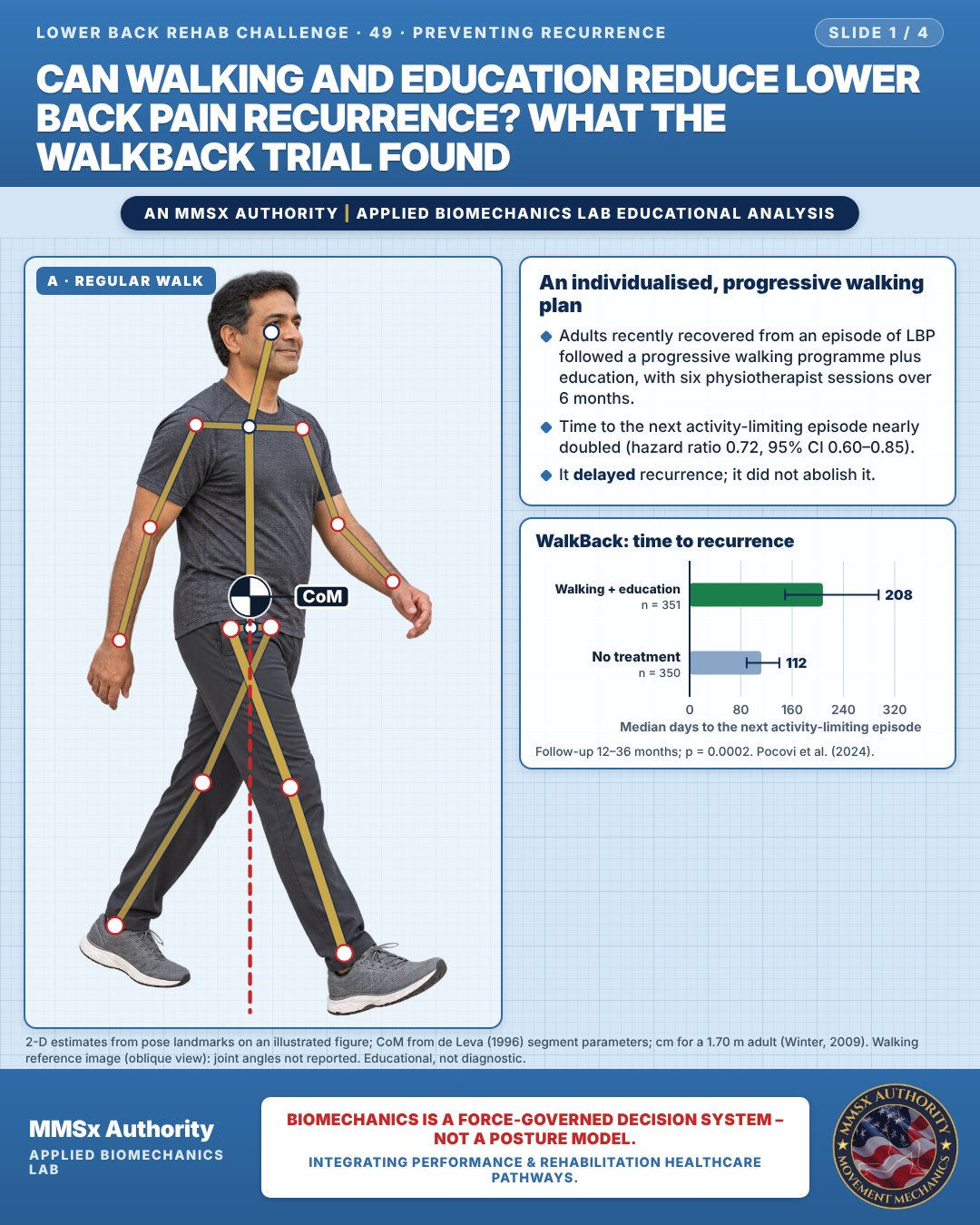
Can walking and education reduce lower back pain recurrence? What the WalkBack trial found
Recurrence is a new episode of LBP after a period of recovery. Movement analysis, verified research data and a decision pathway from the MMSx Authority Applie
 50
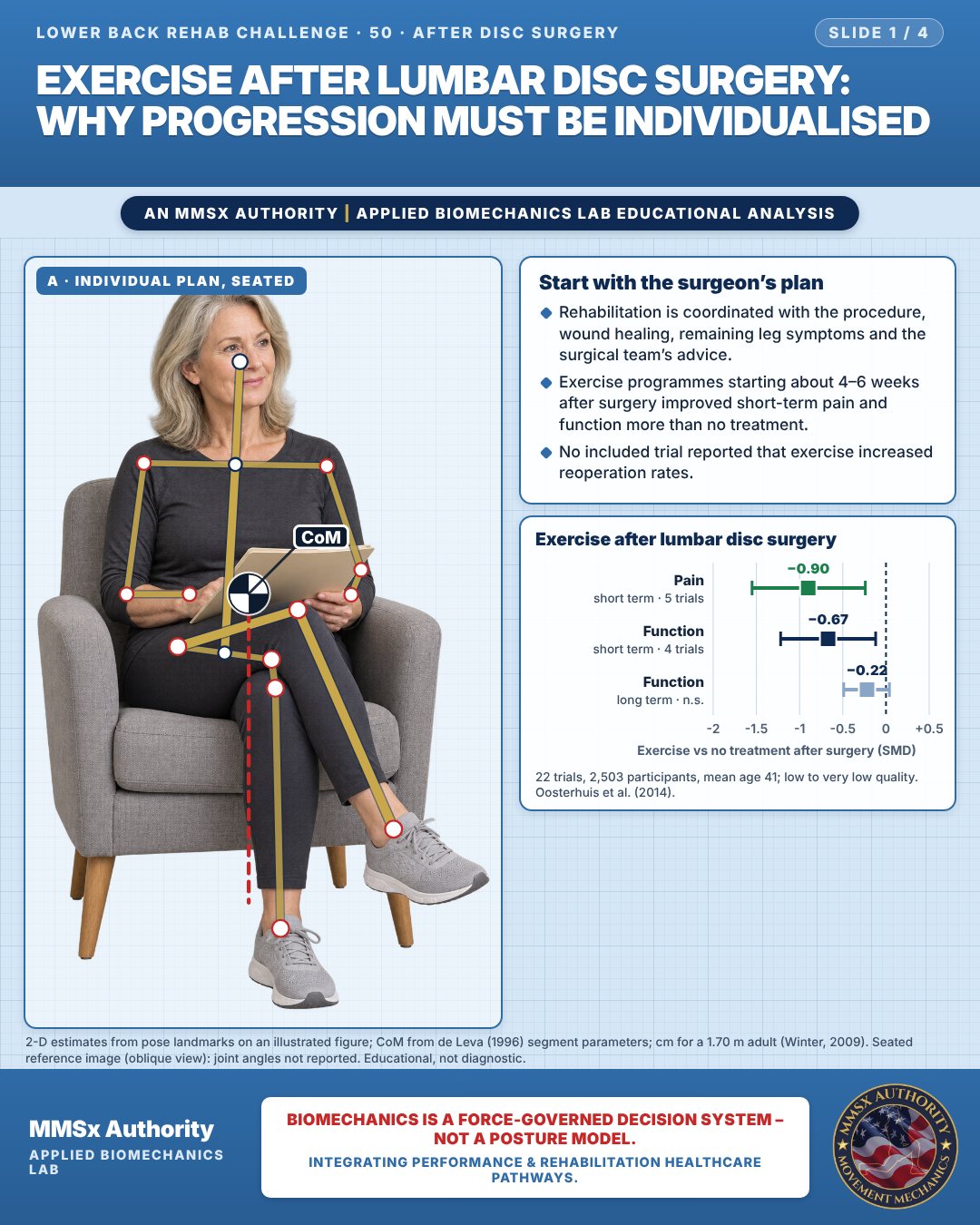
Exercise after lumbar disc surgery: why progression must be individualised
Rehabilitation after lumbar disc surgery (usually discectomy or microdiscectomy for a herniated disc causing sciatica) is a structured, progressive…