MMSx Authority · Applied Biomechanics Lab
Knee Rehabilitation: 50 Evidence-Based Biomechanics Analyses
Fifty evidence-based knee rehabilitation articles from the MMSx Authority Applied Biomechanics Lab: movement analysis, verified research data and decision pathways for knee pain. Each article pairs a biomechanical analysis of three movements with verified research data, a decision pathway and APA 7 references with DOIs.
Cite this collection
Mehta, N. (2026). Knee Rehabilitation: 50 Evidence-Based Biomechanics Analyses [Collection]. MMSx Authority Applied Biomechanics Lab. Zenodo. https://doi.org/10.5281/zenodo.23735752
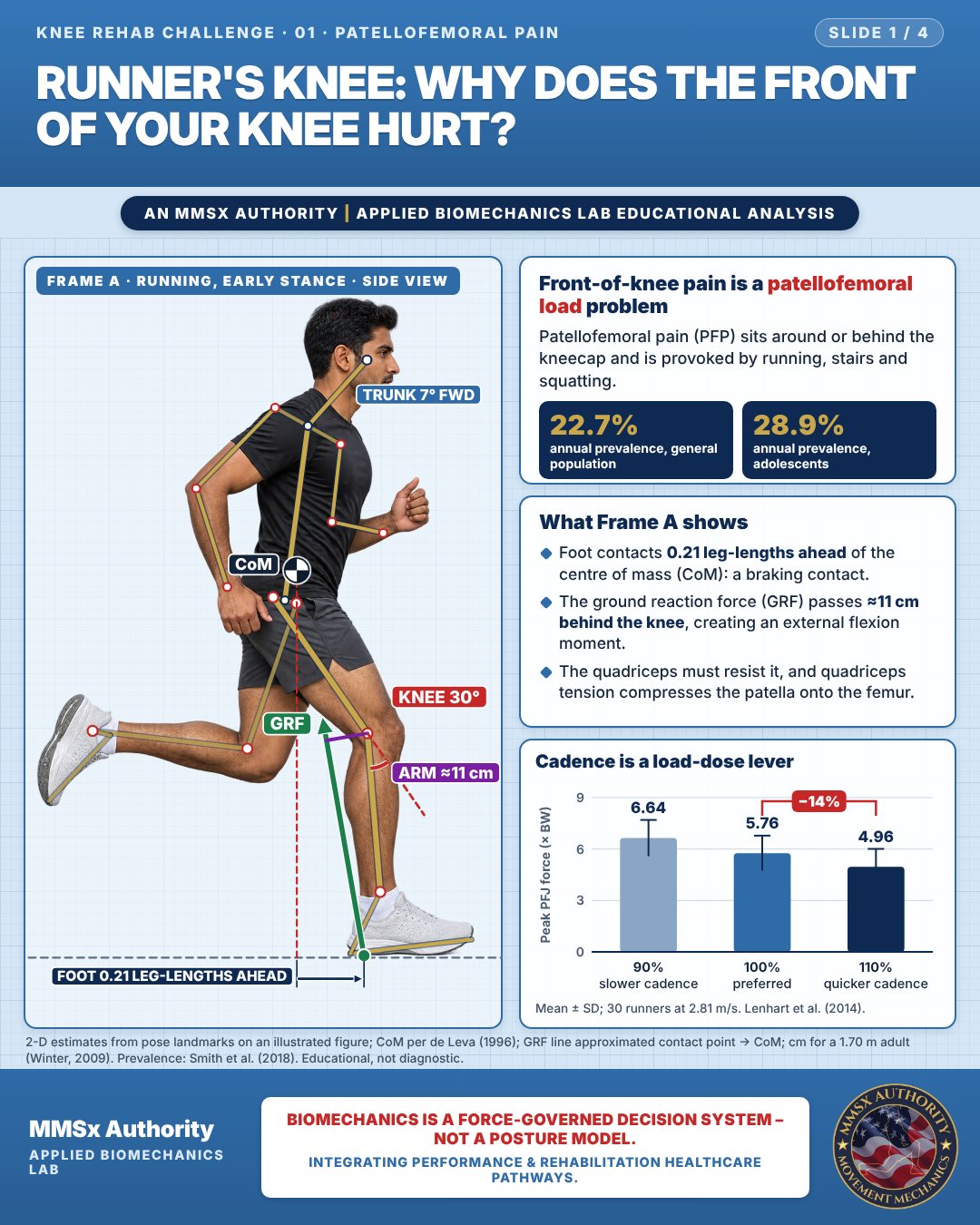 01
Runner's knee: why does the front of your knee hurt?
Patellofemoral pain (often called runner's knee) is pain felt around or behind the kneecap that is typically provoked by activities that load the…
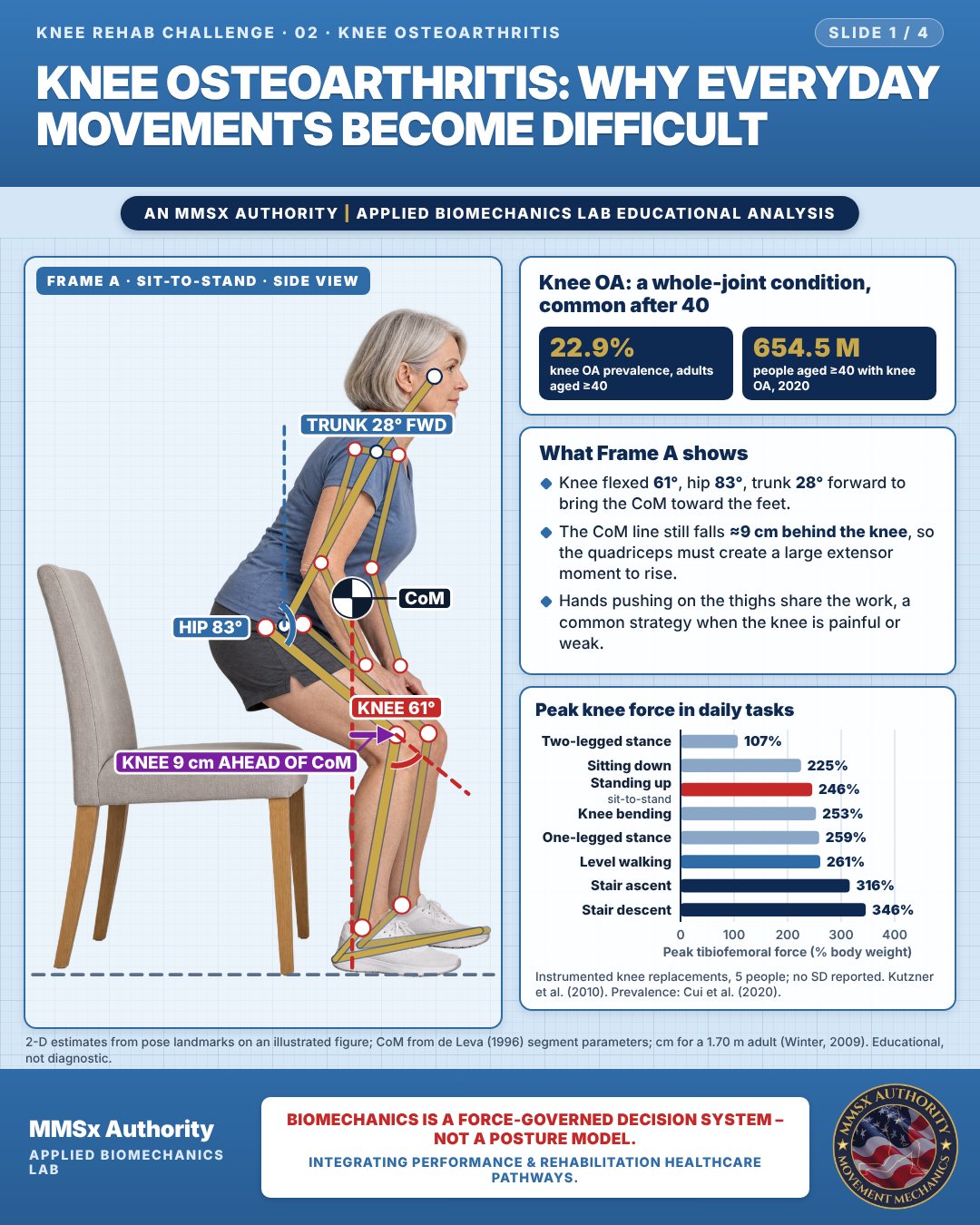 02
Knee osteoarthritis: why everyday movements become difficult
Knee osteoarthritis (OA) is a whole-joint condition involving articular cartilage loss, bone remodelling, osteophytes and synovial change.
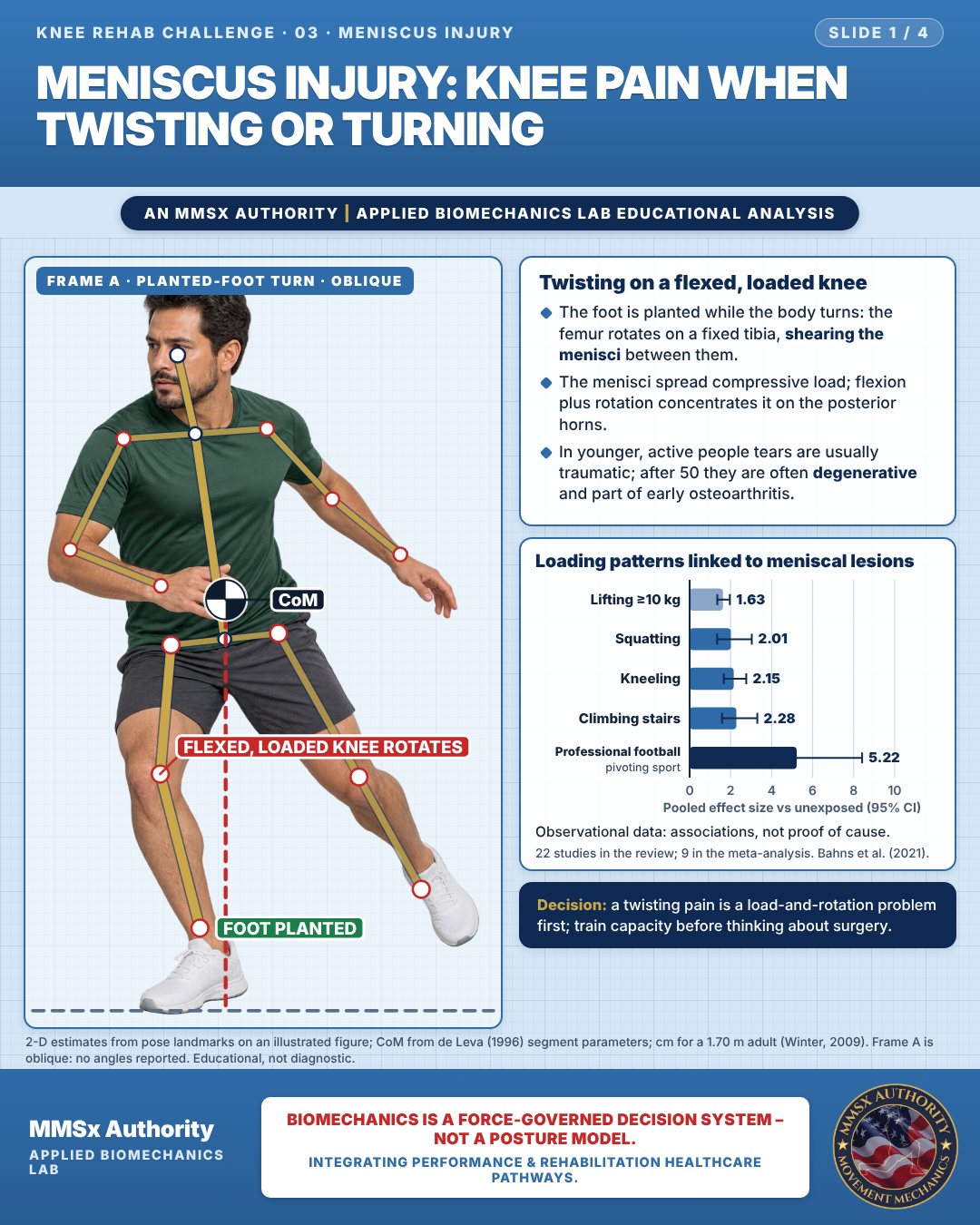 03
Meniscus injury: knee pain when twisting or turning
A meniscus injury is a tear of the medial or lateral fibrocartilage meniscus. Movement analysis, verified research data and a decision pathway from the MMSx A
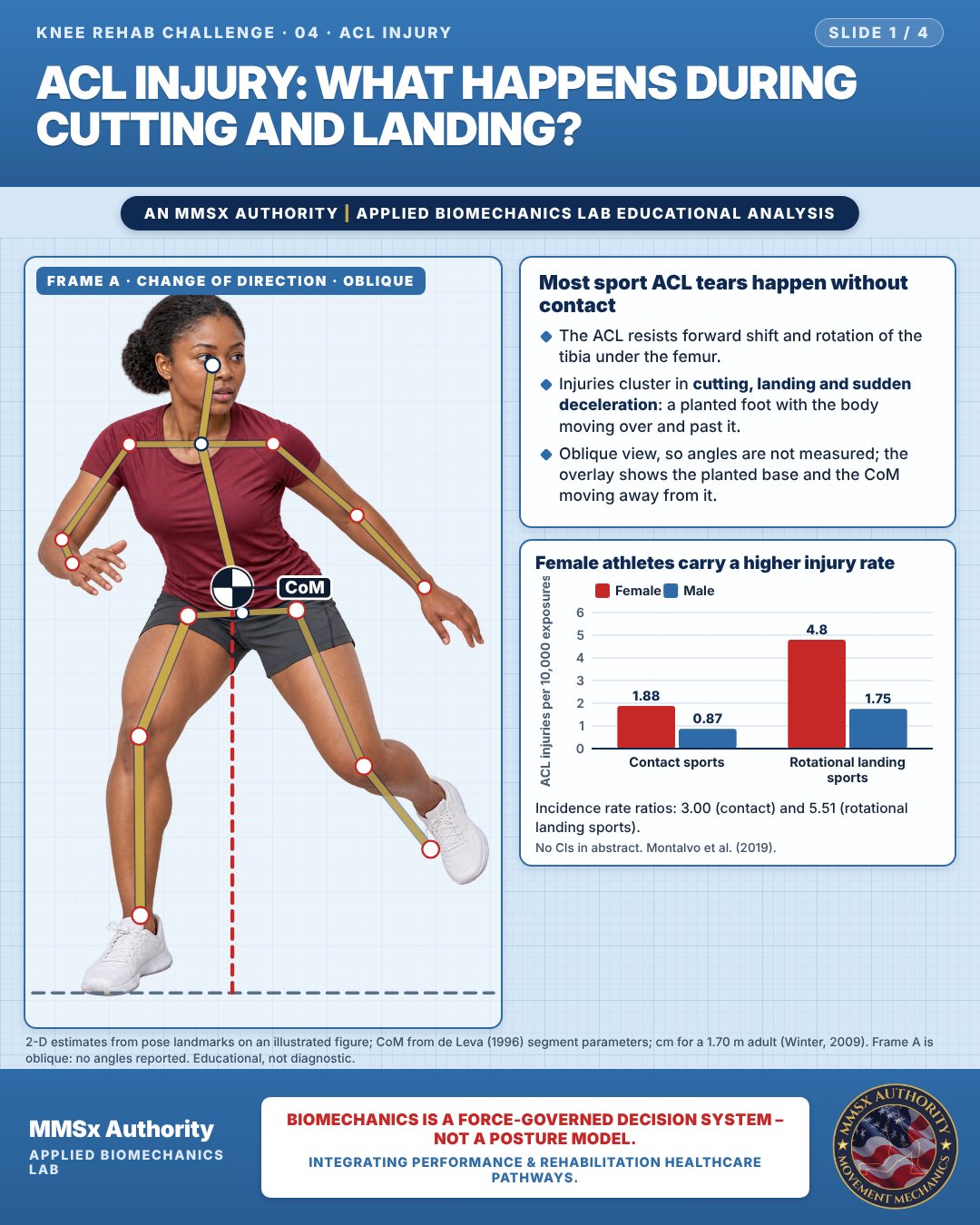 04
ACL injury: what happens during cutting and landing?
An anterior cruciate ligament (ACL) injury is a partial or complete tear of the ligament that resists anterior tibial translation and rotational laxity.
 05
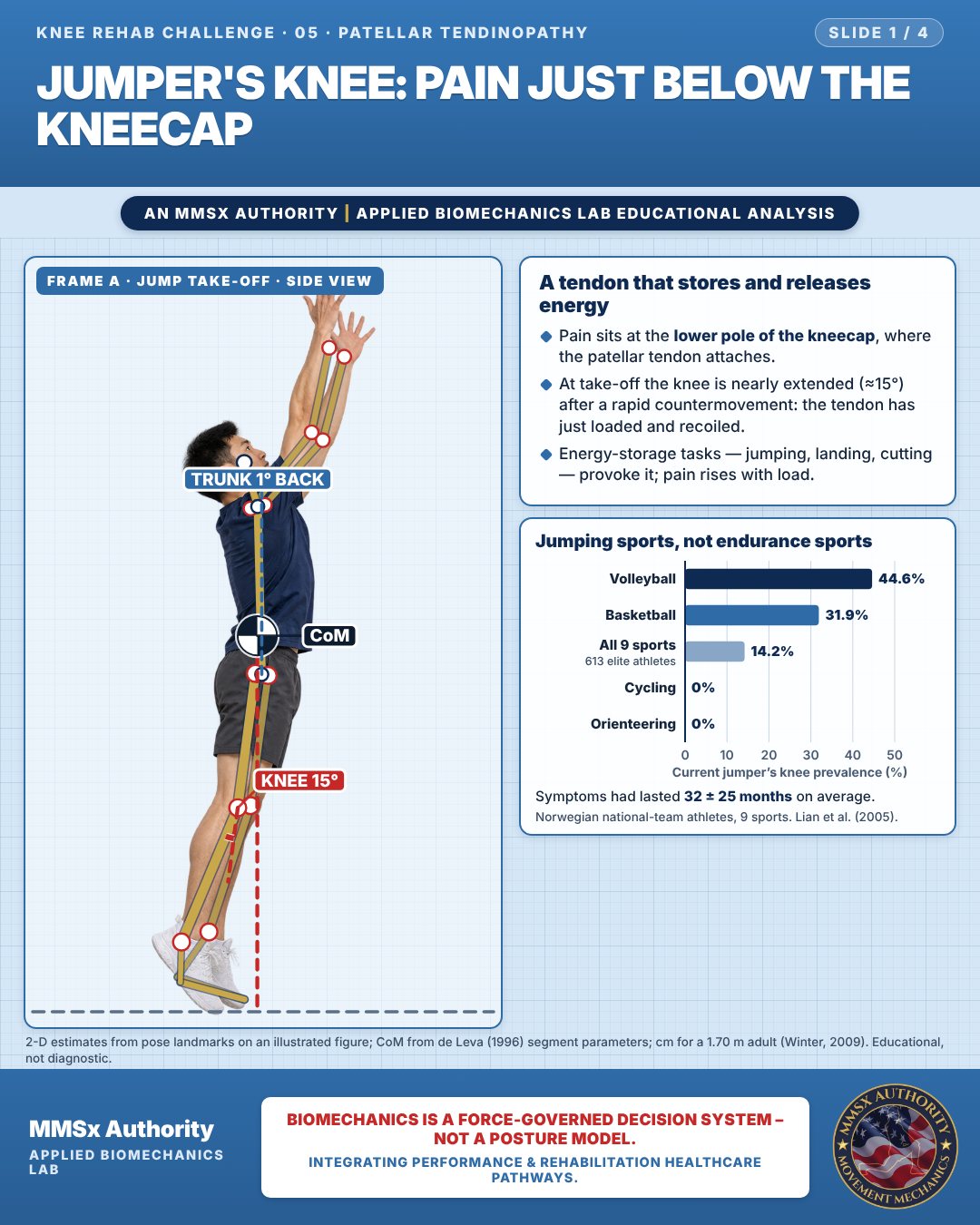
Jumper's knee: pain just below the kneecap
Jumper's knee (patellar tendinopathy) is load-related pain localised to the patellar tendon, usually at its attachment to the lower pole of the…
 06
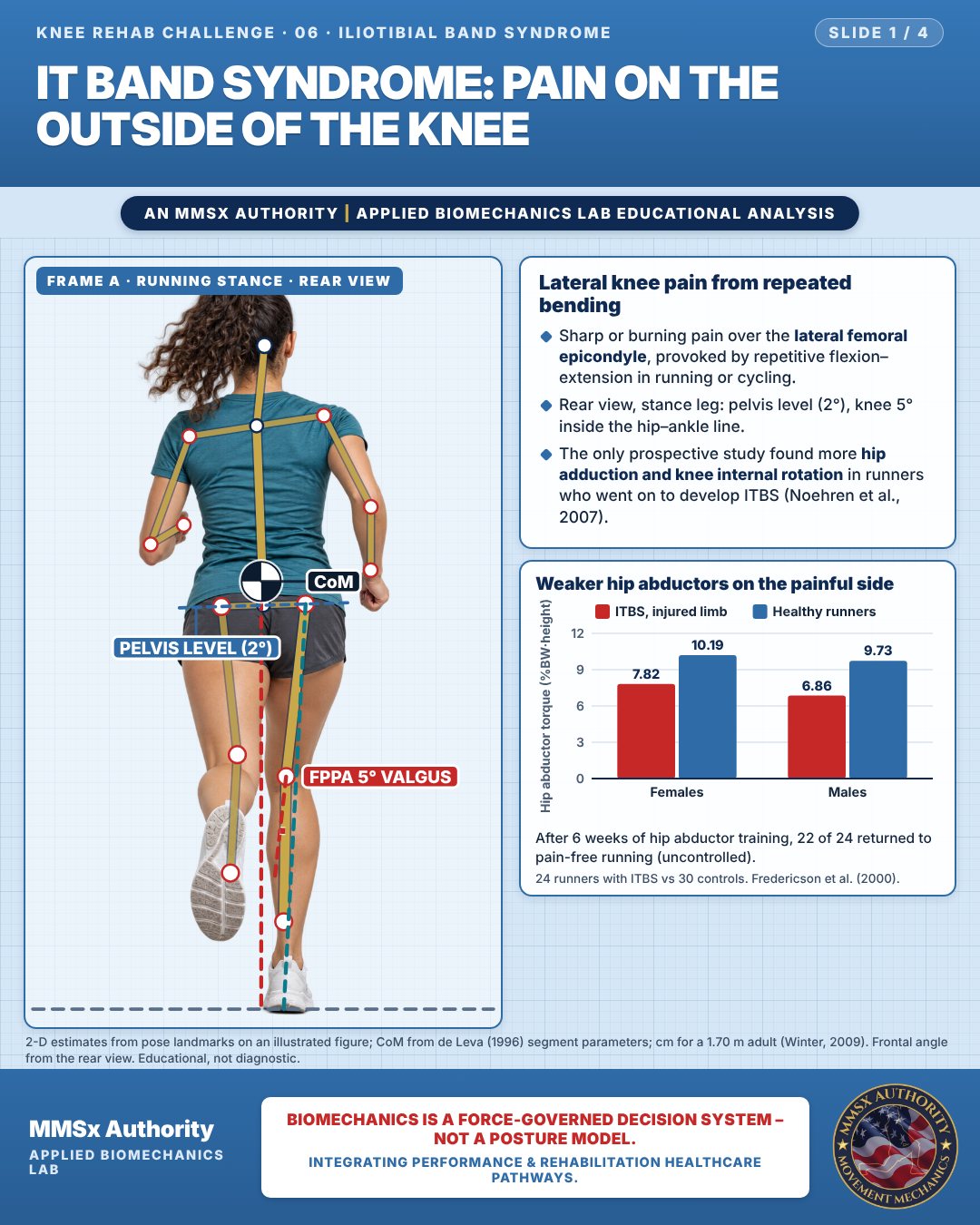
IT band syndrome: pain on the outside of the knee
Iliotibial band syndrome (ITBS) is an overuse condition producing sharp or burning pain over the lateral femoral epicondyle, typically provoked by…
 07
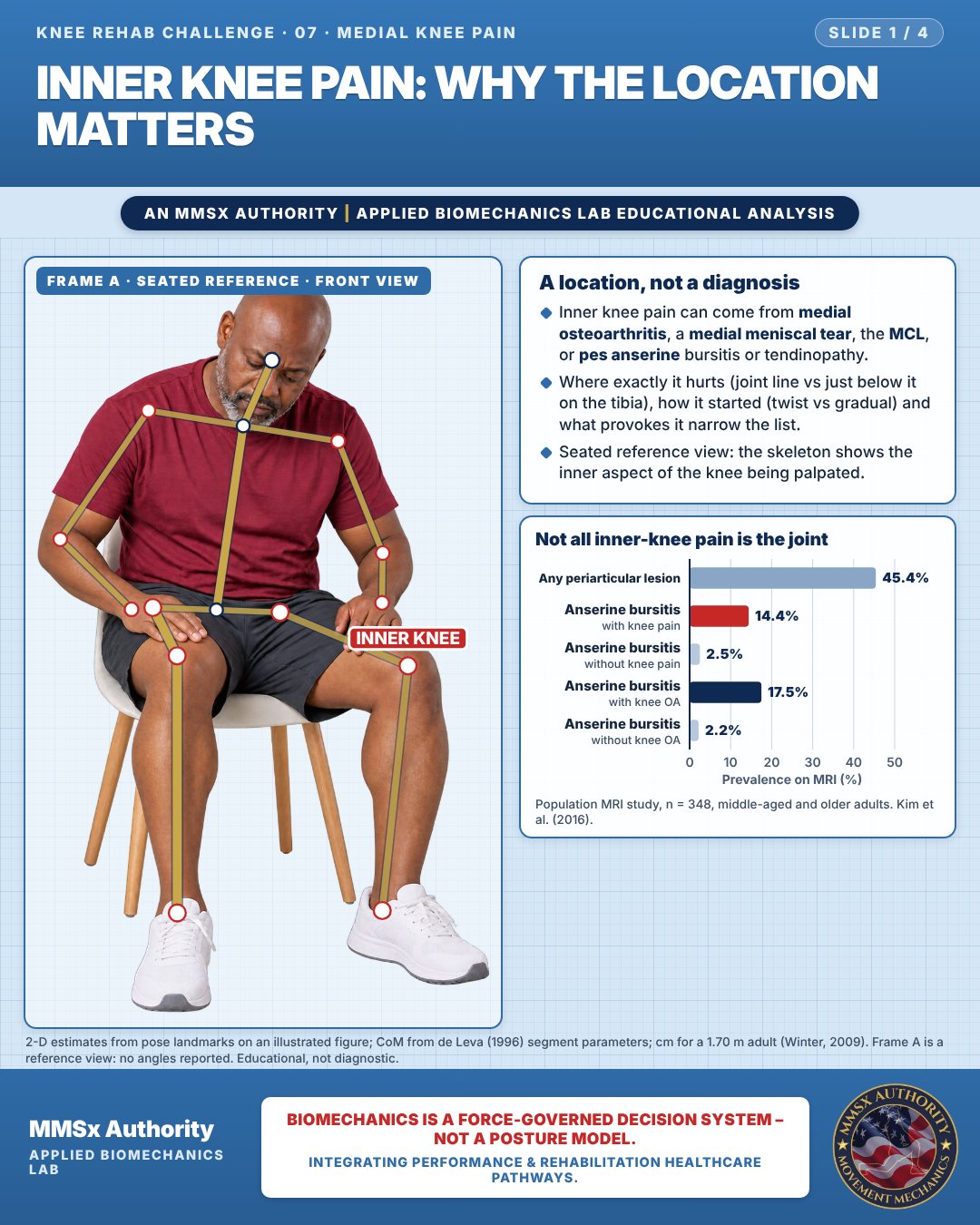
Inner knee pain: why the location matters
Inner (medial) knee pain is a symptom location, not a diagnosis. Movement analysis, verified research data and a decision pathway from the MMSx Authority Appl
 08
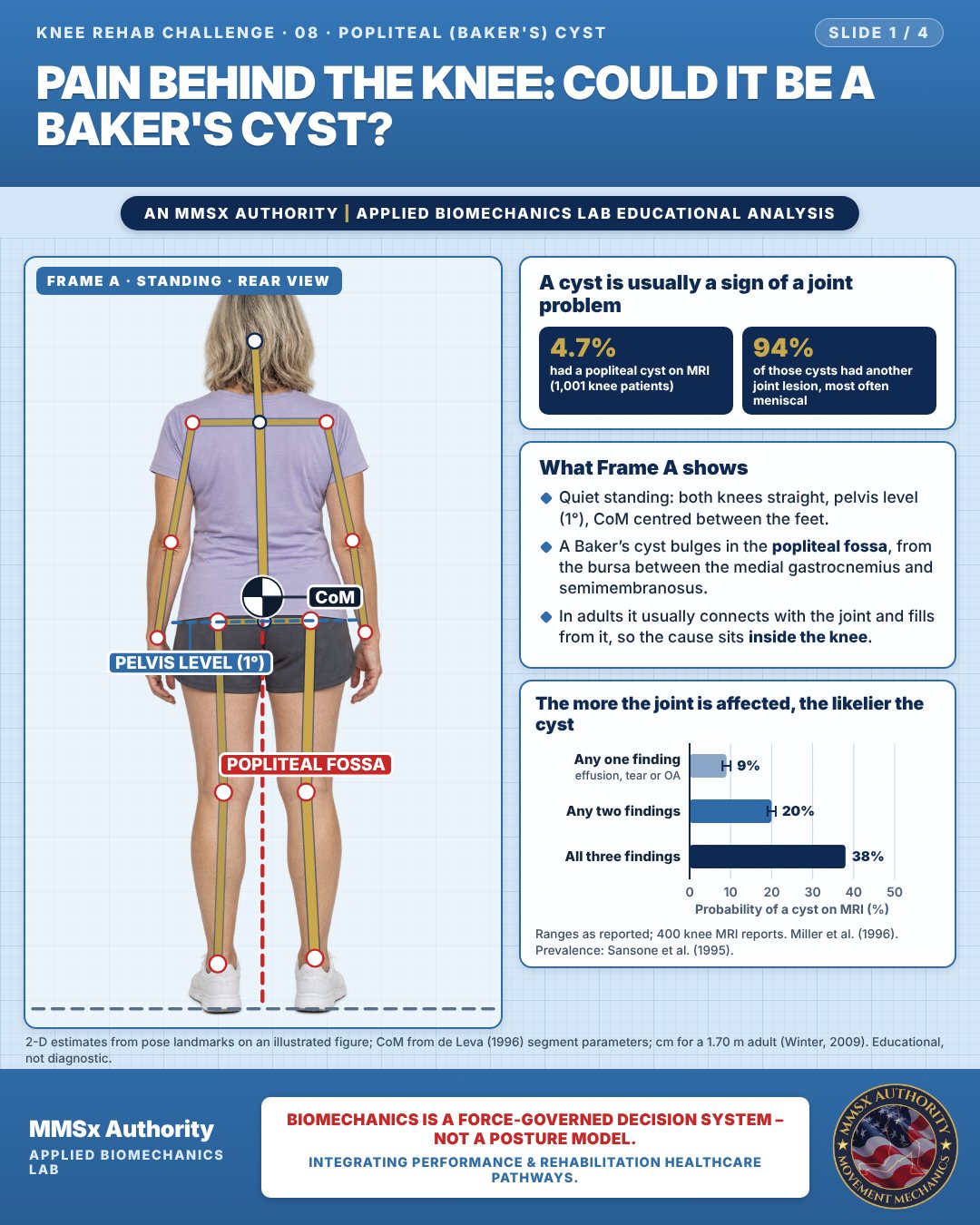
Pain behind the knee: could it be a Baker's cyst?
A popliteal (Baker's) cyst is a fluid-filled distension of the gastrocnemius–semimembranosus bursa at the back of the knee, which in adults usually…
 09
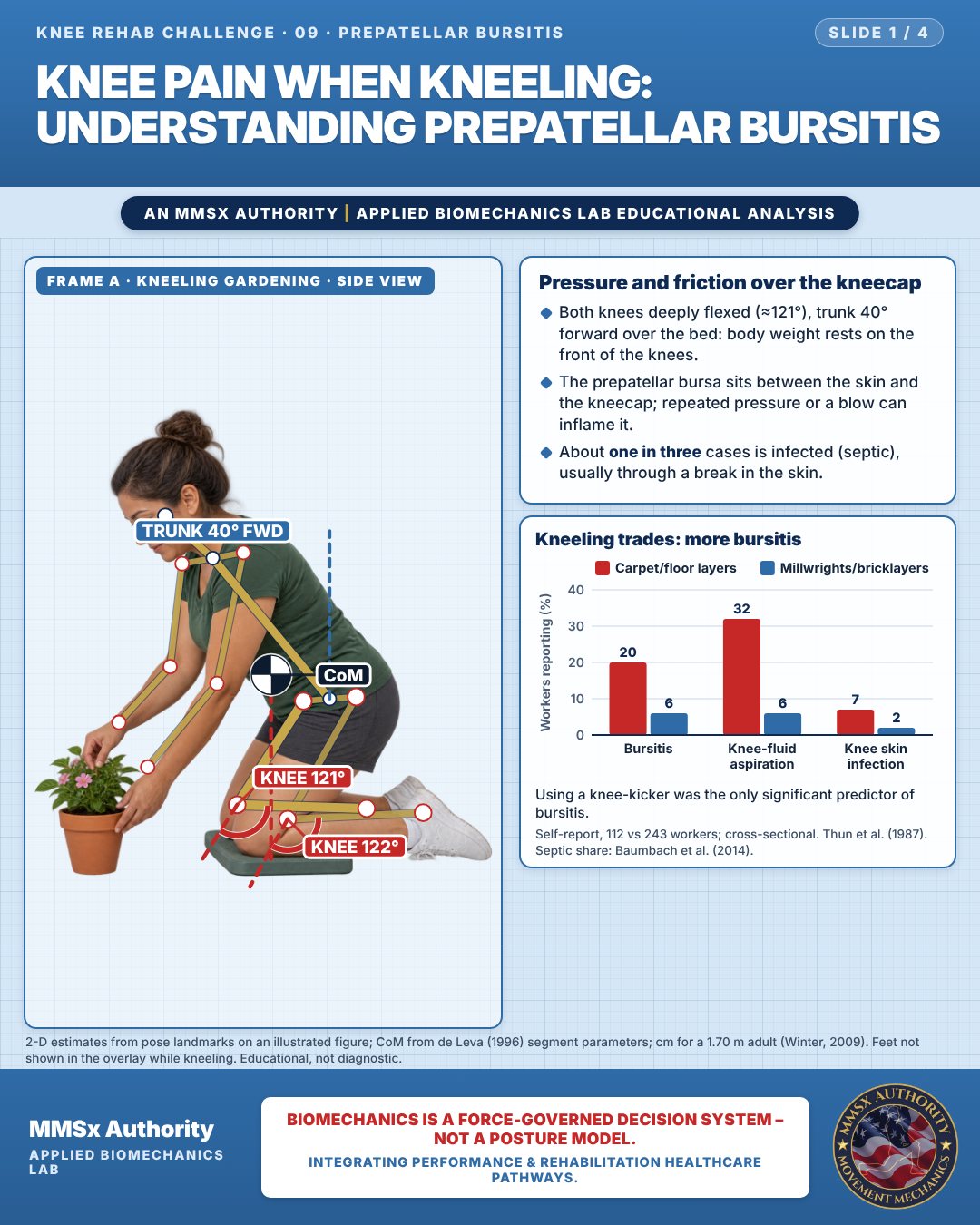
Knee pain when kneeling: understanding prepatellar bursitis
Prepatellar bursitis is inflammation and swelling of the superficial bursa lying between the skin and the front of the kneecap.
 10
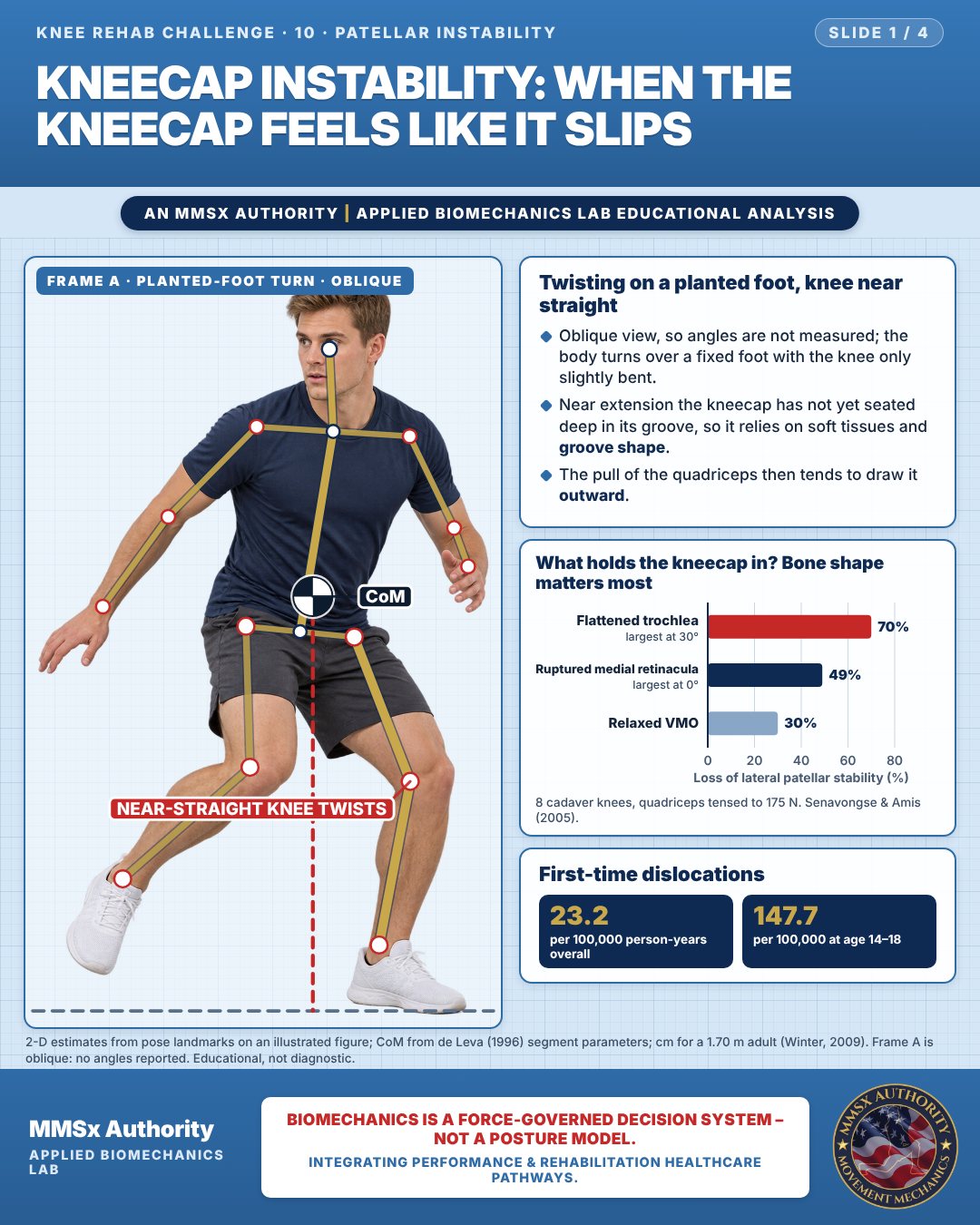
Kneecap instability: when the kneecap feels like it slips
Lateral patellar instability is the tendency of the kneecap to sublux or dislocate out of the trochlear groove towards the outside of the knee,…
 11
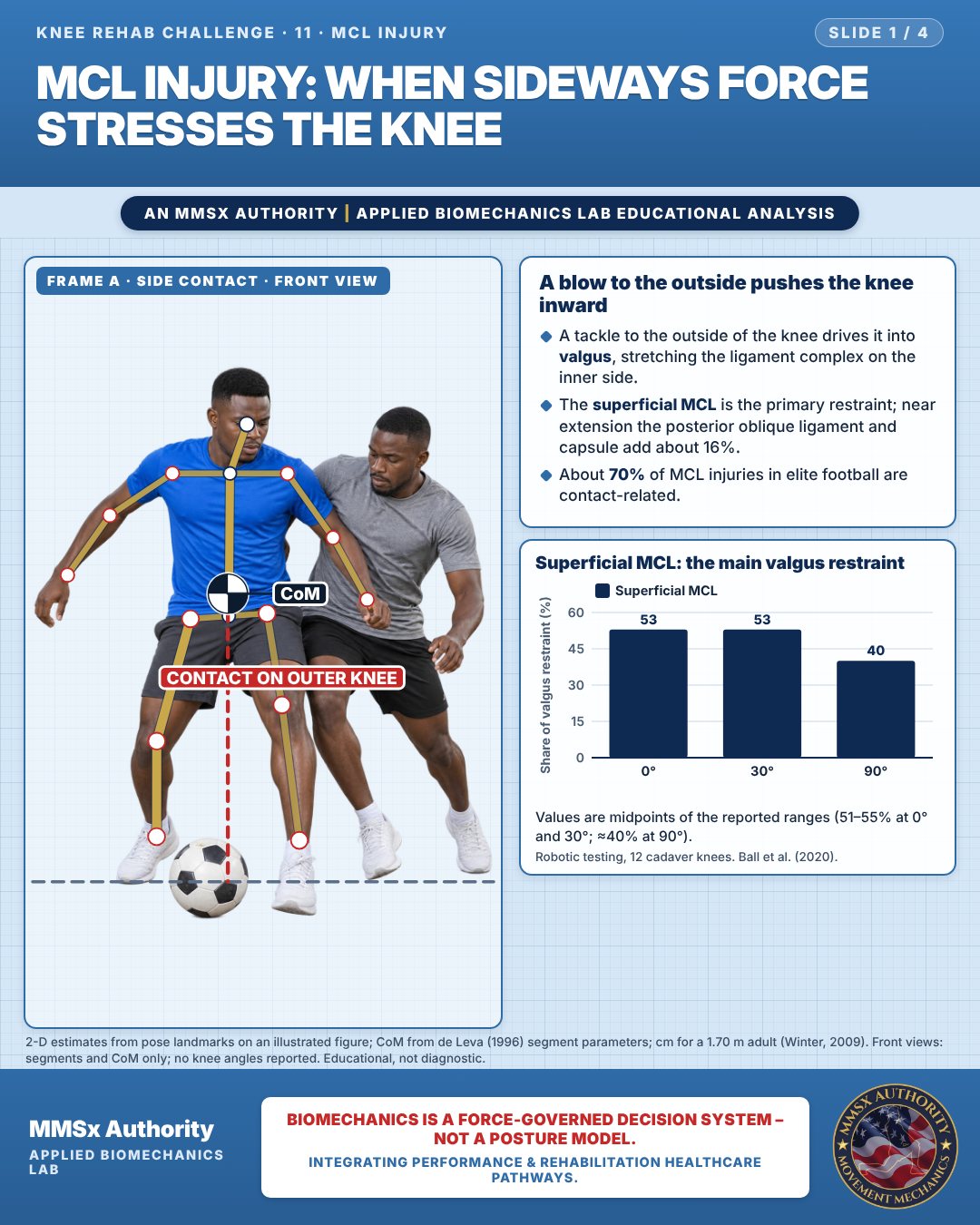
MCL injury: when sideways force stresses the knee
A medial collateral ligament (MCL) injury is a sprain or tear of the ligament complex on the inner side of the knee (superficial MCL, deep MCL,…
 12
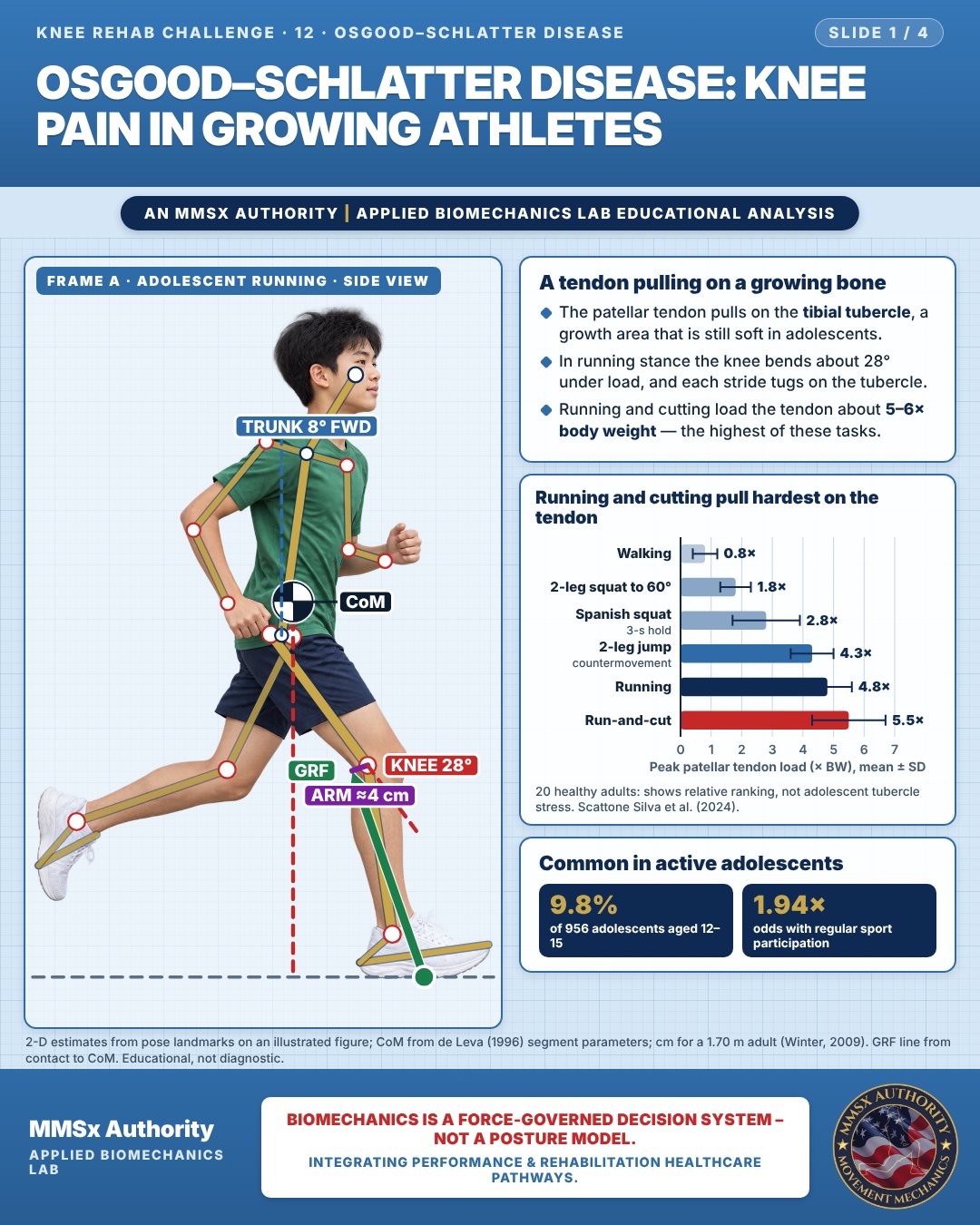
Osgood–Schlatter disease: knee pain in growing athletes
Osgood–Schlatter disease (OSD) is a traction apophysitis of the tibial tubercle in growing adolescents: repeated pull of the patellar tendon on the…
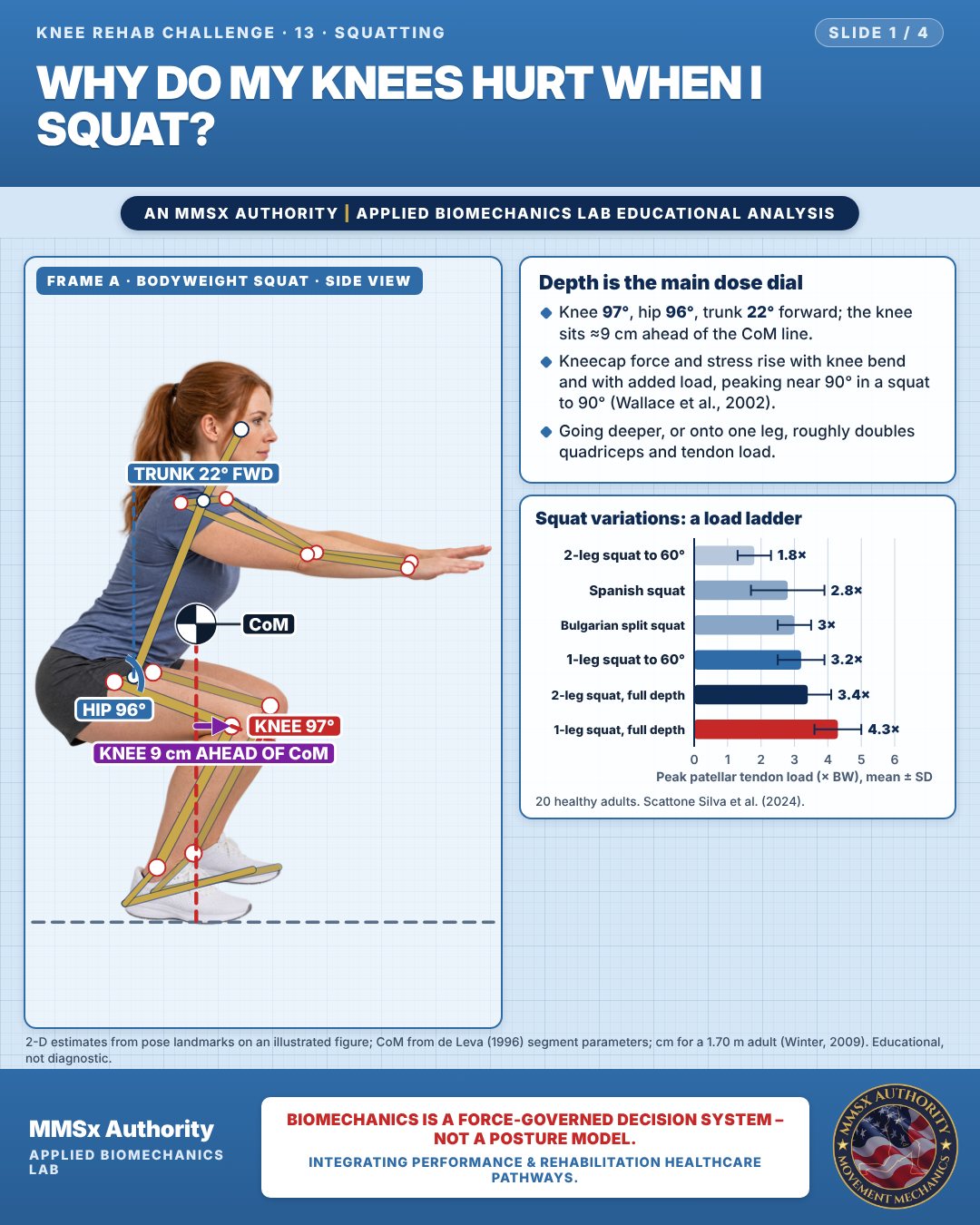 13
Why do my knees hurt when I squat?
Knee pain with squatting is a symptom, not a diagnosis: it most commonly reflects patellofemoral pain (pain around/behind the kneecap with loaded…
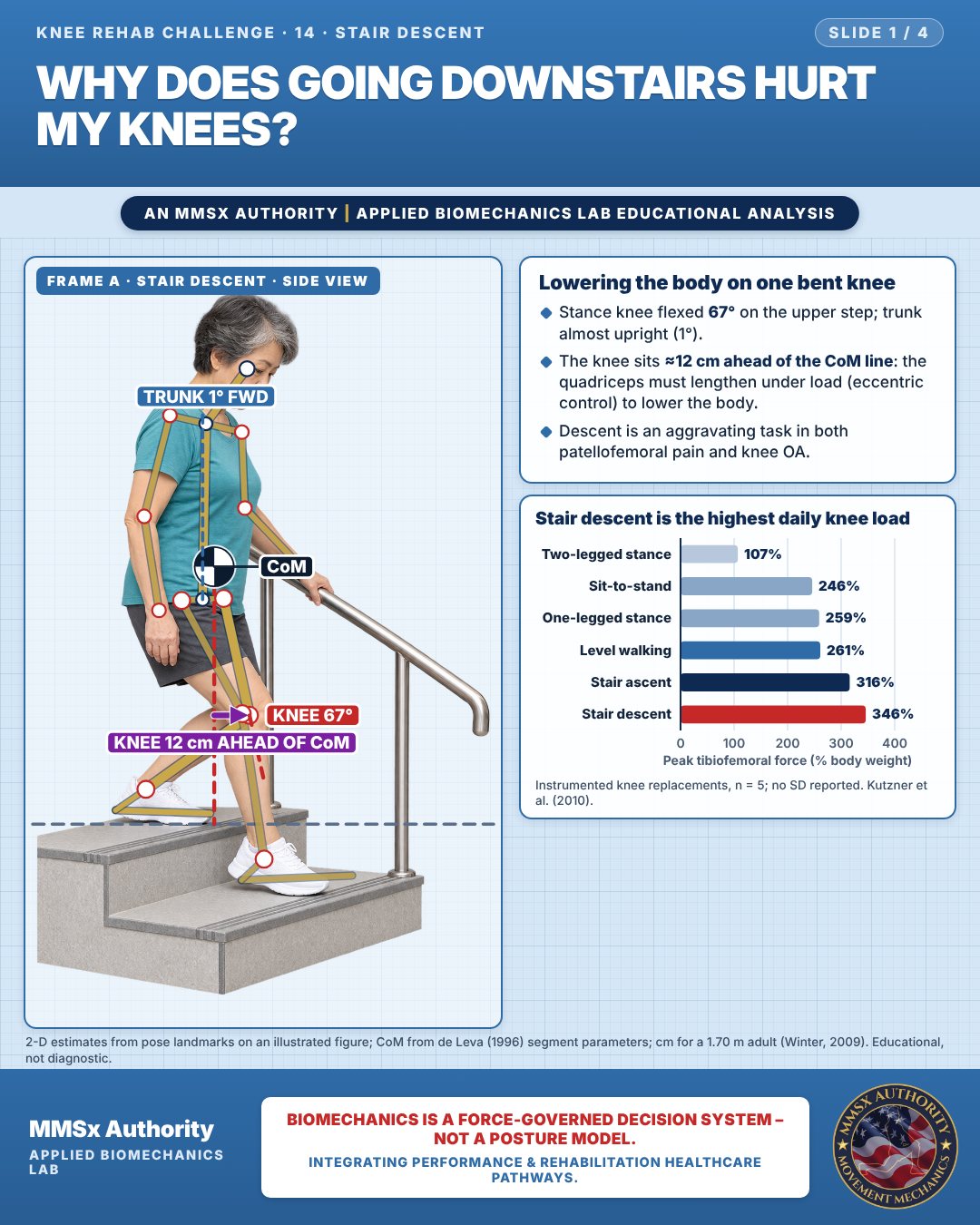 14
Why does going downstairs hurt my knees?
Stair-descent knee pain is anterior or tibiofemoral knee pain provoked when the stance knee bends under load to lower the body.
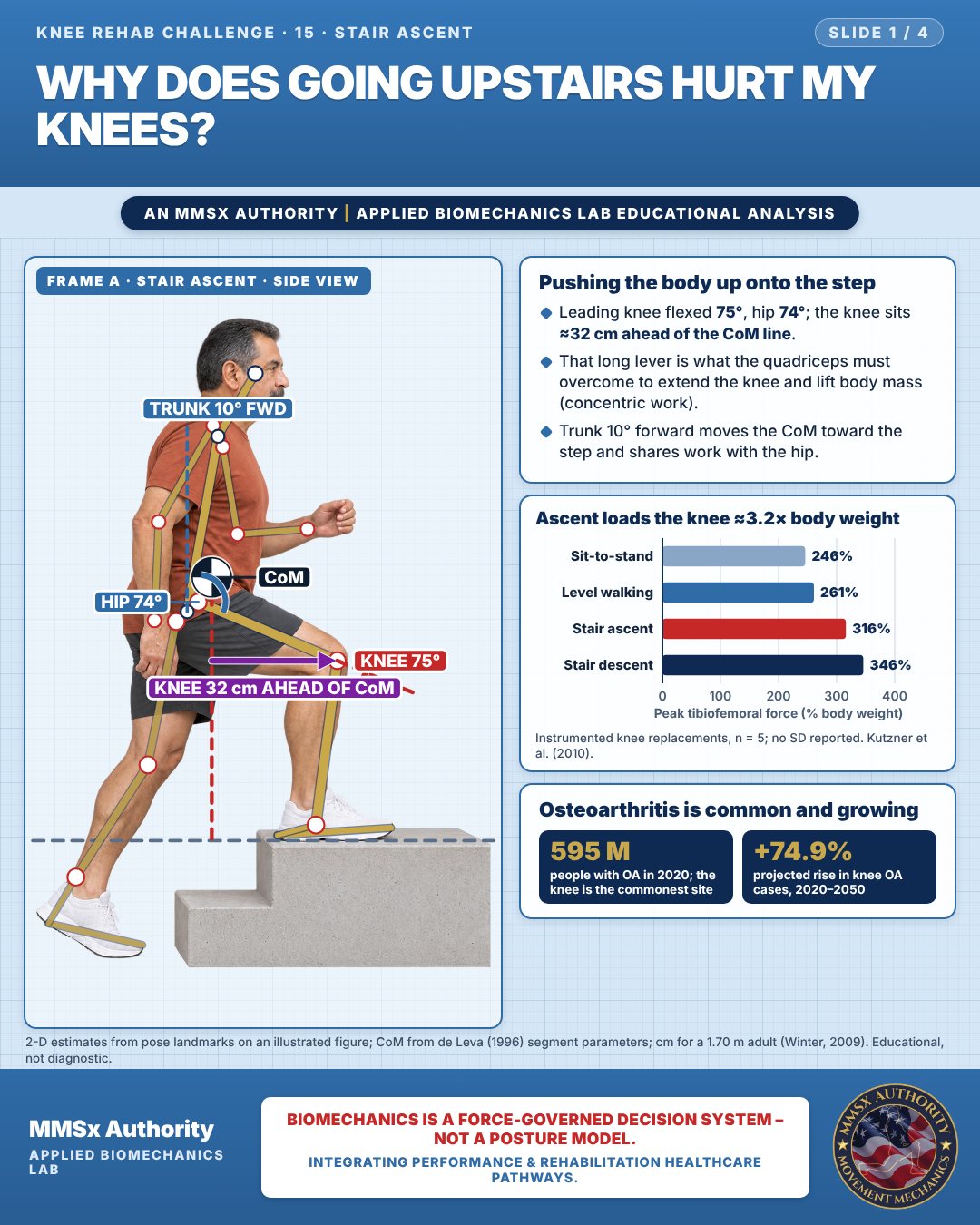 15
Why does going upstairs hurt my knees?
Stair-ascent knee pain is pain felt as the leading knee extends to lift body mass onto the step.
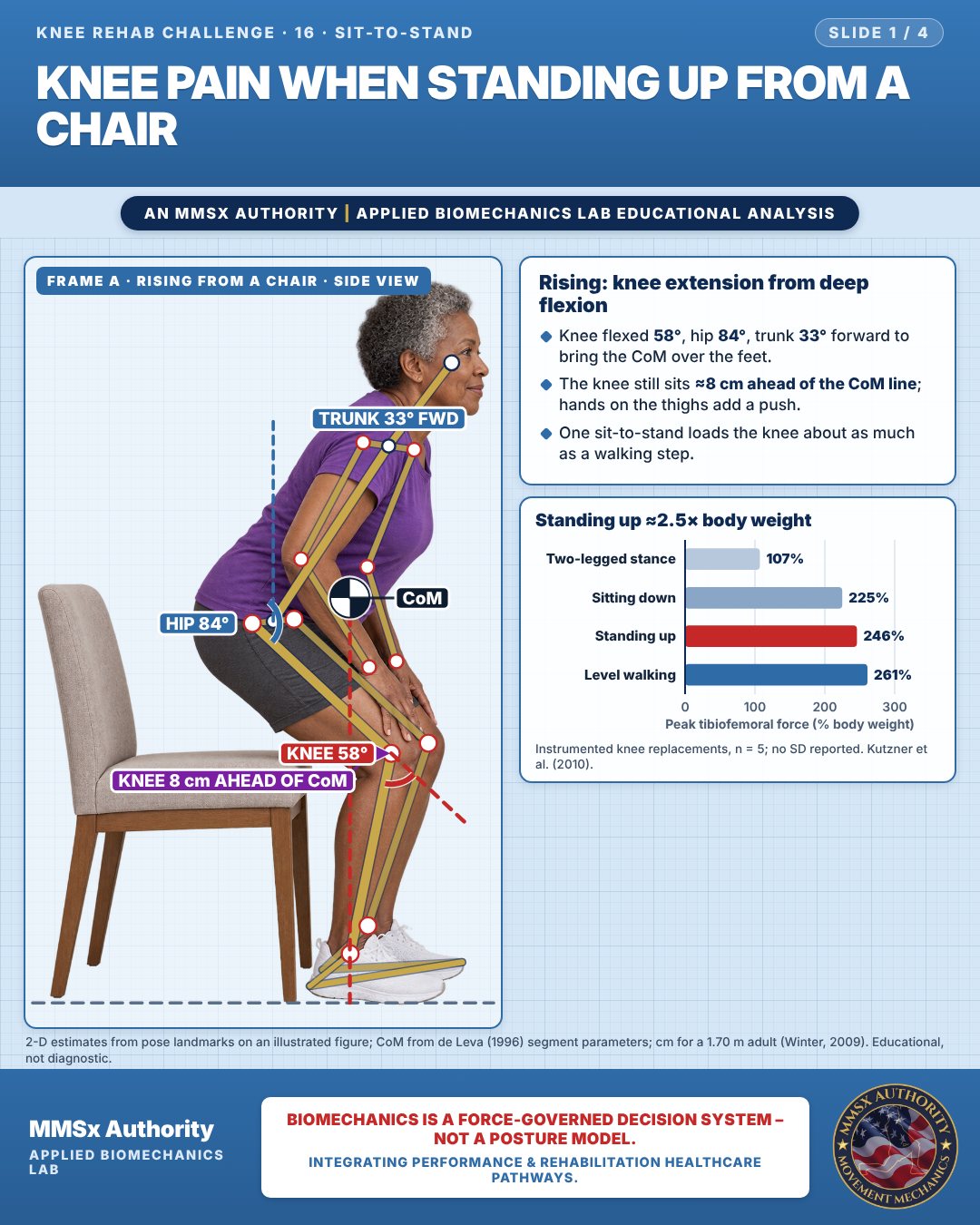 16
Knee pain when standing up from a chair
Knee pain on rising from sitting is pain provoked as the knees extend from deep flexion under body-weight load.
 17
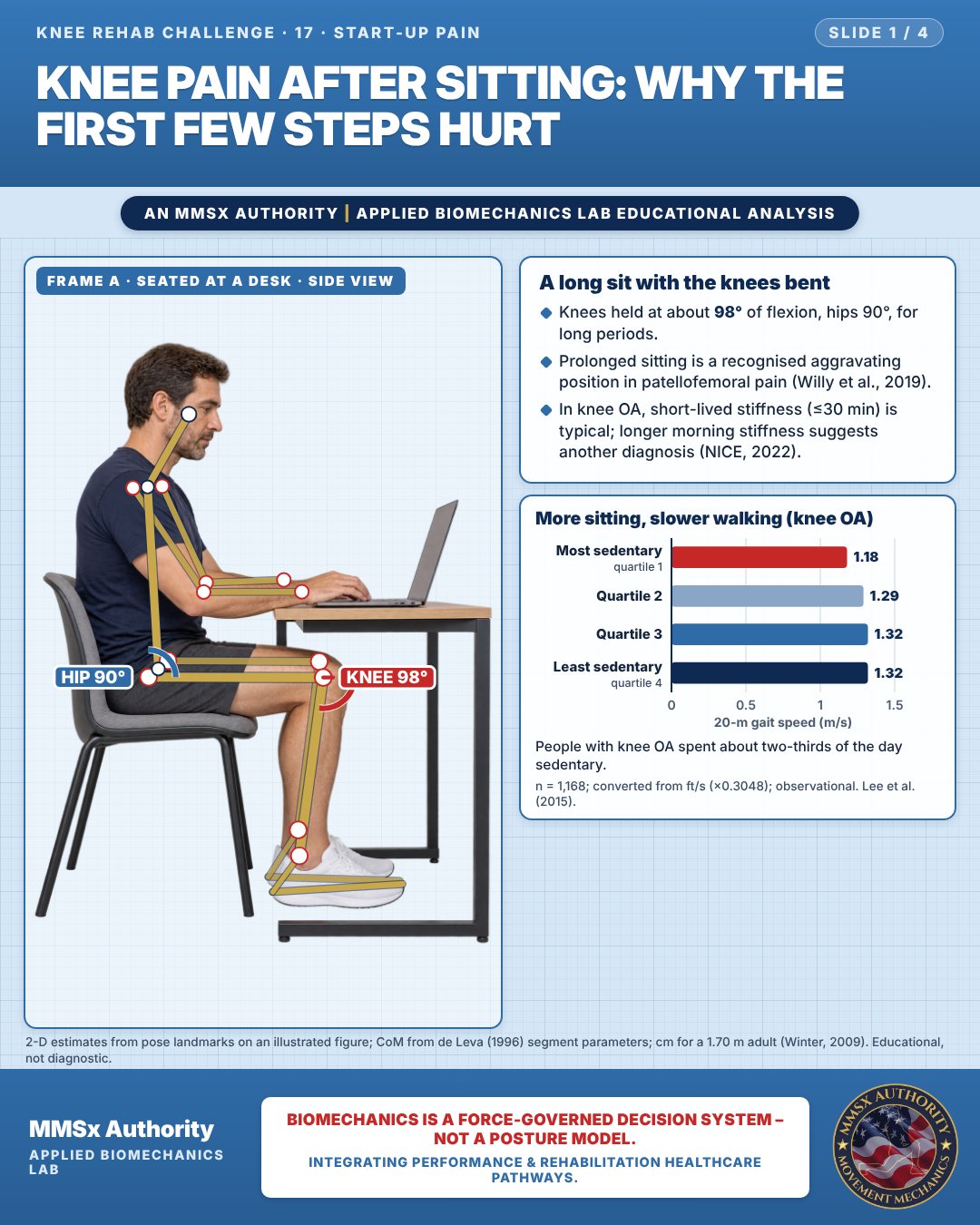
Knee pain after sitting: why the first few steps hurt
Pain or stiffness felt on the first steps after a period of sitting ("start-up" pain/stiffness, inactivity stiffness) that eases within minutes of moving.
 18
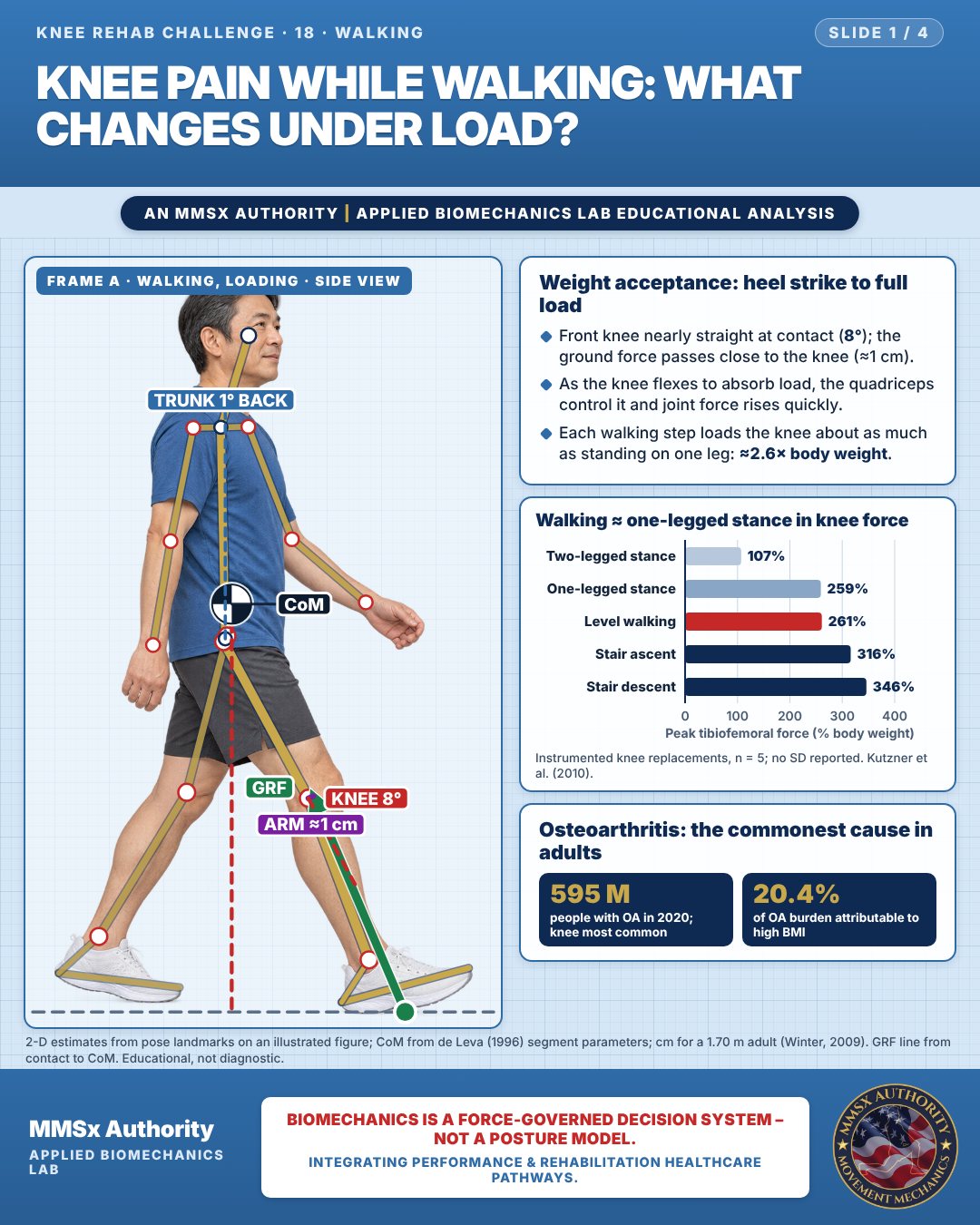
Knee pain while walking: what changes under load?
Activity-related knee pain during walking in adults ≥45 years, with no morning stiffness or stiffness ≤30 minutes, is diagnosed clinically as…
 19
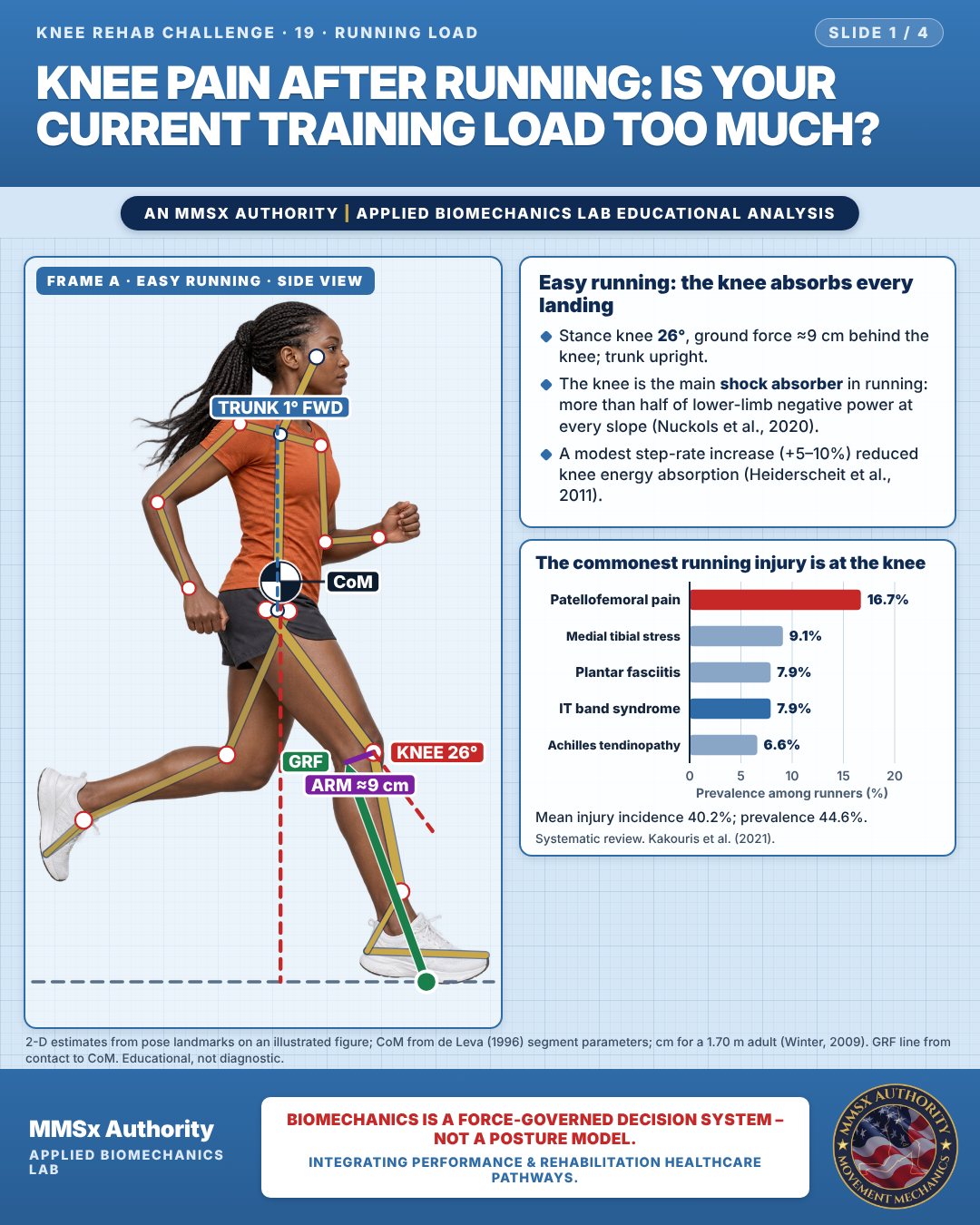
Knee pain after running: is your current training load too much?
Running-related knee pain is pain around or behind the kneecap or at the lateral knee that appears during or after running and limits training.
 20
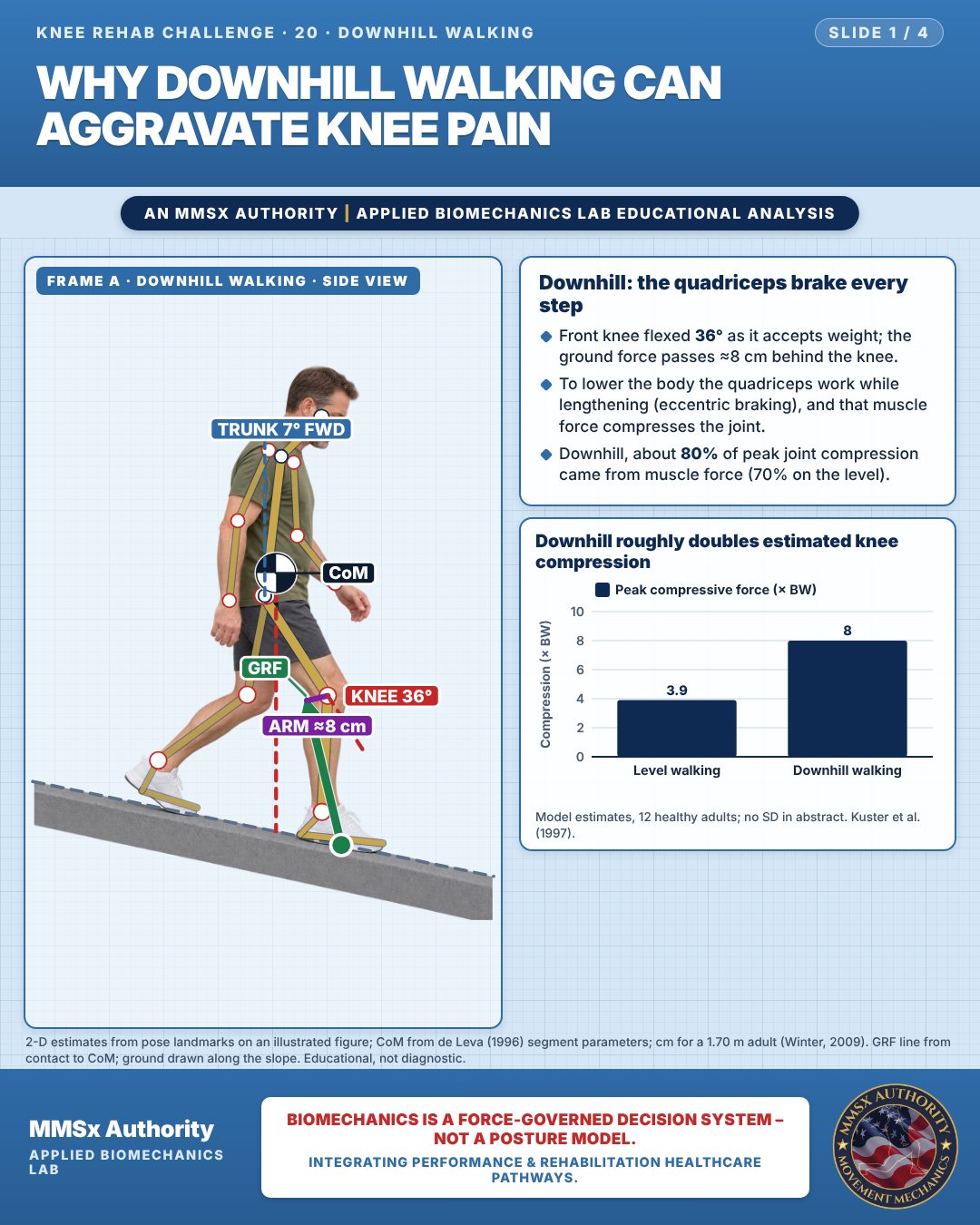
Why downhill walking can aggravate knee pain
Downhill-provoked knee pain is anterior or diffuse knee pain that appears or worsens when walking down slopes, steps or stairs.
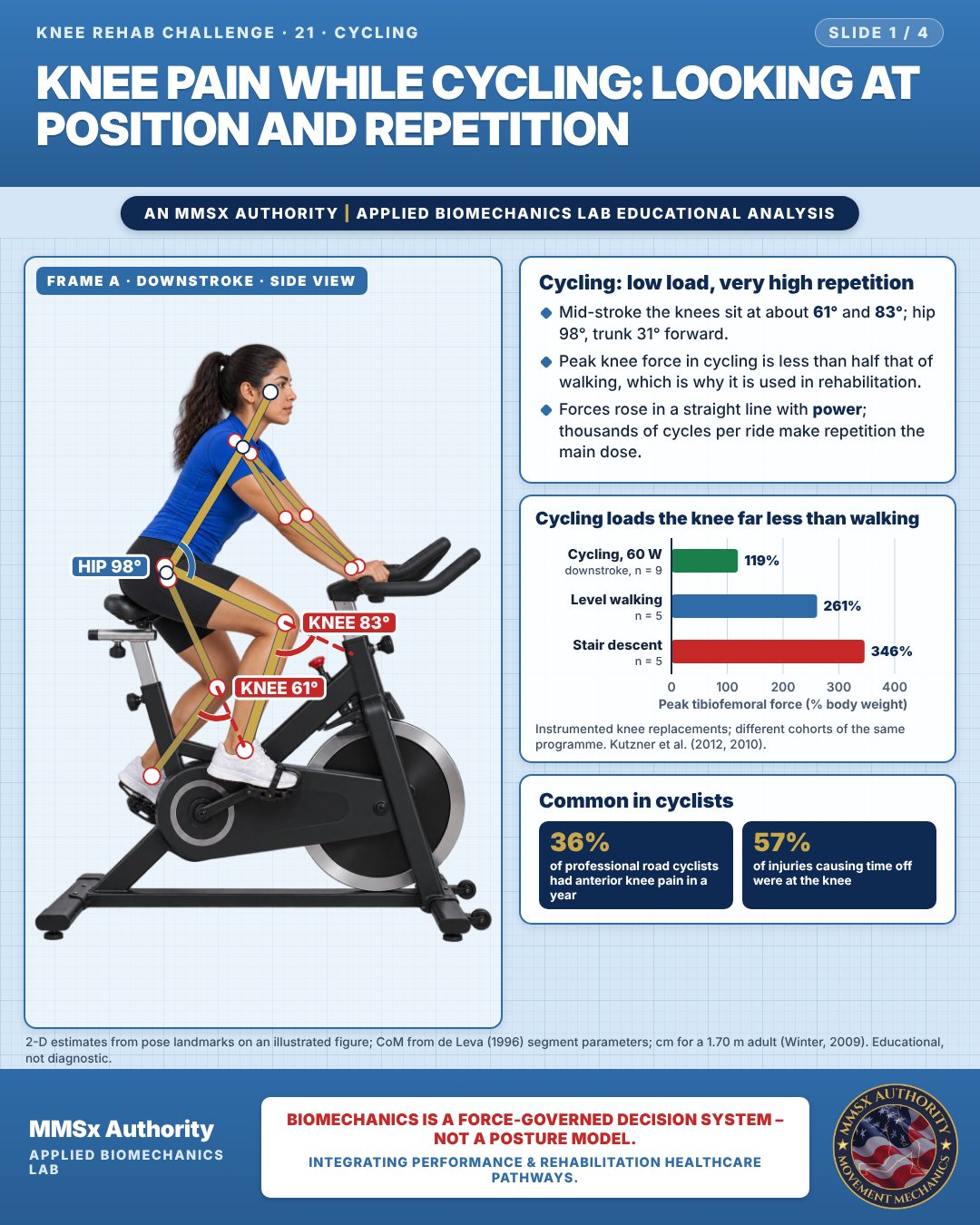 21
Knee pain while cycling: looking at position and repetition
Cycling-related knee pain is an overuse complaint — most often anterior knee pain (patellofemoral or patellar/quadriceps tendon region), less often…
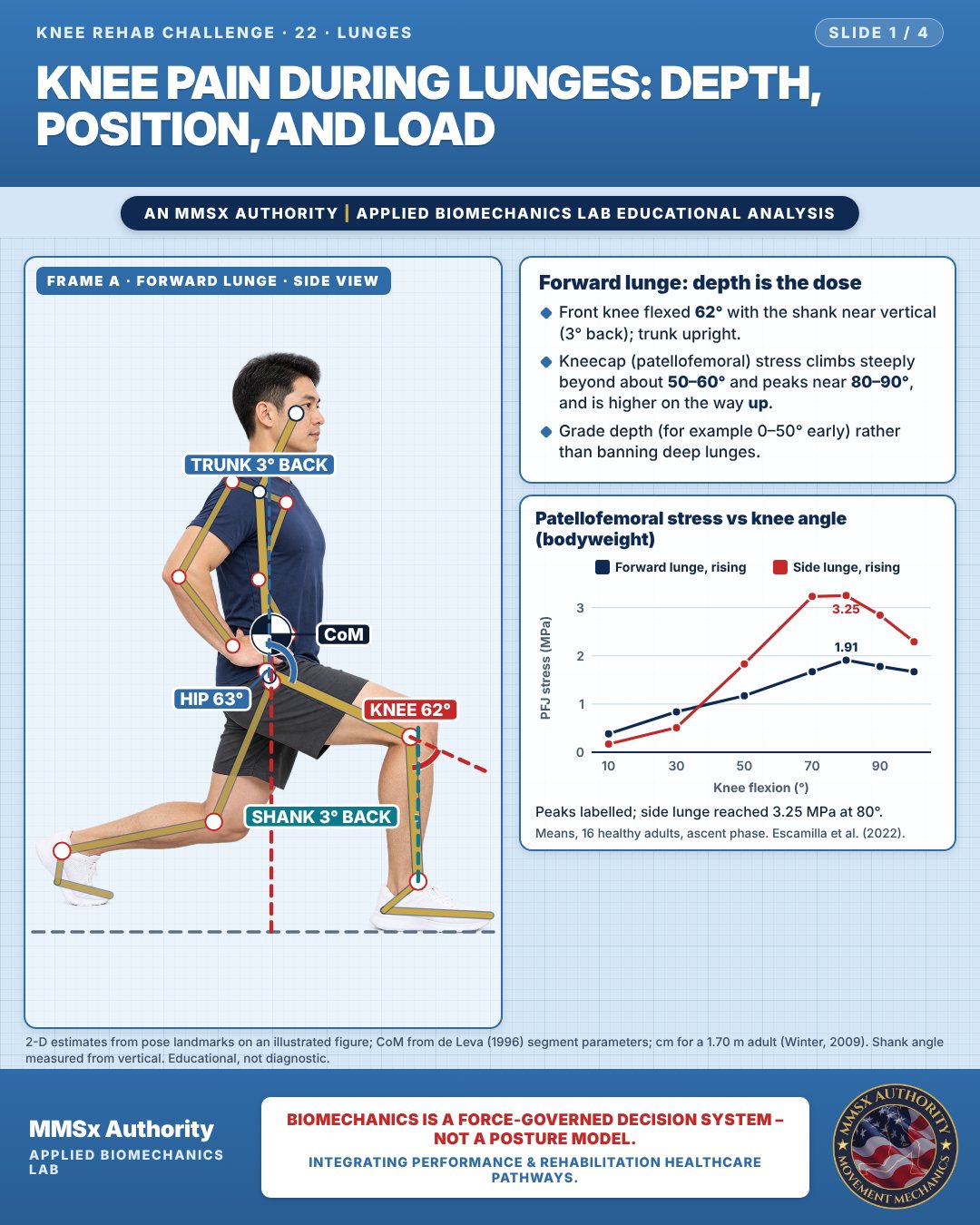 22
Knee pain during lunges: depth, position, and load
Lunge-provoked knee pain is usually anterior (patellofemoral or patellar-tendon region) pain that rises with knee-flexion depth, step geometry and…
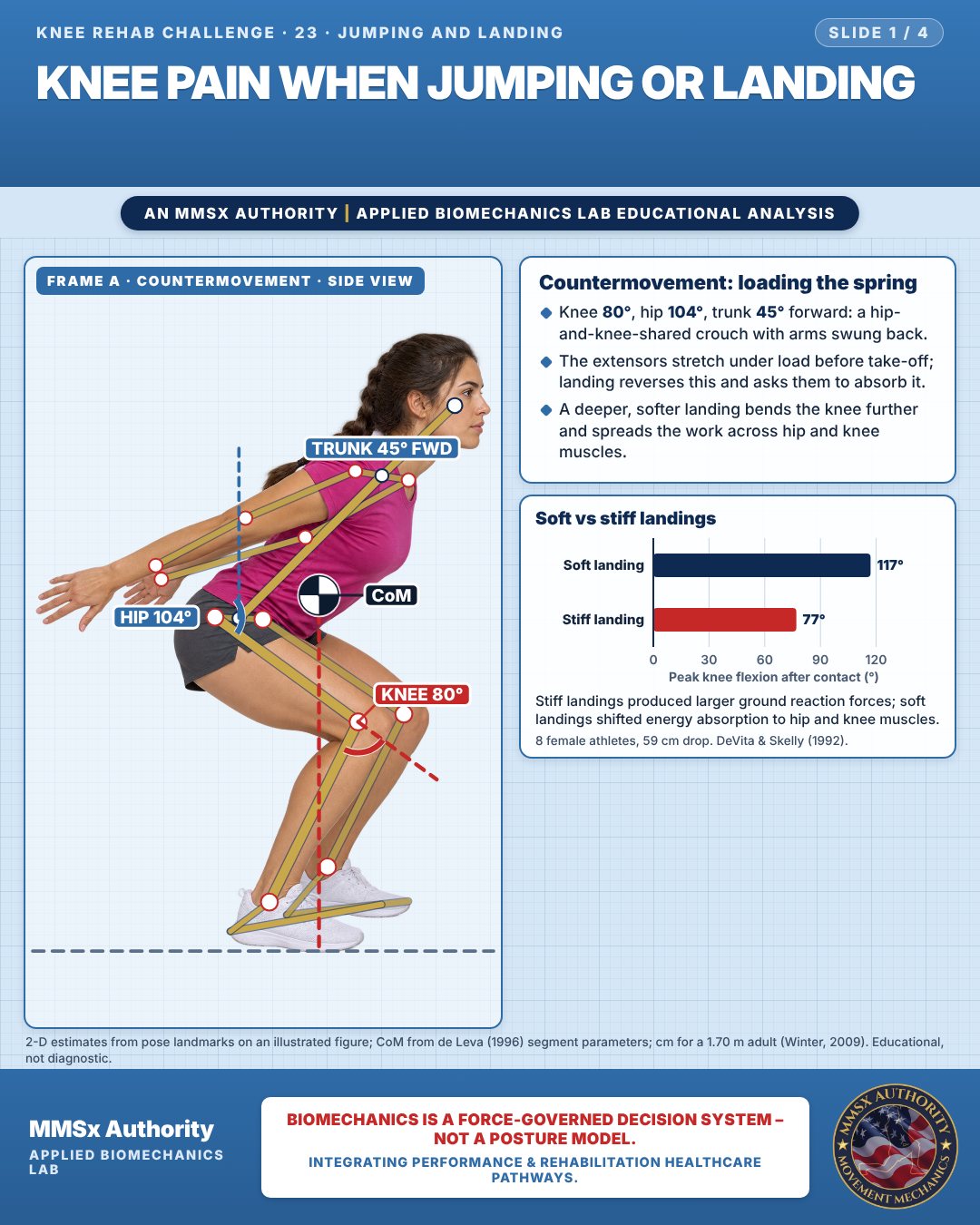 23
Knee pain when jumping or landing
Jump/landing-related knee pain is most often anterior pain at the lower pole of the patella (patellar tendinopathy, "jumper's knee") or around the…
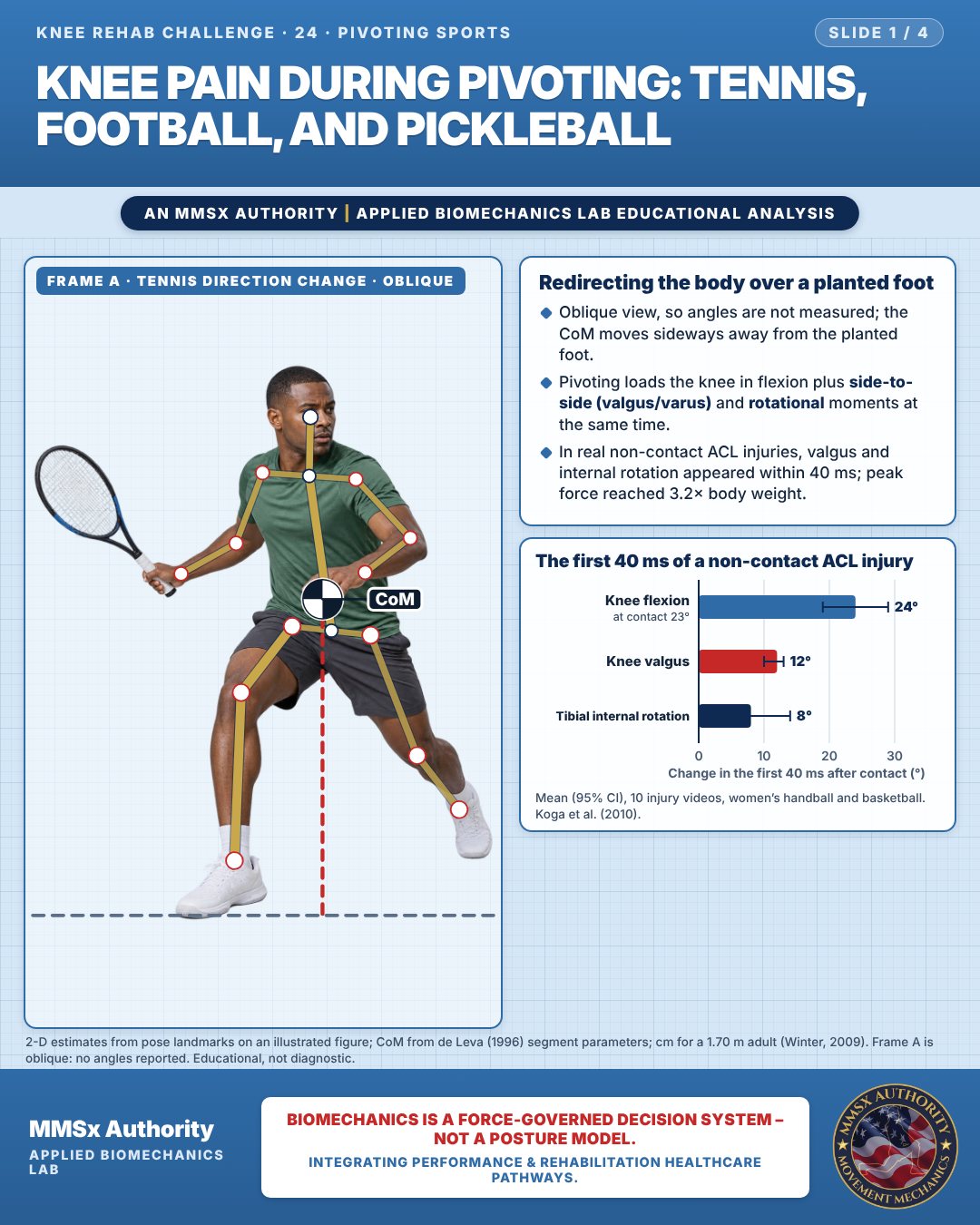 24
Knee pain during pivoting: tennis, football, and pickleball
Pivot-related knee pain arises when the planted knee must decelerate and redirect the body: the joint is loaded not only in flexion but also by…
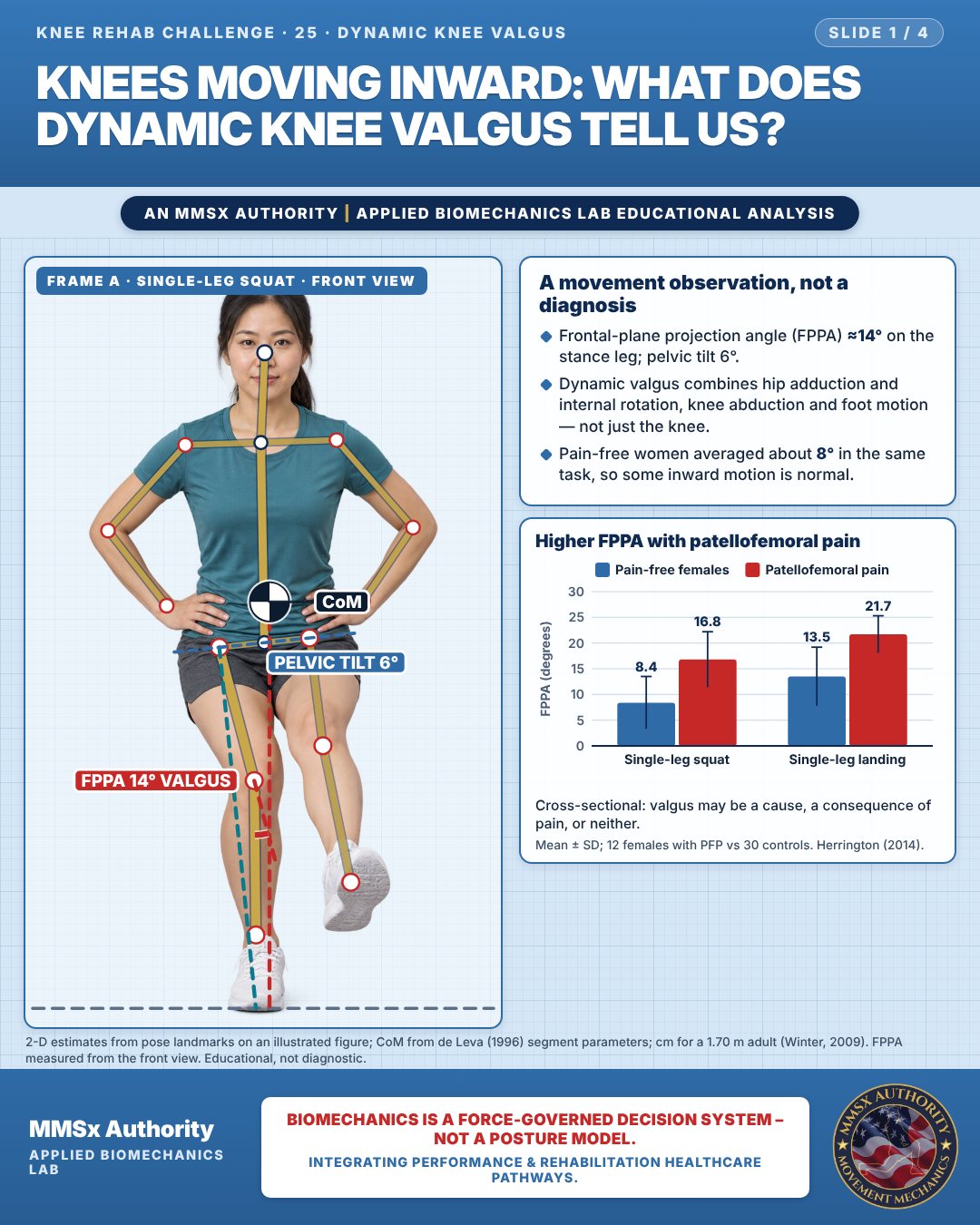 25
Knees moving inward: what does dynamic knee valgus tell us?
Dynamic knee valgus is the visible inward movement of the knee relative to the hip and foot during a weight-bearing task.
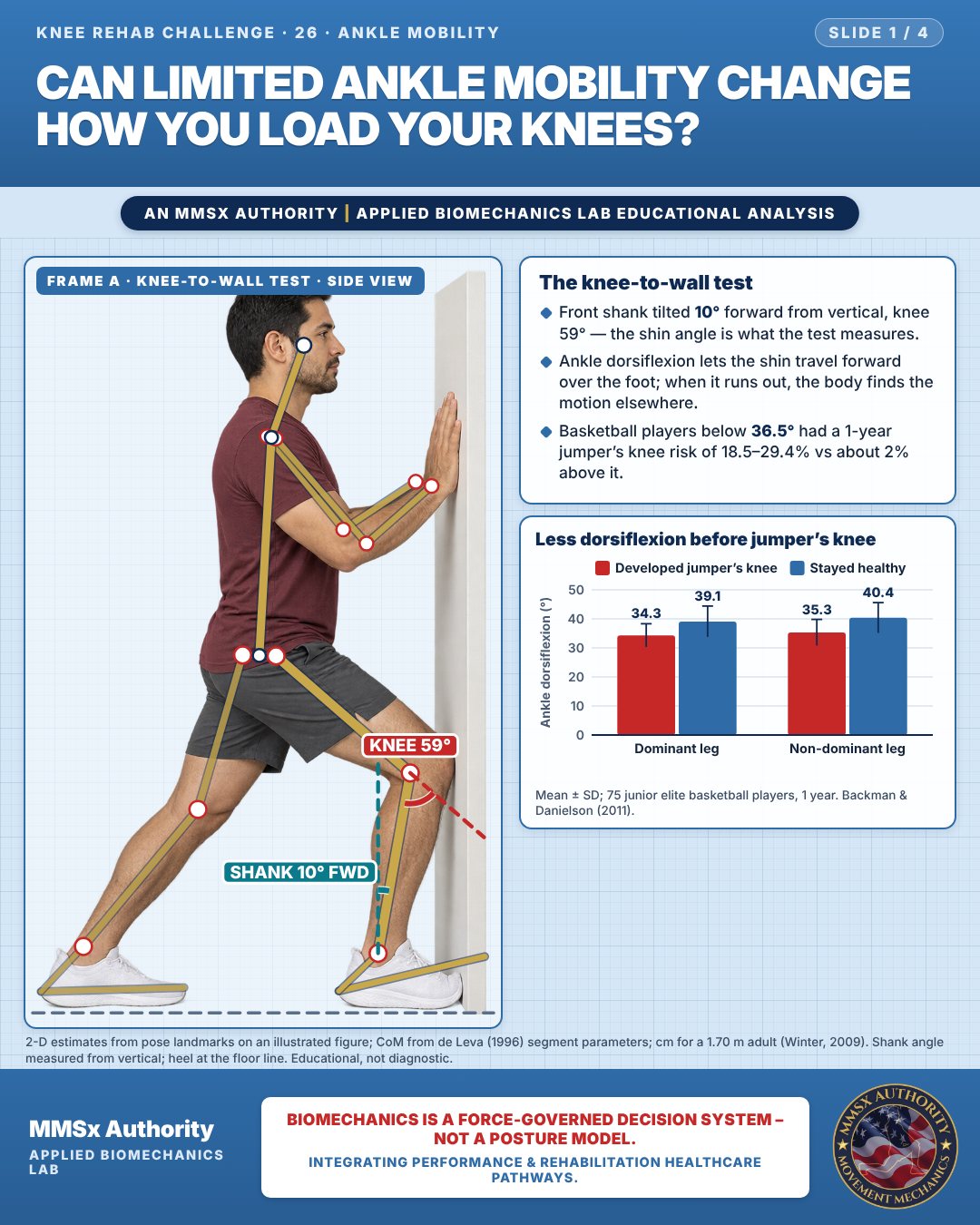 26
Can limited ankle mobility change how you load your knees?
Limited ankle dorsiflexion is a reduced ability of the shin to move forward over the planted foot (talocrural/tibial forward rotation), usually…
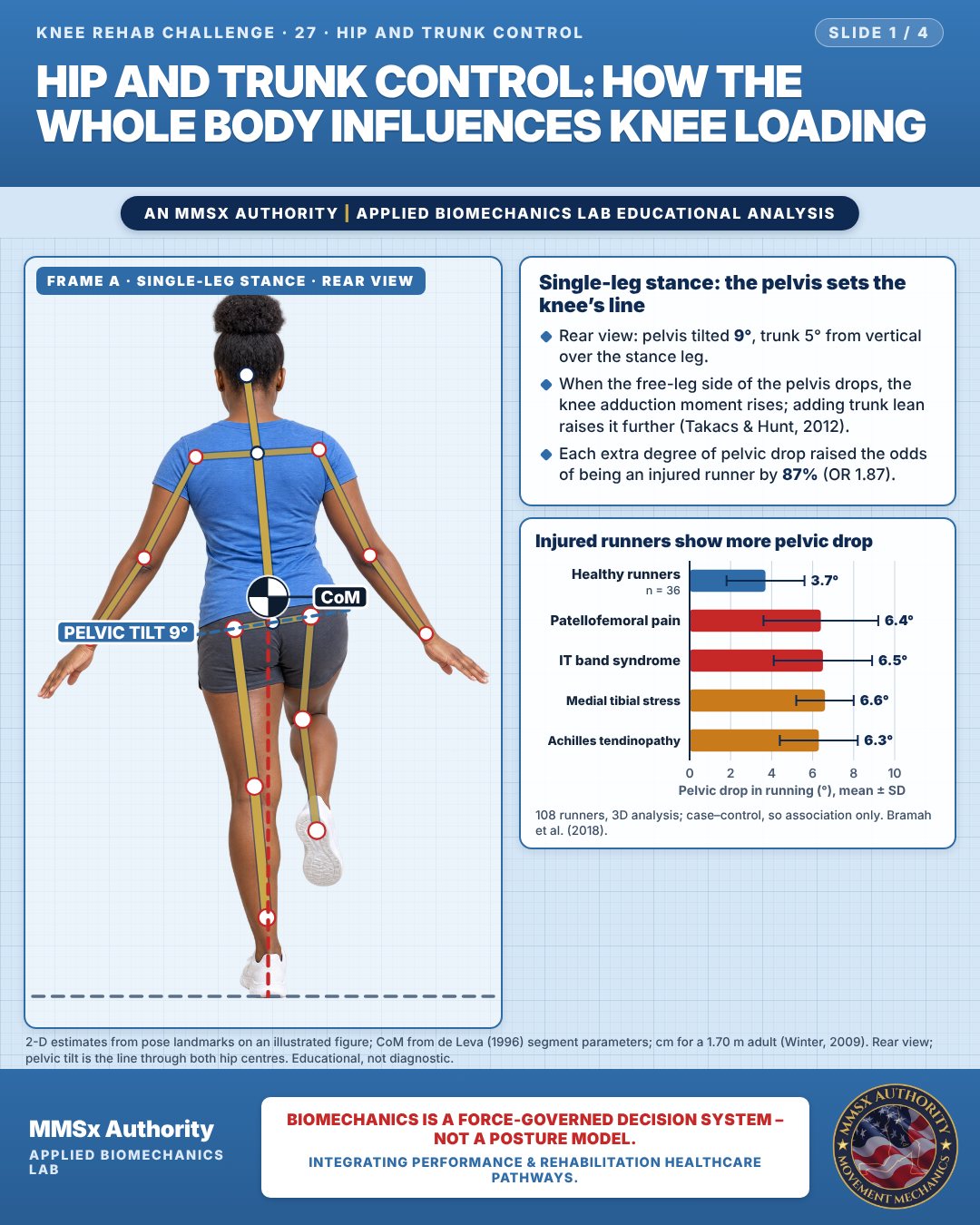 27
Hip and trunk control: how the whole body influences knee loading
"Hip and trunk control" describes how well the pelvis and trunk are held over the stance limb in the frontal and transverse planes.
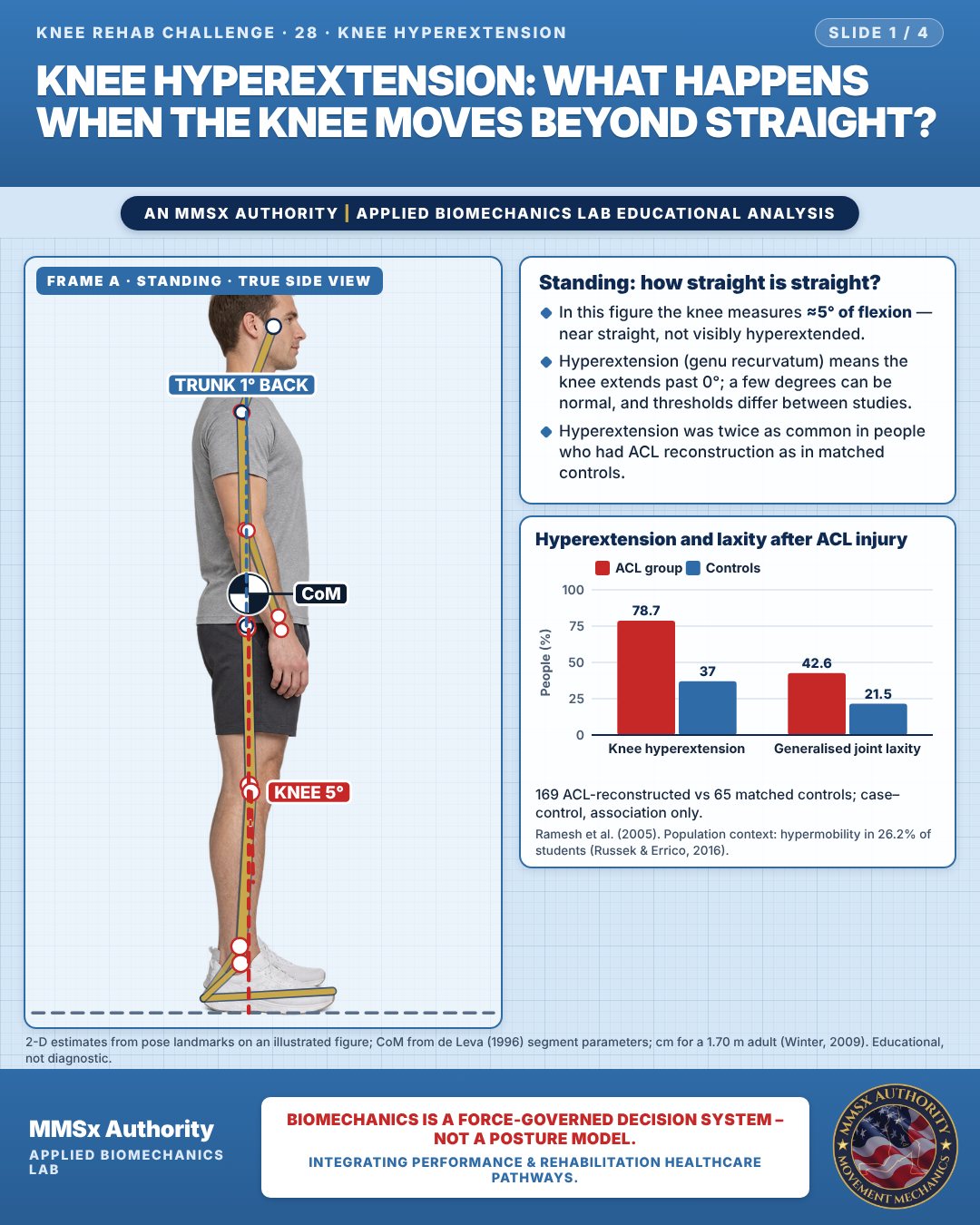 28
Knee hyperextension: what happens when the knee moves beyond straight?
Knee hyperextension (genu recurvatum) is extension of the tibiofemoral joint beyond 0° (straight).
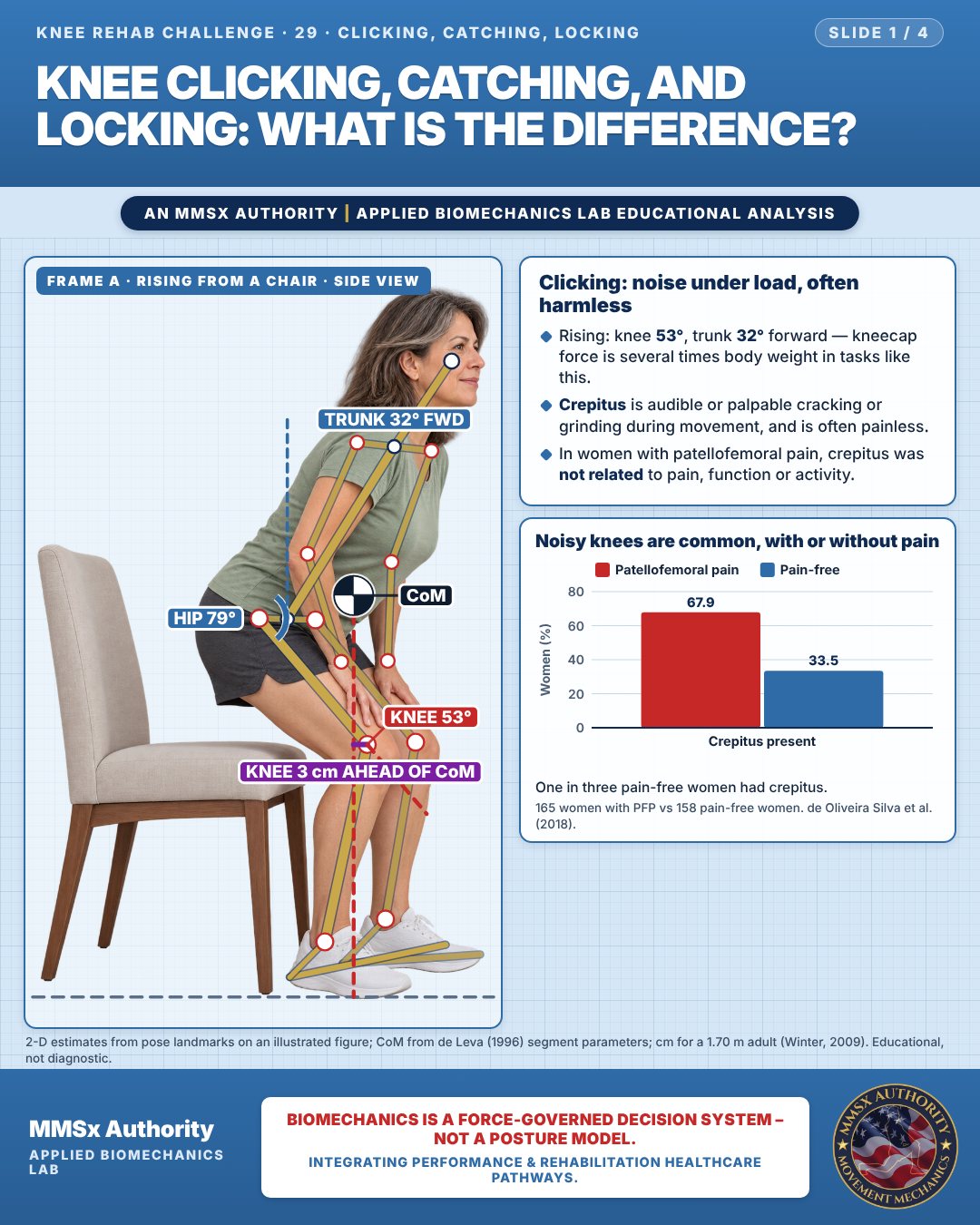 29
Knee clicking, catching, and locking: what is the difference?
- Clicking / crepitus: audible or palpable noise (cracking, grinding, popping) during knee movement.
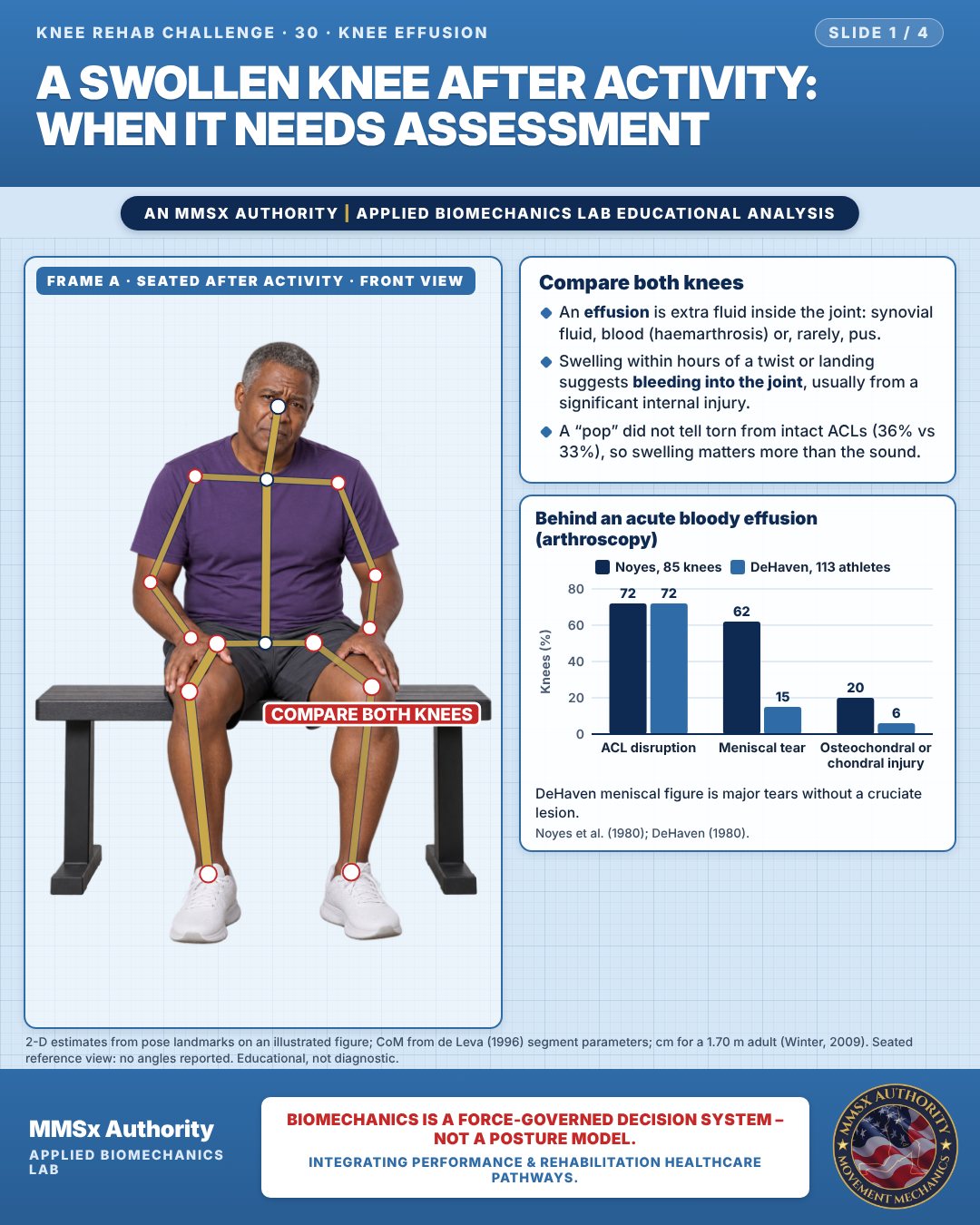 30
A swollen knee after activity: when it needs assessment
A knee effusion is an abnormal increase of fluid inside the knee joint capsule (synovial fluid, blood — haemarthrosis — or, rarely, pus).
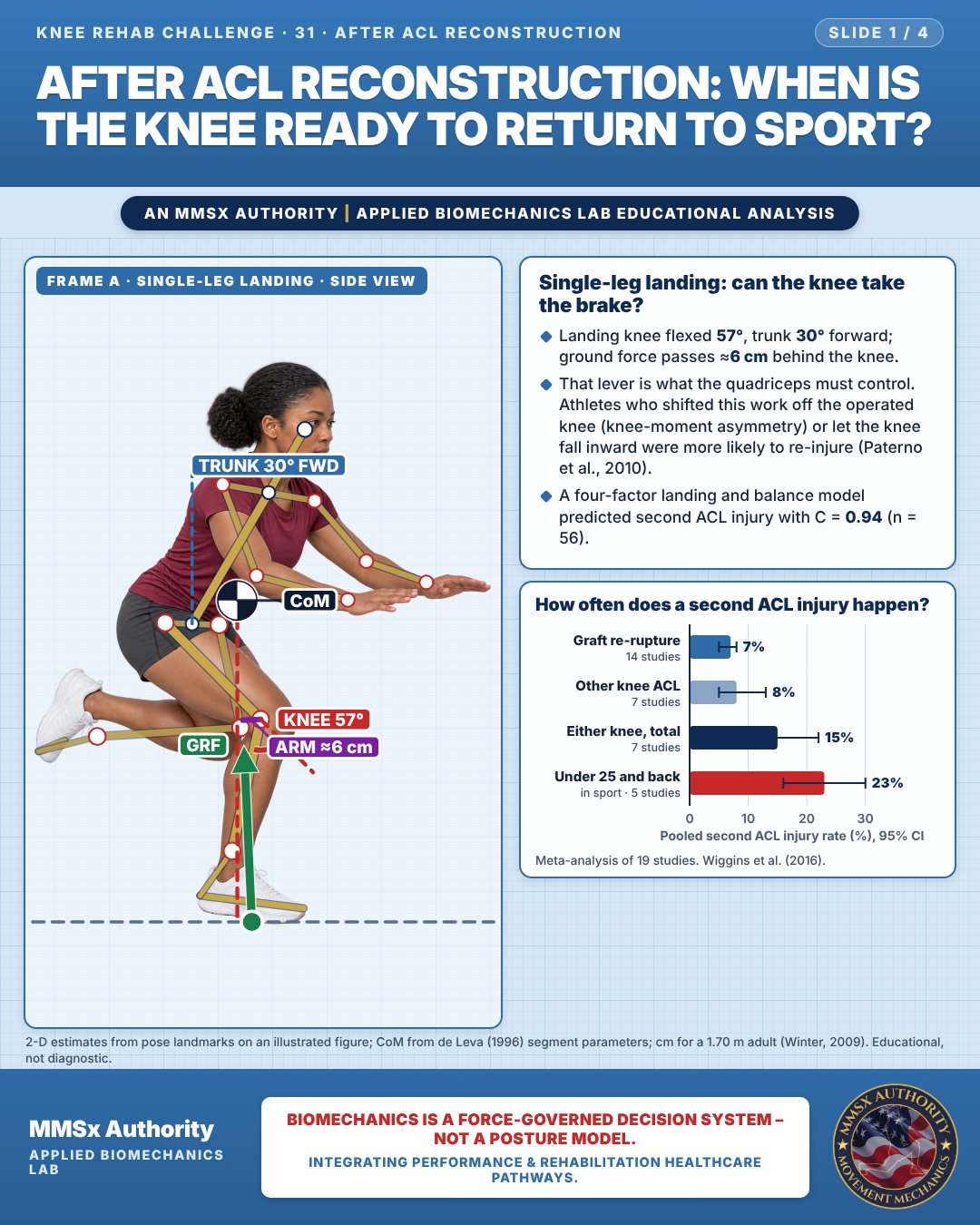 31
After ACL reconstruction: when is the knee ready to return to sport?
Return to sport (RTS) after anterior cruciate ligament reconstruction (ACLR) is a staged decision, not a date: it combines time since surgery…
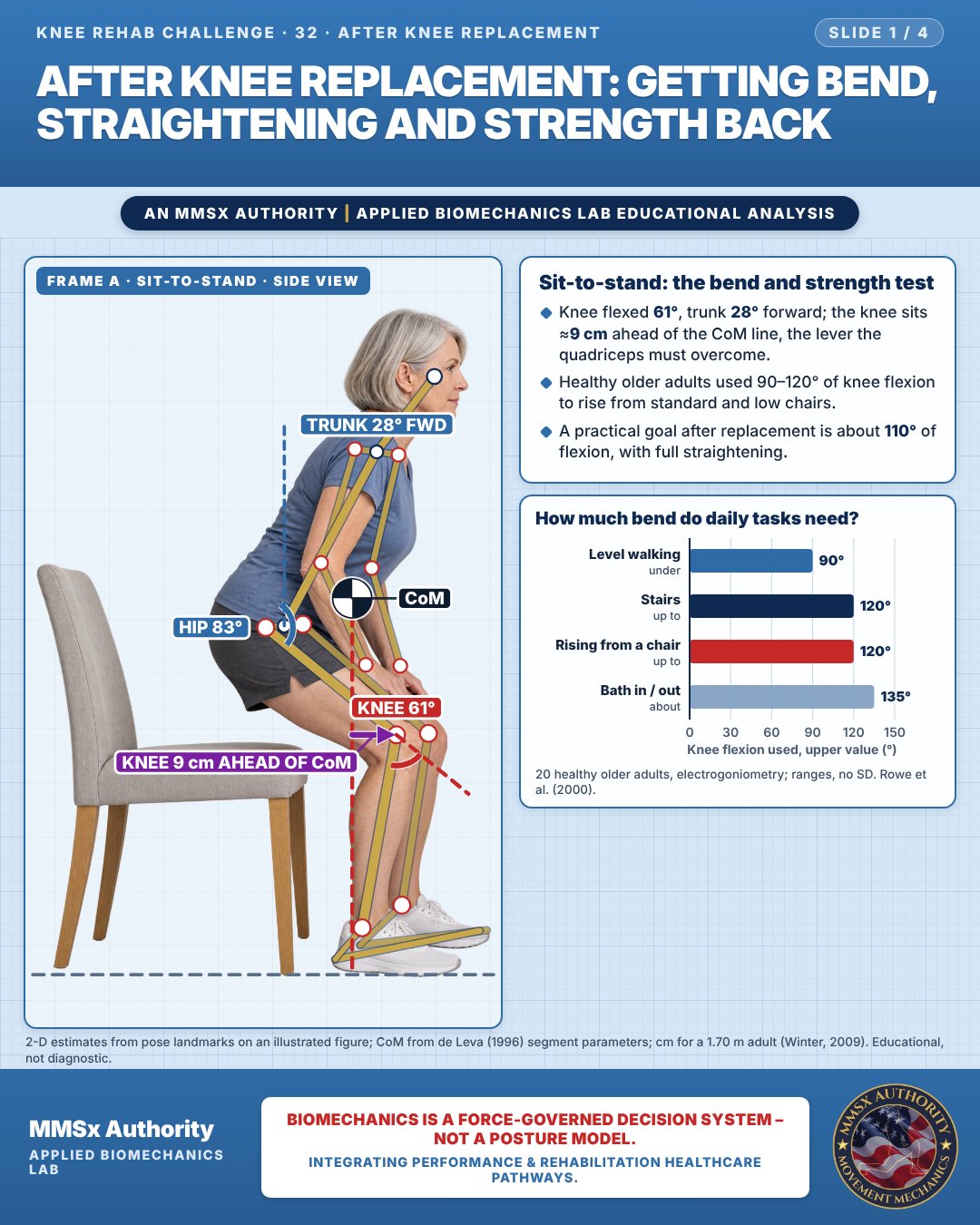 32
After knee replacement: getting bend, straightening and strength back
Rehabilitation after total knee arthroplasty (TKA) aims to restore knee range of motion (full extension and enough flexion for daily tasks),…
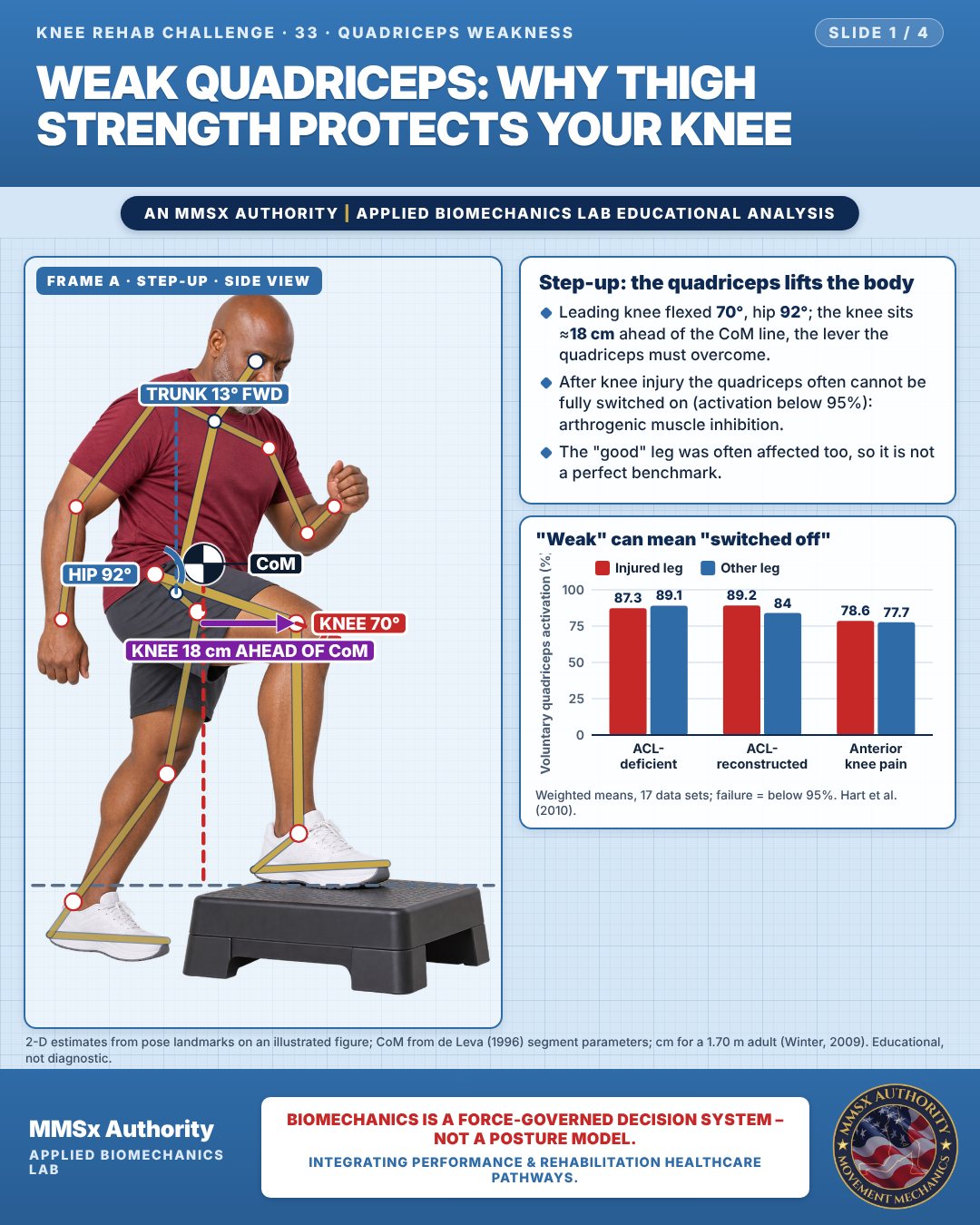 33
Weak quadriceps: why thigh strength protects your knee
Quadriceps weakness is reduced knee-extensor force capacity relative to the other limb or to age- and sex-matched norms.
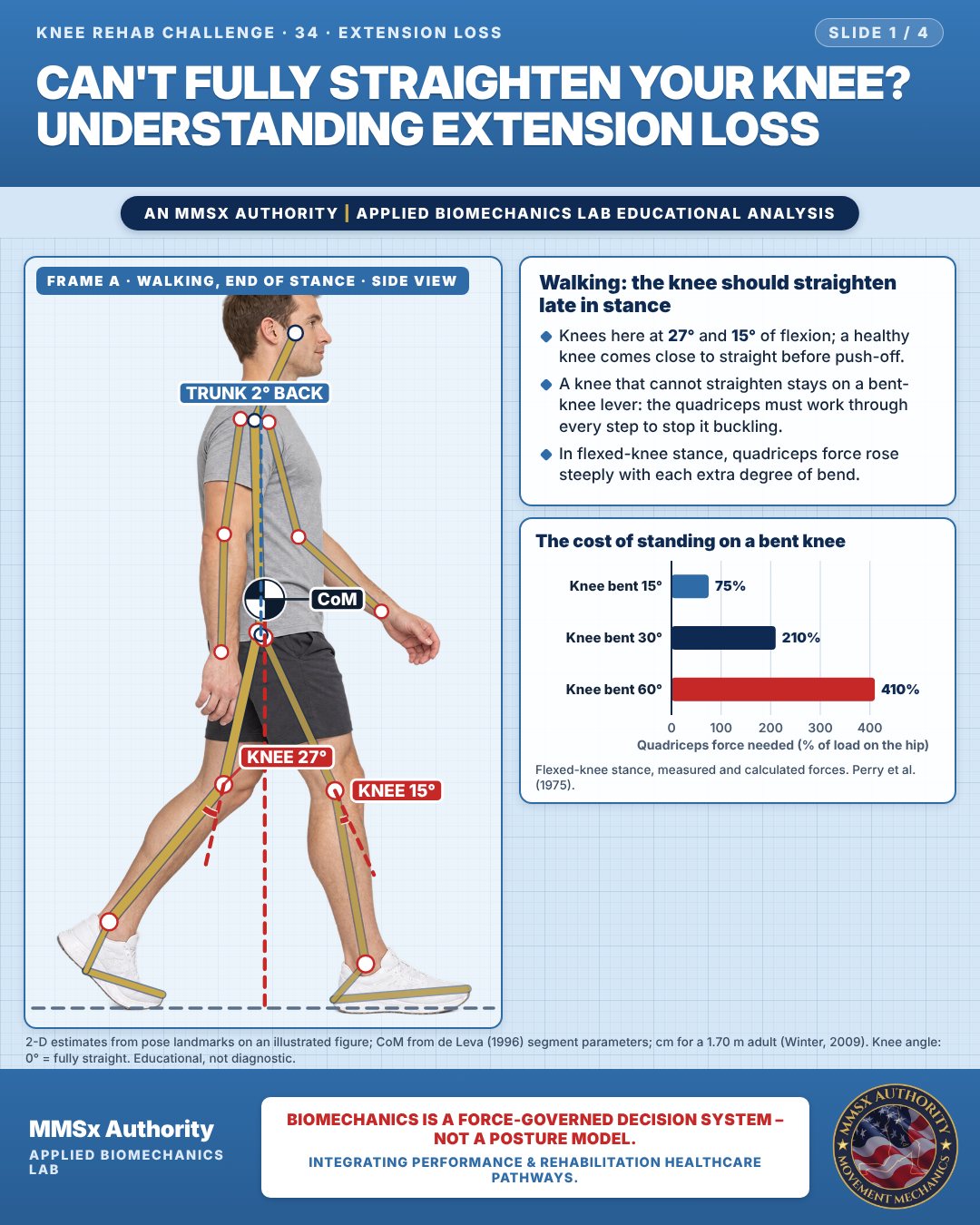 34
Can't fully straighten your knee? Understanding extension loss
Loss of knee extension is the inability to fully straighten the knee, either actively or passively.
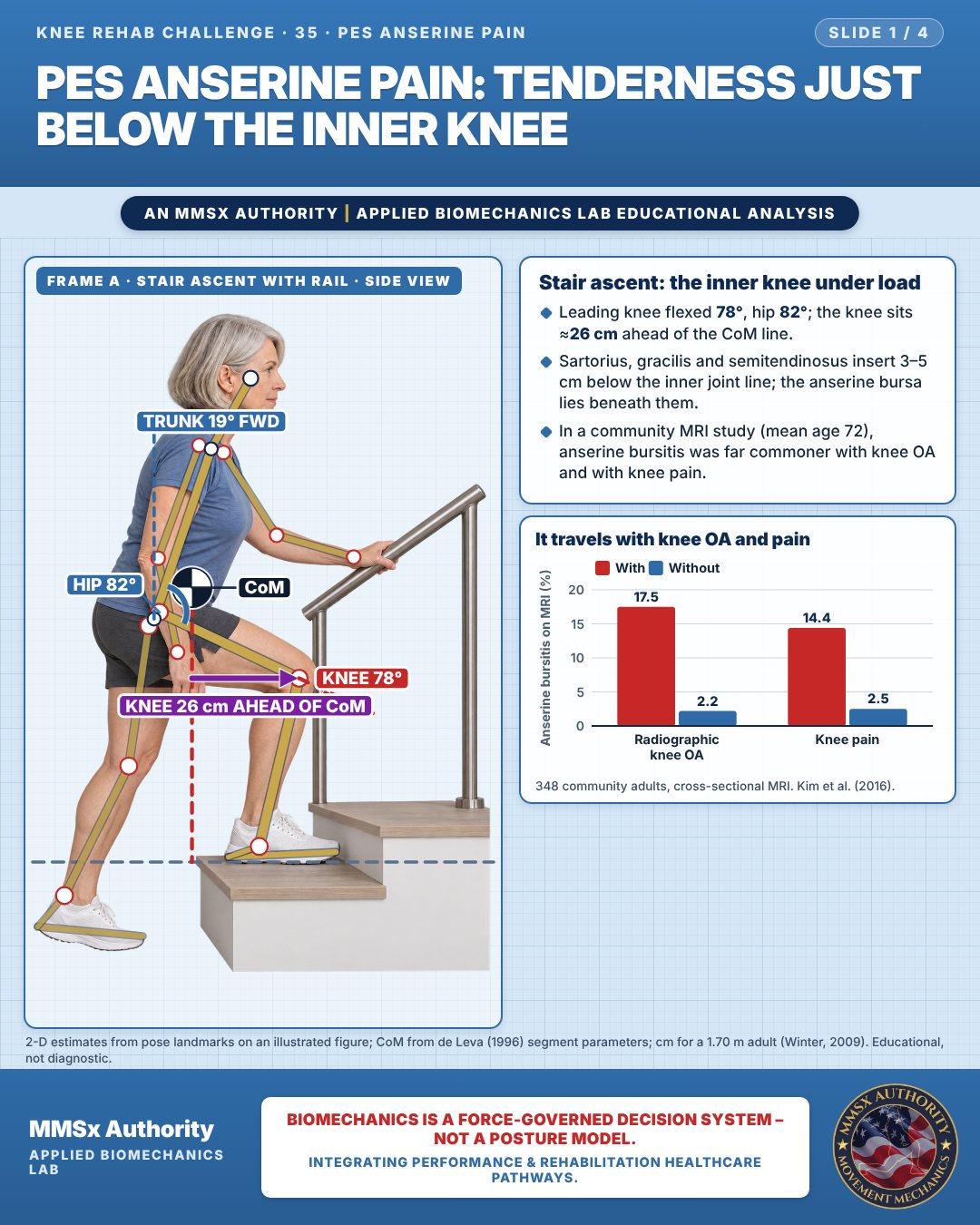 35
Pes anserine pain: tenderness just below the inner knee
Pes anserine (anserine) pain syndrome is pain and local tenderness over the inner (medial) upper shin, about 3–5 cm below the medial joint line,…
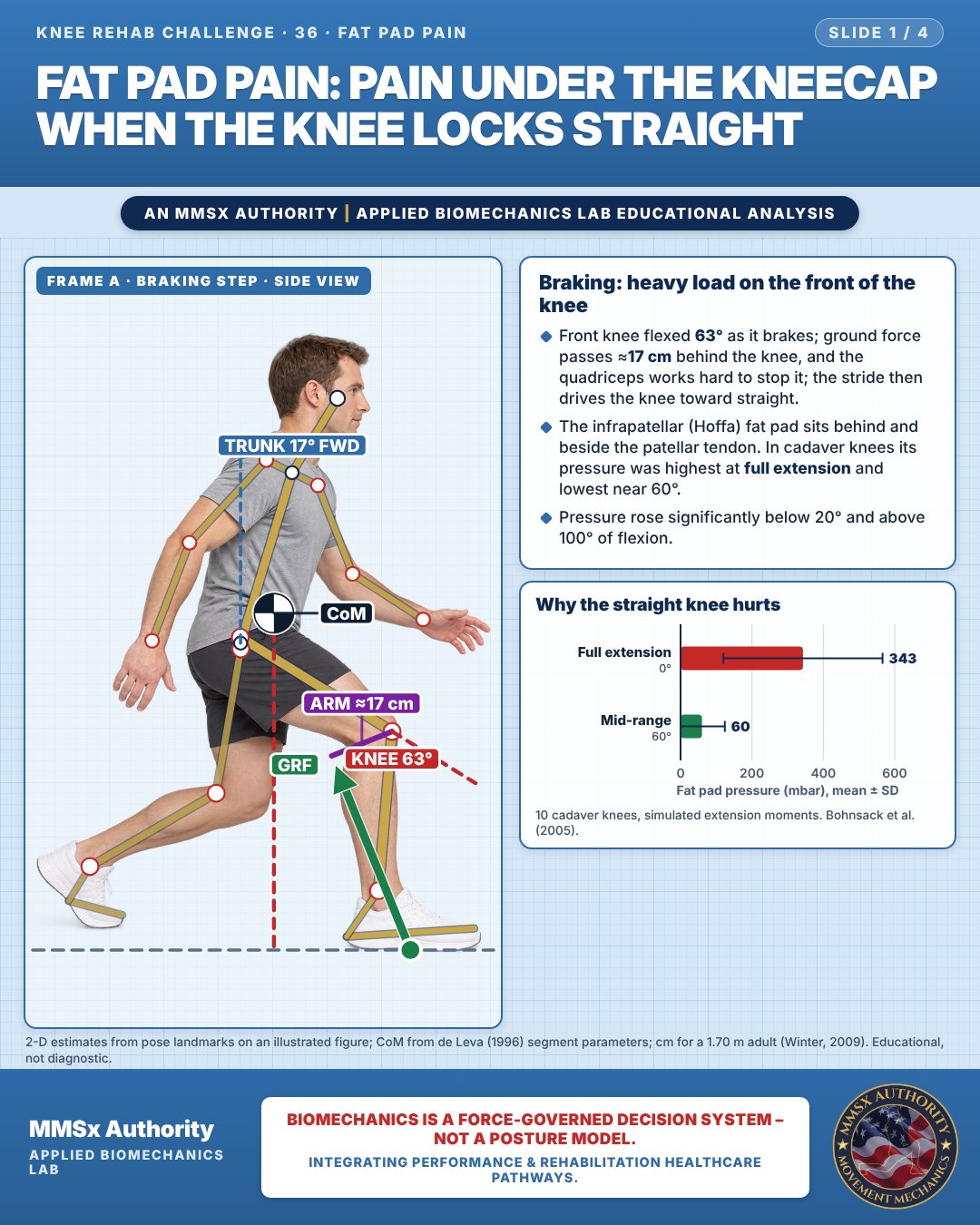 36
Fat pad pain: pain under the kneecap when the knee locks straight
Infrapatellar (Hoffa) fat pad pain is anterior knee pain arising from the fat pad that sits behind and either side of the patellar tendon, typically…
 37
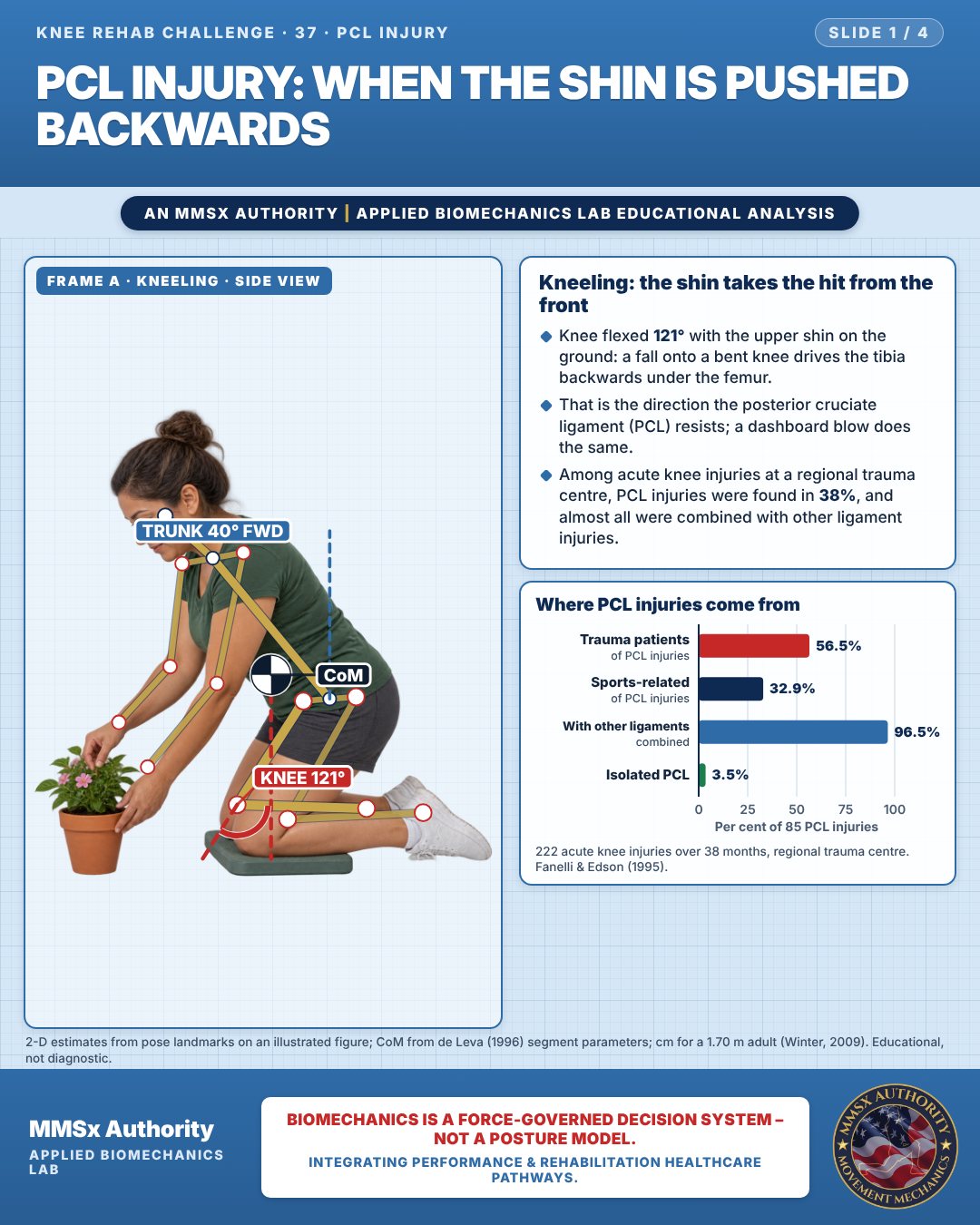
PCL injury: when the shin is pushed backwards
A posterior cruciate ligament (PCL) injury is a sprain or tear of the ligament that resists the shin bone (tibia) moving backwards on the thigh bone (femur).
 38
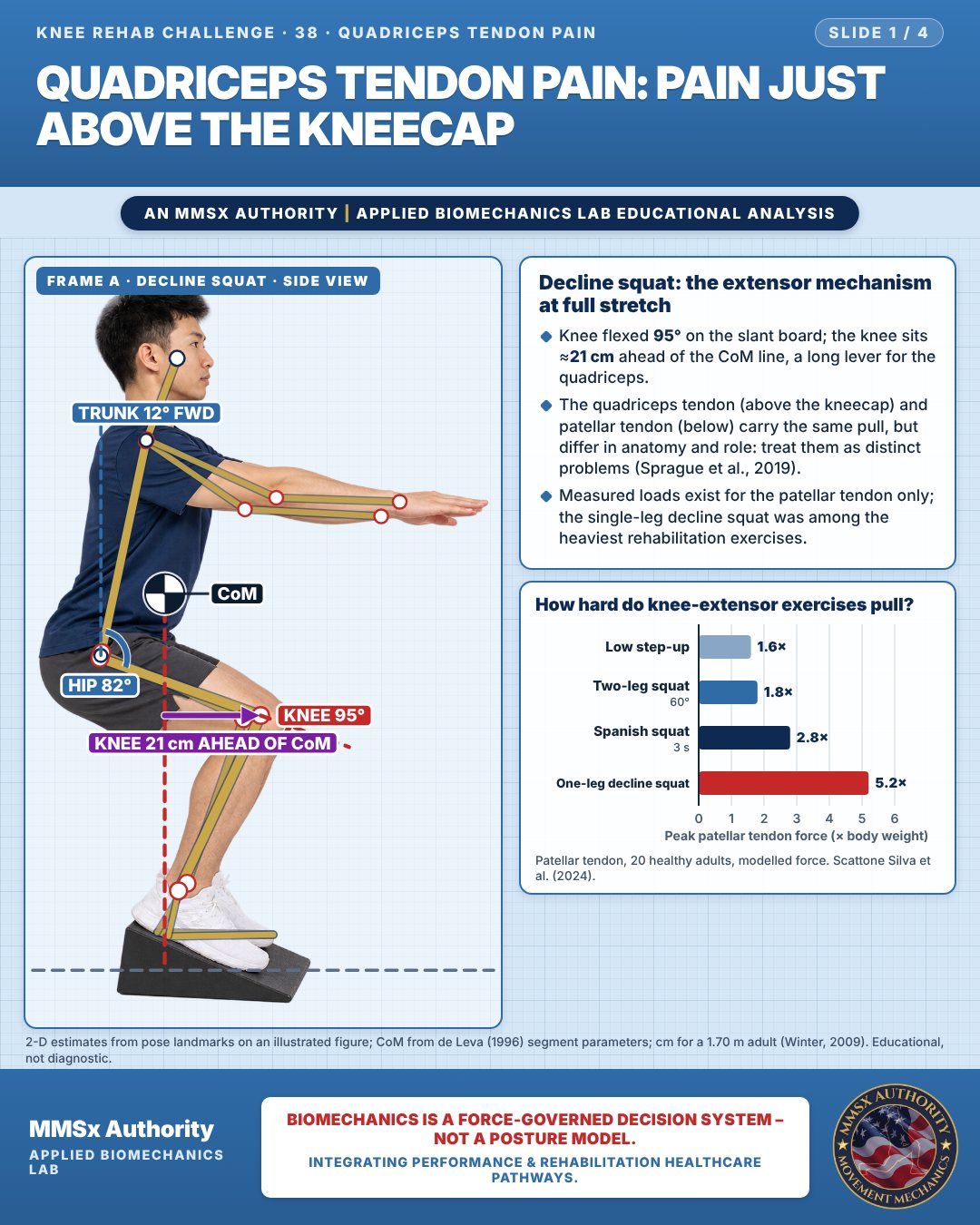
Quadriceps tendon pain: pain just above the kneecap
Quadriceps tendinopathy is pain arising from the quadriceps tendon where it attaches to the upper border of the kneecap.
 39
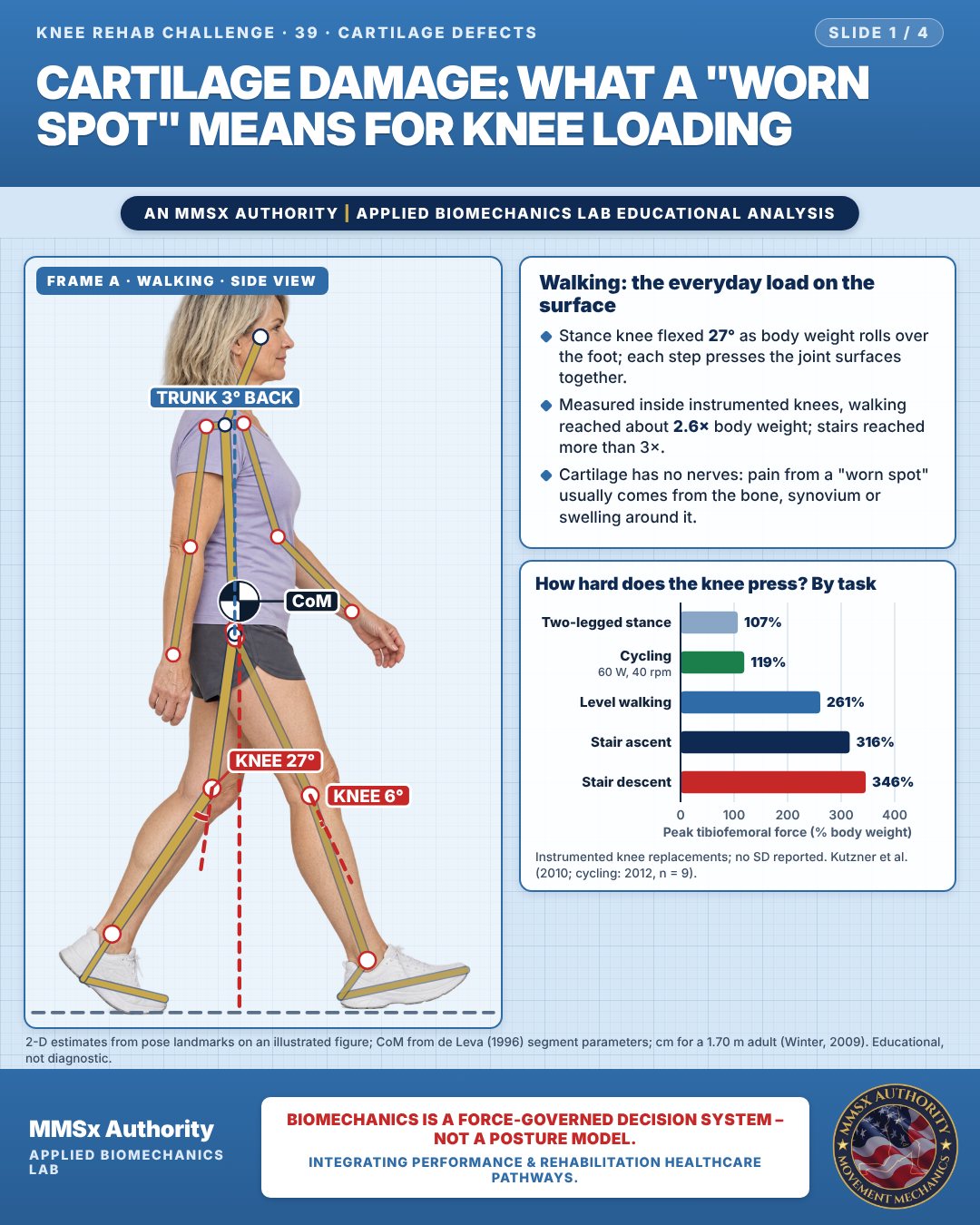
Cartilage damage: what a "worn spot" means for knee loading
An articular cartilage defect is a localised loss or damage of the smooth hyaline cartilage covering the joint surfaces (graded at arthroscopy, e.g.
 40
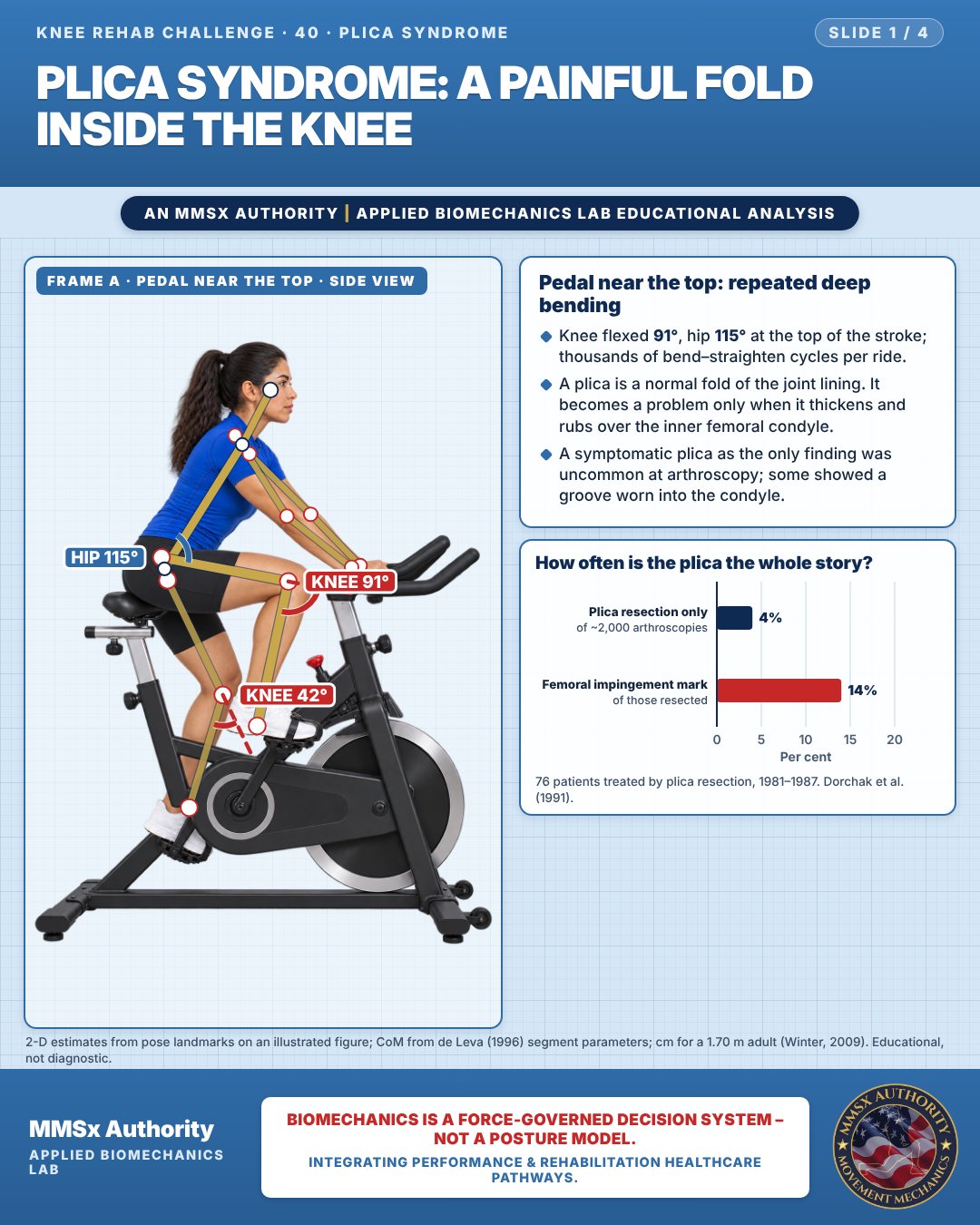
Plica syndrome: a painful fold inside the knee
A plica is a normal fold of the synovial lining inside the knee joint. Movement analysis, verified research data and a decision pathway from the MMSx Authorit
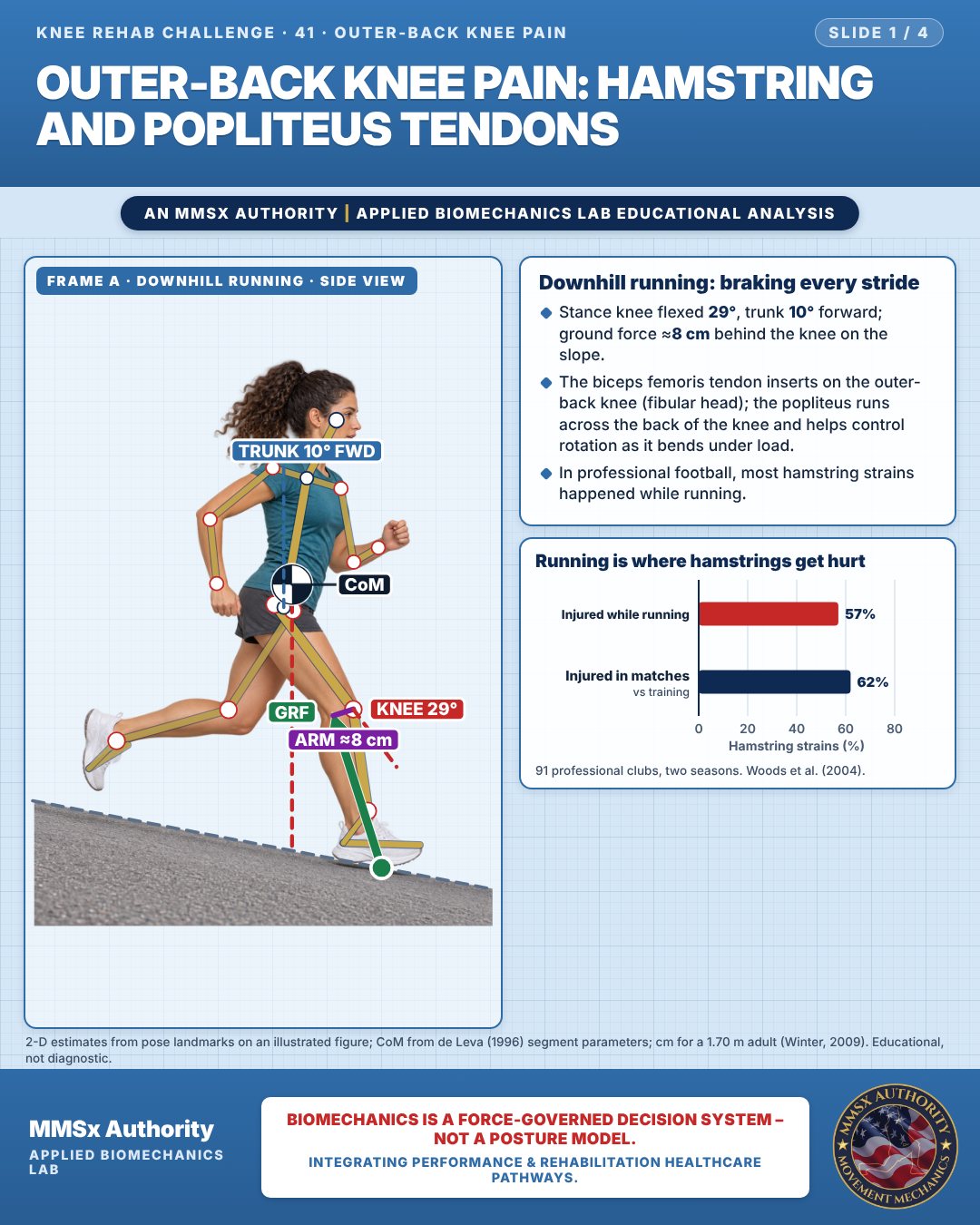 41
Outer-back knee pain: hamstring and popliteus tendons
Posterolateral knee pain describes pain at the outer back of the knee. Movement analysis, verified research data and a decision pathway from the MMSx Authorit
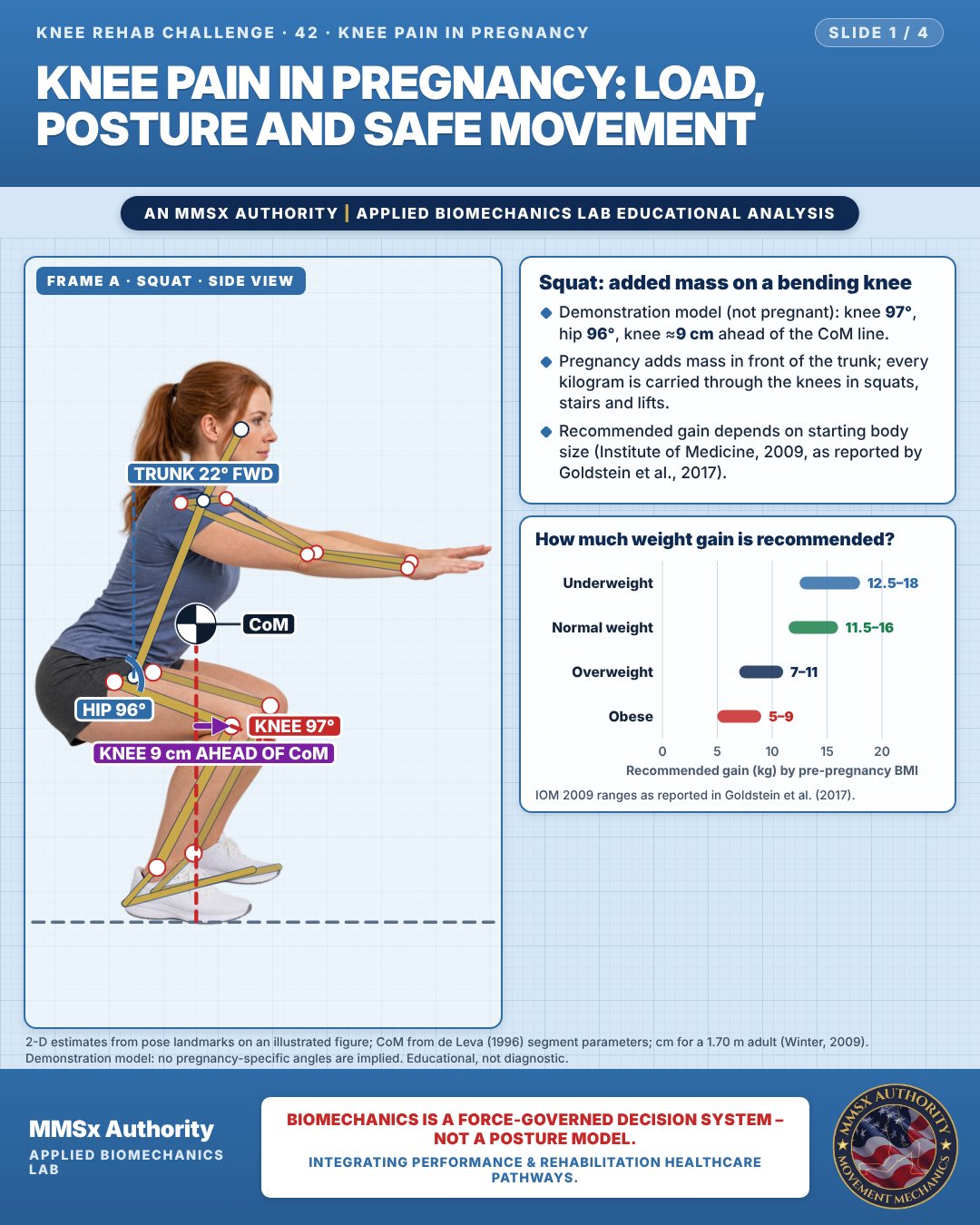 42
Knee pain in pregnancy: load, posture and safe movement
Knee pain in pregnancy refers to new or worsened knee symptoms during pregnancy. Movement analysis, verified research data and a decision pathway from the MMS
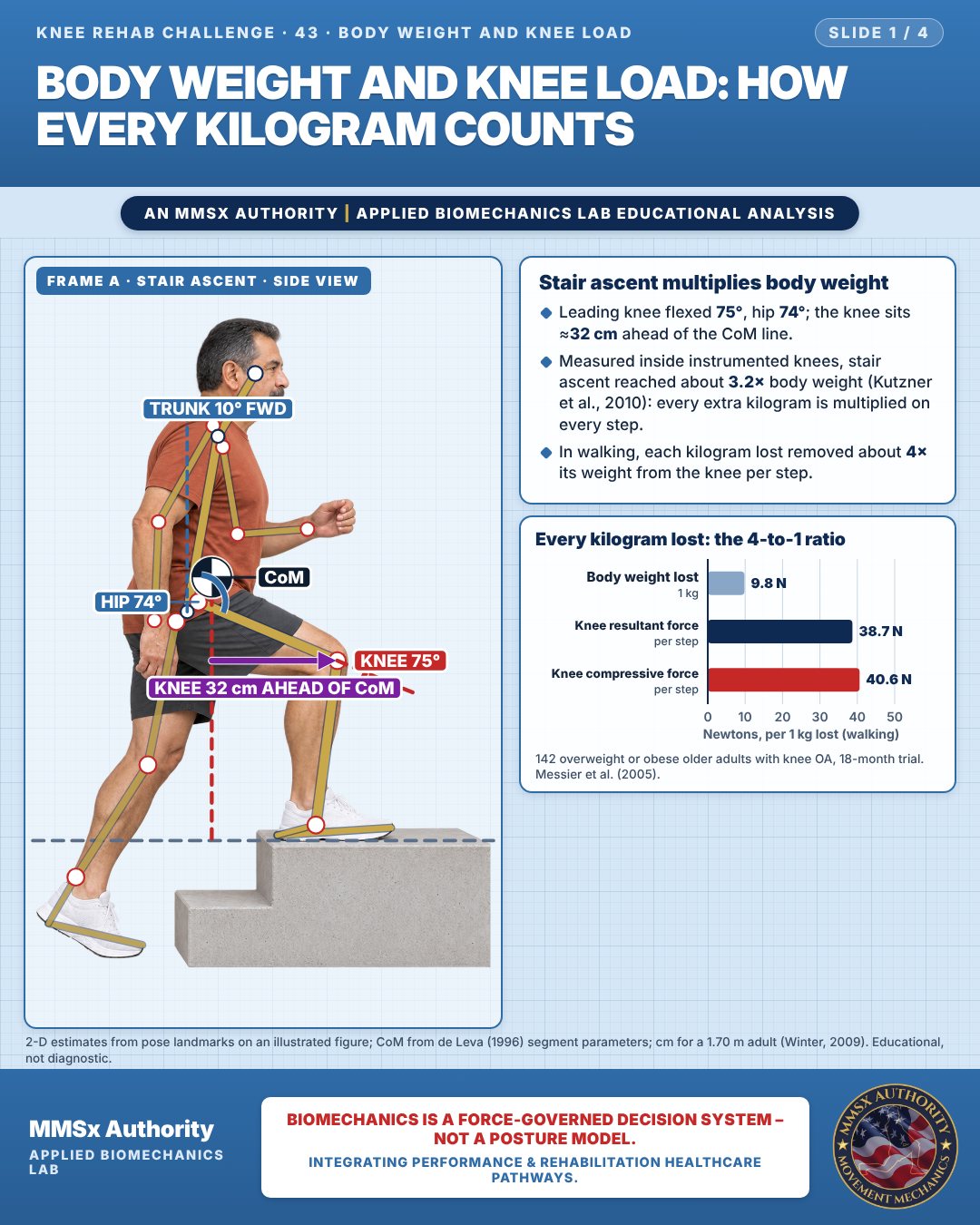 43
Body weight and knee load: how every kilogram counts
Knee joint load is the compressive and resultant force transmitted across the tibiofemoral joint during weight-bearing tasks.
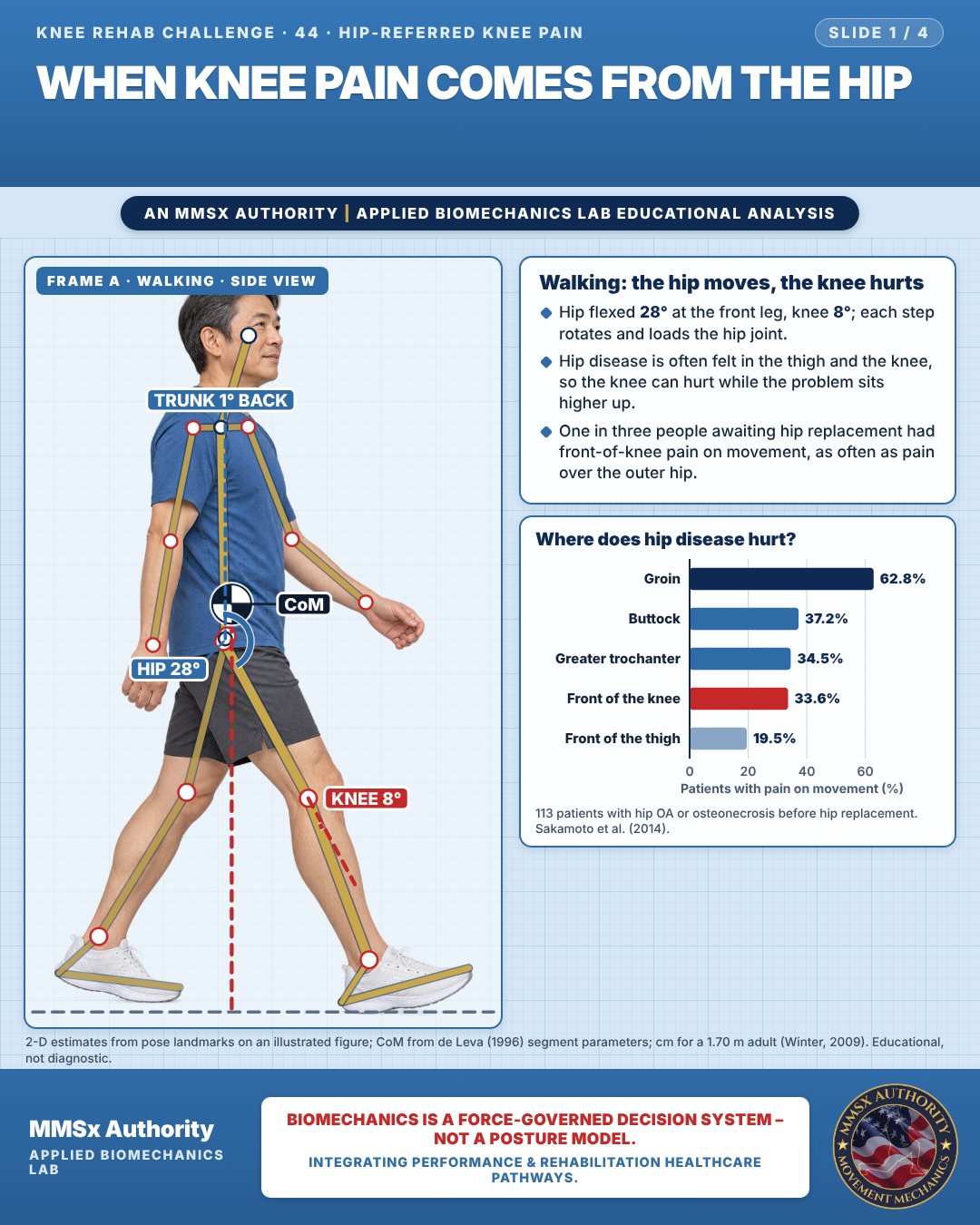 44
When knee pain comes from the hip
Referred knee pain from the hip is pain felt in the thigh or knee that originates from hip joint pathology (e.g.
 45
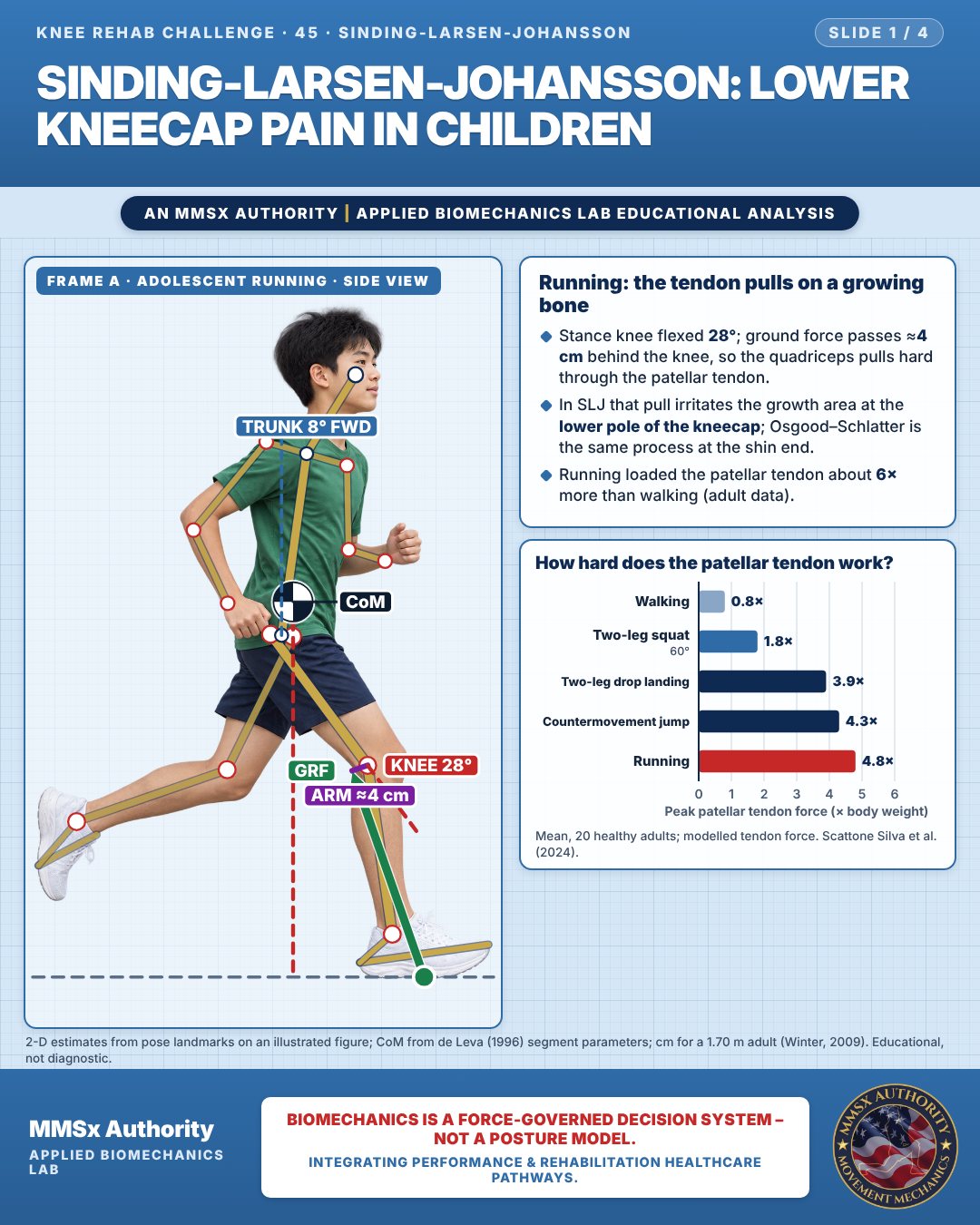
Sinding-Larsen-Johansson: lower kneecap pain in children
Sinding-Larsen-Johansson disease (SLJ) is a traction apophysitis (osteochondrosis) at the lower pole of the patella, where the patellar tendon…
 46
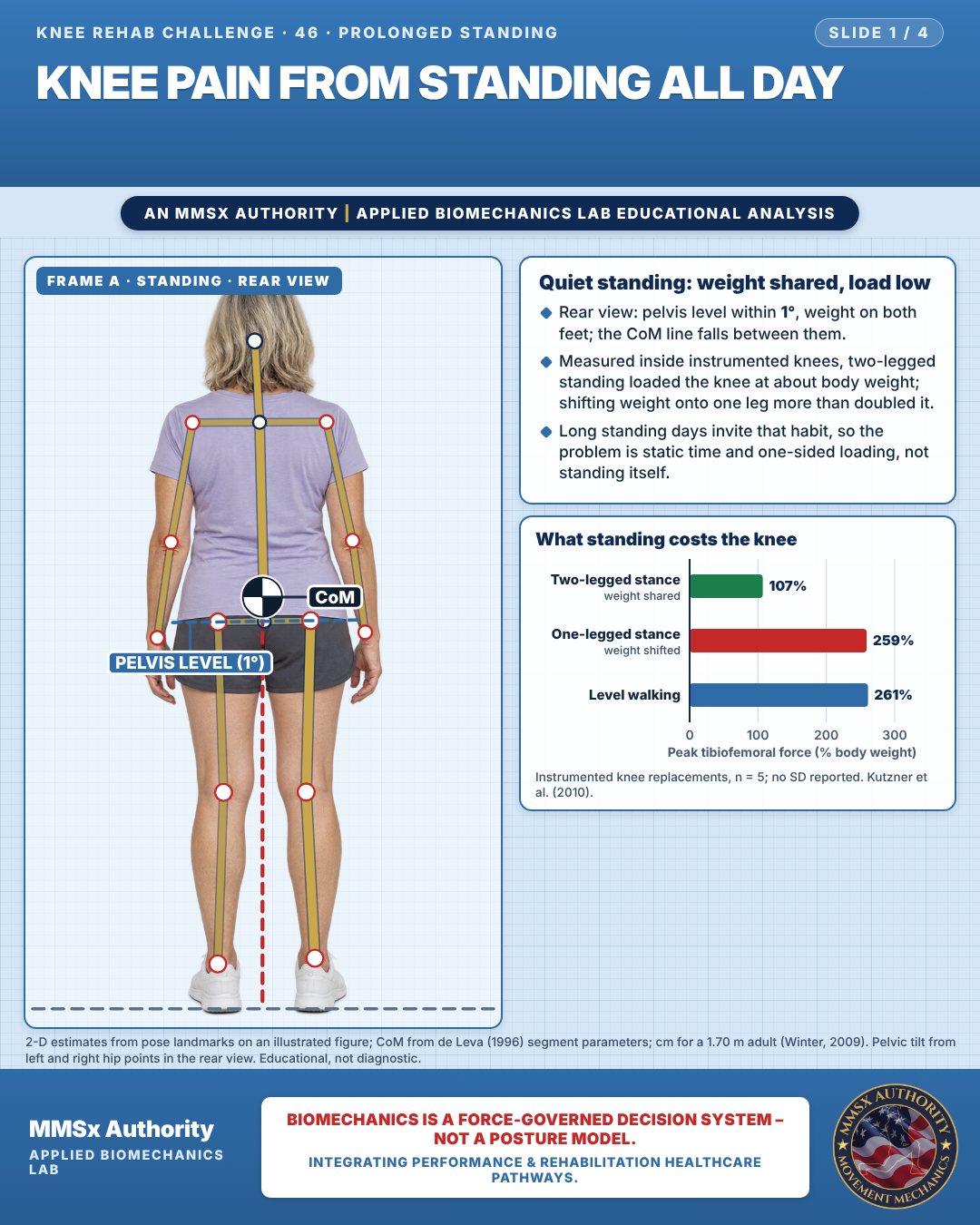
Knee pain from standing all day
Occupational standing-related knee pain describes knee discomfort that builds during long periods of mostly static standing at work, often alongside…
 47
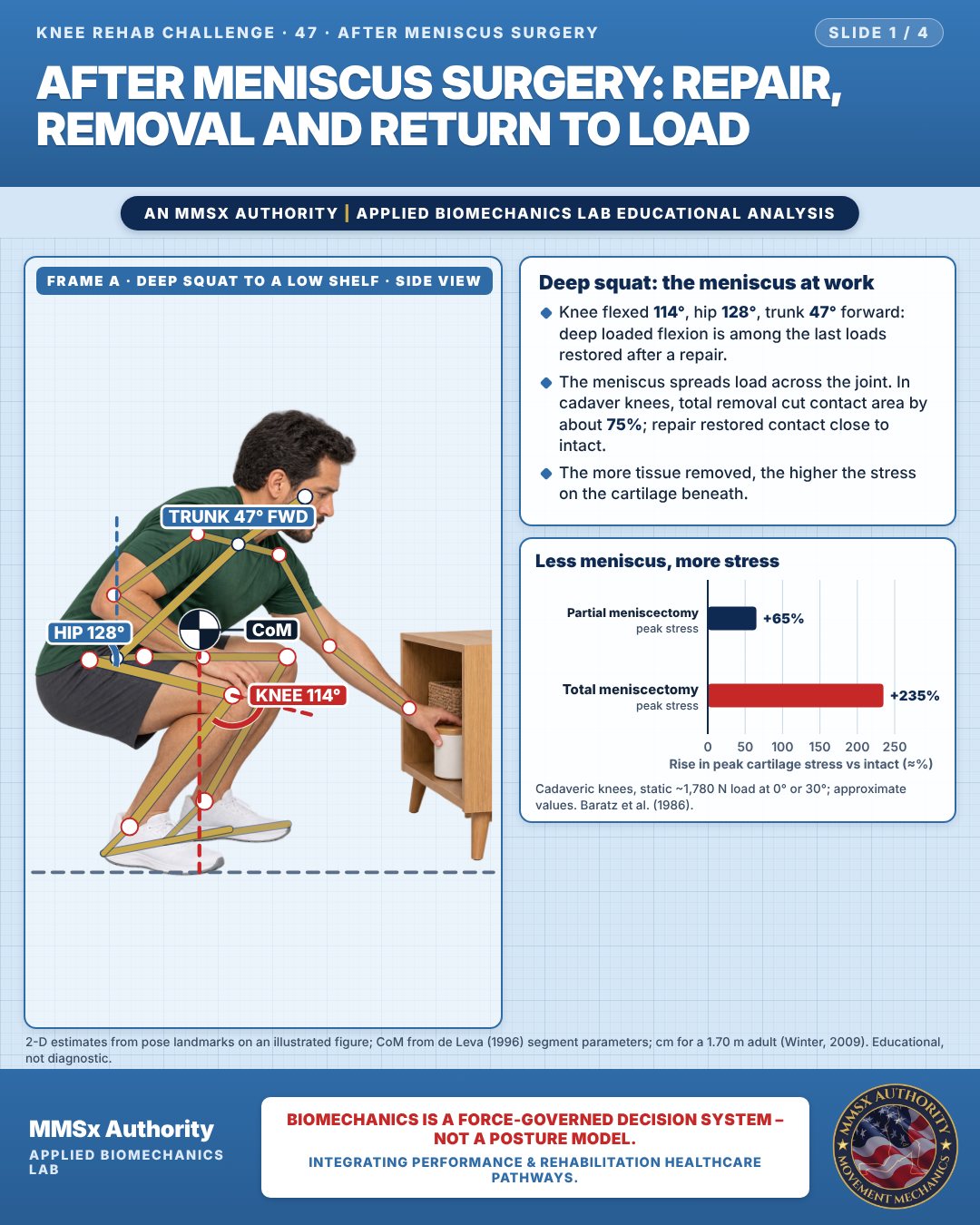
After meniscus surgery: repair, removal and return to load
Meniscus surgery is either removal of the torn part of the meniscus (partial meniscectomy, usually arthroscopic) or stitching the tear so that it can…
 48
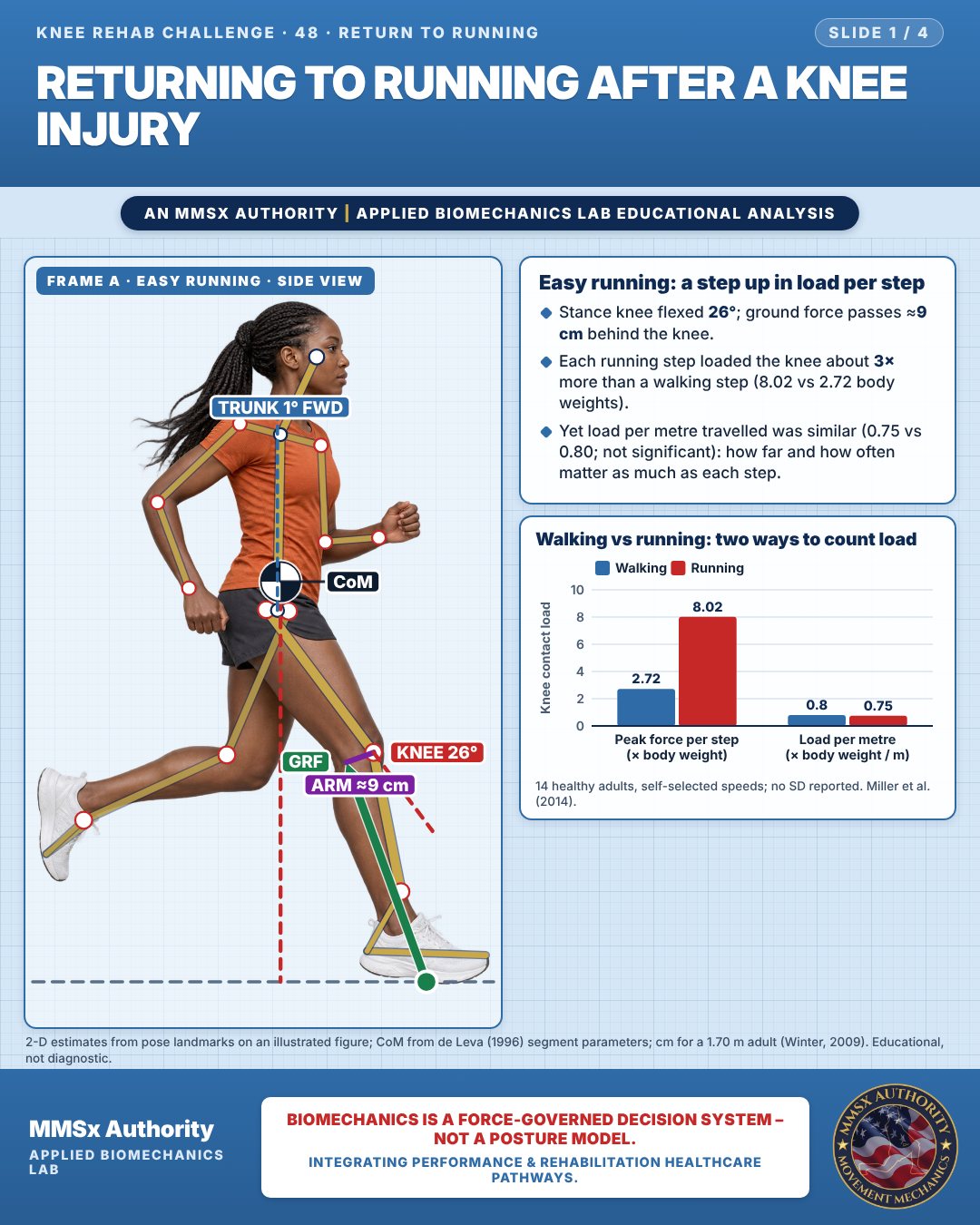
Returning to running after a knee injury
Return to running is the staged reintroduction of running after a knee injury or surgery, in which running load (time, distance, speed, gradient) is…
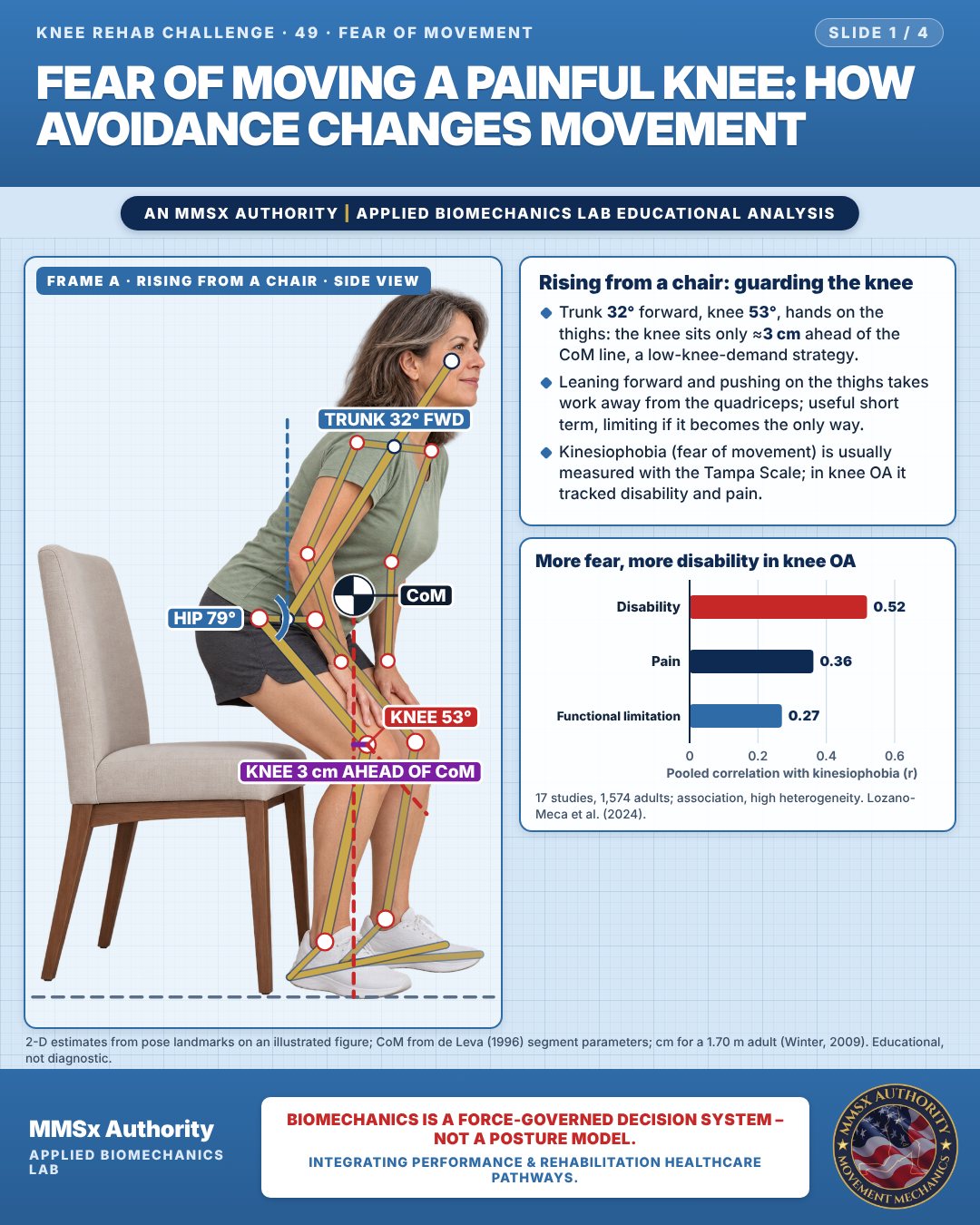 49
Fear of moving a painful knee: how avoidance changes movement
Kinesiophobia (fear of movement) is an excessive, irrational fear of physical movement and activity arising from a feeling of vulnerability to…
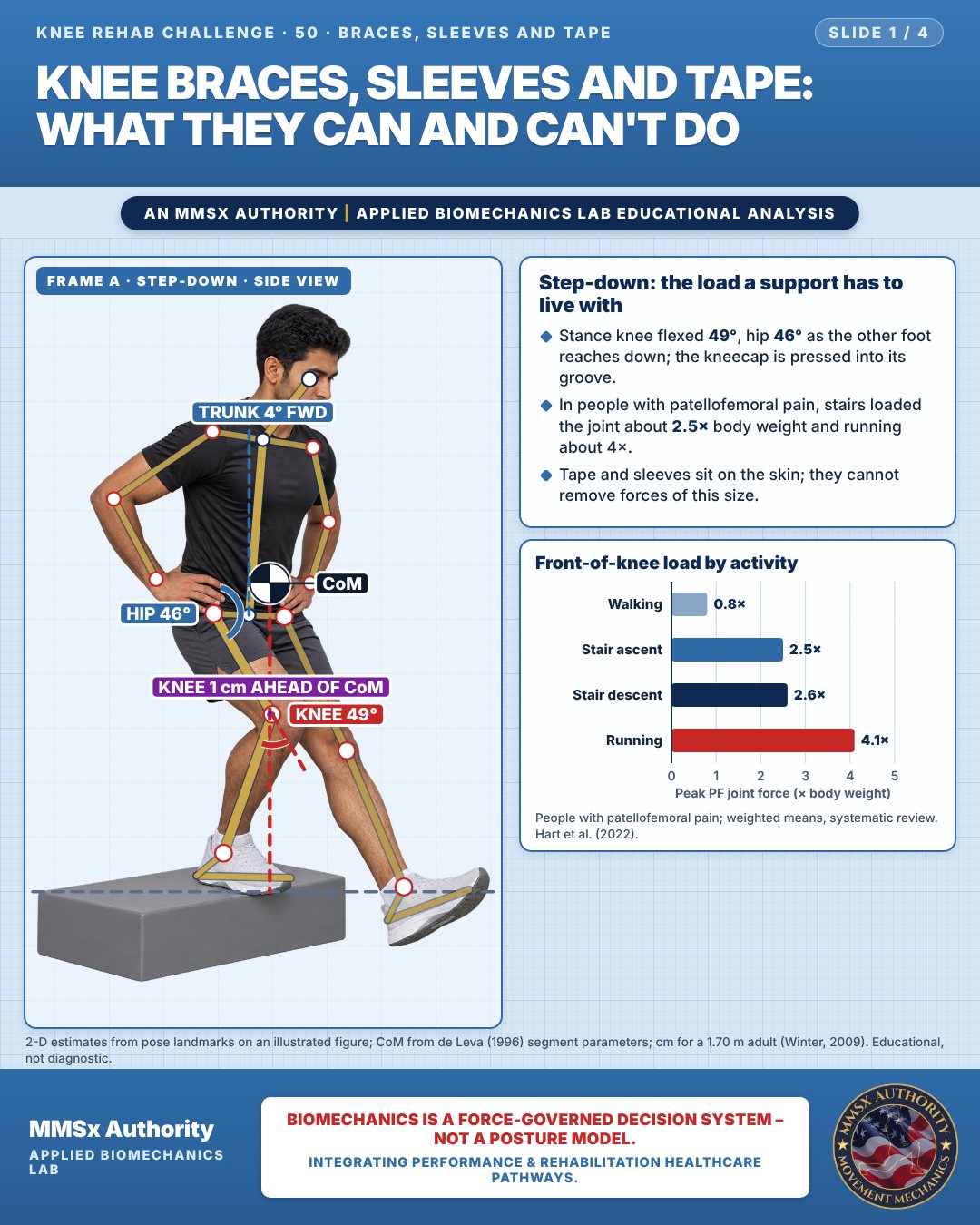 50
Knee braces, sleeves and tape: what they can and can't do
Knee braces, sleeves and tape are external supports worn on the knee. Movement analysis, verified research data and a decision pathway from the MMSx Authority