MMSx Authority · Applied Biomechanics Lab
Hamstring and Thigh Rehabilitation: 50 Evidence-Based Biomechanics Analyses
Fifty evidence-based hamstring, quadriceps and groin rehabilitation articles from the MMSx Authority Applied Biomechanics Lab: movement analysis, verified research data and decision pathways for thigh pain. Each article pairs a biomechanical analysis of three movements with verified research data, a decision pathway and APA 7 references with DOIs.
Cite this collection
Mehta, N. (2026). Hamstring and Thigh Rehabilitation: 50 Evidence-Based Biomechanics Analyses [Collection]. MMSx Authority Applied Biomechanics Lab. Zenodo. https://doi.org/10.5281/zenodo.23735792
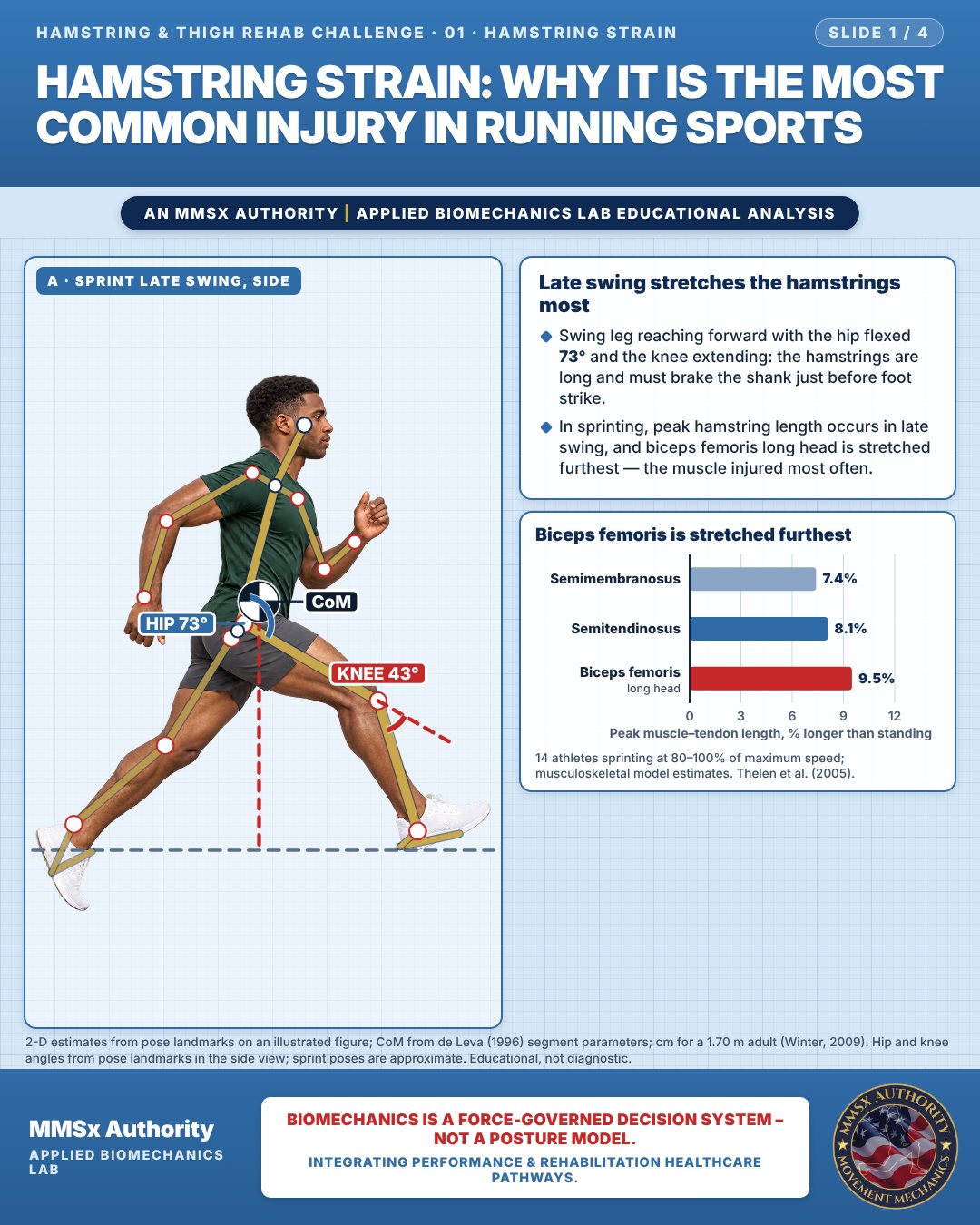 01
Hamstring strain: why it is the most common injury in running sports
A hamstring strain is an acute injury to the muscle fibres, the muscle–tendon junction or the intramuscular tendon of one or more of the hamstring…
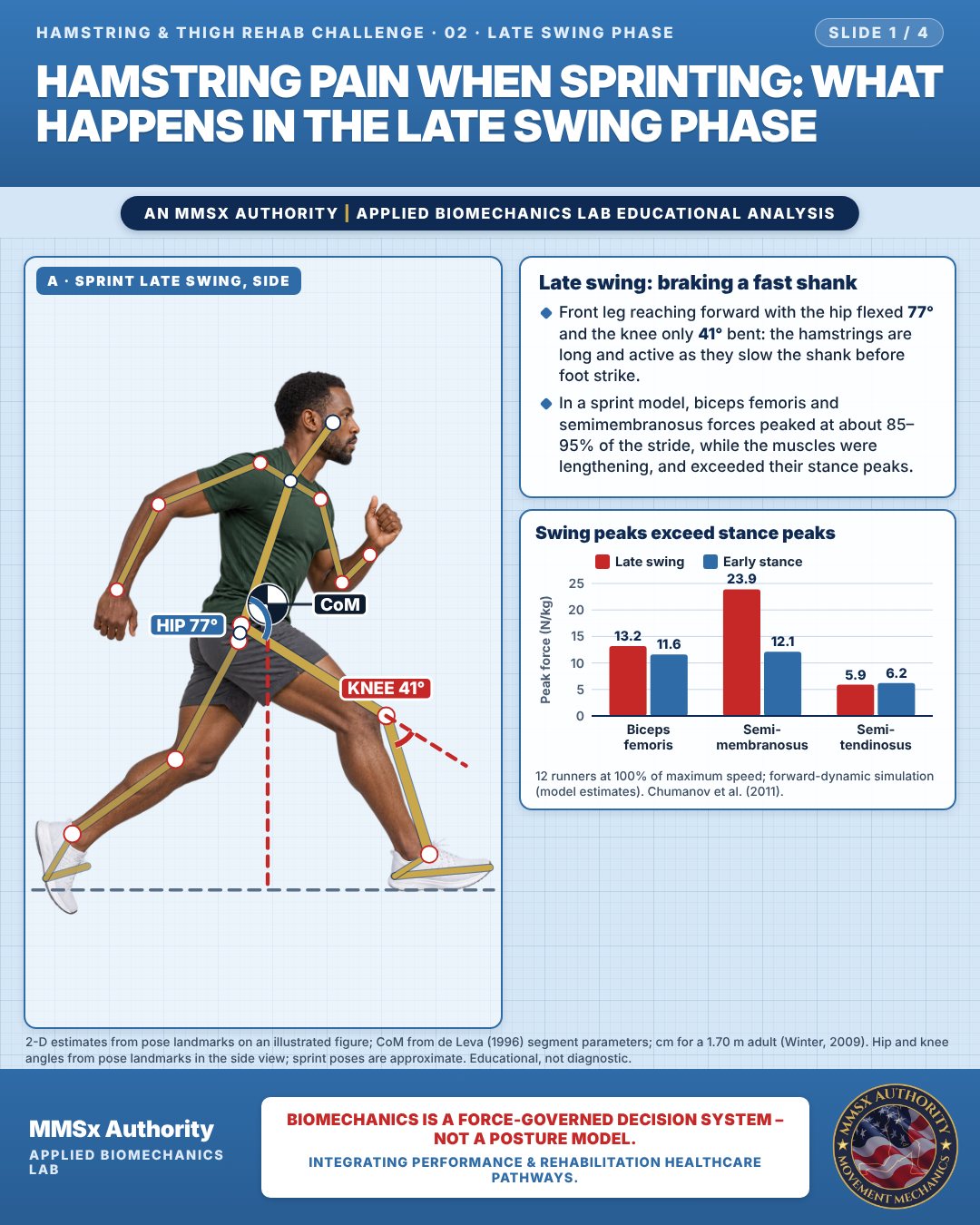 02
Hamstring pain when sprinting: what happens in the late swing phase
Late swing is the final part of the swing phase of sprinting, as the thigh decelerates and the knee extends just before foot strike.
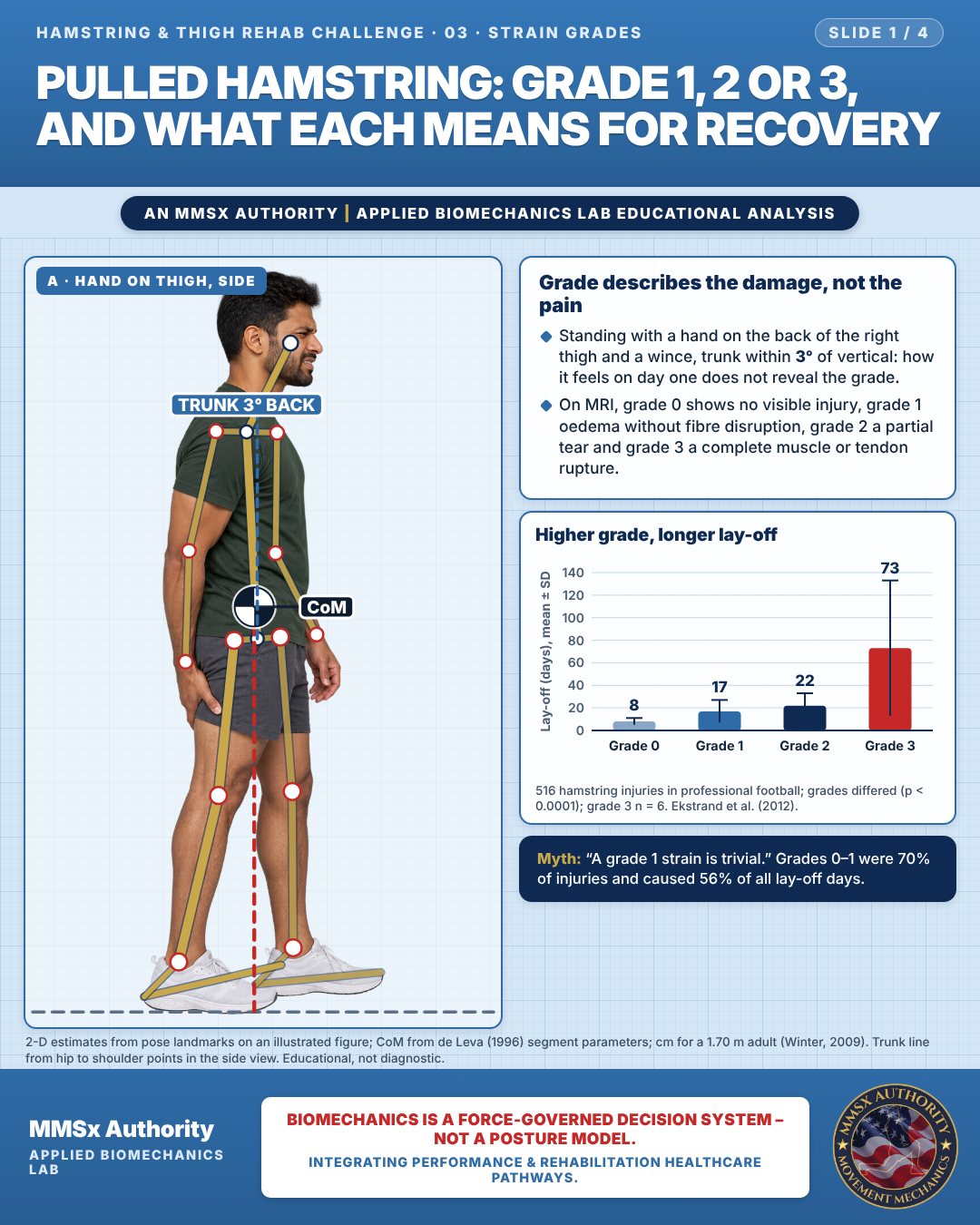 03
Pulled hamstring: grade 1, 2 or 3, and what each means for recovery
"Grade" describes how much structural damage a hamstring strain shows on clinical or MRI assessment.
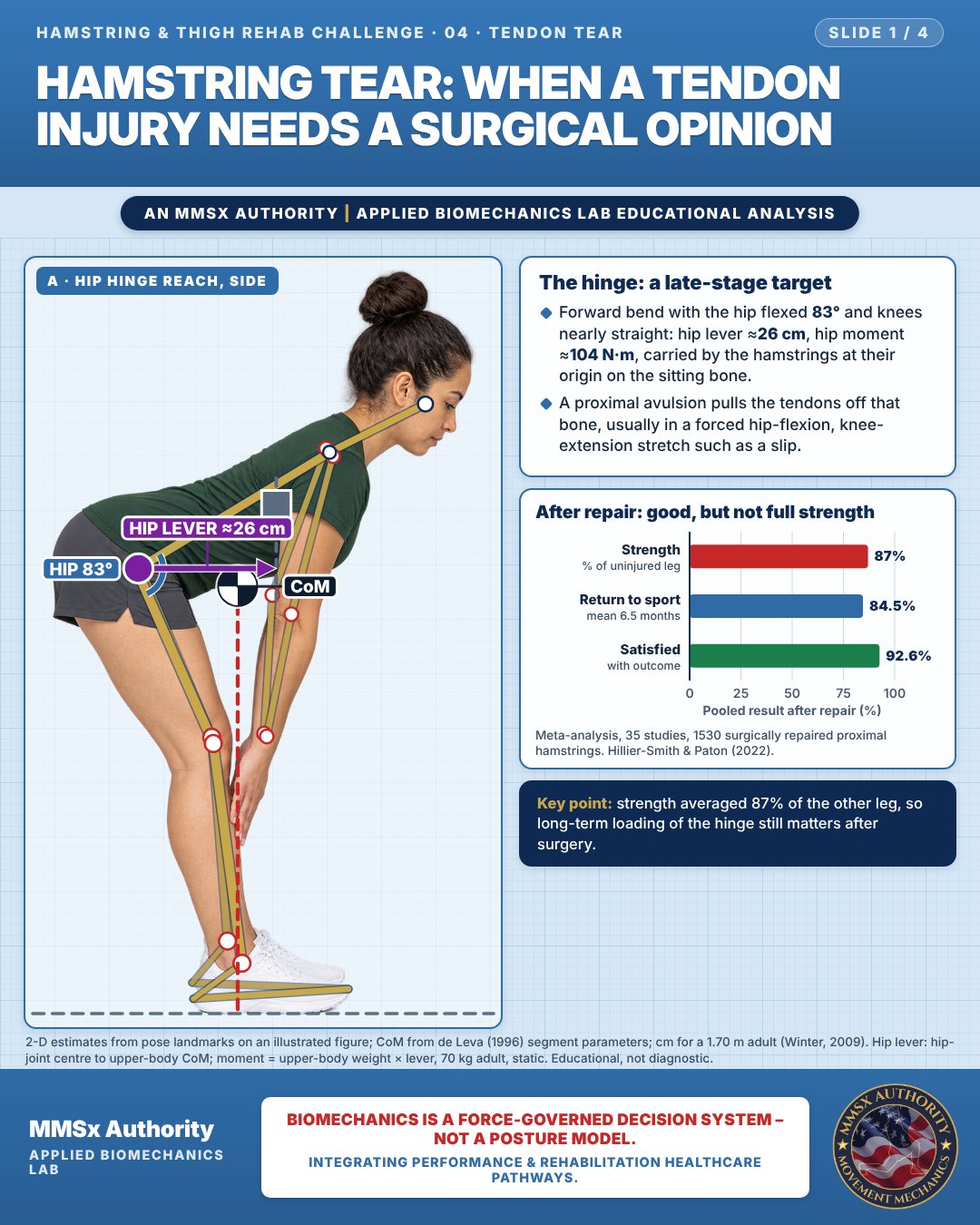 04
Hamstring tear: when a tendon injury needs a surgical opinion
A proximal hamstring tendon avulsion is a partial or complete detachment of the hamstring tendons from their origin on the ischial tuberosity (sitting bone).
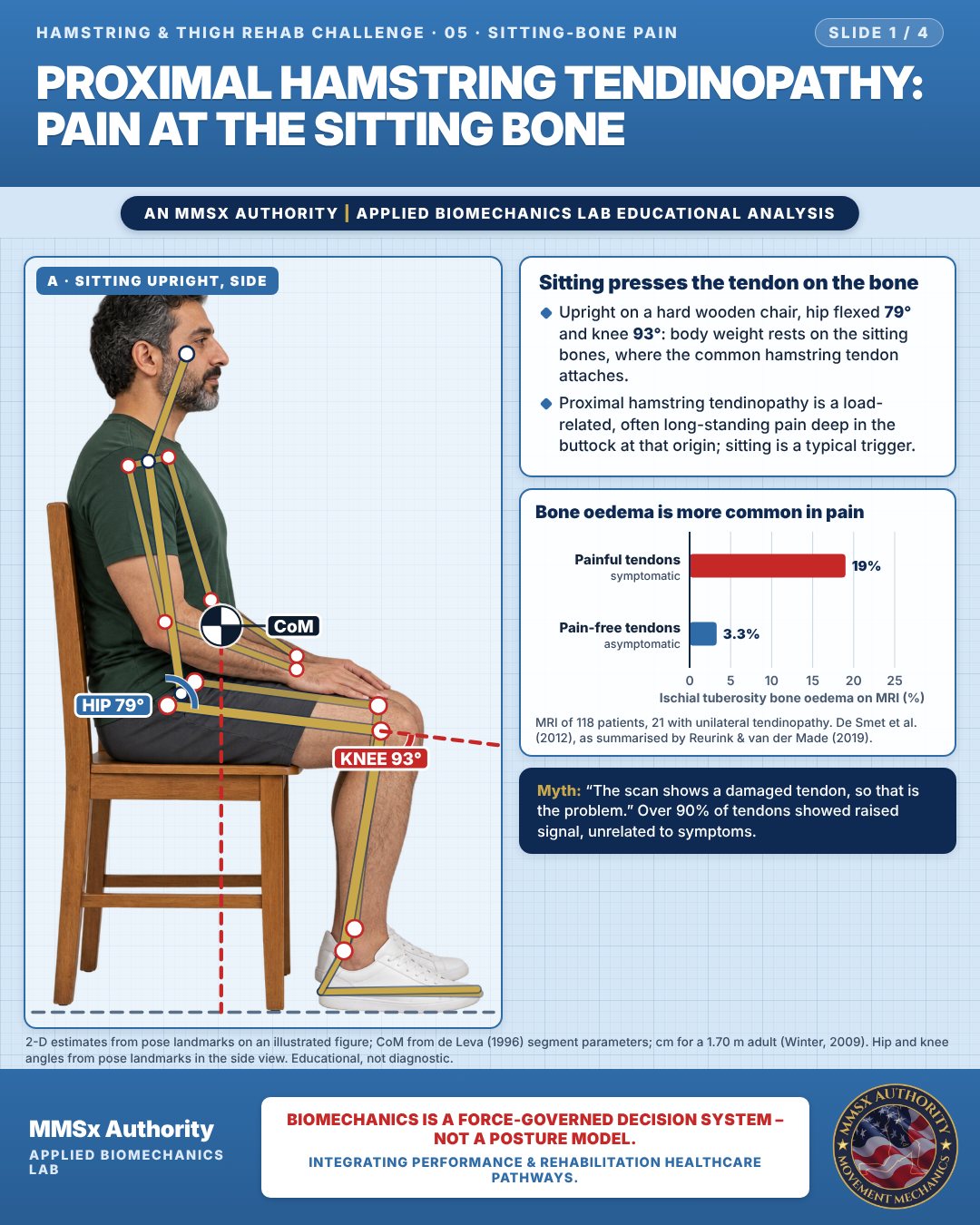 05
Proximal hamstring tendinopathy: pain at the sitting bone
Proximal hamstring tendinopathy (PHT) is a painful, load-related disorder of the common hamstring origin at the ischial tuberosity.
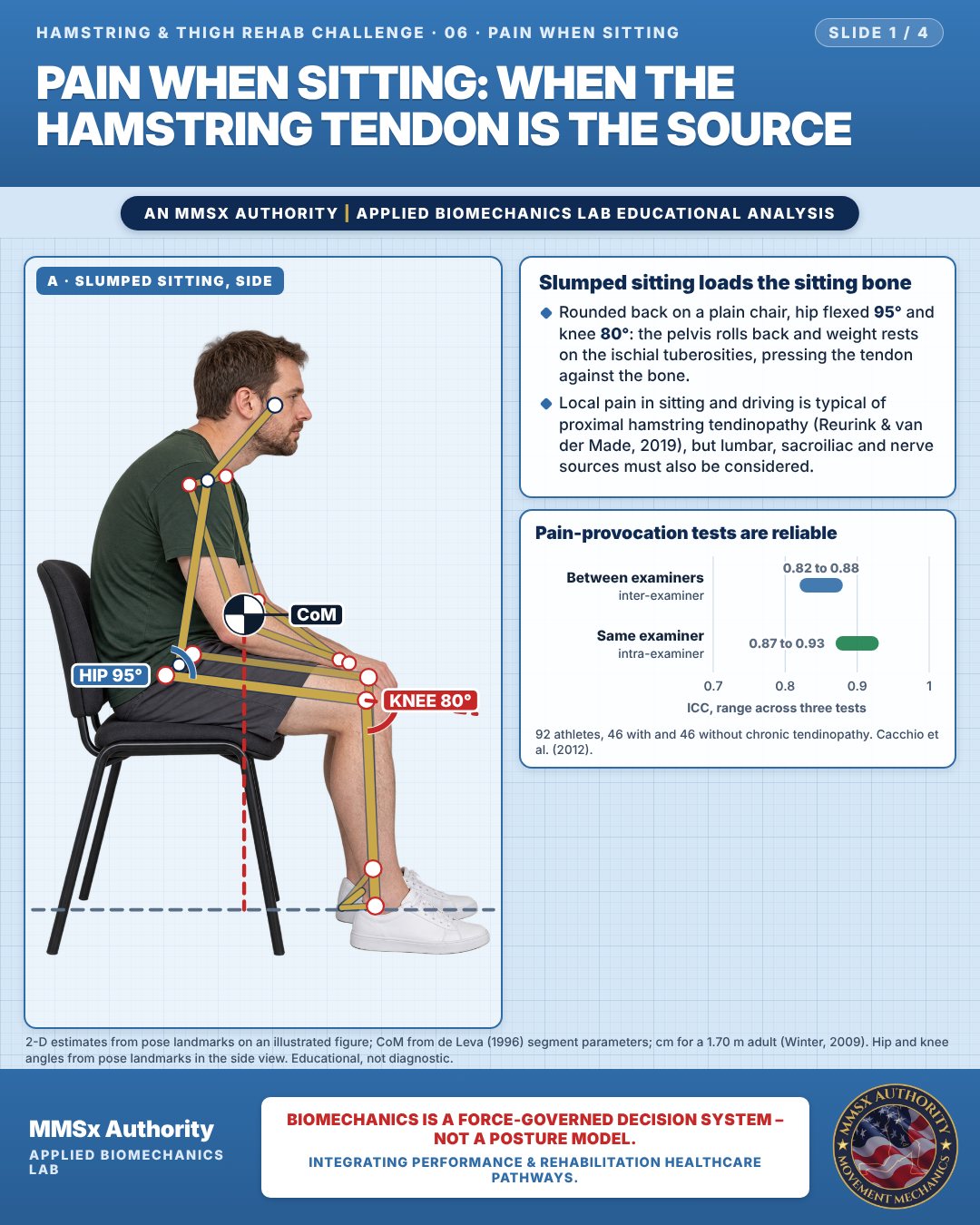 06
Pain when sitting: when the hamstring tendon is the source
Sitting pain at the ischial tuberosity is a hallmark of proximal hamstring tendinopathy: "local pain during sitting and driving is typical".
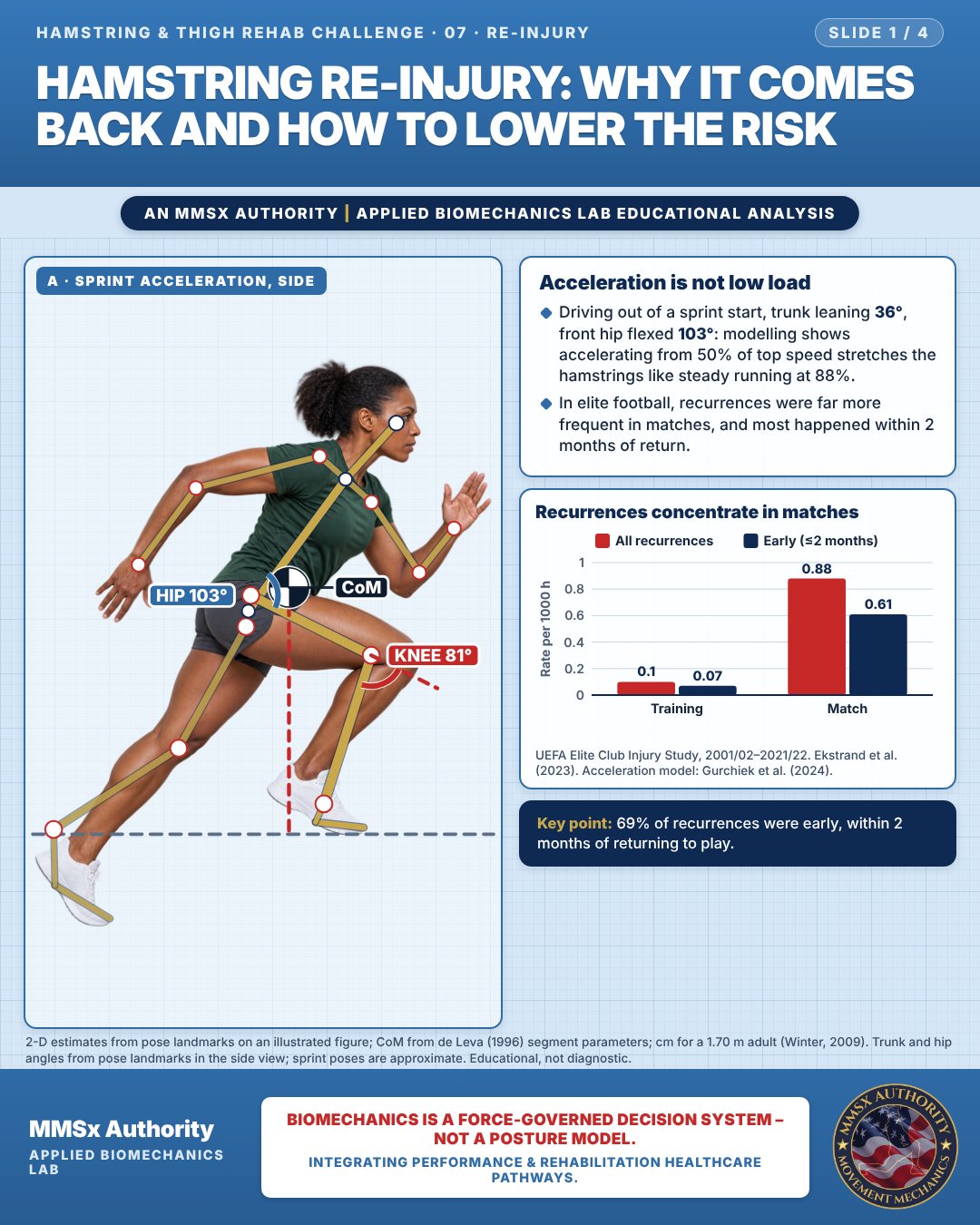 07
Hamstring re-injury: why it comes back and how to lower the risk
A hamstring re-injury (recurrence) is a further hamstring strain in the same leg after return to sport from an index injury.
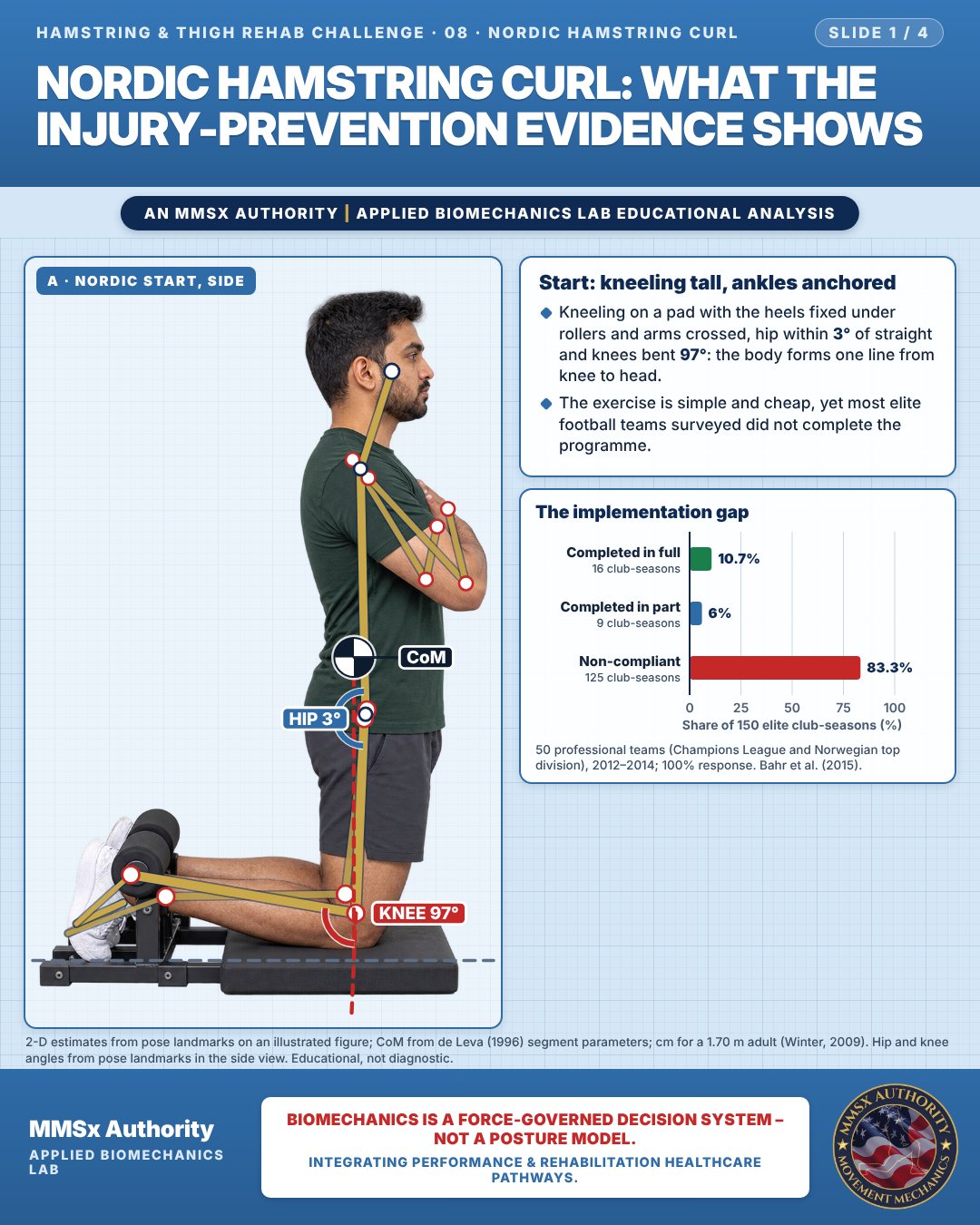 08
Nordic hamstring curl: what the injury-prevention evidence shows
The Nordic hamstring exercise (NHE) is a partner-assisted, bodyweight, eccentric knee-flexor exercise.
 09
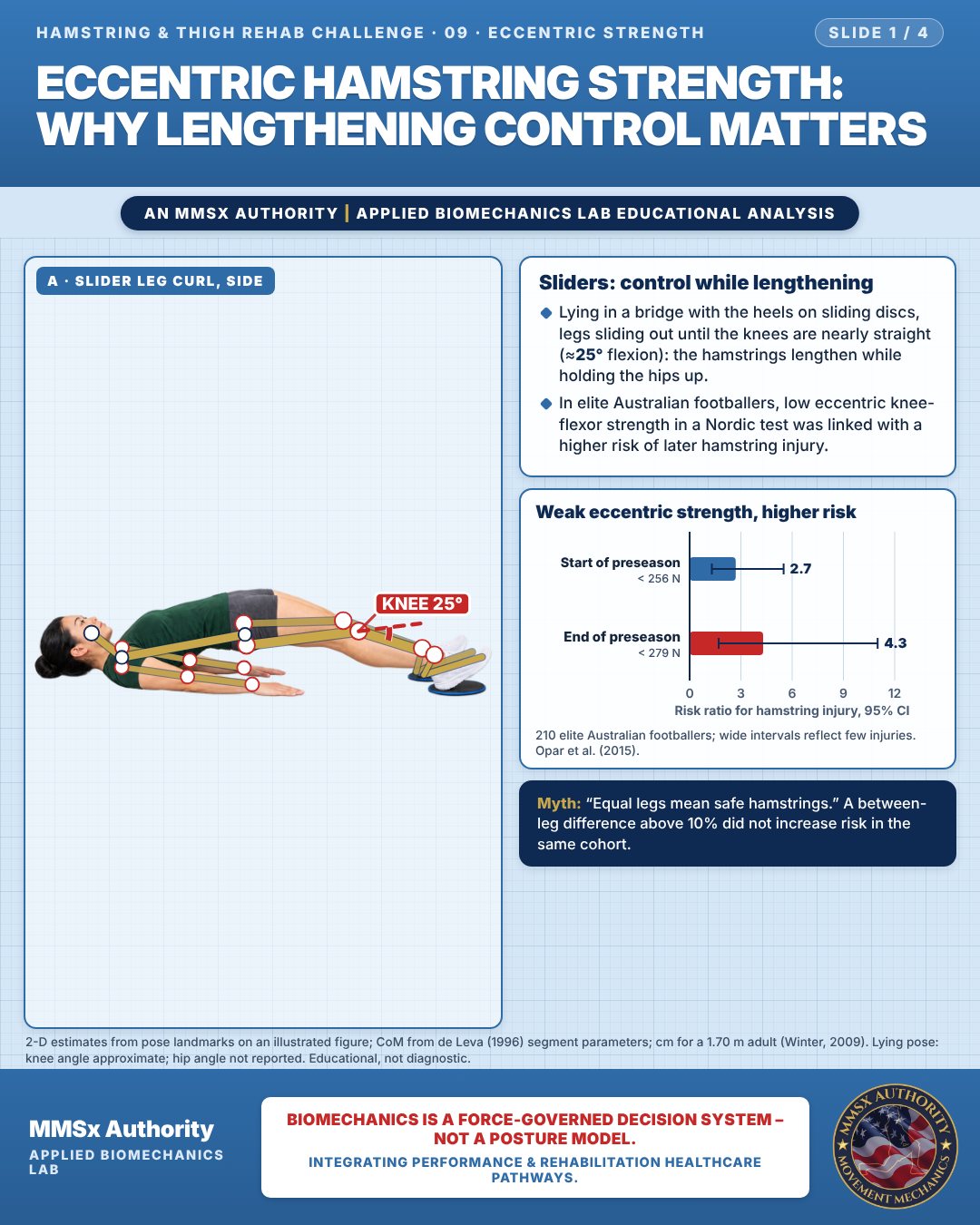
Eccentric hamstring strength: why lengthening control matters
Eccentric hamstring strength is the force the hamstrings can produce while being lengthened under load, commonly measured as knee-flexor force during…
 10
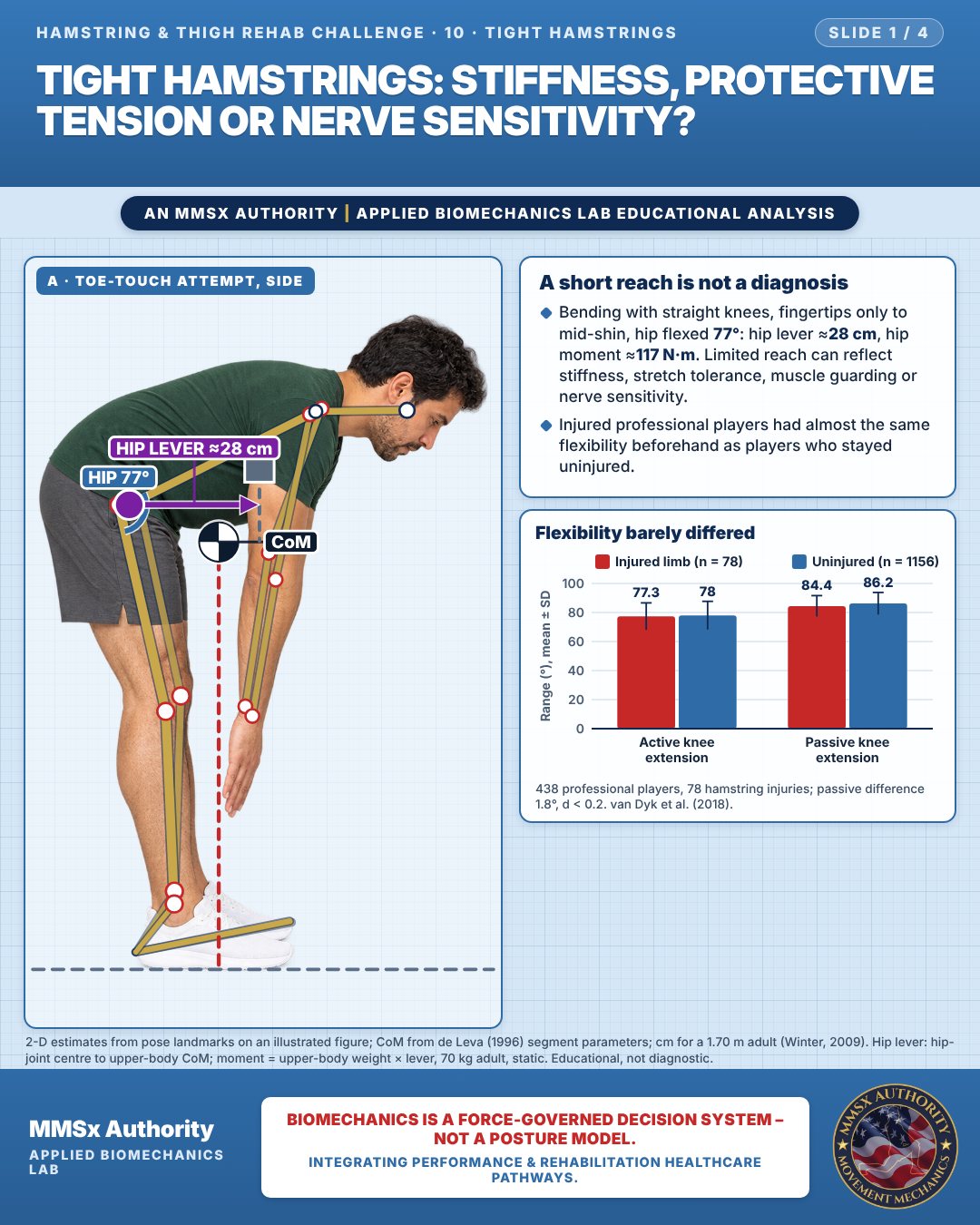
Tight hamstrings: stiffness, protective tension or nerve sensitivity?
"Tight hamstrings" is a lay description of limited straight-leg hip flexion or knee extension (for example a toe-touch, straight-leg raise or sit-and-reach).
 11
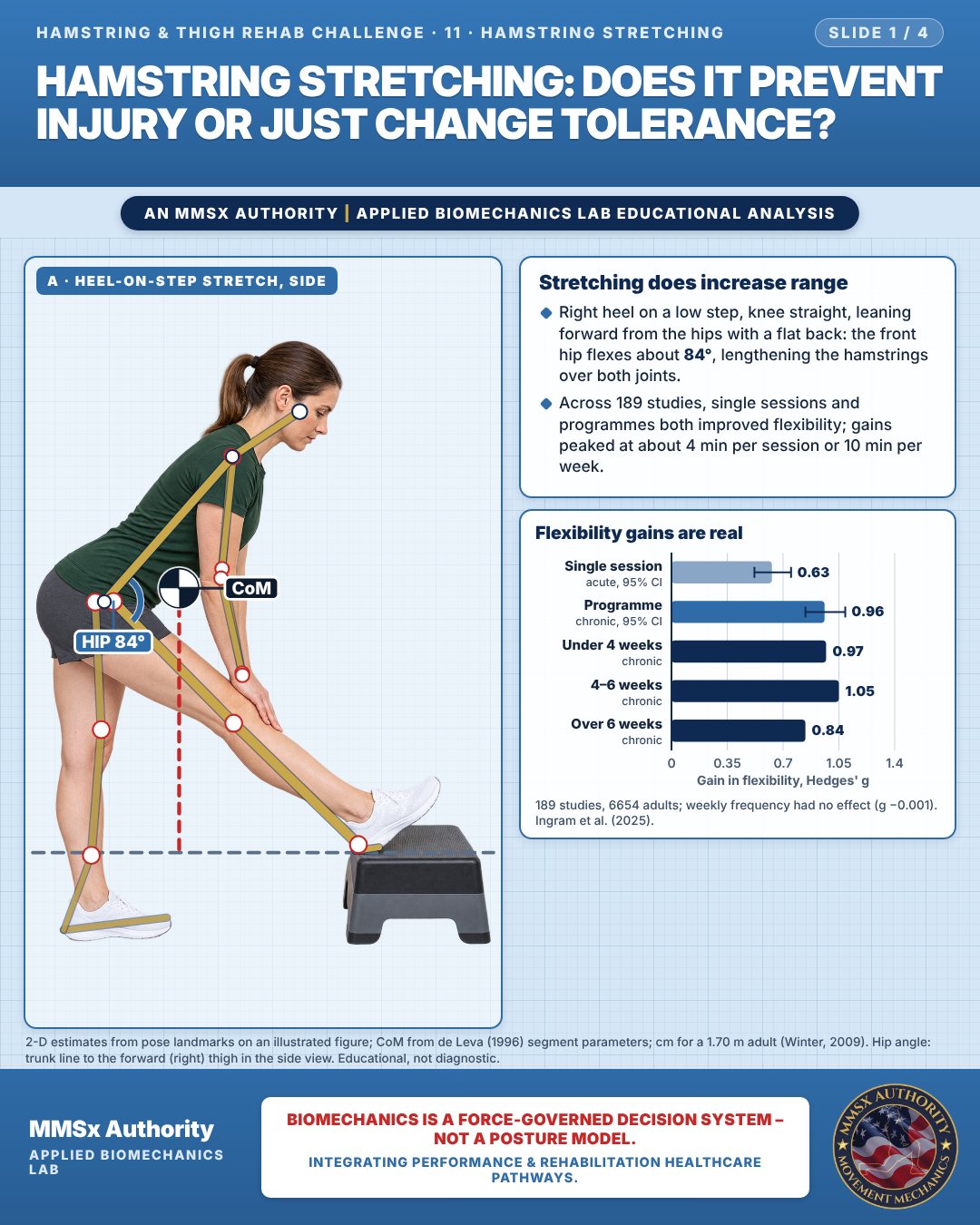
Hamstring stretching: does it prevent injury or just change tolerance?
Hamstring stretching means holding (static) or moving (dynamic, e.g. Movement analysis, verified research data and a decision pathway.
 12
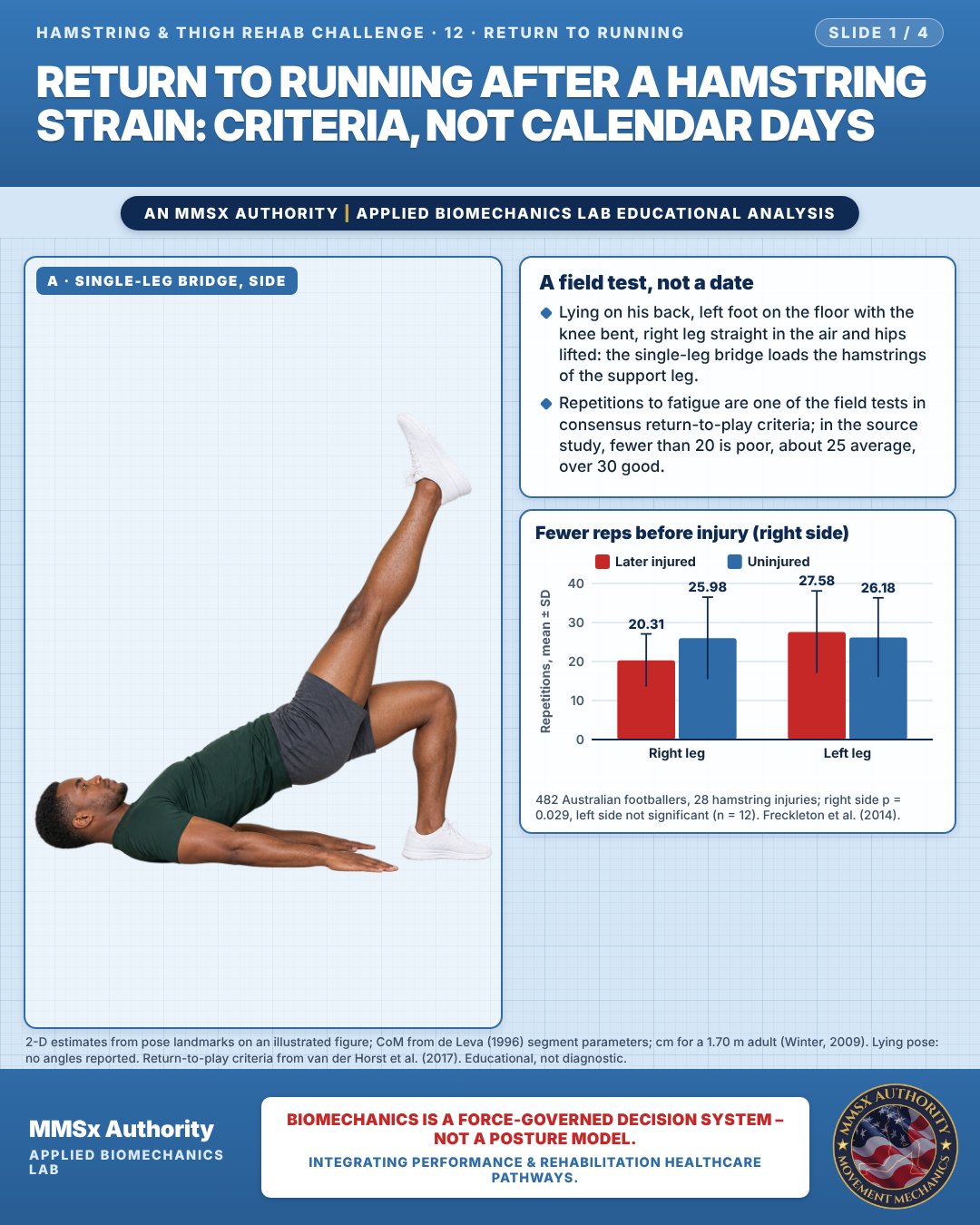
Return to running after a hamstring strain: criteria, not calendar days
Criteria-based return to running means progressing running speed and volume, and finally clearing a player for full training and matches, when…
 13
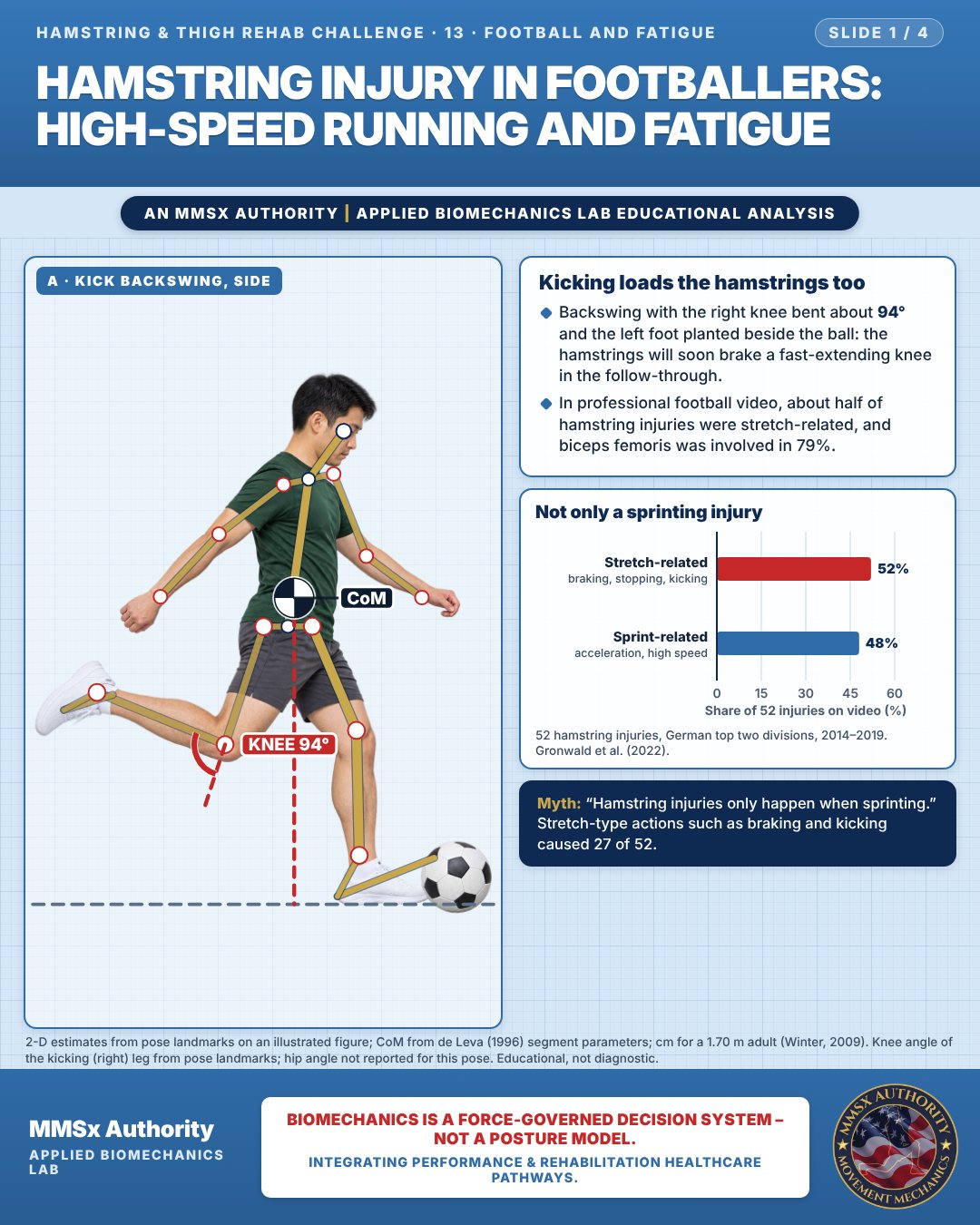
Hamstring injury in footballers: high-speed running and fatigue
Hamstring strain injury in football is an acute, usually non-contact tear of hamstring muscle fibres (most often the long head of biceps femoris)…
 14
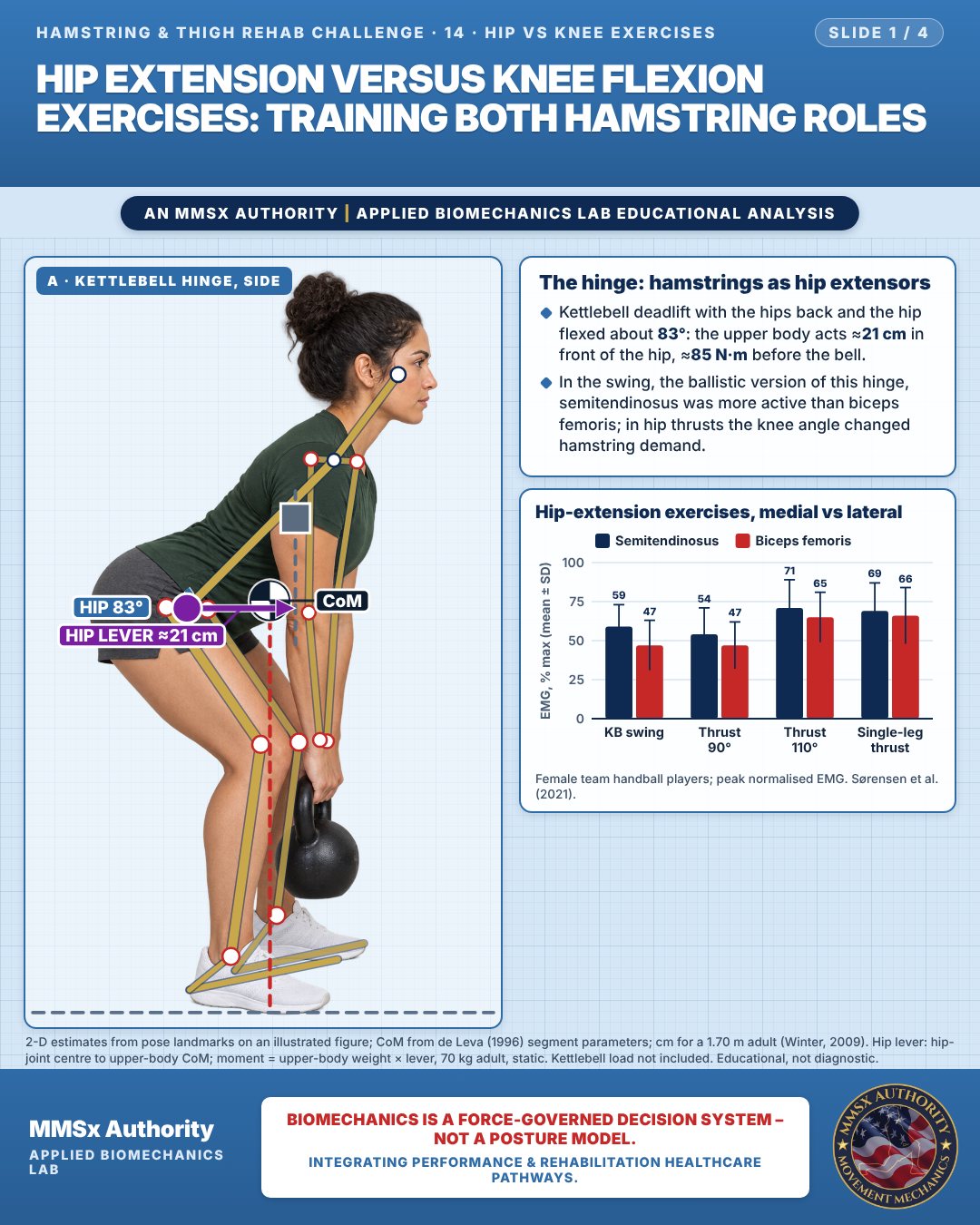
Hip extension versus knee flexion exercises: training both hamstring roles
The long hamstrings (biceps femoris long head, semitendinosus, semimembranosus) cross both the hip and the knee, so they work as hip extensors…
 15
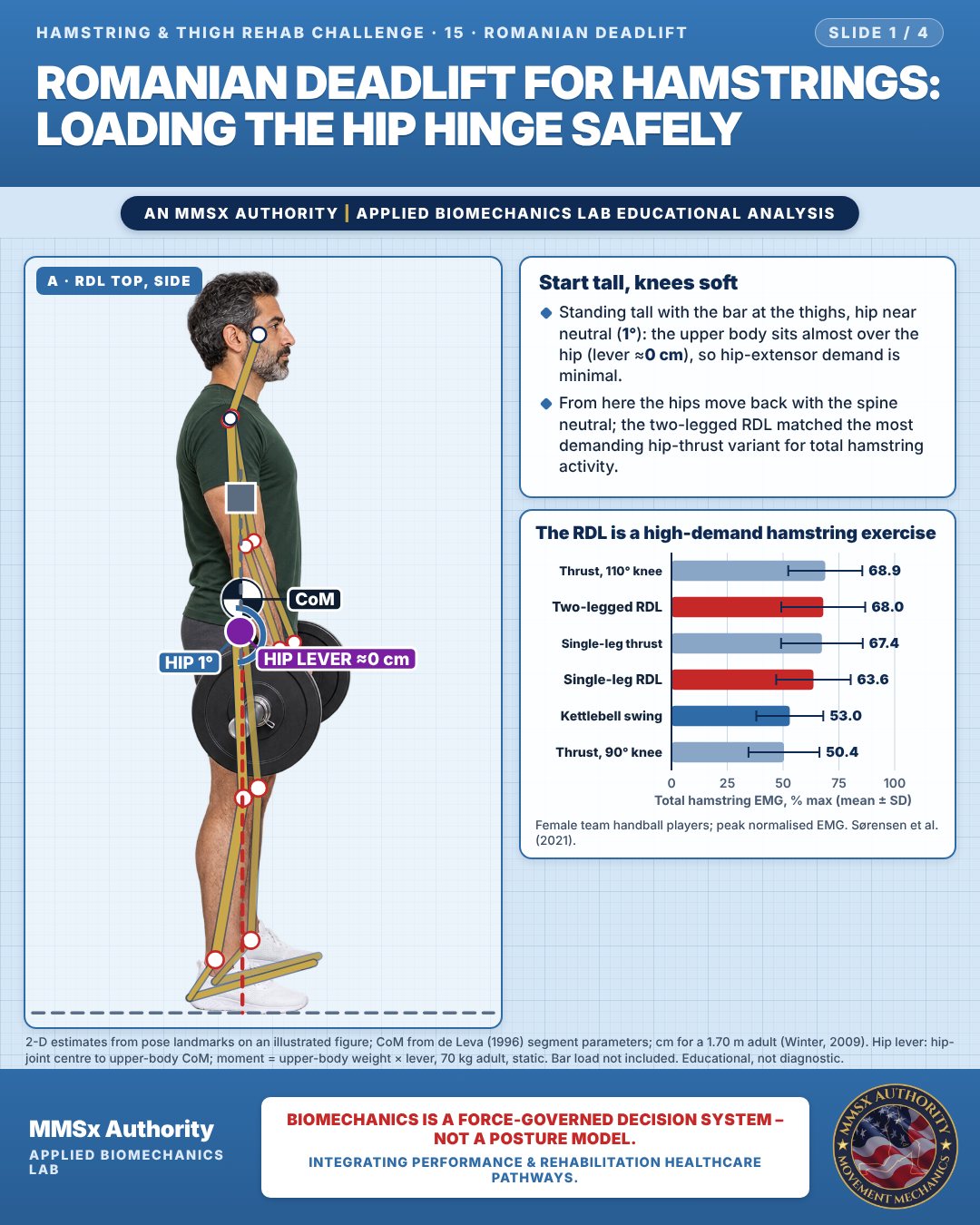
Romanian deadlift for hamstrings: loading the hip hinge safely
The Romanian deadlift (RDL) is a hip-hinge exercise: from standing, the hips move backward with the knees softly bent and the spine held neutral,…
 16
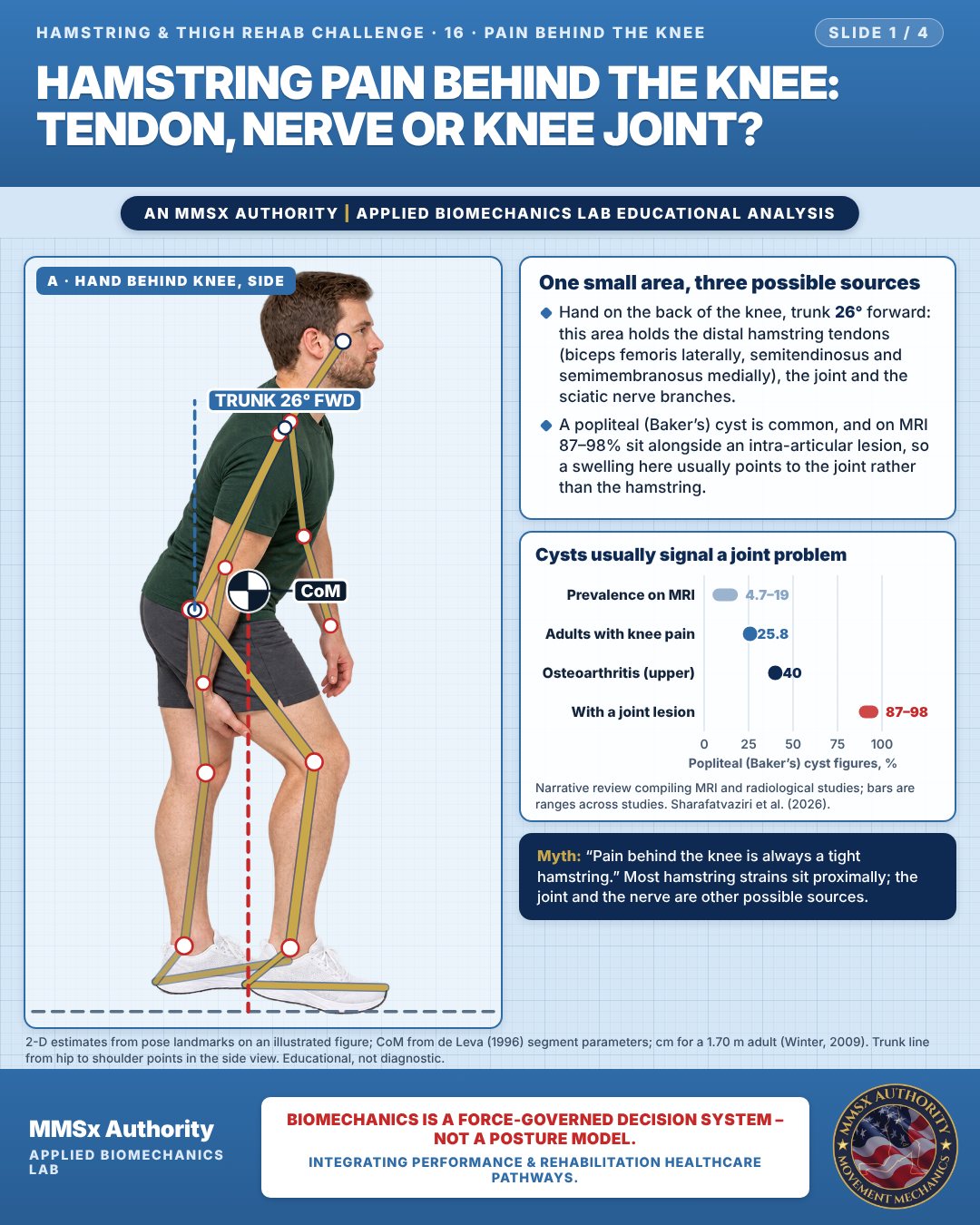
Hamstring pain behind the knee: tendon, nerve or knee joint?
Pain at the back of the knee can come from the distal hamstring tendons (biceps femoris laterally.
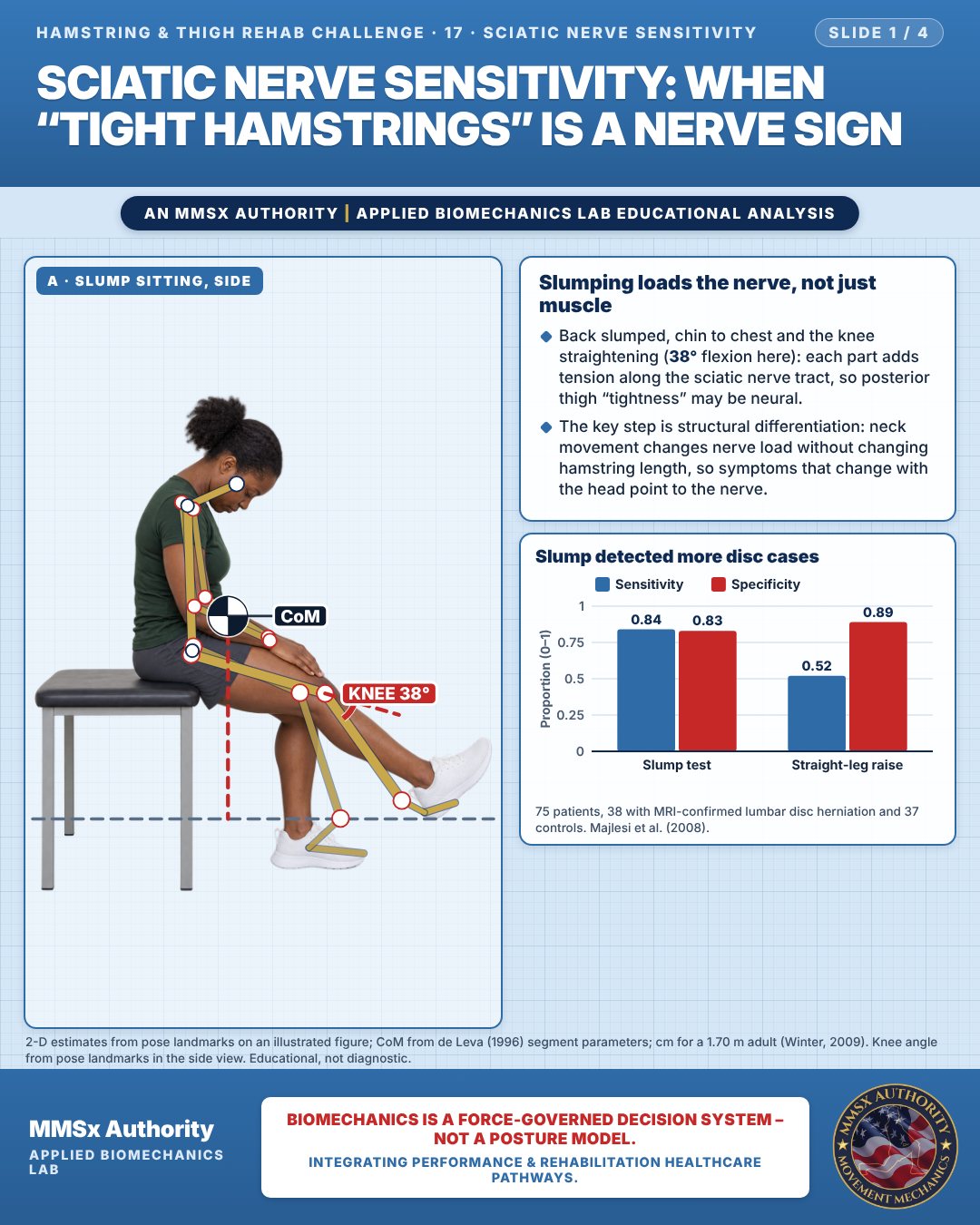 17
Sciatic nerve sensitivity: when “tight hamstrings” is a nerve sign
Sciatic nerve sensitivity (neural mechanosensitivity) is an increased sensitivity of the sciatic nerve and its branches to stretch or compression.
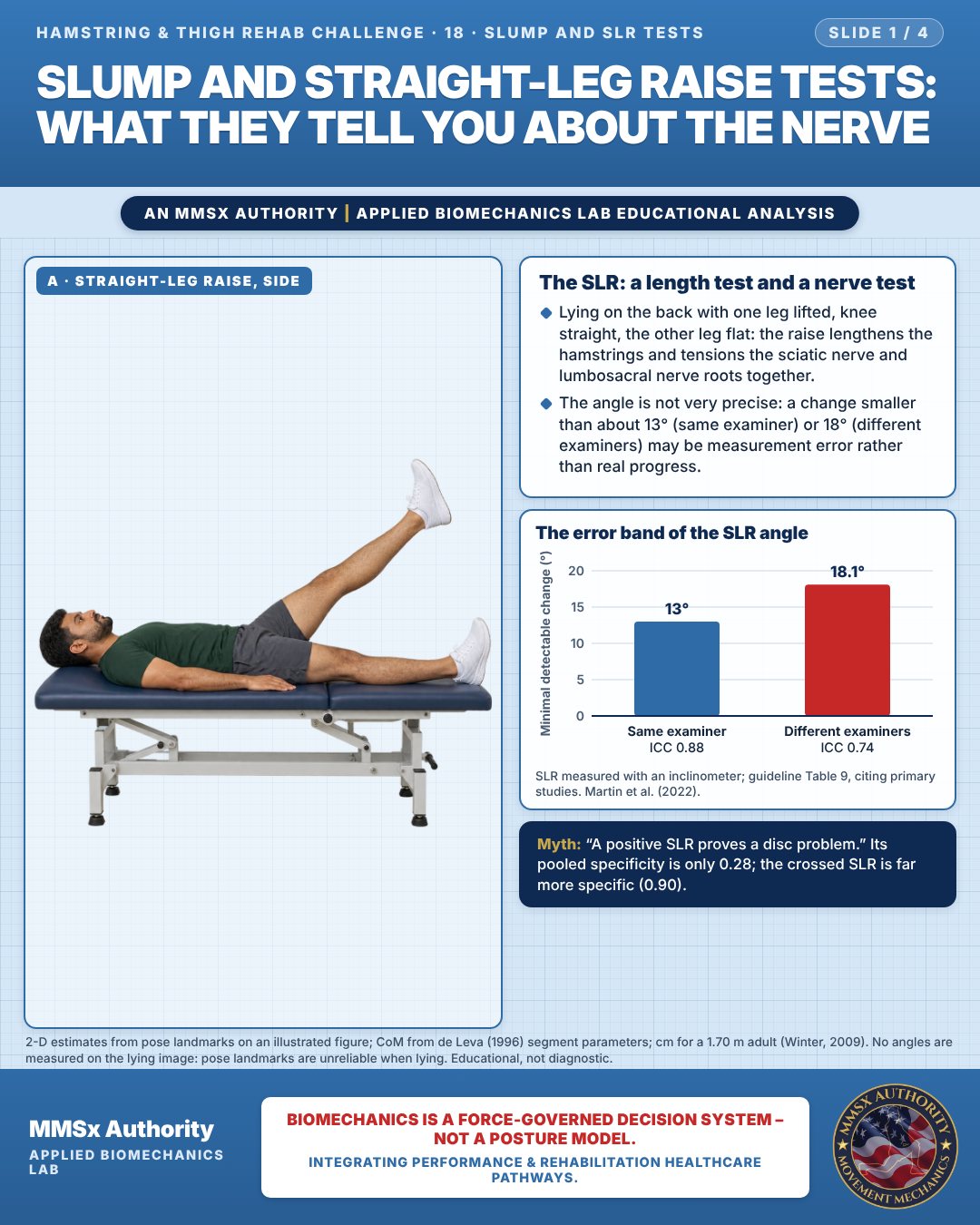 18
Slump and straight-leg raise tests: what they tell you about the nerve
The straight-leg raise (SLR) and slump tests are passive positioning tests. Movement analysis, verified research data and a decision pathway.
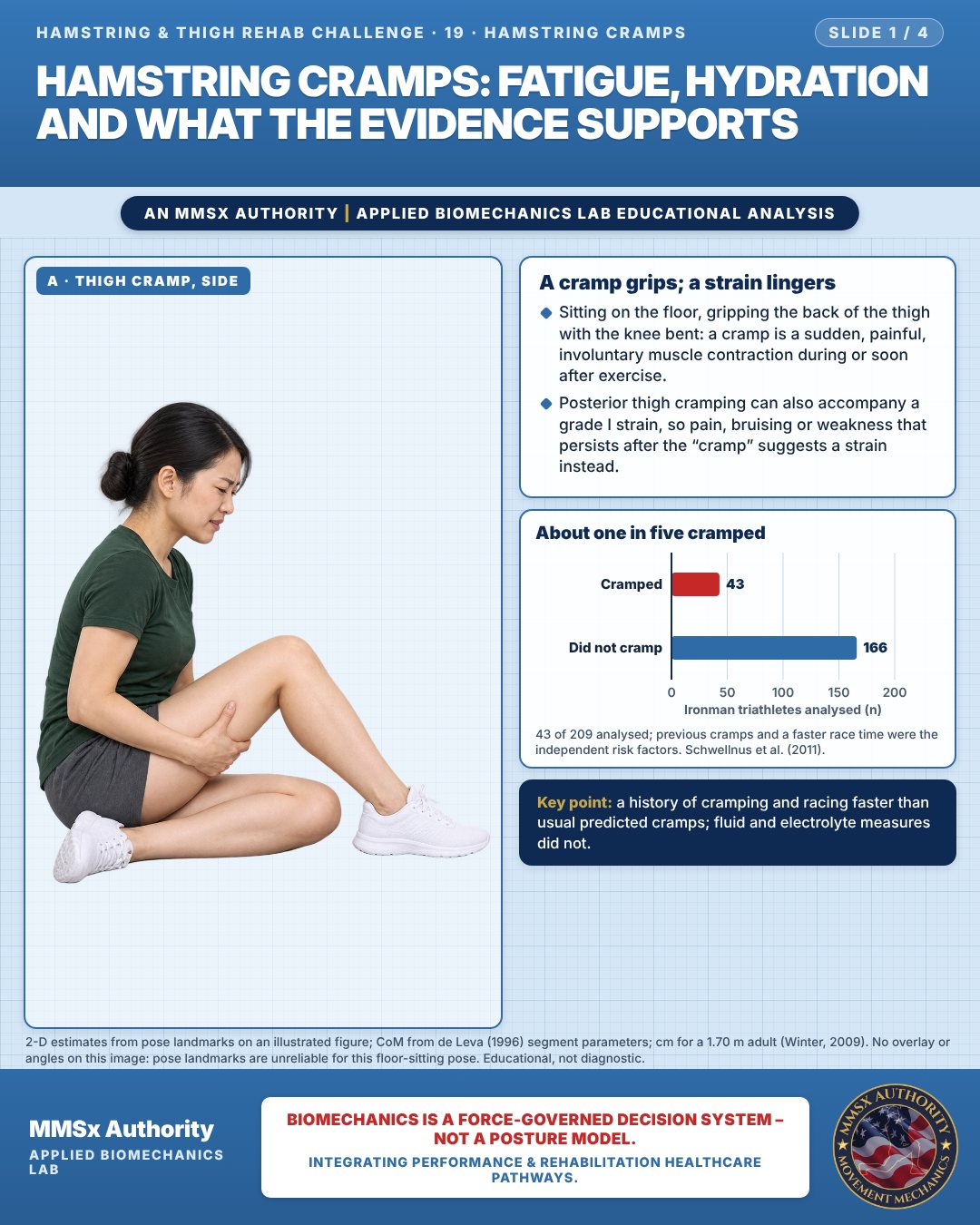 19
Hamstring cramps: fatigue, hydration and what the evidence supports
An exercise-associated muscle cramp (EAMC) is a sudden, painful, involuntary contraction of skeletal muscle during or soon after exercise.
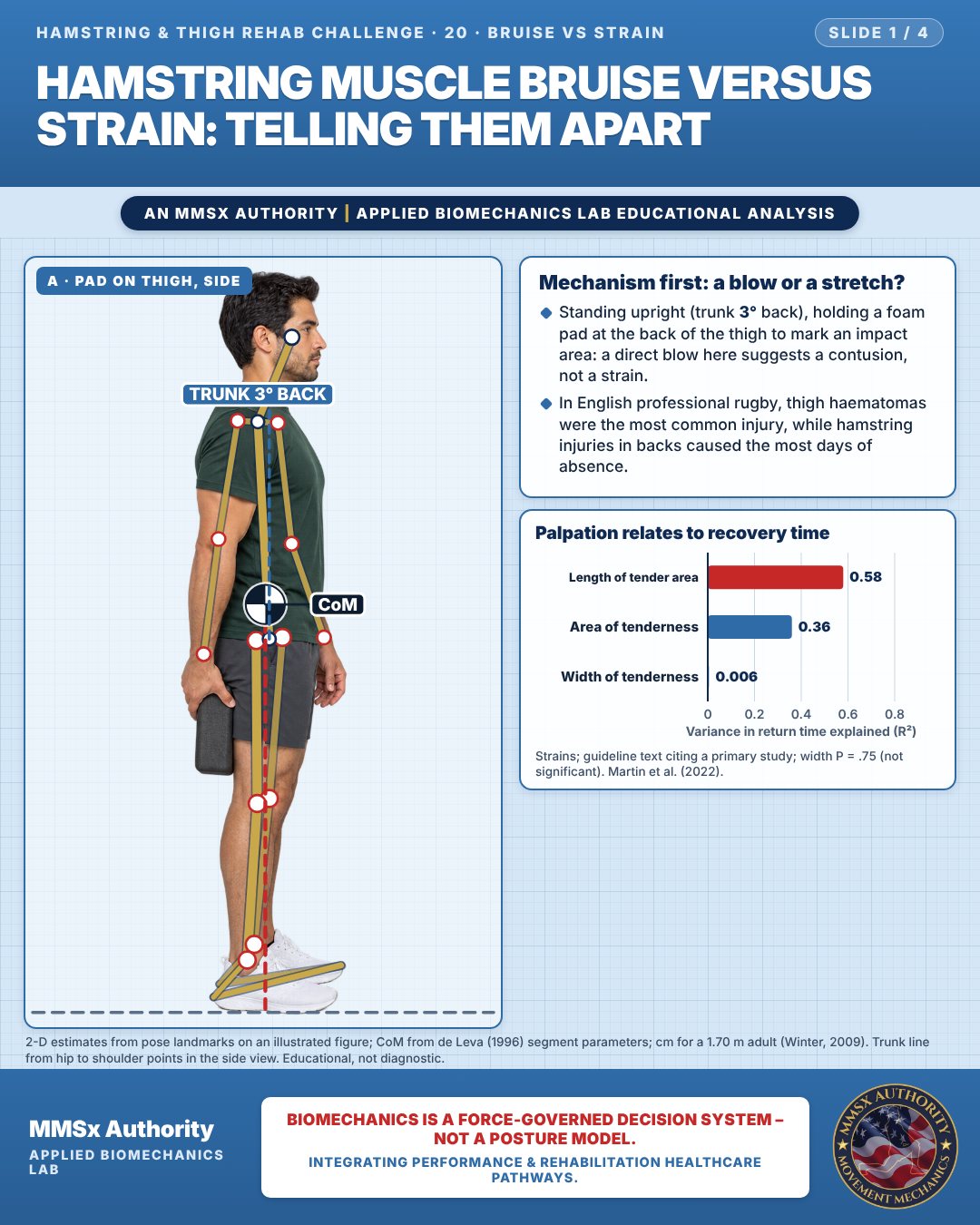 20
Hamstring muscle bruise versus strain: telling them apart
A hamstring contusion (bruise) is muscle damage and bleeding caused by a direct blow, for example a knee or object striking the back of the thigh.
 21
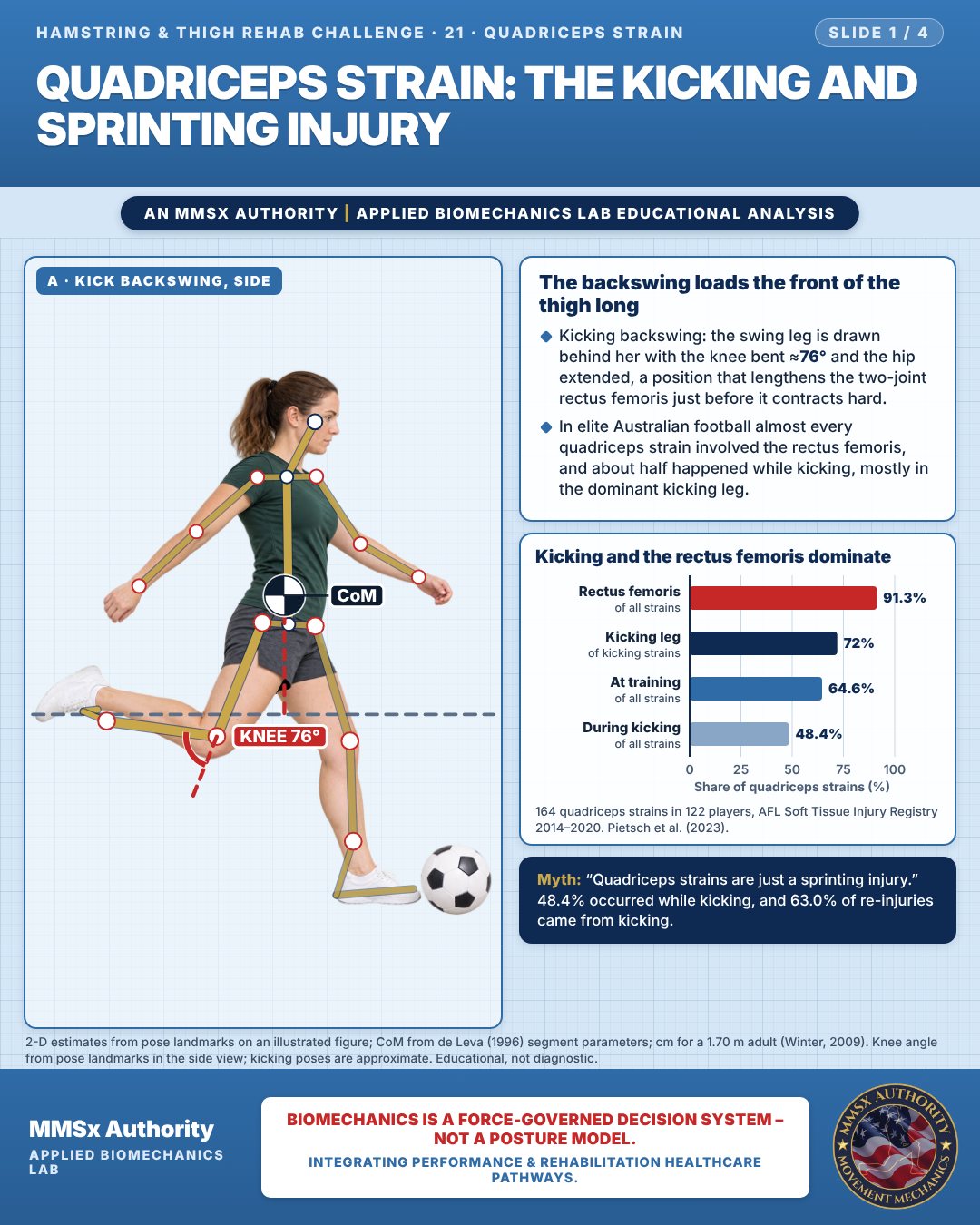
Quadriceps strain: the kicking and sprinting injury
A quadriceps strain is an indirect (non-contact) injury to the muscle, musculotendinous junction or tendon of one of the four quadriceps muscles,…
 22
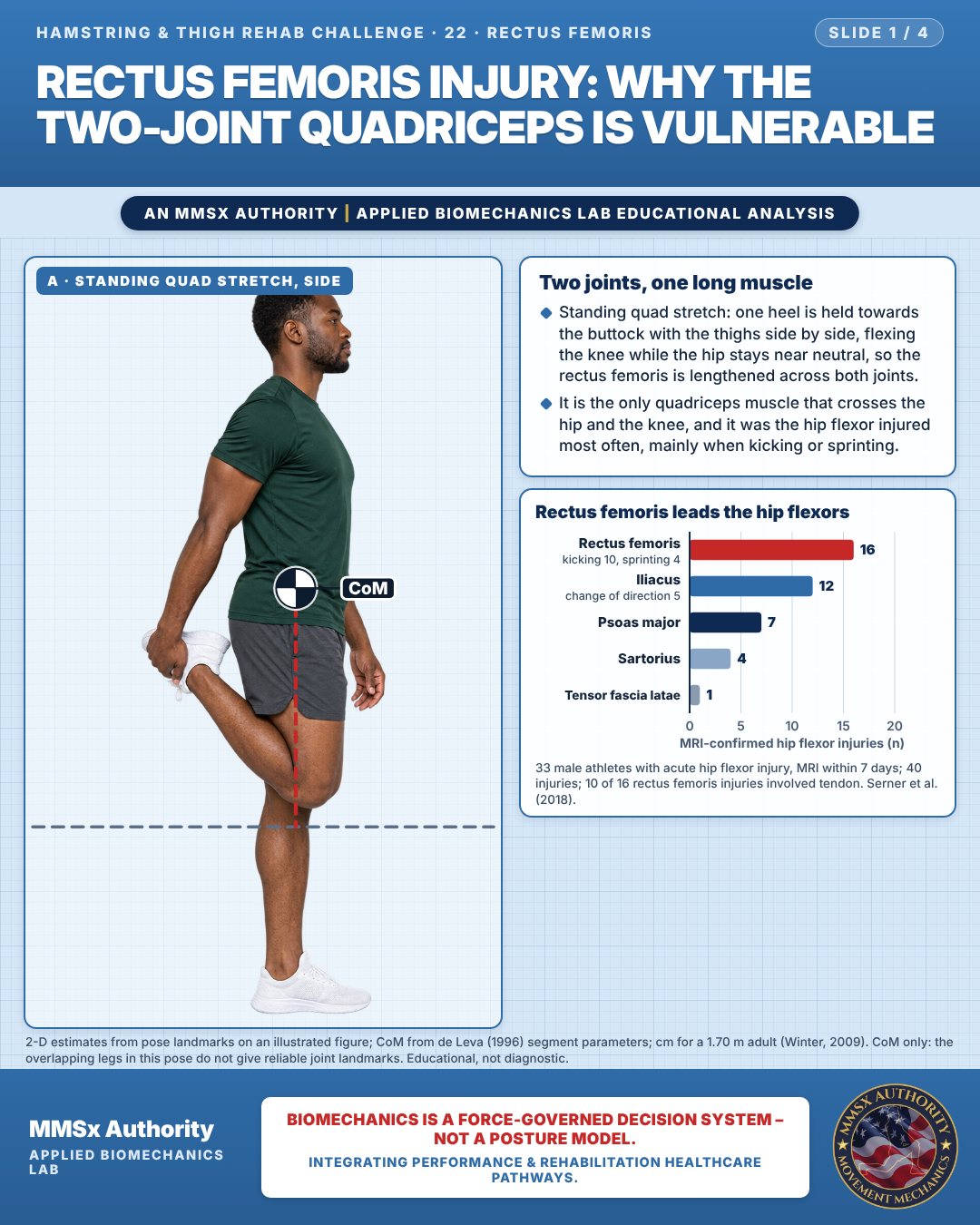
Rectus femoris injury: why the two-joint quadriceps is vulnerable
The rectus femoris is the only quadriceps muscle that crosses both the hip and the knee. Movement analysis, verified research data and a decision pathway.
 23
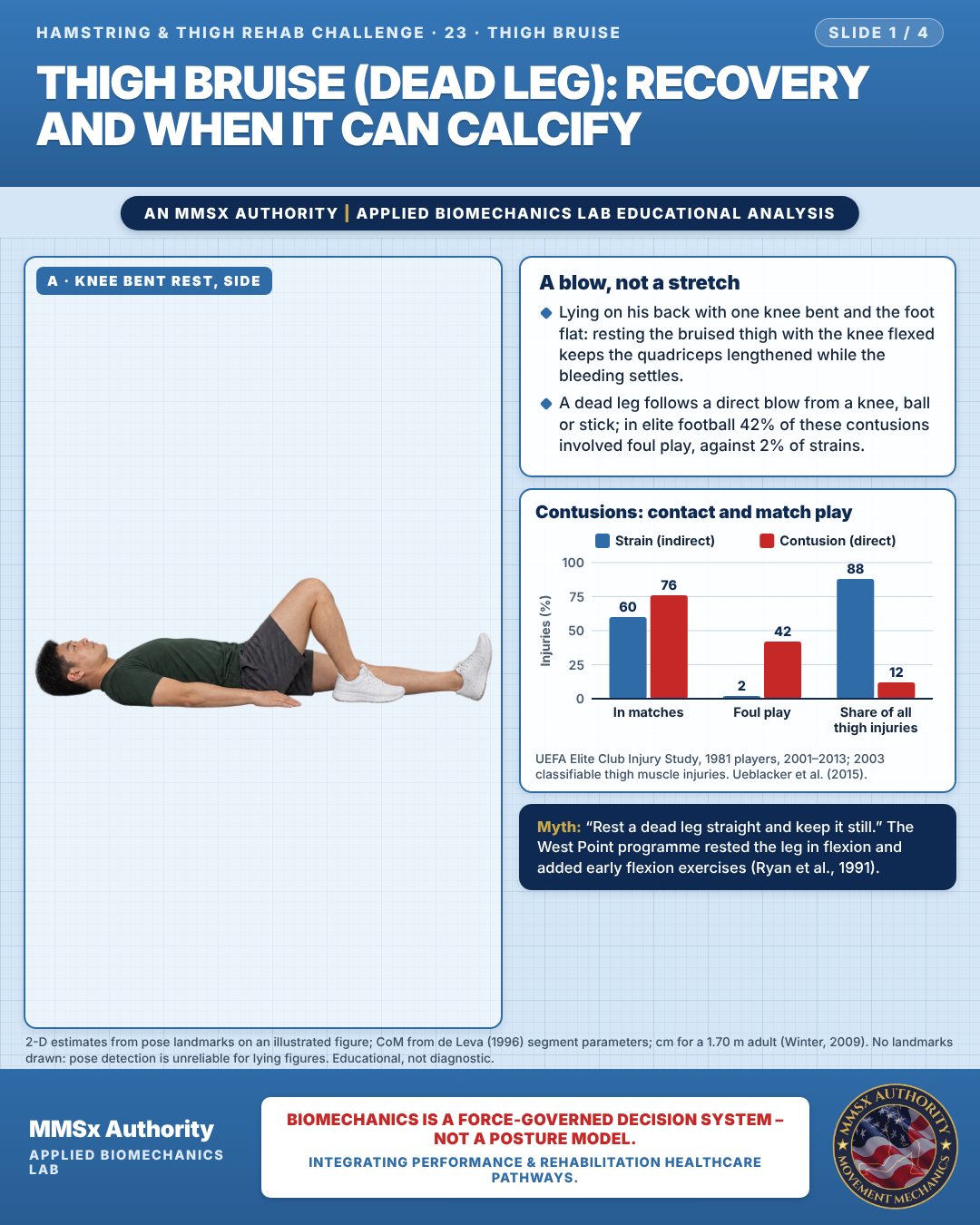
Thigh bruise (dead leg): recovery and when it can calcify
A thigh contusion ("dead leg", "corked thigh") is a direct-impact injury, usually to the quadriceps, from a knee, helmet, ball or stick.
 24
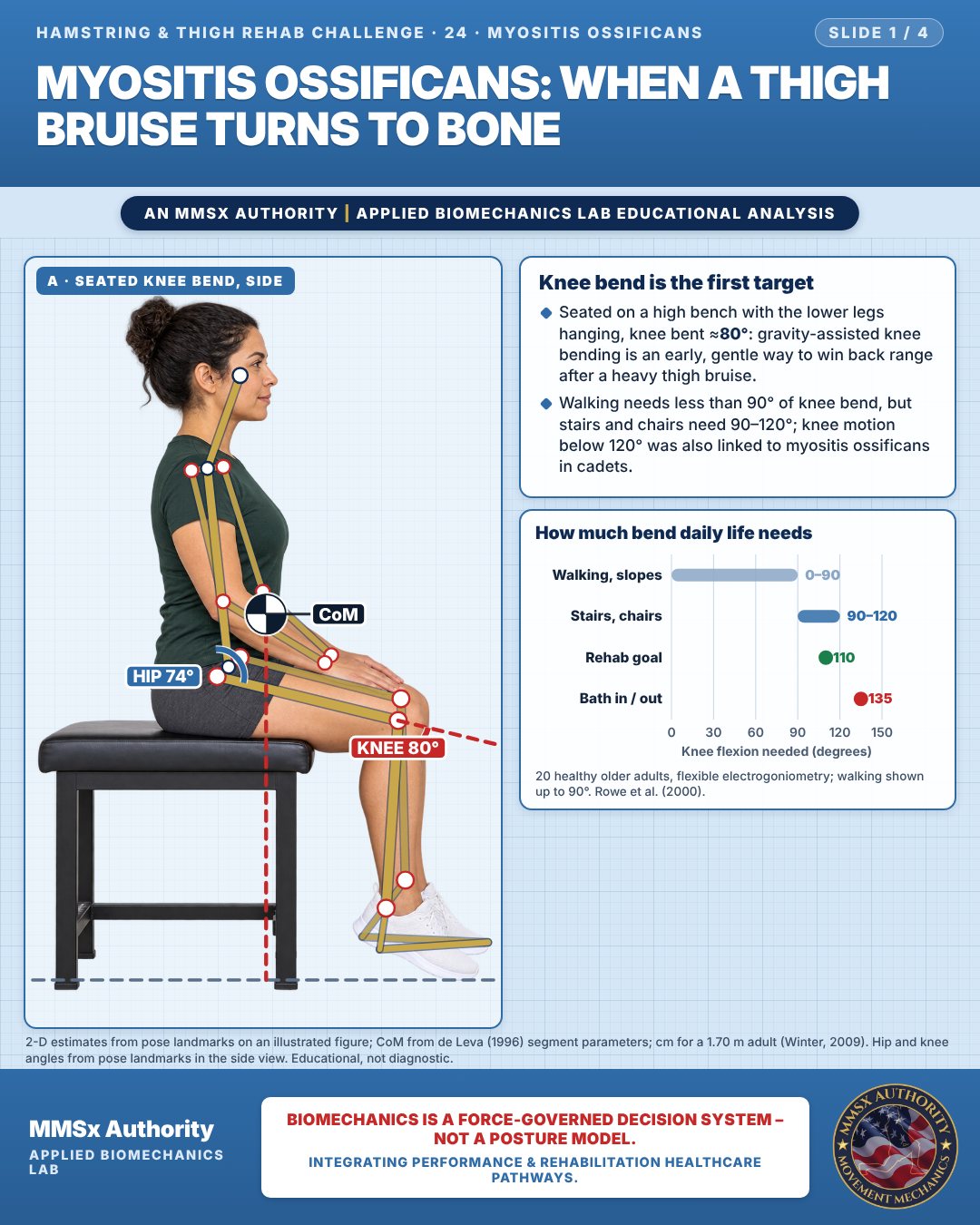
Myositis ossificans: when a thigh bruise turns to bone
Myositis ossificans (traumatic) is the formation of benign, non-cancerous bone within a muscle after injury, most often after a moderate or severe…
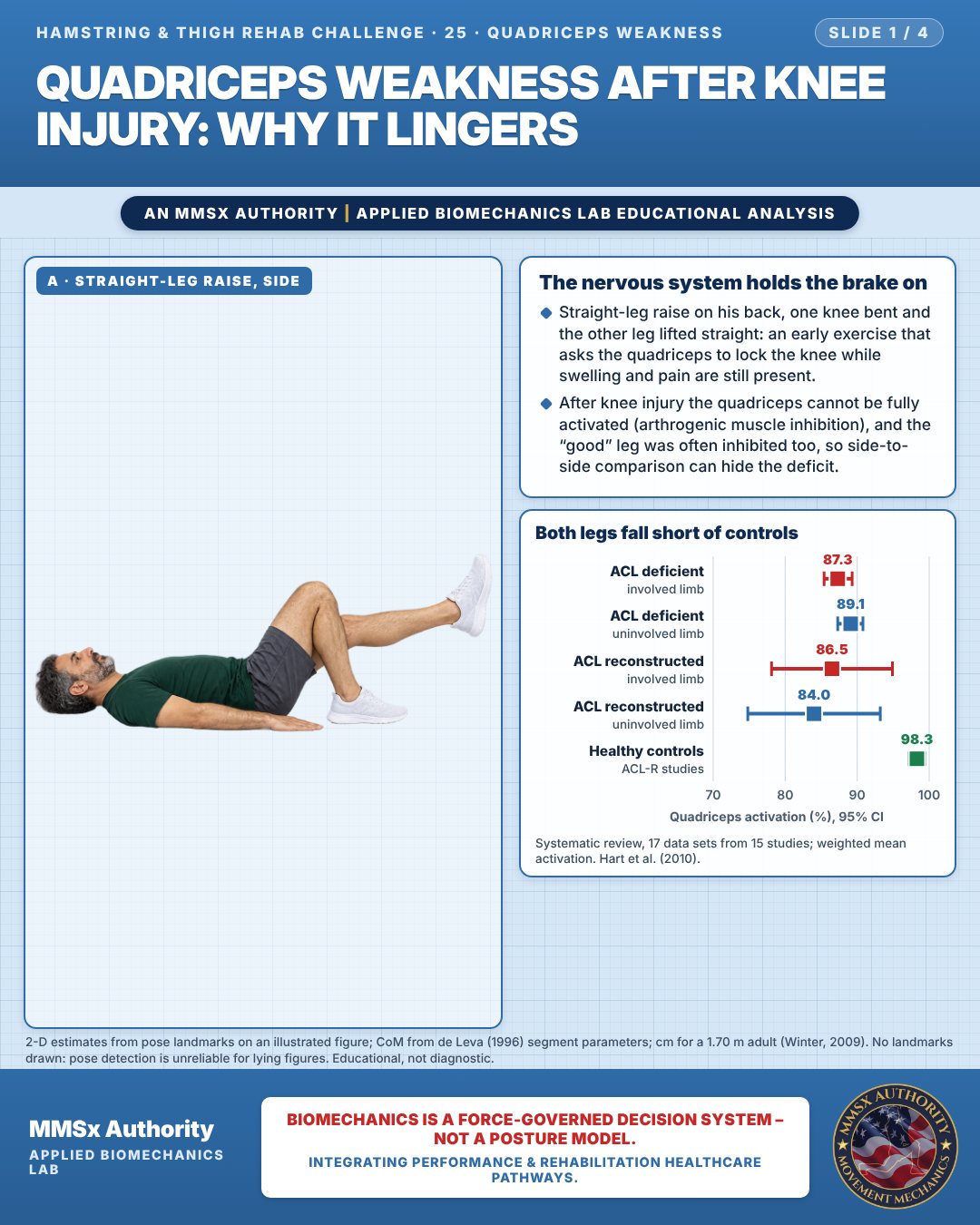 25
Quadriceps weakness after knee injury: why it lingers
Persistent quadriceps weakness after knee injury or surgery (for example ACL injury or reconstruction) is a lasting deficit in knee-extensor strength.
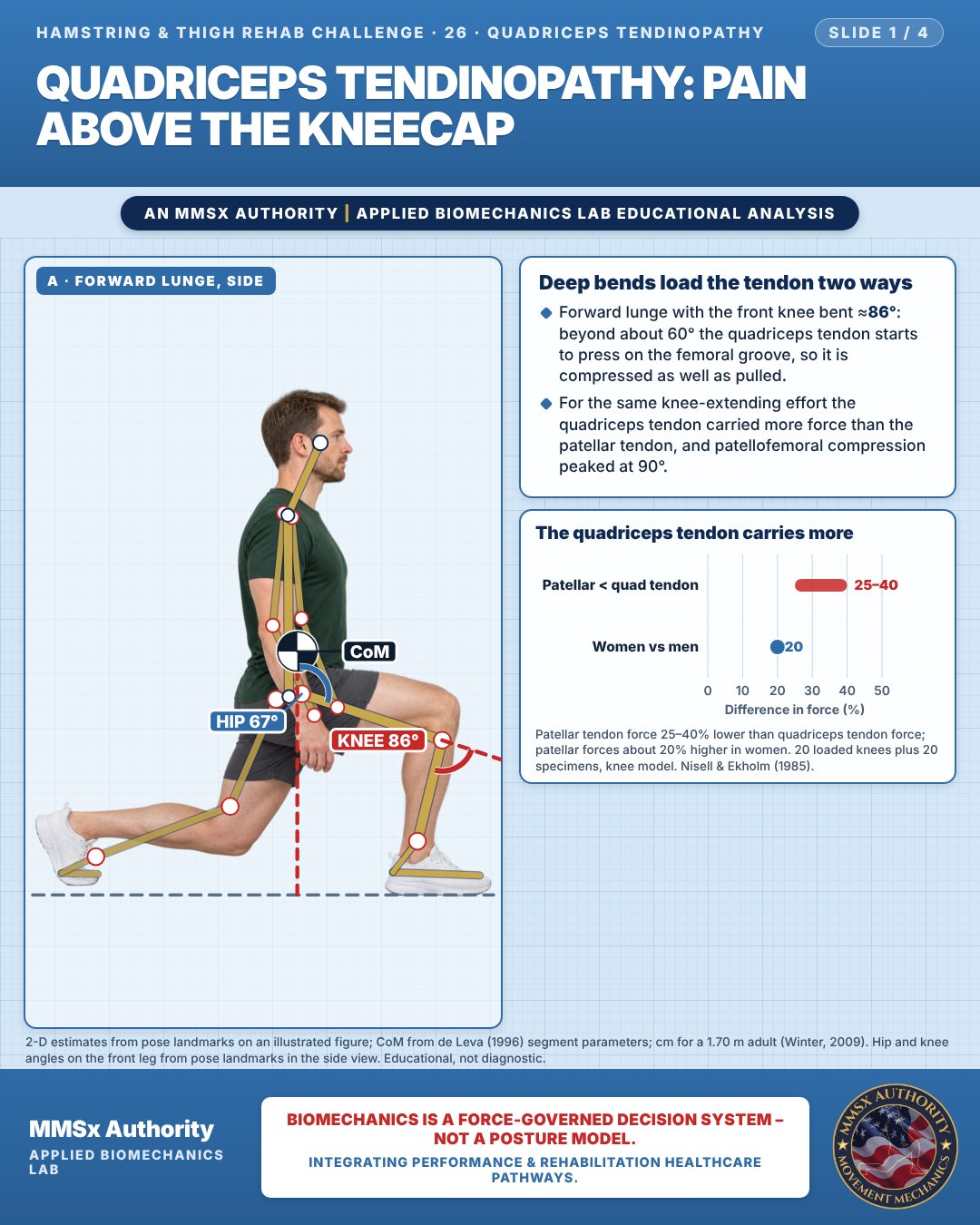 26
Quadriceps tendinopathy: pain above the kneecap
Quadriceps tendinopathy is a load-related painful condition of the quadriceps tendon, usually felt as localised tenderness at the upper border of the kneecap.
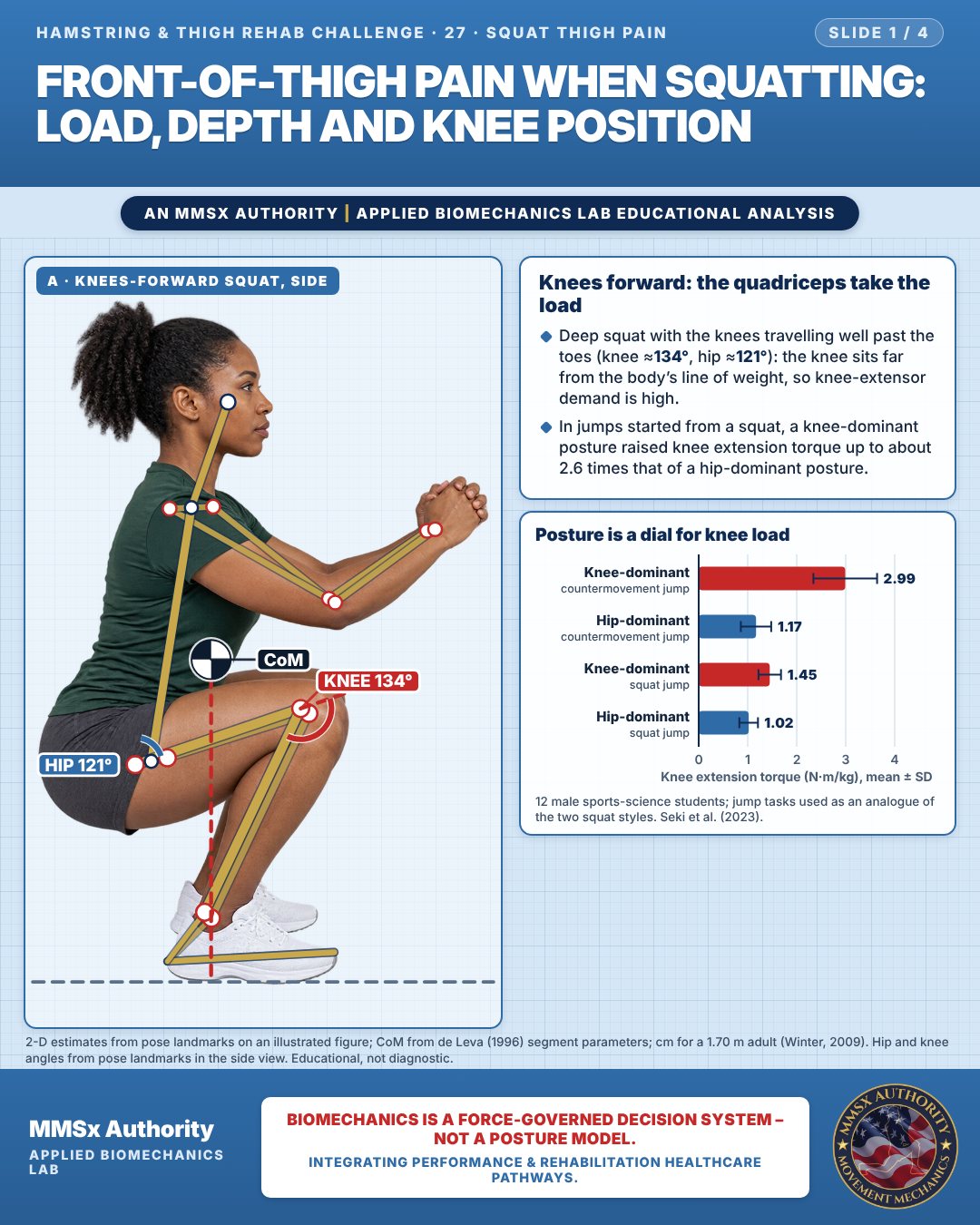 27
Front-of-thigh pain when squatting: load, depth and knee position
Front-of-thigh or front-of-knee pain during squatting is load-related pain from the knee-extensor mechanism: the quadriceps muscle, the quadriceps…
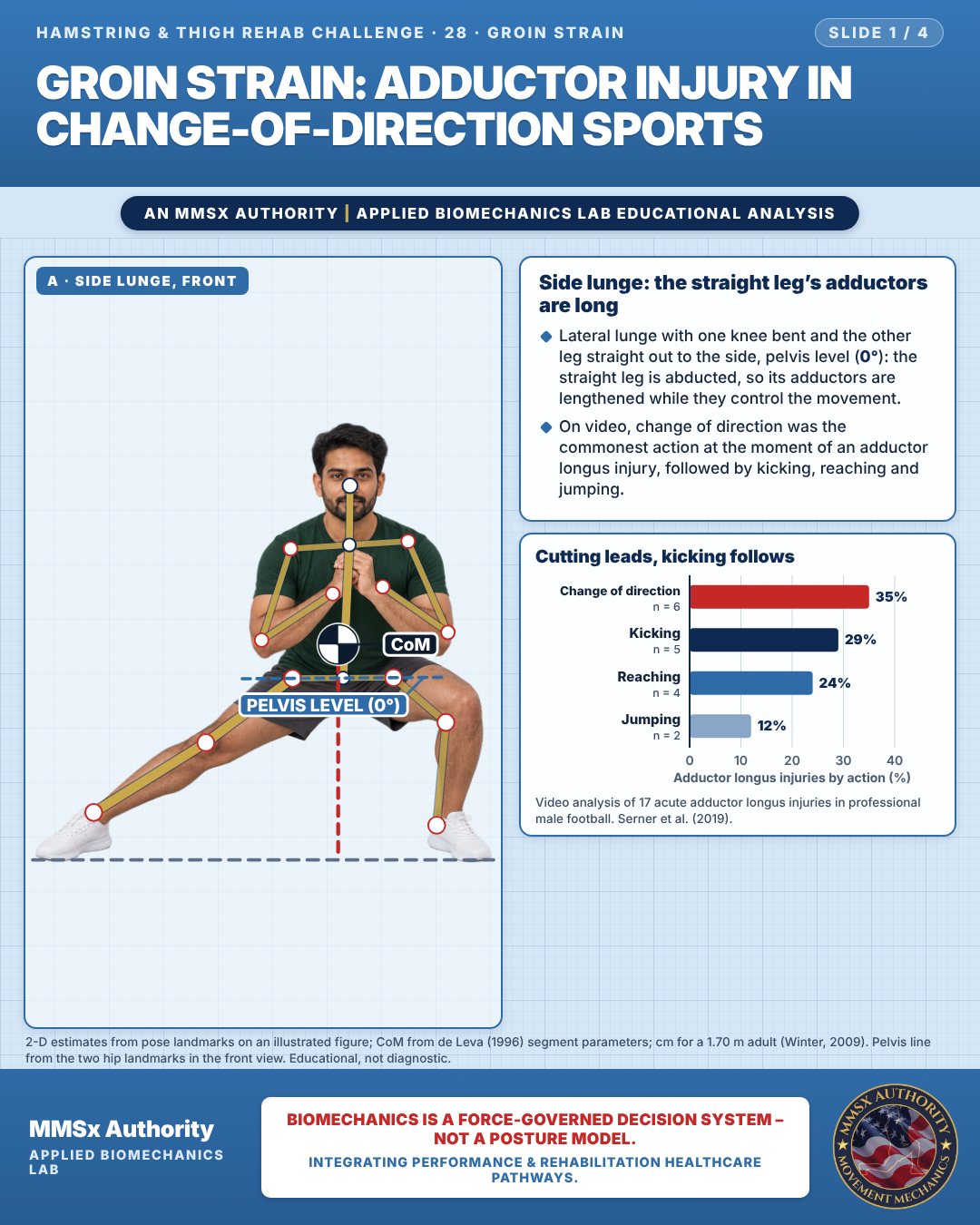 28
Groin strain: adductor injury in change-of-direction sports
A groin strain is an acute muscle injury in the groin region, most often of the adductor muscles (especially adductor longus), and less often of the…
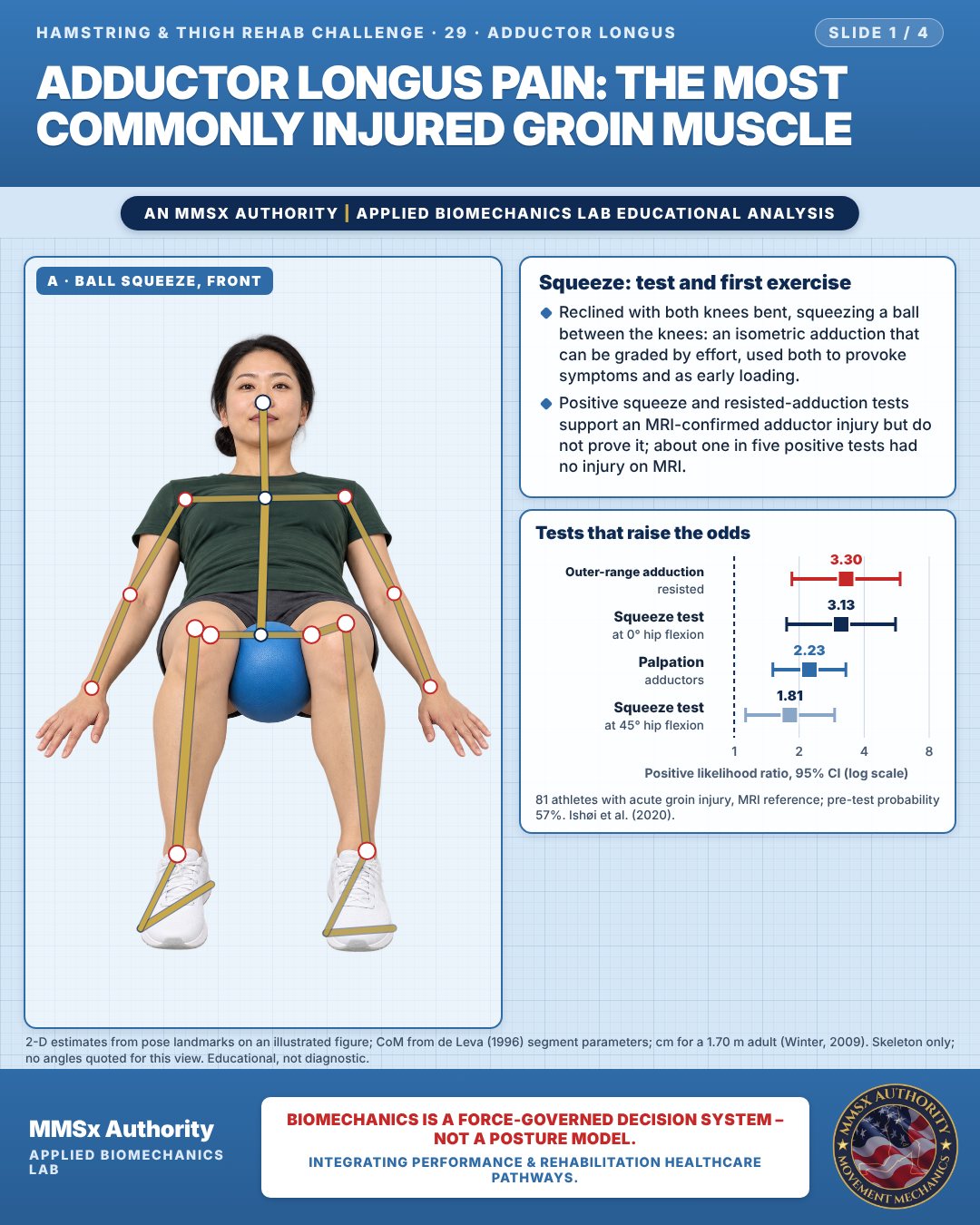 29
Adductor longus pain: the most commonly injured groin muscle
Adductor longus injury is an acute strain of the adductor longus, the most superficial and anterior of the adductor muscles, which runs from the…
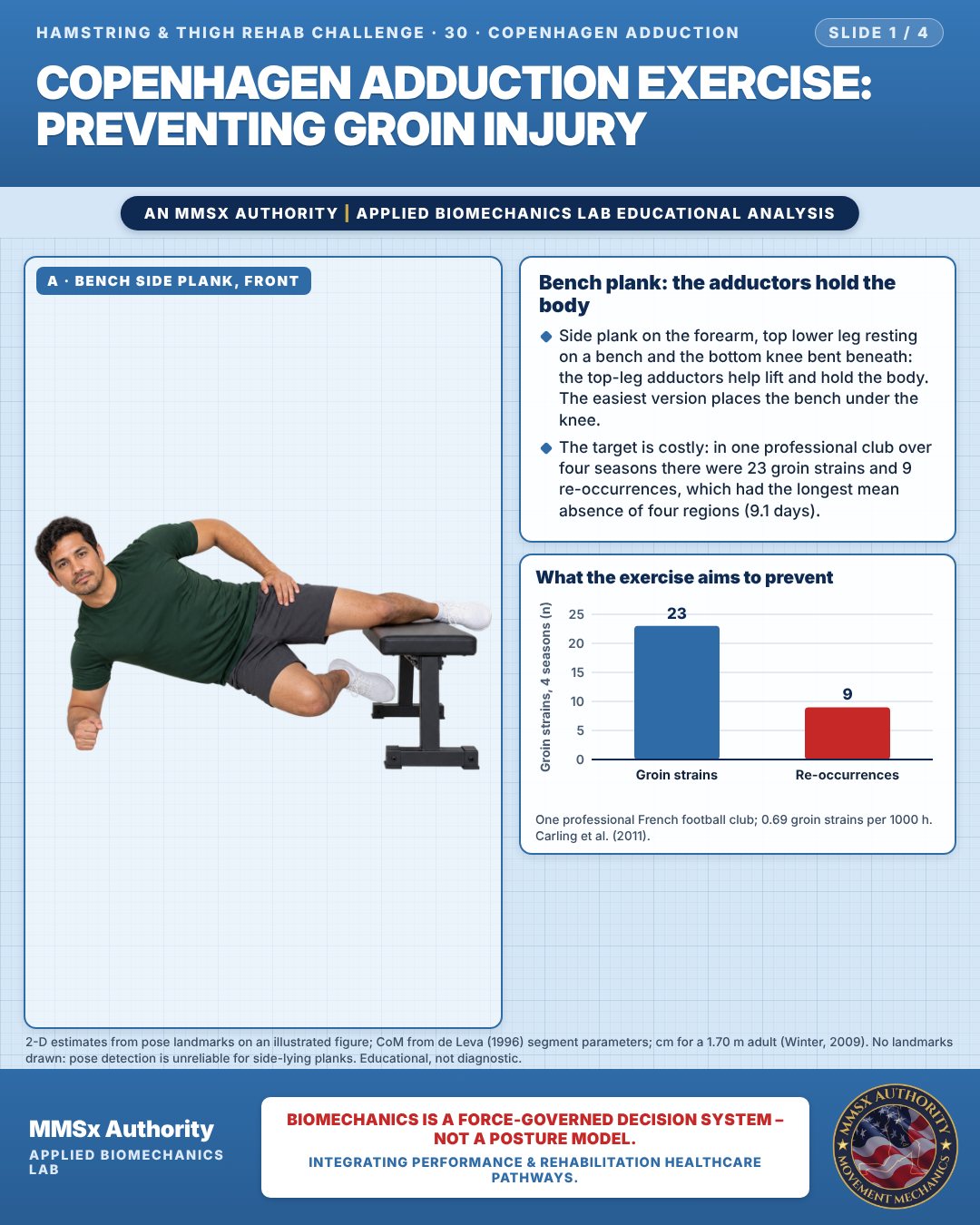 30
Copenhagen adduction exercise: preventing groin injury
The Copenhagen adduction exercise is a side-lying bodyweight exercise in which the upper leg rests on a bench (at the knee for the short-lever…
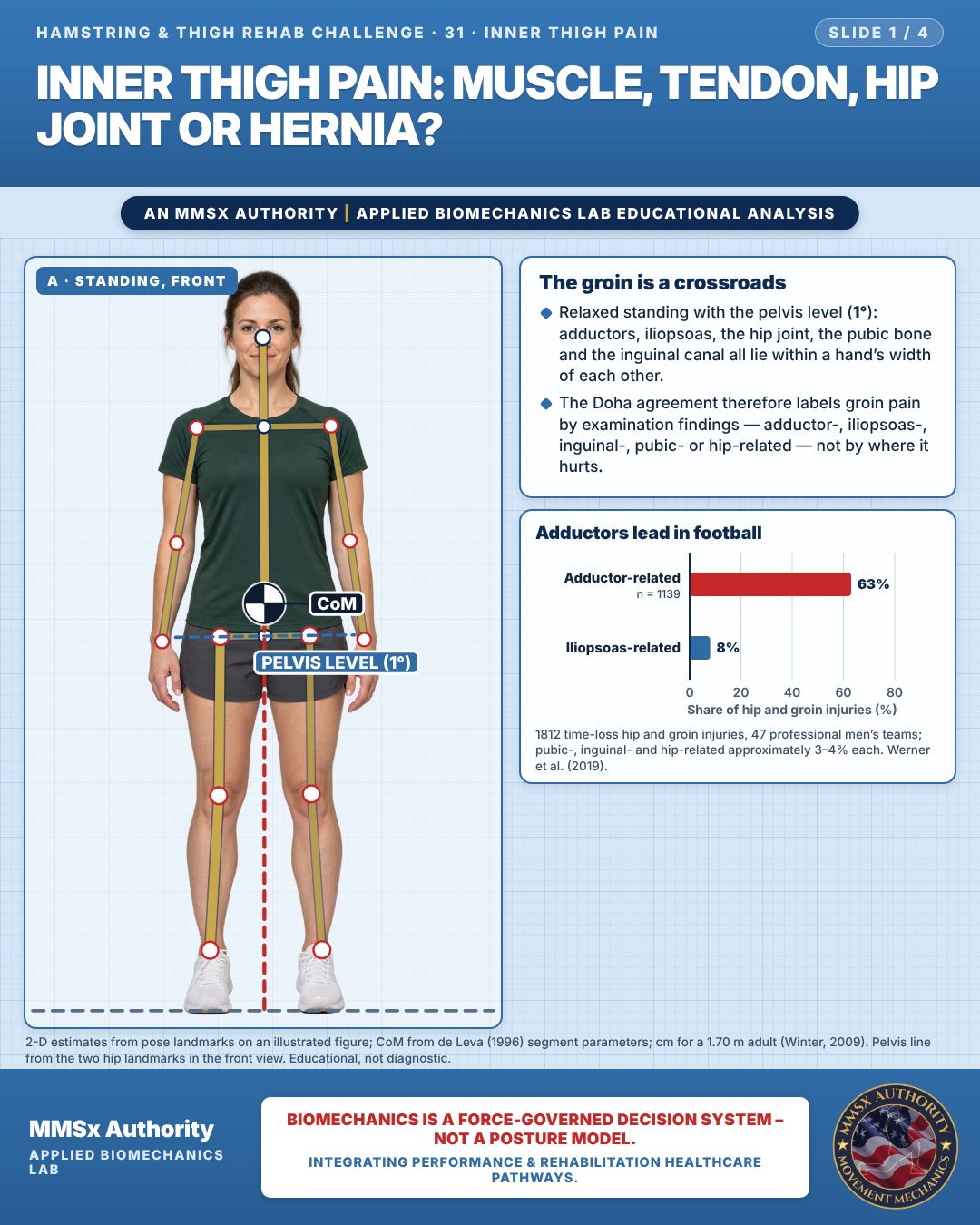 31
Inner thigh pain: muscle, tendon, hip joint or hernia?
Inner thigh (groin) pain in athletes is classified clinically, not by imaging, into defined clinical entities: adductor-related, iliopsoas-related,…
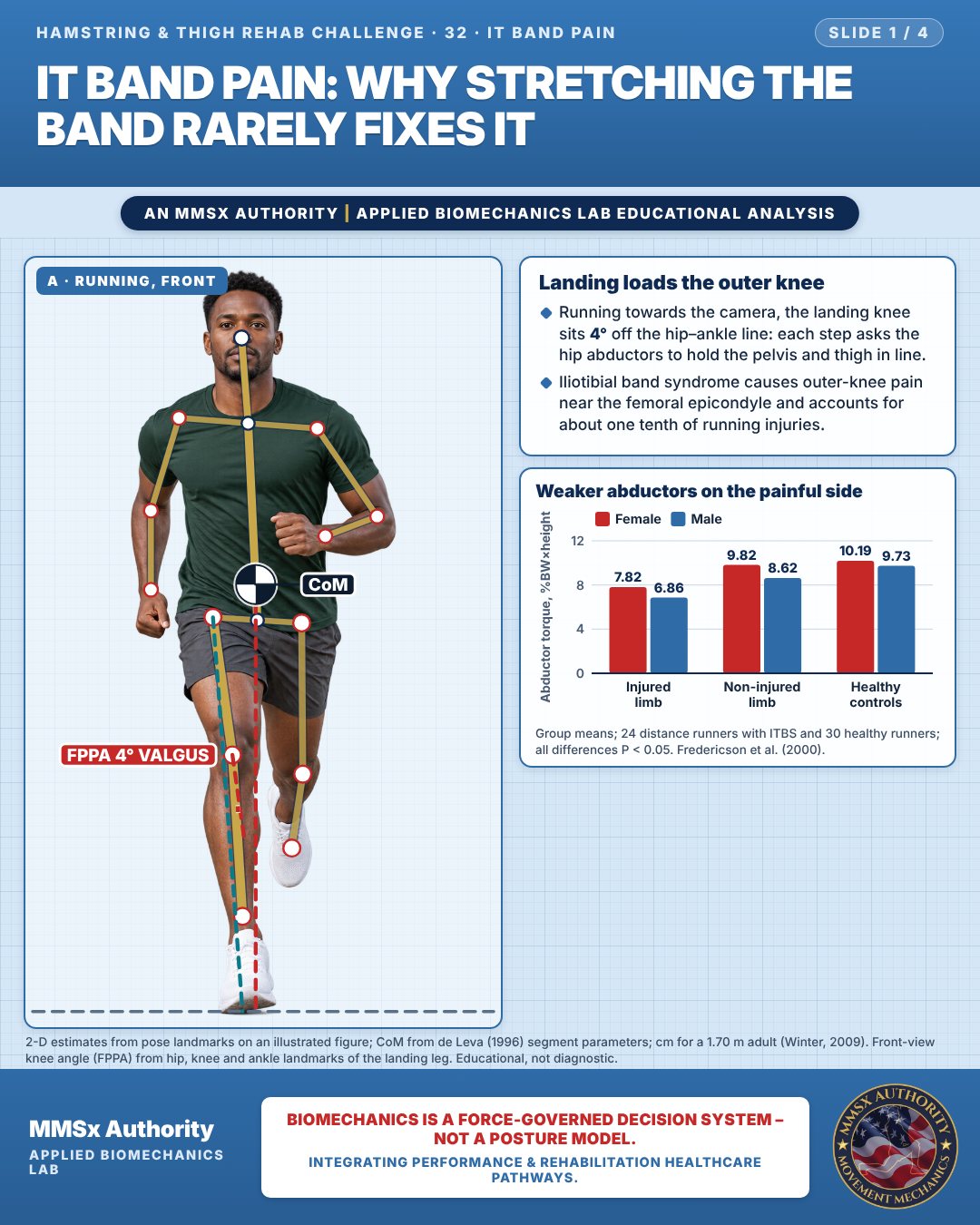 32
IT band pain: why stretching the band rarely fixes it
Iliotibial band syndrome (ITBS) is an overuse condition causing lateral knee pain in runners and cyclists, felt over the lateral femoral epicondyle.
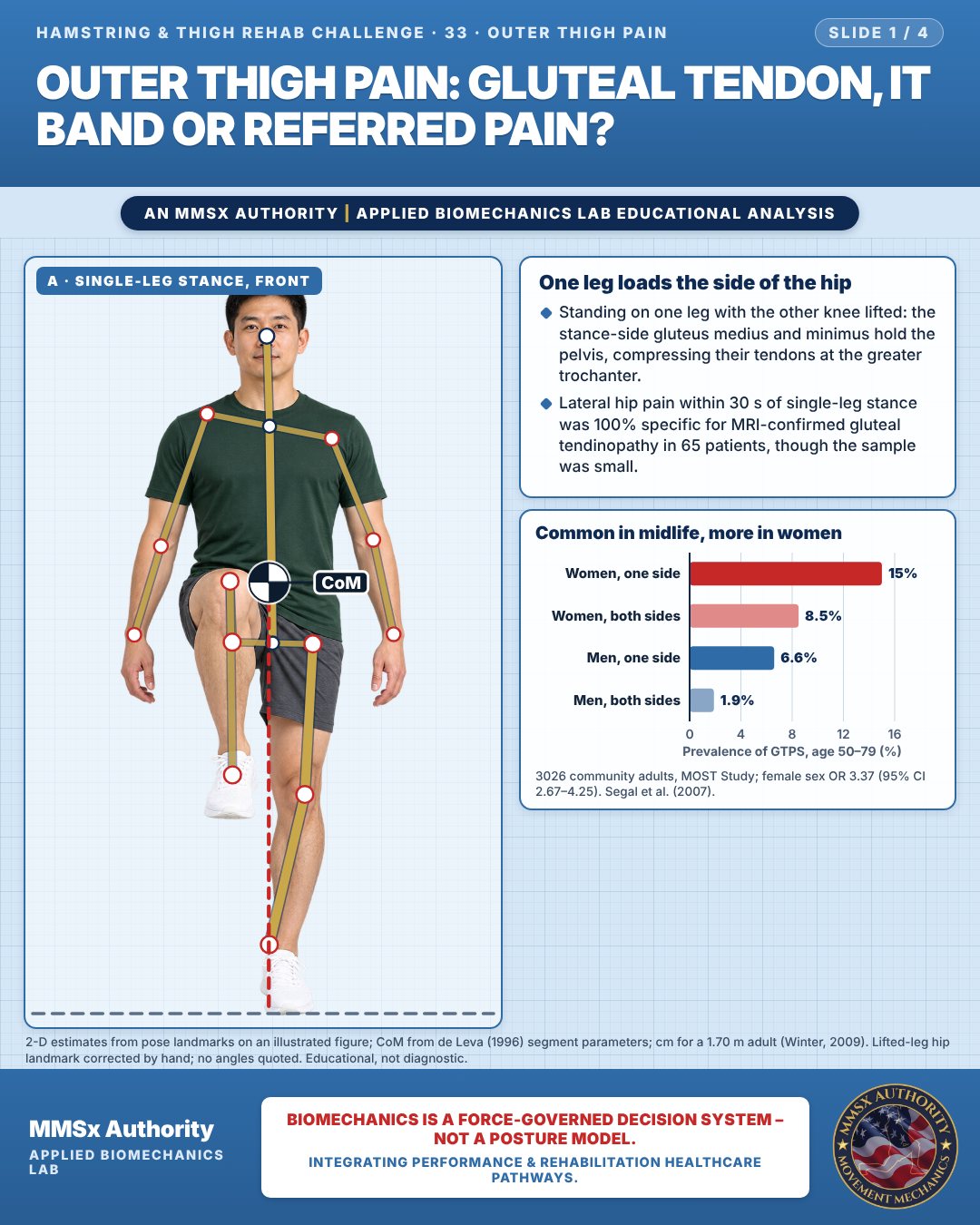 33
Outer thigh pain: gluteal tendon, IT band or referred pain?
Greater trochanteric pain syndrome (GTPS) is pain and tenderness over the lateral hip at the greater trochanter, most often associated with gluteus…
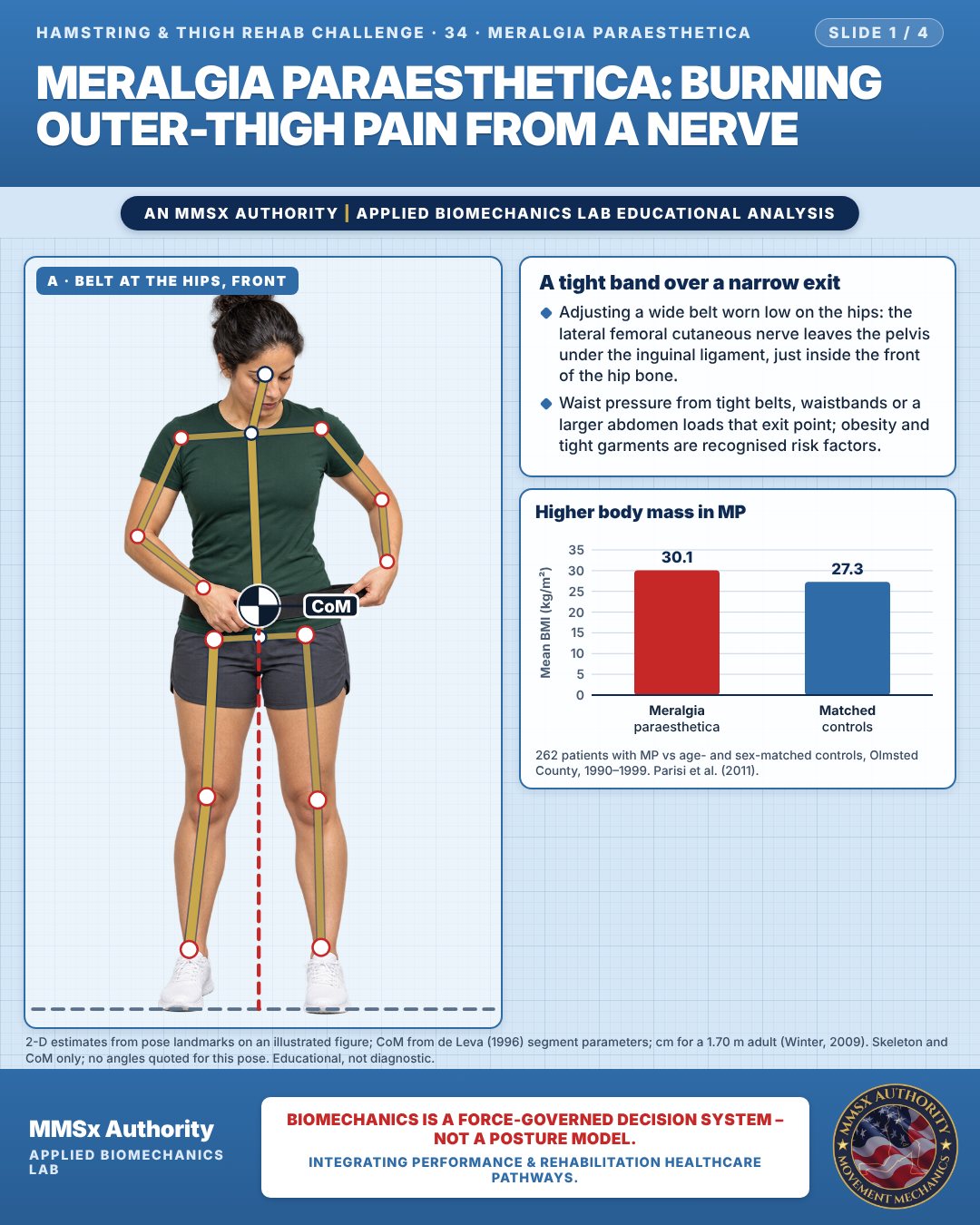 34
Meralgia paraesthetica: burning outer-thigh pain from a nerve
Meralgia paraesthetica (MP) is a mononeuropathy of the lateral femoral cutaneous nerve (LFCN), usually from entrapment where the nerve passes under…
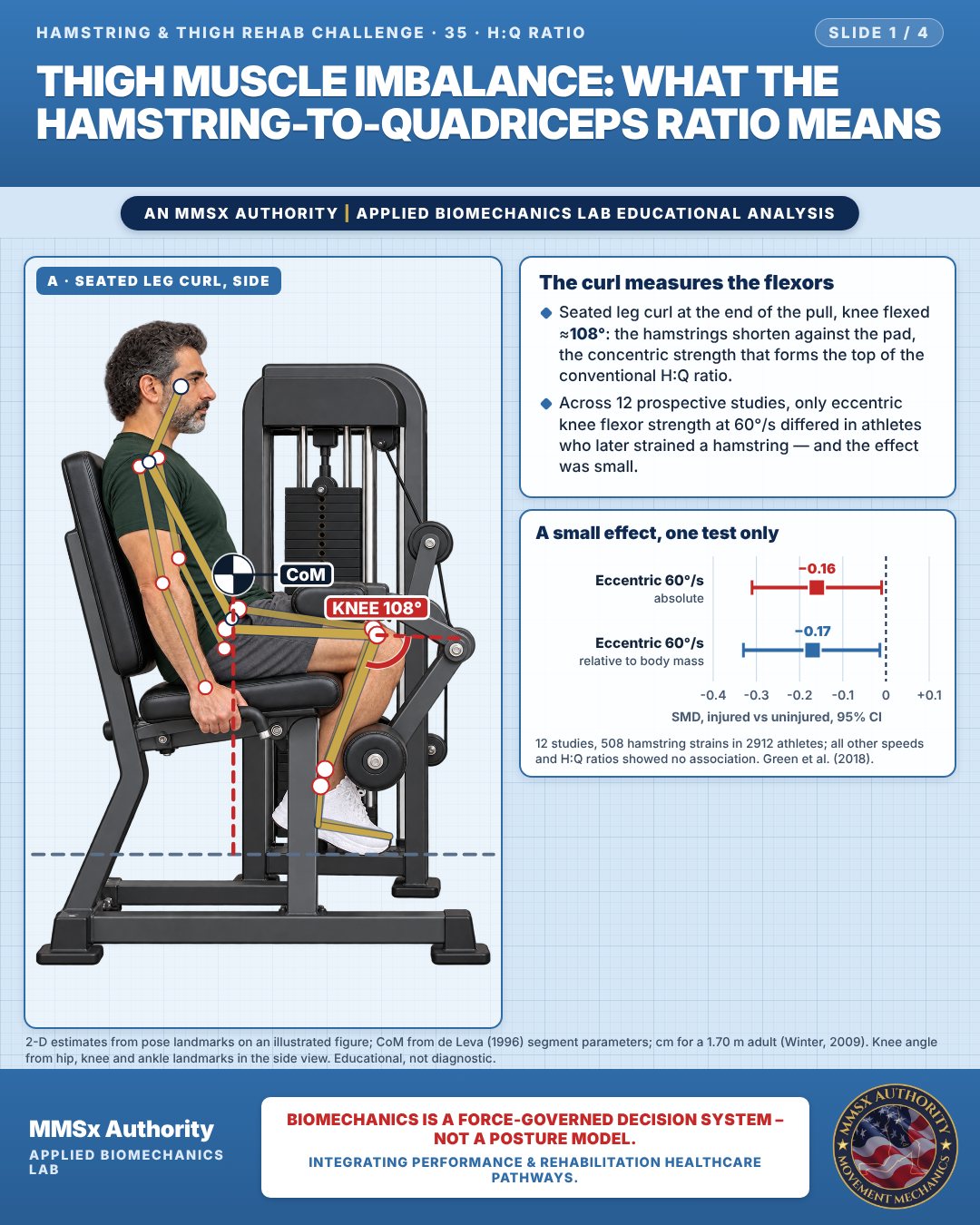 35
Thigh muscle imbalance: what the hamstring-to-quadriceps ratio means
The hamstring-to-quadriceps (H:Q) ratio compares knee flexor with knee extensor strength, usually on an isokinetic dynamometer.
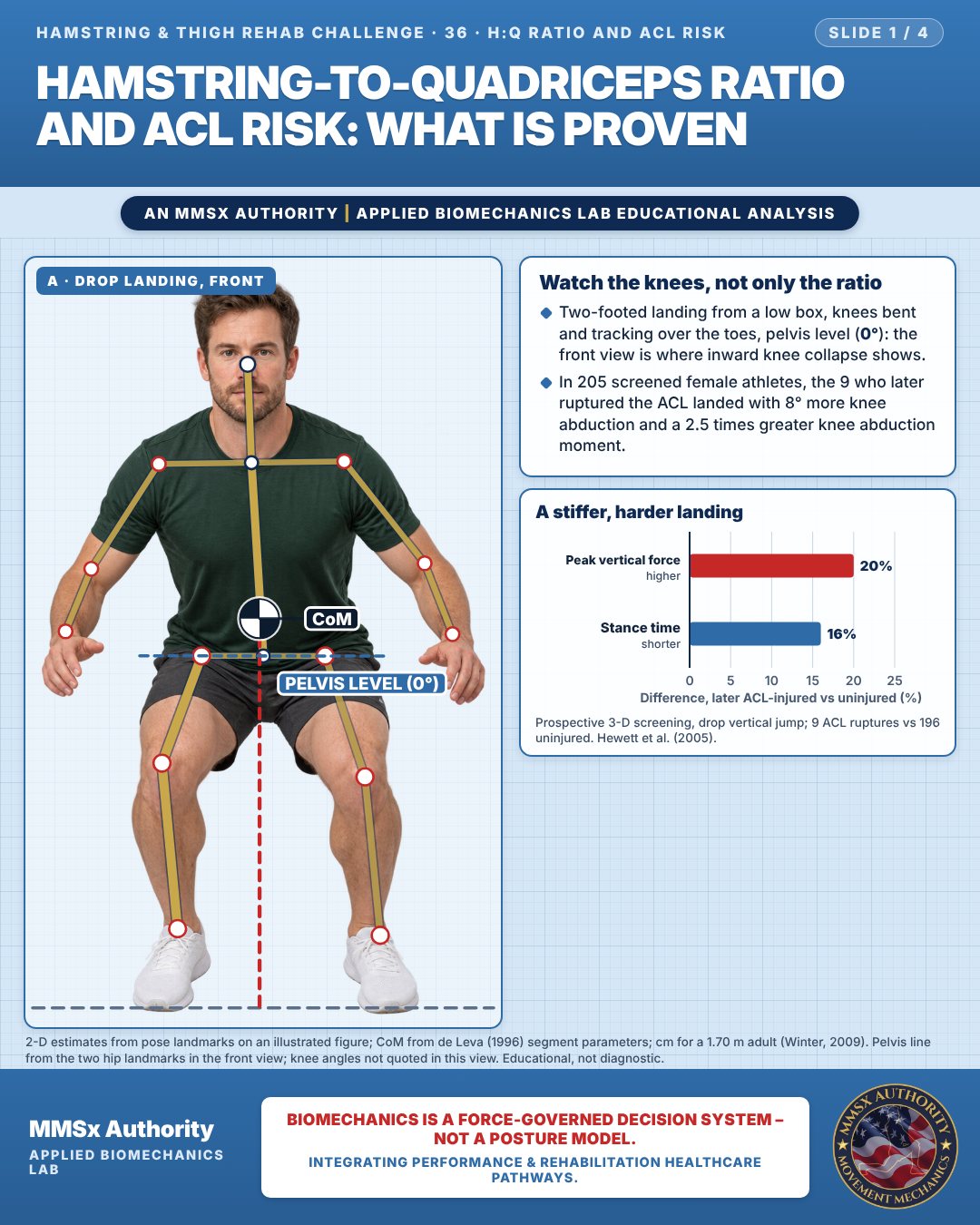 36
Hamstring-to-quadriceps ratio and ACL risk: what is proven
The anterior cruciate ligament (ACL) restrains forward translation and rotation of the tibia.
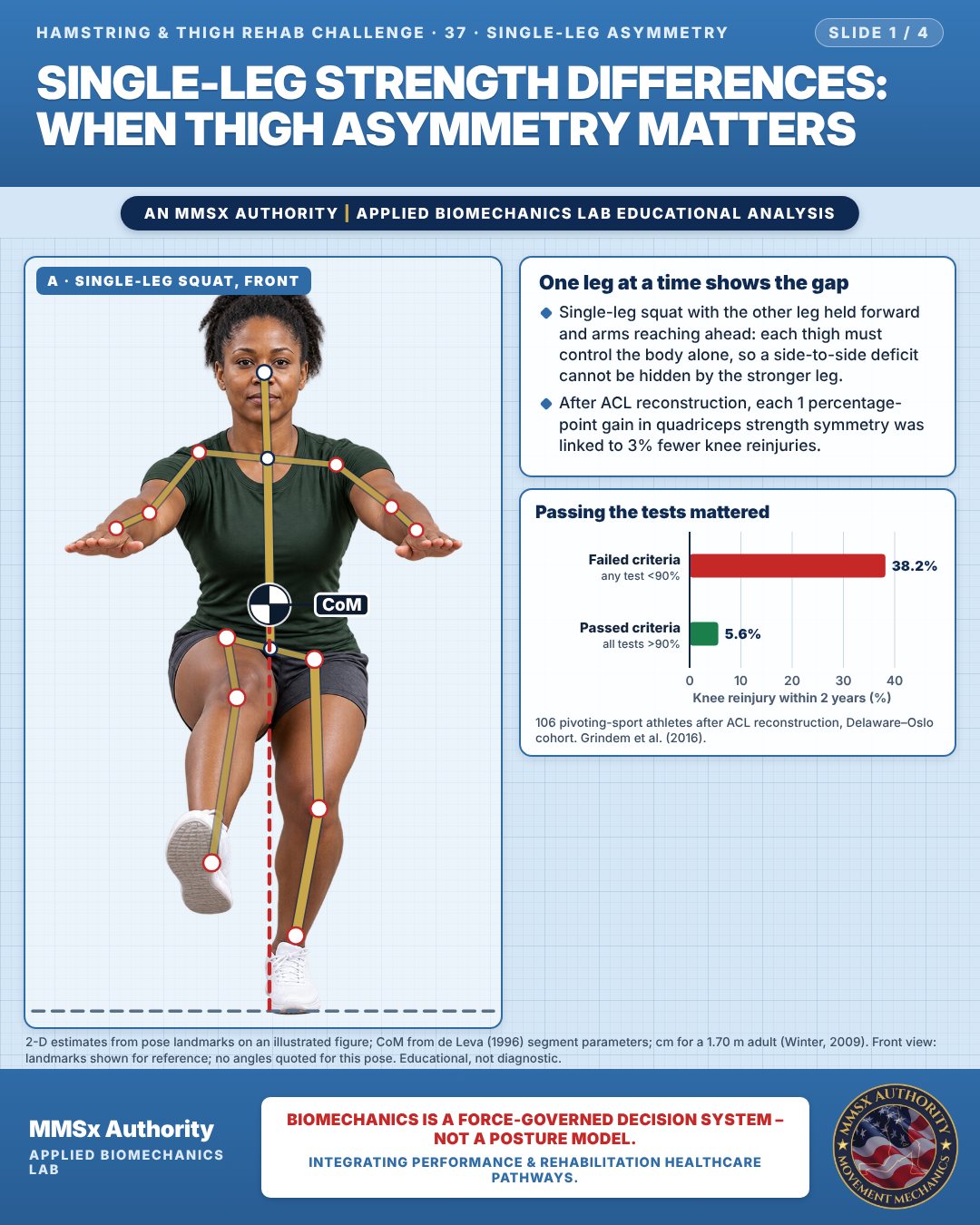 37
Single-leg strength differences: when thigh asymmetry matters
The limb symmetry index (LSI) expresses the involved limb's result as a percentage of the uninvolved limb (for example quadriceps strength or…
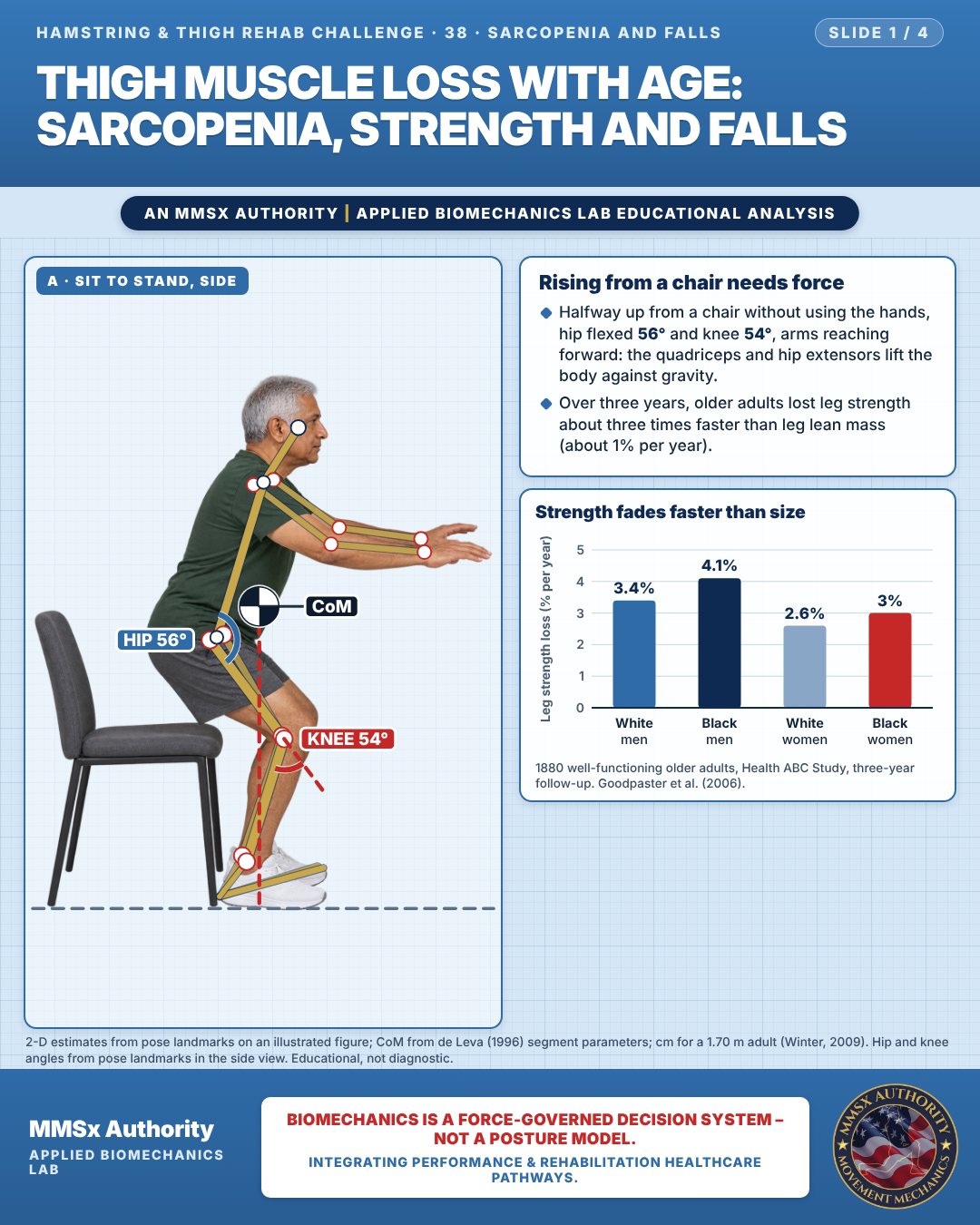 38
Thigh muscle loss with age: sarcopenia, strength and falls
Sarcopenia is "a muscle disease (muscle failure) rooted in adverse muscle changes that accrue across a lifetime".
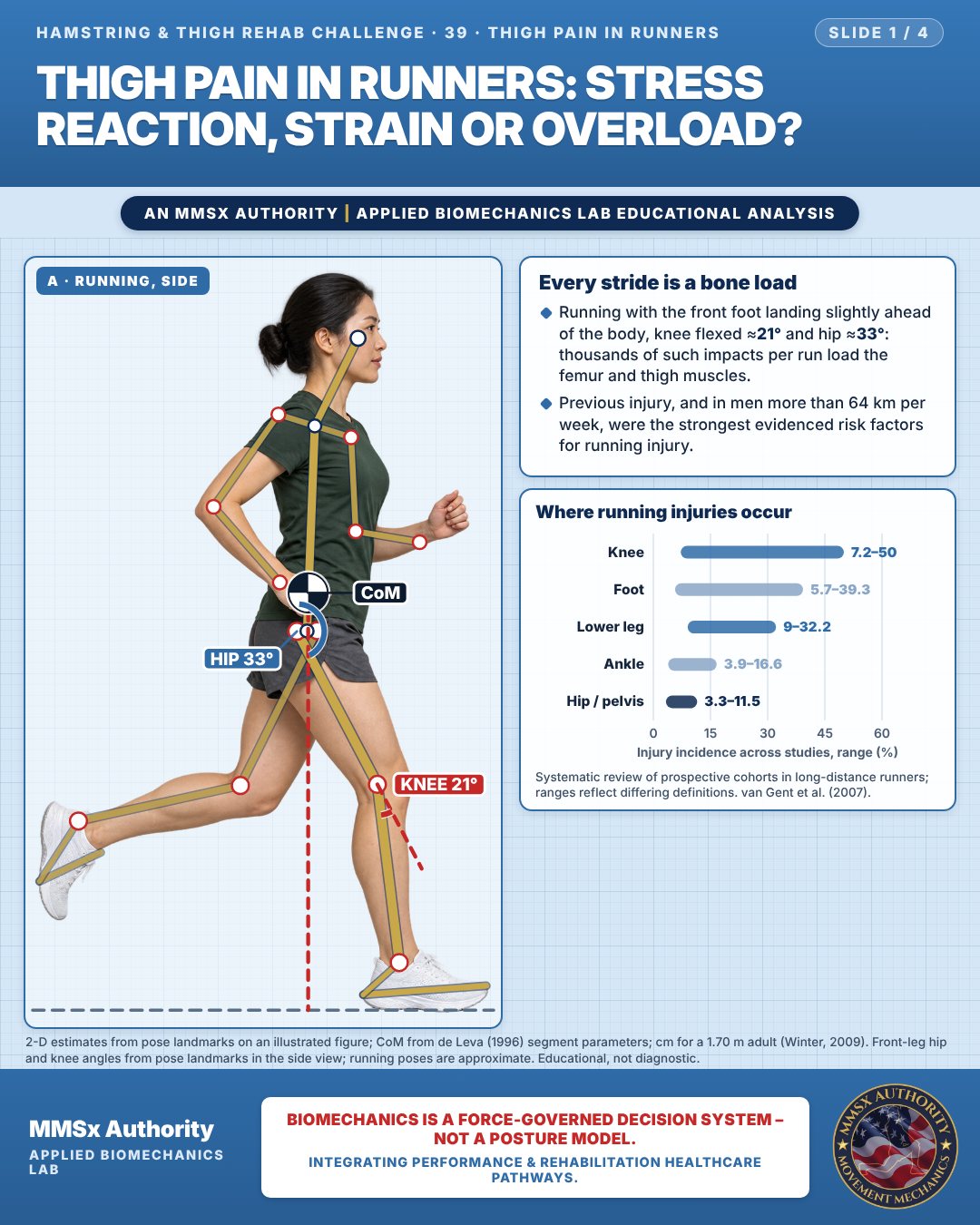 39
Thigh pain in runners: stress reaction, strain or overload?
Thigh pain in runners usually reflects one of three processes: a muscle strain (sudden onset during fast running, focal muscle pain on contraction…
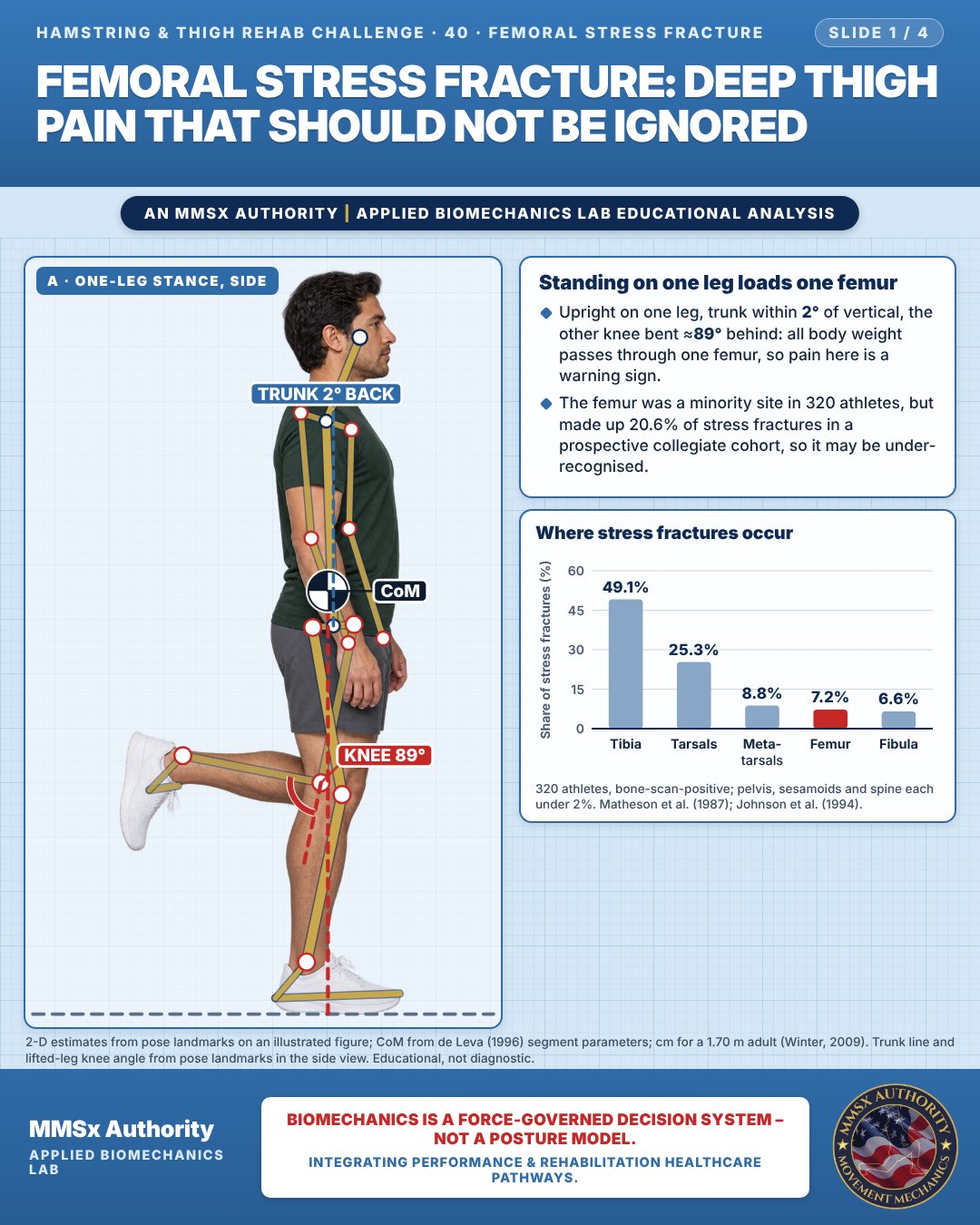 40
Femoral stress fracture: deep thigh pain that should not be ignored
A femoral stress fracture is a bone stress injury of the femoral neck or shaft caused by repetitive loading that exceeds the bone's capacity to remodel.
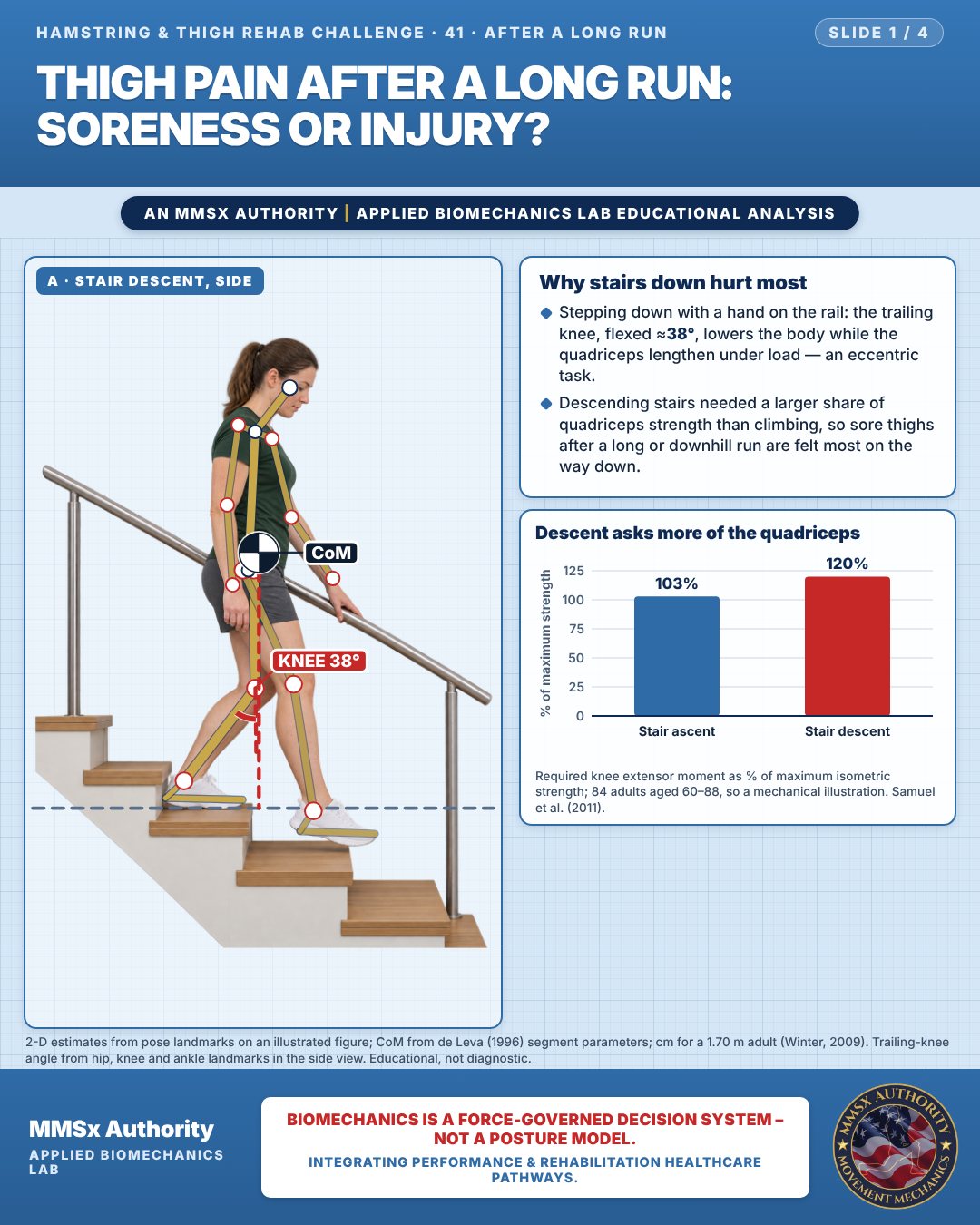 41
Thigh pain after a long run: soreness or injury?
Thigh pain after a long run is most often exercise-induced muscle soreness: a generalised ache that builds over the following hours and days after…
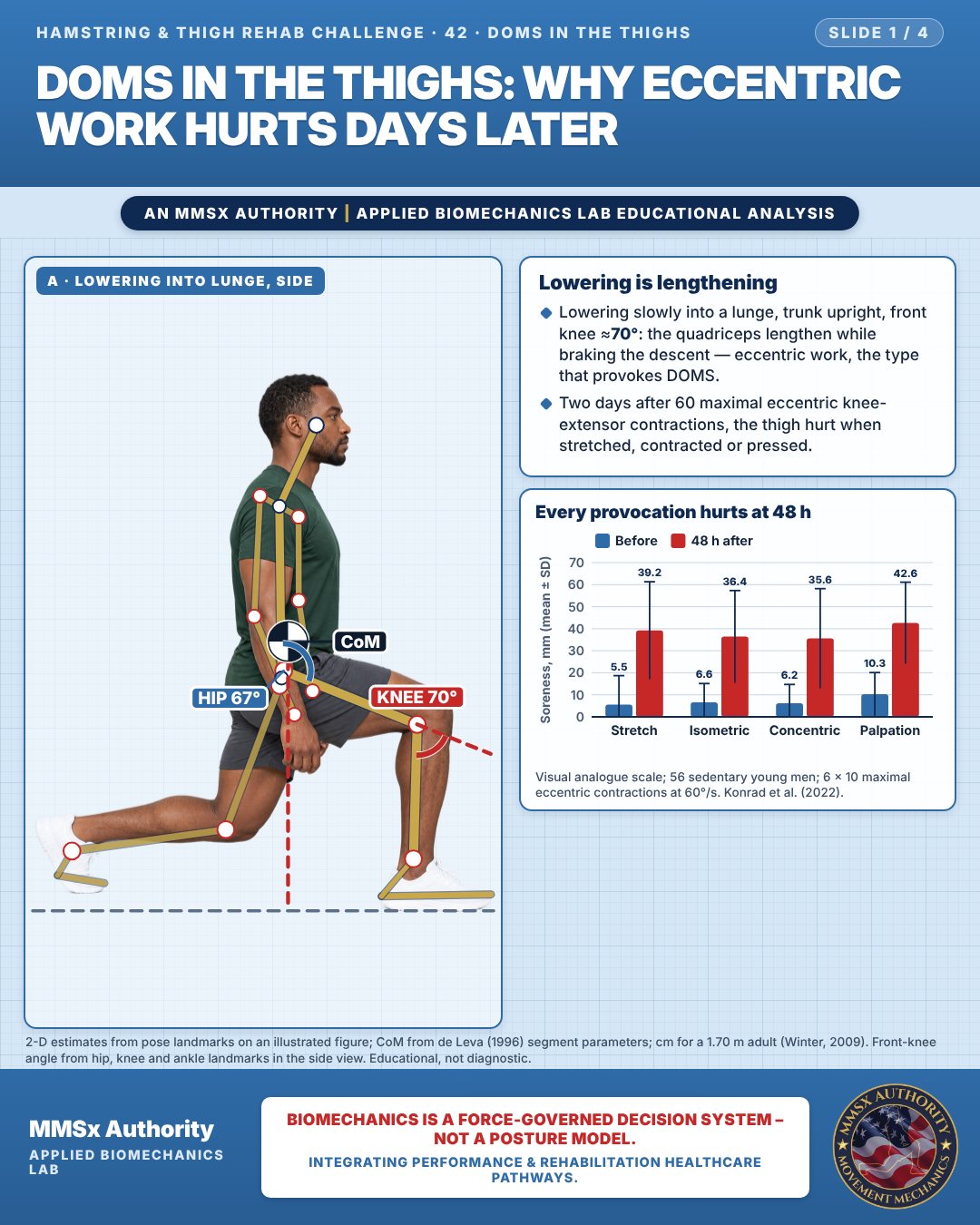 42
DOMS in the thighs: why eccentric work hurts days later
Delayed-onset muscle soreness (DOMS) is a generalised muscle pain that follows unaccustomed, eccentric (lengthening, decelerating) movements,…
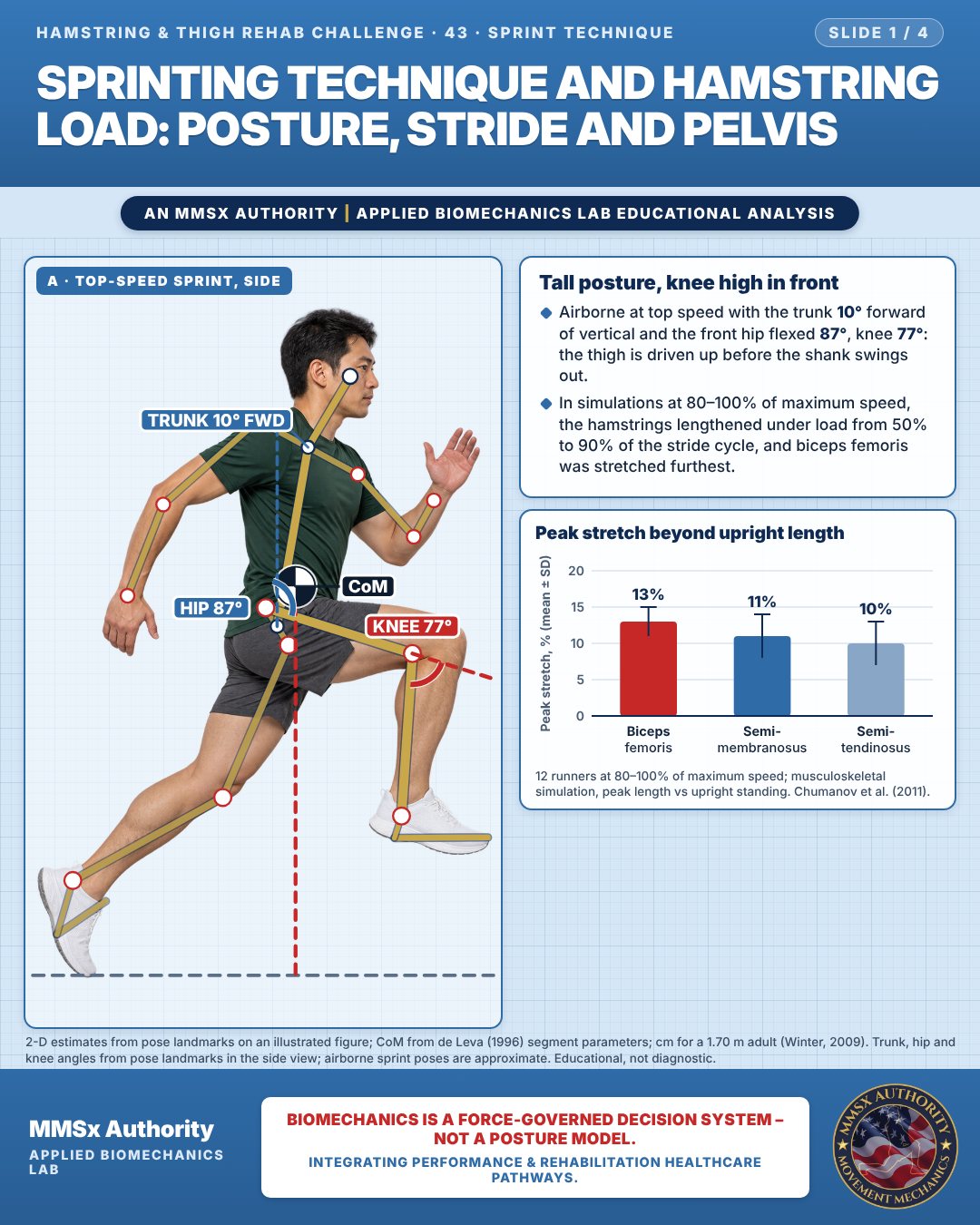 43
Sprinting technique and hamstring load: posture, stride and pelvis
Sprinting places the hamstrings under their highest functional demand: in late swing they lengthen while producing force to decelerate the…
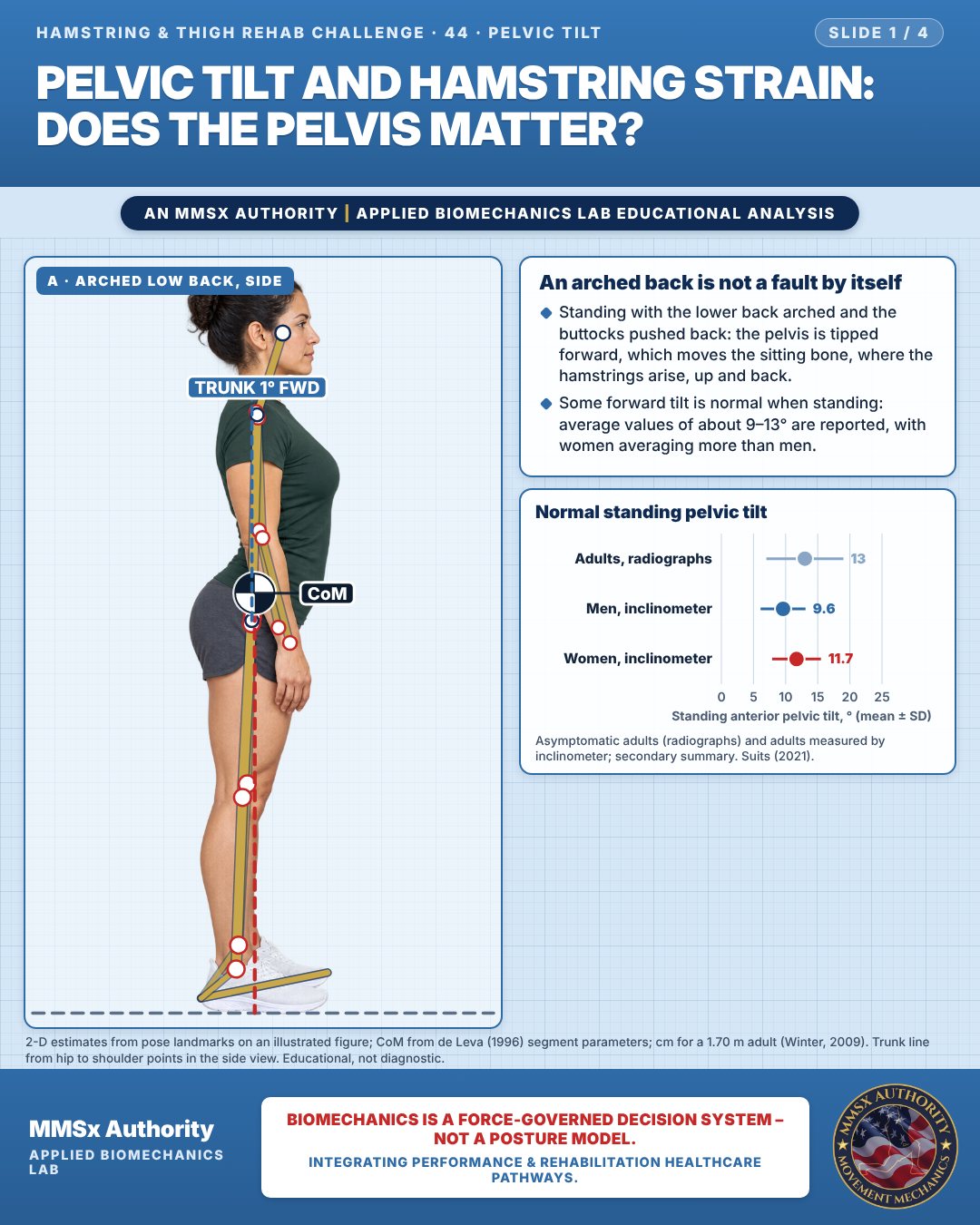 44
Pelvic tilt and hamstring strain: does the pelvis matter?
Anterior pelvic tilt is a forward rotation of the pelvis in the sagittal plane. Movement analysis, verified research data and a decision pathway.
 45
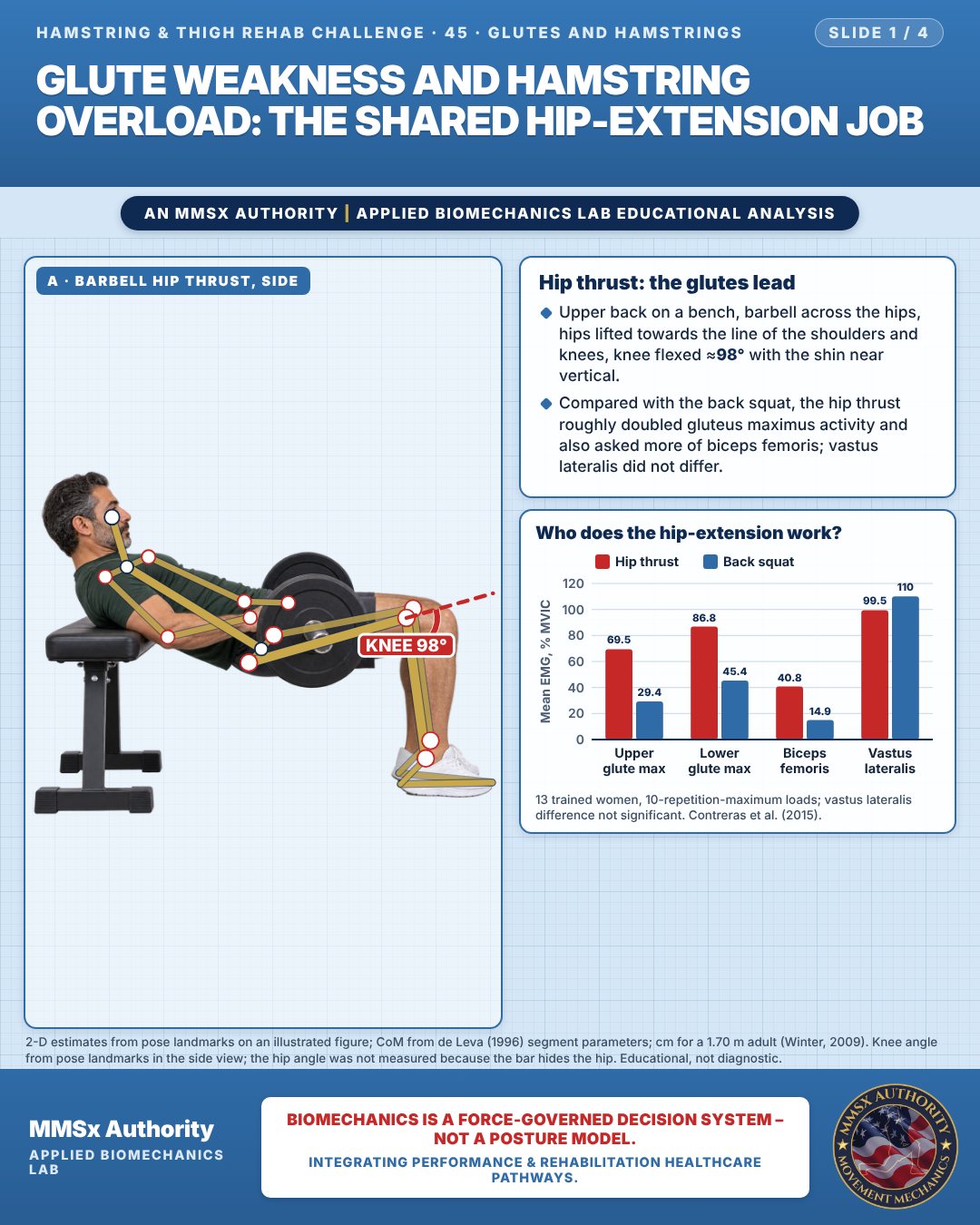
Glute weakness and hamstring overload: the shared hip-extension job
The gluteus maximus and the hamstrings share the job of extending the hip. Movement analysis, verified research data and a decision pathway.
 46
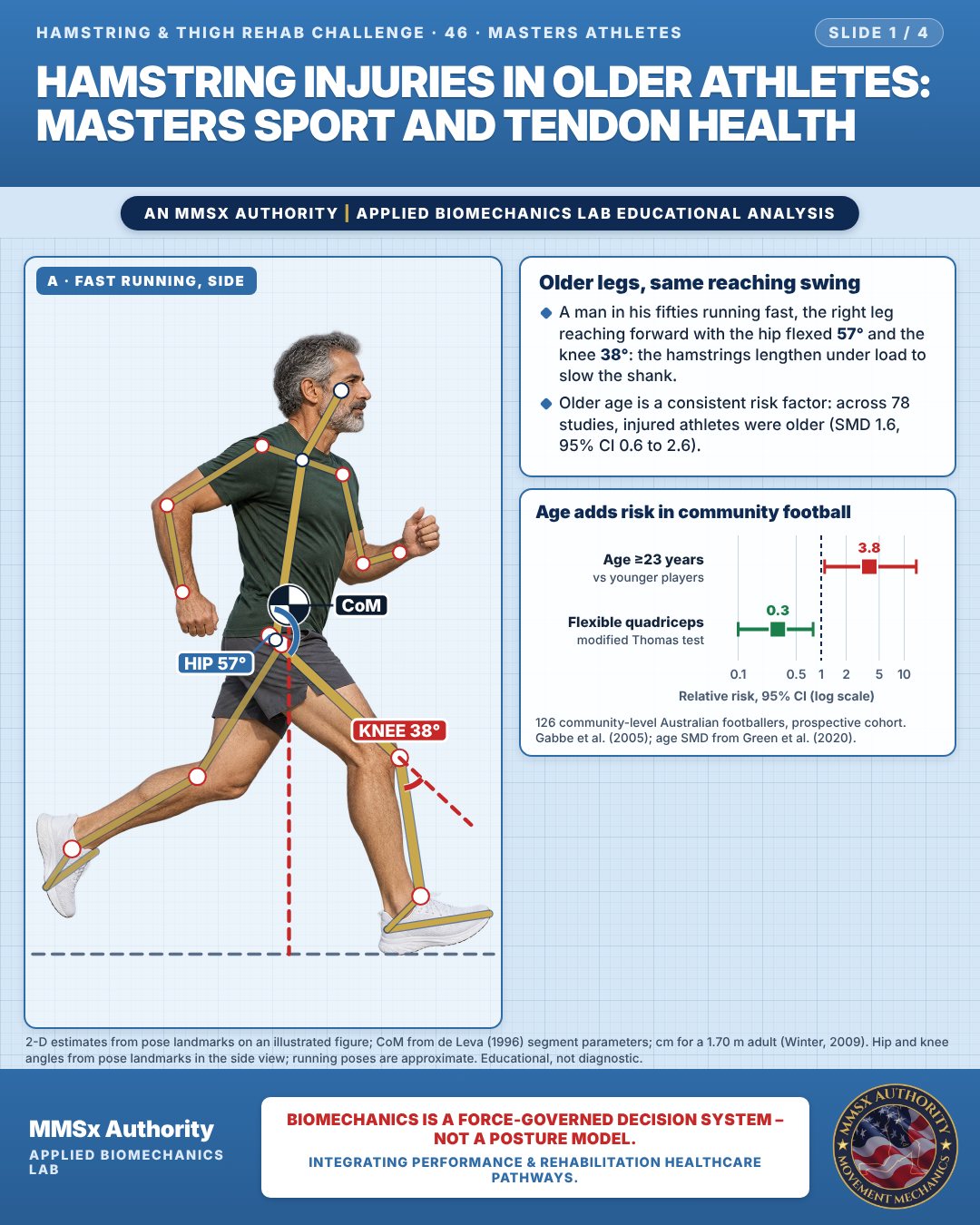
Hamstring injuries in older athletes: masters sport and tendon health
In older athletes, hamstring problems span the familiar sprint-related muscle strain and, less commonly, injury to the proximal hamstring tendons at…
 47
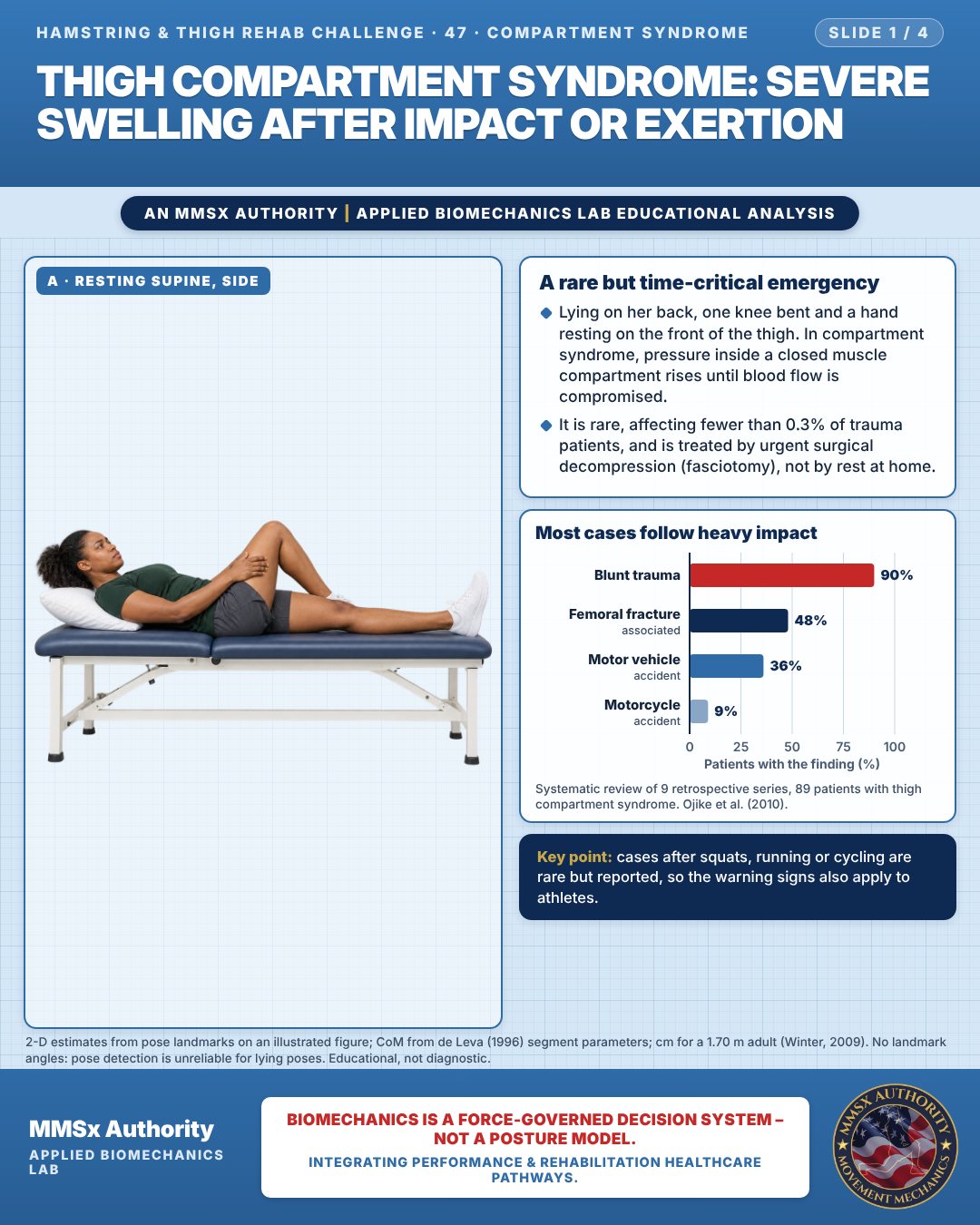
Thigh compartment syndrome: severe swelling after impact or exertion
Acute compartment syndrome of the thigh is a rise in pressure within a closed fascial compartment of the thigh that compromises blood flow and can…
 48
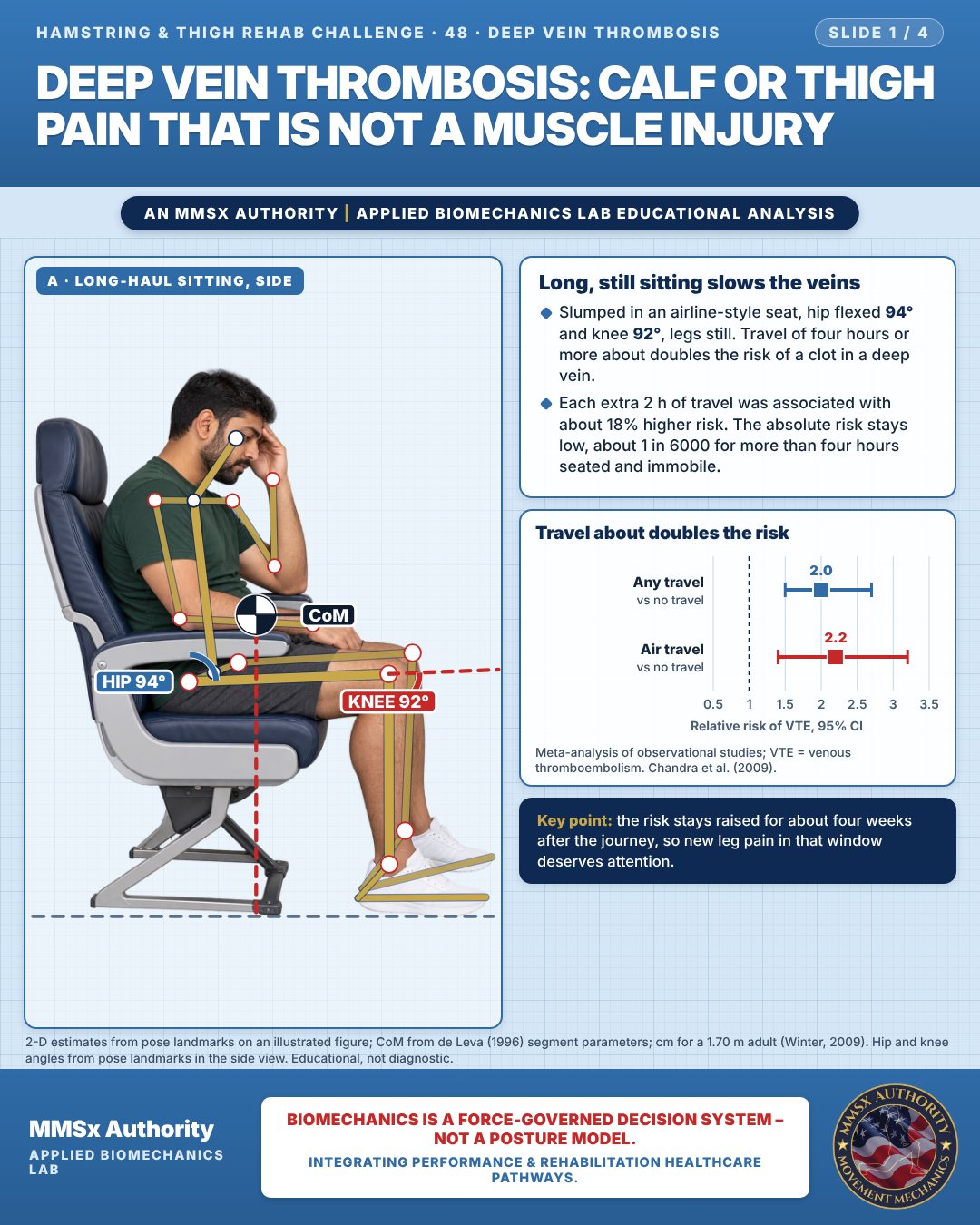
Deep vein thrombosis: calf or thigh pain that is not a muscle injury
Deep vein thrombosis (DVT) is a blood clot in a deep vein, usually of the leg (calf, popliteal or femoral veins).
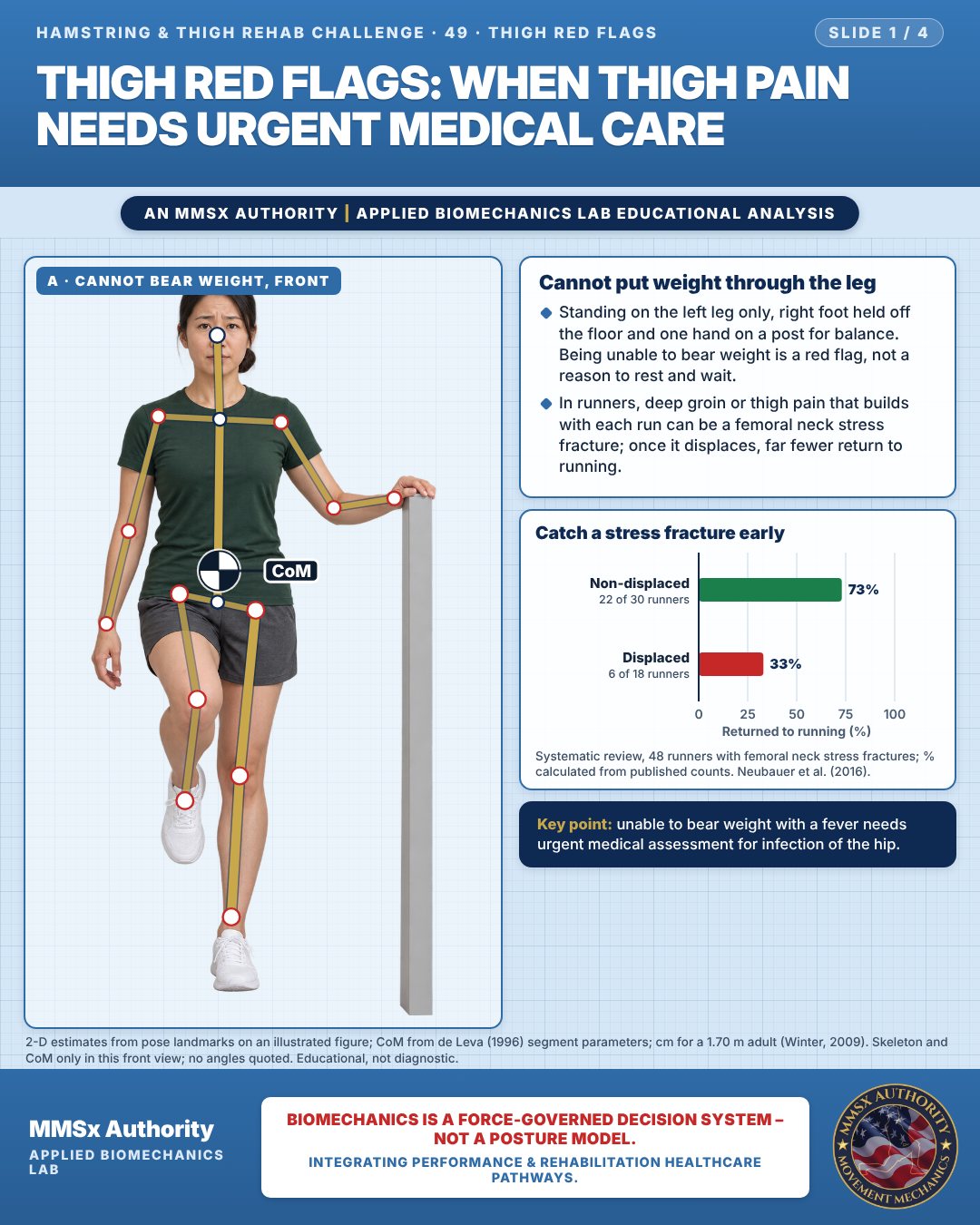 49
Thigh red flags: when thigh pain needs urgent medical care
Red flags are features of thigh pain that suggest a serious, time-sensitive cause rather than a muscle problem.
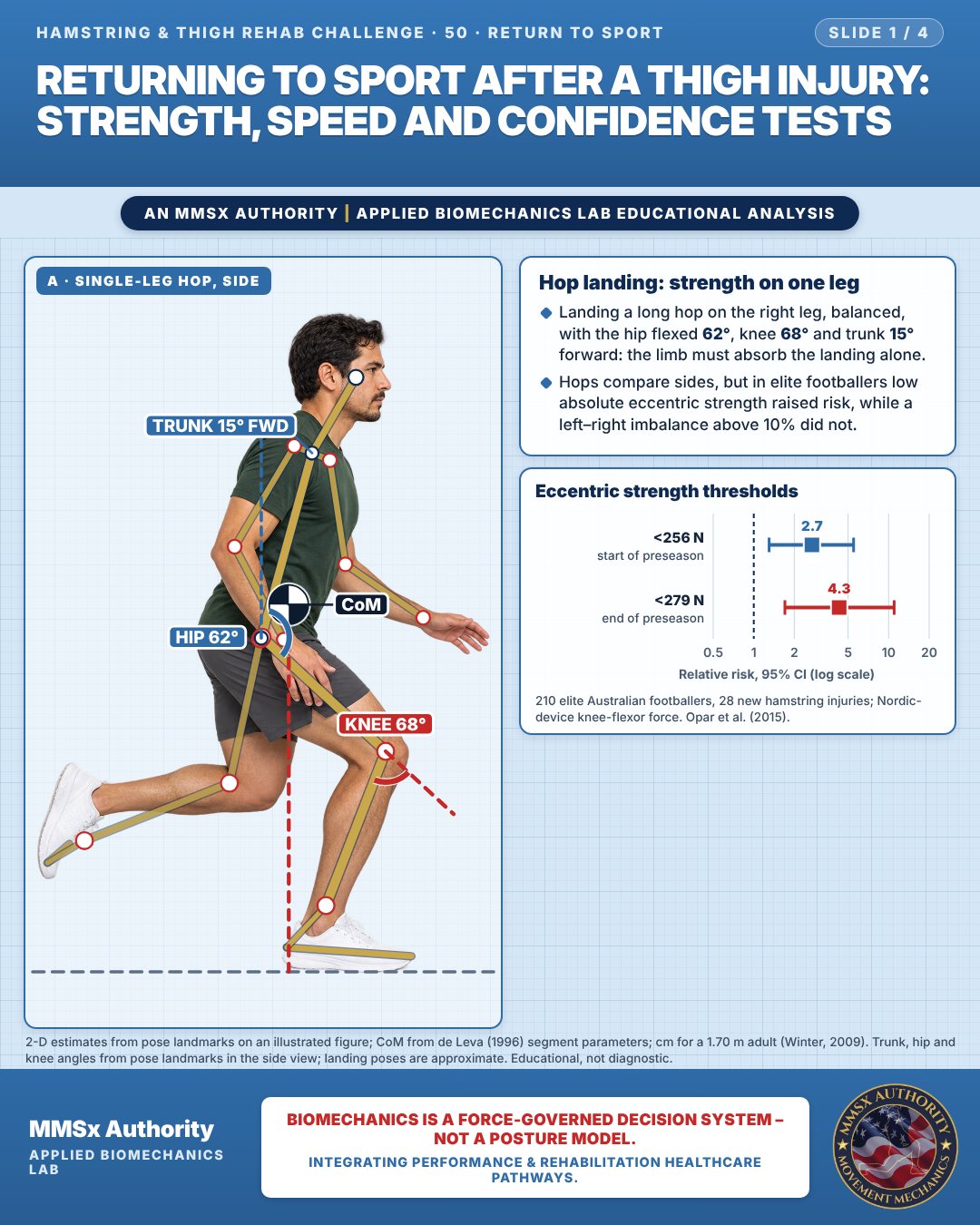 50
Returning to sport after a thigh injury: strength, speed and confidence tests
Return to sport after a thigh muscle injury is a staged decision that combines time-based healing, symptom response and performance on tests of…