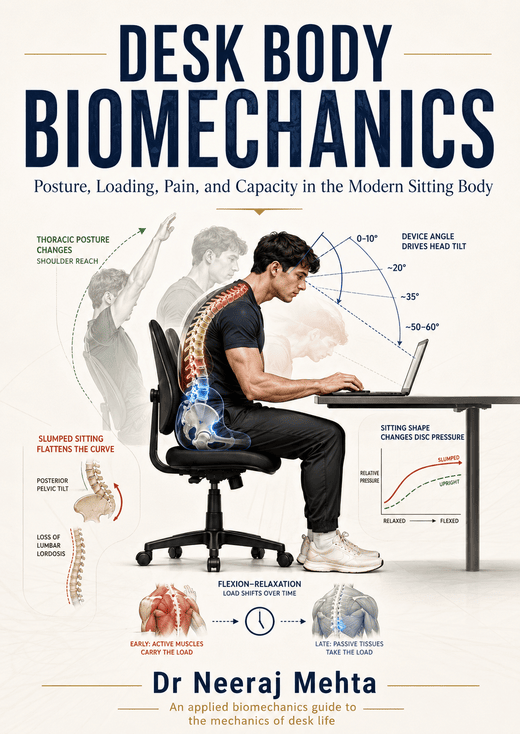
Before we can change the desk body, we have to understand it mechanically. This part defines the real problem: not weak posture, but an under-varied, under-loaded, over-repeated movement system.
The upper body lives in front of a screen. This part follows the load from the eyes down: the neck that holds the head toward the monitor, the shoulders that round toward the keyboard, and the wrists and hands that carry hours of small, repeated work.
At the centre of the desk body is the trunk — the spine that bends to the chair, the low back that takes the blame, and the rib cage that quietly governs breathing. This part treats the body’s core column as the mechanical and respiratory hub it really is.
Below the desk, out of sight, the largest and most powerful machinery of the body sits idle. The hips stiffen, the glutes switch off, the hamstrings tighten and the feet lose their connection to the ground. This part follows the lost movement capacity of the lower body — and how to win it back.
Having traced the desk body from head to foot, this part turns to the desk itself — and to the workday around it. It asks what a workstation can and cannot do, punctures the myth that a standing desk undoes sitting, and makes the case that the most powerful tool of all is the smallest: the movement break.
This part gathers the mechanics of the whole book into the recognisable patterns of discomfort that desk workers actually experience — neck, shoulder, low back, hip and head. Each chapter explains the pattern, reassures where reassurance is due, flags the signs that warrant professional help, and points toward management.
Understanding the desk body is half the work; the other half is doing something about it. This part turns the whole book into practice — a graded system of four simple, equipment-light routines, from a three-minute reset to a walking habit, that together undo what sitting does and rebuild what it erodes.
The desk body is not only an individual matter; it is a workplace one. This part turns the science and practice of the book outward — to the organisations where desk work happens — with practical guidance on building movement into the workplace, screening responsibly, changing behaviour, and shaping a more active future of work.