Chapter 112: Variation selection matrix
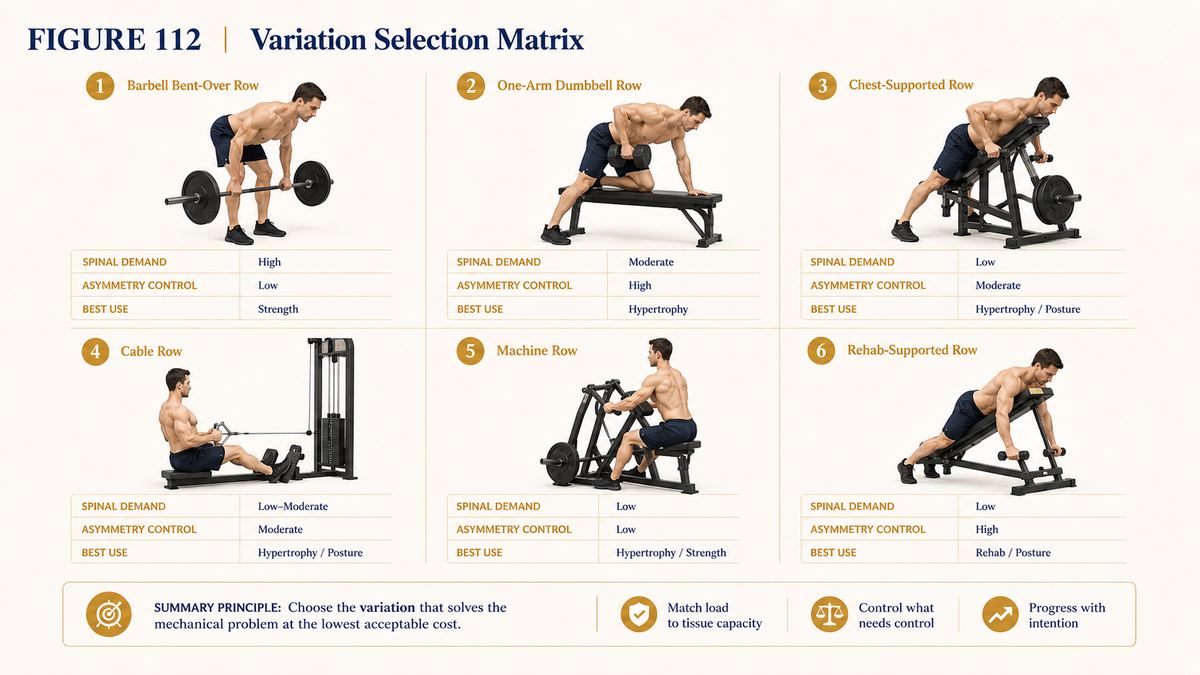
In plain language, variation selection matrix asks whether the athlete can row while preserving the mechanical problem that the coach or clinician actually wants to train. Bent-over rowing is not simply the movement of a weight toward the body. It is a load-transfer decision between the hand, implement, elbow, shoulder, scapula, trunk, pelvis, hip hinge and floor.
The MMSx view treats this chapter as a decision about turning observation into weekly decisions that build strength, hypertrophy, posture or return-to-load capacity. The useful question is not only whether the rep was completed. The useful question is whether the rep can be repeated with the same start position, same path, same finish standard and an acceptable recovery response.
The main caution is adding volume and intensity faster than tissue tolerance, technique repeatability and recovery can support. Therefore the field action is to programme by row purpose, row cost, tissue response and measurable quality, not by exercise popularity. This keeps the exercise inside the intended movement family and prevents the session from drifting into random effort or compensation.
A strong chapter decision combines observation with history. Bar path, dumbbell path, scapular motion, rib-cage position, hip-hinge quality, tempo, symptom response and next-session readiness are all useful signals; none of them is the whole answer by itself.
MMSx decision question
Can the athlete preserve the intended row problem while load, range, support, tempo and symptom response remain controlled?
Field action
Change one variable at a time: support, body angle, grip, range, tempo, load, volume or frequency.
Clinical caution
Do not progress difficulty when pain, neurological symptoms, loss of control, unexplained weakness or post-surgical limits are present.