Bent-Over Rowing
Chapter-wise LMS reader with 120 human figure plates, progress tracking, search, part navigation and clean reading pages.
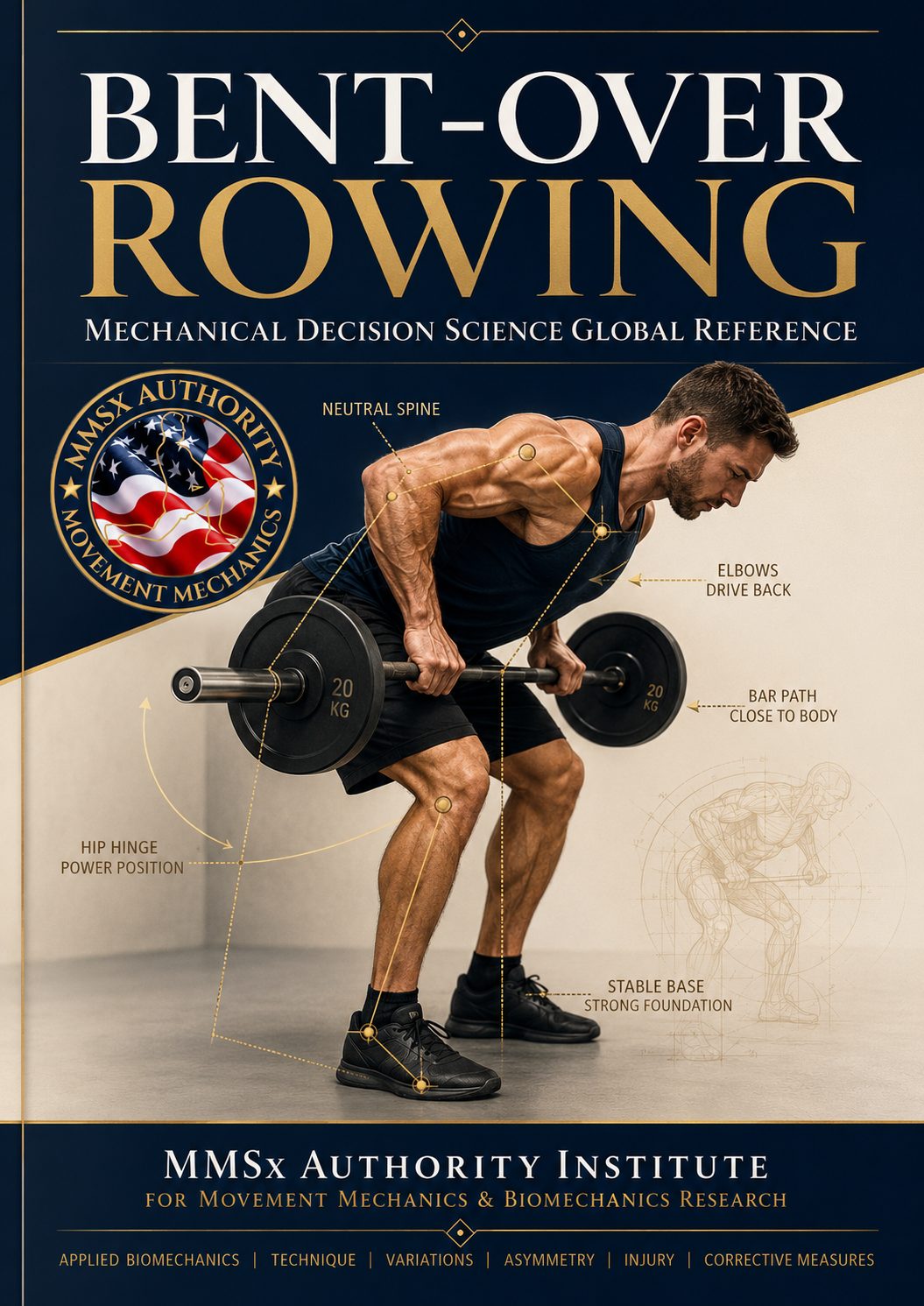
PART I — Foundations, Vocabulary and Decision Science
The one-sentence bent-over row
In plain language, the one-sentence bent-over row asks whether the athlete can row while preserving the mechanical problem that the coach or clin...
Figure 002Why rowing is not only a back exercise
In plain language, why rowing is not only a back exercise asks whether the athlete can row while preserving the mechanical problem that the coach...
Figure 003The hand-load-trunk-floor system
In plain language, the hand-load-trunk-floor system asks whether the athlete can row while preserving the mechanical problem that the coach or cl...
Figure 004Horizontal, diagonal and vertical pulling compared
In plain language, horizontal, diagonal and vertical pulling compared asks whether the athlete can row while preserving the mechanical problem th...
Figure 005What makes a row a row
In plain language, what makes a row a row asks whether the athlete can row while preserving the mechanical problem that the coach or clinician ac...
Figure 006The hinge as a load-bearing platform
In plain language, the hinge as a load-bearing platform asks whether the athlete can row while preserving the mechanical problem that the coach o...
Figure 007Scapular motion vocabulary
In plain language, scapular motion vocabulary asks whether the athlete can row while preserving the mechanical problem that the coach or clinicia...
Figure 008Elbow path vocabulary
In plain language, elbow path vocabulary asks whether the athlete can row while preserving the mechanical problem that the coach or clinician act...
Figure 009Grip, wrist and forearm vocabulary
In plain language, grip, wrist and forearm vocabulary asks whether the athlete can row while preserving the mechanical problem that the coach or ...
Figure 010The MMSx rowing decision model
In plain language, the mmsx rowing decision model asks whether the athlete can row while preserving the mechanical problem that the coach or clin...
Figure 011Evidence hierarchy for rowing
In plain language, evidence hierarchy for rowing asks whether the athlete can row while preserving the mechanical problem that the coach or clini...
Figure 012How to read this reference
In plain language, how to read this reference asks whether the athlete can row while preserving the mechanical problem that the coach or clinicia...
PART II — The Physics Engine of Bent-Over Rowing
Force path and moment arms
In plain language, force path and moment arms asks whether the athlete can row while preserving the mechanical problem that the coach or clinicia...
Figure 014Torque at the shoulder
In plain language, torque at the shoulder asks whether the athlete can row while preserving the mechanical problem that the coach or clinician ac...
Figure 015Torque at the elbow
In plain language, torque at the elbow asks whether the athlete can row while preserving the mechanical problem that the coach or clinician actua...
Figure 016Lumbar shear and compression
In plain language, lumbar shear and compression asks whether the athlete can row while preserving the mechanical problem that the coach or clinic...
Figure 017Hip hinge angle and spinal demand
In plain language, hip hinge angle and spinal demand asks whether the athlete can row while preserving the mechanical problem that the coach or c...
Figure 018Centre of mass and base of support
In plain language, centre of mass and base of support asks whether the athlete can row while preserving the mechanical problem that the coach or ...
Figure 019Bar path vs dumbbell path
In plain language, bar path vs dumbbell path asks whether the athlete can row while preserving the mechanical problem that the coach or clinician...
Figure 020Tempo, impulse and acceleration
In plain language, tempo, impulse and acceleration asks whether the athlete can row while preserving the mechanical problem that the coach or cli...
Figure 021Range of motion and length-tension
In plain language, range of motion and length-tension asks whether the athlete can row while preserving the mechanical problem that the coach or ...
Figure 022Unilateral loading and anti-rotation
In plain language, unilateral loading and anti-rotation asks whether the athlete can row while preserving the mechanical problem that the coach o...
Figure 023External support and load redistribution
In plain language, external support and load redistribution asks whether the athlete can row while preserving the mechanical problem that the coa...
Figure 024When load changes the problem
In plain language, when load changes the problem asks whether the athlete can row while preserving the mechanical problem that the coach or clini...
PART III — The Human Machine: Joints, Muscles and Control
Latissimus dorsi role
In plain language, latissimus dorsi role asks whether the athlete can row while preserving the mechanical problem that the coach or clinician act...
Figure 026Rhomboids and middle trapezius role
In plain language, rhomboids and middle trapezius role asks whether the athlete can row while preserving the mechanical problem that the coach or...
Figure 027Lower trapezius and scapular depression
In plain language, lower trapezius and scapular depression asks whether the athlete can row while preserving the mechanical problem that the coac...
Figure 028Posterior deltoid and shoulder extension
In plain language, posterior deltoid and shoulder extension asks whether the athlete can row while preserving the mechanical problem that the coa...
Figure 029Biceps and brachialis contribution
In plain language, biceps and brachialis contribution asks whether the athlete can row while preserving the mechanical problem that the coach or ...
Figure 030Forearm and grip system
In plain language, forearm and grip system asks whether the athlete can row while preserving the mechanical problem that the coach or clinician a...
Figure 031Erector spinae and trunk brace
In plain language, erector spinae and trunk brace asks whether the athlete can row while preserving the mechanical problem that the coach or clin...
Figure 032Glute-hamstring hinge support
In plain language, glute-hamstring hinge support asks whether the athlete can row while preserving the mechanical problem that the coach or clini...
Figure 033Thoracic mobility and rib cage position
In plain language, thoracic mobility and rib cage position asks whether the athlete can row while preserving the mechanical problem that the coac...
Figure 034Rotator cuff centring
In plain language, rotator cuff centring asks whether the athlete can row while preserving the mechanical problem that the coach or clinician act...
Figure 035Neck and head position
In plain language, neck and head position asks whether the athlete can row while preserving the mechanical problem that the coach or clinician ac...
Figure 036Breathing and bracing
In plain language, breathing and bracing asks whether the athlete can row while preserving the mechanical problem that the coach or clinician act...
PART IV — Variation Atlas: Barbell Rows
Strict overhand barbell row
In plain language, strict overhand barbell row asks whether the athlete can row while preserving the mechanical problem that the coach or clinici...
Figure 038Underhand barbell row
In plain language, underhand barbell row asks whether the athlete can row while preserving the mechanical problem that the coach or clinician act...
Figure 039Yates row
In plain language, yates row asks whether the athlete can row while preserving the mechanical problem that the coach or clinician actually wants ...
Figure 040Pendlay row
In plain language, pendlay row asks whether the athlete can row while preserving the mechanical problem that the coach or clinician actually want...
Figure 041Snatch-grip row
In plain language, snatch-grip row asks whether the athlete can row while preserving the mechanical problem that the coach or clinician actually ...
Figure 042Close-grip barbell row
In plain language, close-grip barbell row asks whether the athlete can row while preserving the mechanical problem that the coach or clinician ac...
Figure 043Wide-elbow upper-back row
In plain language, wide-elbow upper-back row asks whether the athlete can row while preserving the mechanical problem that the coach or clinician...
Figure 044Chest-to-bar row
In plain language, chest-to-bar row asks whether the athlete can row while preserving the mechanical problem that the coach or clinician actually...
Figure 045Paused barbell row
In plain language, paused barbell row asks whether the athlete can row while preserving the mechanical problem that the coach or clinician actual...
Figure 046Tempo eccentric row
In plain language, tempo eccentric row asks whether the athlete can row while preserving the mechanical problem that the coach or clinician actua...
Figure 047Rack-supported row
In plain language, rack-supported row asks whether the athlete can row while preserving the mechanical problem that the coach or clinician actual...
Figure 048Smith-machine row
In plain language, smith-machine row asks whether the athlete can row while preserving the mechanical problem that the coach or clinician actuall...
PART V — Variation Atlas: Dumbbell and Unilateral Rows
One-arm bench-supported dumbbell row
In plain language, one-arm bench-supported dumbbell row asks whether the athlete can row while preserving the mechanical problem that the coach o...
Figure 050Tripod dumbbell row
In plain language, tripod dumbbell row asks whether the athlete can row while preserving the mechanical problem that the coach or clinician actua...
Figure 051Free-standing one-arm dumbbell row
In plain language, free-standing one-arm dumbbell row asks whether the athlete can row while preserving the mechanical problem that the coach or ...
Figure 052Two-dumbbell bent-over row
In plain language, two-dumbbell bent-over row asks whether the athlete can row while preserving the mechanical problem that the coach or clinicia...
Figure 053Neutral-grip dumbbell row
In plain language, neutral-grip dumbbell row asks whether the athlete can row while preserving the mechanical problem that the coach or clinician...
Figure 054Elbow-out rear-delt dumbbell row
In plain language, elbow-out rear-delt dumbbell row asks whether the athlete can row while preserving the mechanical problem that the coach or cl...
Figure 055Incline chest-supported dumbbell row
In plain language, incline chest-supported dumbbell row asks whether the athlete can row while preserving the mechanical problem that the coach o...
Figure 056Seal-row bridge
In plain language, seal-row bridge asks whether the athlete can row while preserving the mechanical problem that the coach or clinician actually ...
Figure 057Renegade row as trunk challenge
In plain language, renegade row as trunk challenge asks whether the athlete can row while preserving the mechanical problem that the coach or cli...
Figure 058Kroc-style high-rep row
In plain language, kroc-style high-rep row asks whether the athlete can row while preserving the mechanical problem that the coach or clinician a...
Figure 059Contralateral stance dumbbell row
In plain language, contralateral stance dumbbell row asks whether the athlete can row while preserving the mechanical problem that the coach or c...
Figure 060Ipsilateral stance dumbbell row
In plain language, ipsilateral stance dumbbell row asks whether the athlete can row while preserving the mechanical problem that the coach or cli...
PART VI — Other Row Families and Equipment Bridges
Landmine Meadows row
In plain language, landmine meadows row asks whether the athlete can row while preserving the mechanical problem that the coach or clinician actu...
Figure 062T-bar row
In plain language, t-bar row asks whether the athlete can row while preserving the mechanical problem that the coach or clinician actually wants ...
Figure 063Cable low row bridge
In plain language, cable low row bridge asks whether the athlete can row while preserving the mechanical problem that the coach or clinician actu...
Figure 064Single-arm cable hinge row
In plain language, single-arm cable hinge row asks whether the athlete can row while preserving the mechanical problem that the coach or clinicia...
Figure 065Band bent-over row
In plain language, band bent-over row asks whether the athlete can row while preserving the mechanical problem that the coach or clinician actual...
Figure 066Suspension-row regression
In plain language, suspension-row regression asks whether the athlete can row while preserving the mechanical problem that the coach or clinician...
Figure 067Machine row comparison
In plain language, machine row comparison asks whether the athlete can row while preserving the mechanical problem that the coach or clinician ac...
Figure 068Chest-supported machine row
In plain language, chest-supported machine row asks whether the athlete can row while preserving the mechanical problem that the coach or clinici...
Figure 069Plate-loaded row
In plain language, plate-loaded row asks whether the athlete can row while preserving the mechanical problem that the coach or clinician actually...
Figure 070Prone row rehabilitation bridge
In plain language, prone row rehabilitation bridge asks whether the athlete can row while preserving the mechanical problem that the coach or cli...
Figure 071Row-to-pulldown transfer
In plain language, row-to-pulldown transfer asks whether the athlete can row while preserving the mechanical problem that the coach or clinician ...
Figure 072Choosing the least costly variation
In plain language, choosing the least costly variation asks whether the athlete can row while preserving the mechanical problem that the coach or...
PART VII — Assessment, Flaws and Asymmetry Diagnosis
Initial screening and readiness
In plain language, initial screening and readiness asks whether the athlete can row while preserving the mechanical problem that the coach or cli...
Figure 074Hinge quality assessment
In plain language, hinge quality assessment asks whether the athlete can row while preserving the mechanical problem that the coach or clinician ...
Figure 075Lumbar flexion fault
In plain language, lumbar flexion fault asks whether the athlete can row while preserving the mechanical problem that the coach or clinician actu...
Figure 076Lumbar extension and rib flare fault
In plain language, lumbar extension and rib flare fault asks whether the athlete can row while preserving the mechanical problem that the coach o...
Figure 077Trunk rotation asymmetry
In plain language, trunk rotation asymmetry asks whether the athlete can row while preserving the mechanical problem that the coach or clinician ...
Figure 078Shoulder shrug compensation
In plain language, shoulder shrug compensation asks whether the athlete can row while preserving the mechanical problem that the coach or clinici...
Figure 079Scapular winging and early protraction
In plain language, scapular winging and early protraction asks whether the athlete can row while preserving the mechanical problem that the coach...
Figure 080Elbow flare and wrist collapse
In plain language, elbow flare and wrist collapse asks whether the athlete can row while preserving the mechanical problem that the coach or clin...
Figure 081Uneven range of motion
In plain language, uneven range of motion asks whether the athlete can row while preserving the mechanical problem that the coach or clinician ac...
Figure 082Grip dominance and side bias
In plain language, grip dominance and side bias asks whether the athlete can row while preserving the mechanical problem that the coach or clinic...
Figure 083Fatigue drift patterns
In plain language, fatigue drift patterns asks whether the athlete can row while preserving the mechanical problem that the coach or clinician ac...
Figure 084Video, EMG and sensor interpretation
In plain language, video, emg and sensor interpretation asks whether the athlete can row while preserving the mechanical problem that the coach o...
PART VIII — Pain, Injury and Return-to-Rowing
Low-back irritability and rowing choice
In plain language, low-back irritability and rowing choice asks whether the athlete can row while preserving the mechanical problem that the coac...
Figure 086Disc-sensitive presentations
In plain language, disc-sensitive presentations asks whether the athlete can row while preserving the mechanical problem that the coach or clinic...
Figure 087Hip and hamstring limitation
In plain language, hip and hamstring limitation asks whether the athlete can row while preserving the mechanical problem that the coach or clinic...
Figure 088Shoulder impingement-sensitive row
In plain language, shoulder impingement-sensitive row asks whether the athlete can row while preserving the mechanical problem that the coach or ...
Figure 089Rotator cuff tendinopathy lens
In plain language, rotator cuff tendinopathy lens asks whether the athlete can row while preserving the mechanical problem that the coach or clin...
Figure 090Biceps tendon and elbow irritation
In plain language, biceps tendon and elbow irritation asks whether the athlete can row while preserving the mechanical problem that the coach or ...
Figure 091Wrist and grip overload
In plain language, wrist and grip overload asks whether the athlete can row while preserving the mechanical problem that the coach or clinician a...
Figure 092Neck symptoms and row posture
In plain language, neck symptoms and row posture asks whether the athlete can row while preserving the mechanical problem that the coach or clini...
Figure 093Scapular dyskinesis and control
In plain language, scapular dyskinesis and control asks whether the athlete can row while preserving the mechanical problem that the coach or cli...
Figure 094Post-surgical and red-flag boundaries
In plain language, post-surgical and red-flag boundaries asks whether the athlete can row while preserving the mechanical problem that the coach ...
Figure 095Traffic-light symptom response
In plain language, traffic-light symptom response asks whether the athlete can row while preserving the mechanical problem that the coach or clin...
Figure 096Return-to-rowing progression
In plain language, return-to-rowing progression asks whether the athlete can row while preserving the mechanical problem that the coach or clinic...
PART IX — Corrective Measures and Programming
Corrective hierarchy
In plain language, corrective hierarchy asks whether the athlete can row while preserving the mechanical problem that the coach or clinician actu...
Figure 098Regression before correction
In plain language, regression before correction asks whether the athlete can row while preserving the mechanical problem that the coach or clinic...
Figure 099Hip-hinge corrective block
In plain language, hip-hinge corrective block asks whether the athlete can row while preserving the mechanical problem that the coach or clinicia...
Figure 100Scapular control corrective block
In plain language, scapular control corrective block asks whether the athlete can row while preserving the mechanical problem that the coach or c...
Figure 101Rotator cuff centring block
In plain language, rotator cuff centring block asks whether the athlete can row while preserving the mechanical problem that the coach or clinici...
Figure 102Grip and wrist corrective block
In plain language, grip and wrist corrective block asks whether the athlete can row while preserving the mechanical problem that the coach or cli...
Figure 103Anti-rotation corrective block
In plain language, anti-rotation corrective block asks whether the athlete can row while preserving the mechanical problem that the coach or clin...
Figure 104Mobility and tissue-preparation block
In plain language, mobility and tissue-preparation block asks whether the athlete can row while preserving the mechanical problem that the coach ...
Figure 105Strength programming
In plain language, strength programming asks whether the athlete can row while preserving the mechanical problem that the coach or clinician actu...
Figure 106Hypertrophy programming
In plain language, hypertrophy programming asks whether the athlete can row while preserving the mechanical problem that the coach or clinician a...
Figure 107Posture-correction programming
In plain language, posture-correction programming asks whether the athlete can row while preserving the mechanical problem that the coach or clin...
Figure 108Clinical return-to-load programming
In plain language, clinical return-to-load programming asks whether the athlete can row while preserving the mechanical problem that the coach or...
PART X — Reference Apparatus and Professional Tools
Coach cue library
In plain language, coach cue library asks whether the athlete can row while preserving the mechanical problem that the coach or clinician actuall...
Figure 110Clinical intake form
In plain language, clinical intake form asks whether the athlete can row while preserving the mechanical problem that the coach or clinician actu...
Figure 111Rowing movement scorecard
In plain language, rowing movement scorecard asks whether the athlete can row while preserving the mechanical problem that the coach or clinician...
Figure 112Variation selection matrix
In plain language, variation selection matrix asks whether the athlete can row while preserving the mechanical problem that the coach or clinicia...
Figure 113Asymmetry correction matrix
In plain language, asymmetry correction matrix asks whether the athlete can row while preserving the mechanical problem that the coach or clinici...
Figure 114Injury decision tree
In plain language, injury decision tree asks whether the athlete can row while preserving the mechanical problem that the coach or clinician actu...
Figure 115Programming templates
In plain language, programming templates asks whether the athlete can row while preserving the mechanical problem that the coach or clinician act...
Figure 116Figure and media production brief
In plain language, figure and media production brief asks whether the athlete can row while preserving the mechanical problem that the coach or c...
Figure 117Laboratory measurement notes
In plain language, laboratory measurement notes asks whether the athlete can row while preserving the mechanical problem that the coach or clinic...
Figure 118Teaching slides outline
In plain language, teaching slides outline asks whether the athlete can row while preserving the mechanical problem that the coach or clinician a...
Figure 119Glossary of rowing mechanics
In plain language, glossary of rowing mechanics asks whether the athlete can row while preserving the mechanical problem that the coach or clinic...
Figure 120Evidence map and bibliography
In plain language, evidence map and bibliography asks whether the athlete can row while preserving the mechanical problem that the coach or clini...